


Brownout drinking is an experience where one drinks enough to lose memory of some parts of the night and recall the night in a hazy sense. In brownout drinking, one doesn’t drink enough to totally blackout and have no memory of the events of the night.
Want to drink less?
Sunnyside helps you ease into mindful drinking at your own pace. Think lifestyle change, not a fad diet. Develop new daily routines, so you maintain your new habits for life. Take a 3 Minute Quiz.
What Is Brownout Drinking?
Brownout drinking may be less significant than blackout drinking as one can still remember elements of the night however it can still indicate that someone is struggling with an alcohol problem. Brownouts occur after a night of drinking heavy enough to impair judgment and cause some lapses in memory. Brownouts are just as dangerous as blackouts, as the line between the two is very thin. In either circumstance, it means that someone is consuming far too much alcohol than their body can maintain.1
Brownout Drinking Vs. Blackout Drinking
Brownout drinking occurs when someone is drinking enough to lose memory of some aspects of the night, whereas blackout drinking occurs when someone has no memory of the night. In brownout drinking, the blood alcohol content is around .012%, whereas blackout drinking typically has levels of at least .016%, which is twice the legal limit. In brownout drinking, you may have hours of memories that you cannot remember. In blackout drinking, there are severe cognitive dysfunctions, including motor issues, speech, judgment, and impulse control. Blackout drinking can also lead to alcohol poisoning and brain damage.2
How Alcohol Brownouts Occur
Brownouts are caused by neural pathways which get disrupted in the brain. If someone drinks enough to brownout. They are damaging brain signals that communicate to the hippocampus. When there is a shut-off of communication to the hippocampus, there is little to no ability to regulate emotions, learn new things, engage in cognitive tasks, and form new memories. The damage in brownout can be harmful but isn’t necessarily going to lead to permanent brain damage the way blackout drinking can harm the physical structure of the brain.3
Signs That Someone Is Brownout Drinking
Brownout drinking can seem fairly innocent at first. However, it can escalate quickly. Some of the common signs that someone is brownout drunk may be typical of how they normally are drunk. Many times, we don’t consider the level of drunkenness as brownout; however, if someone is routinely getting drunk enough to not recall parts of the night prior, it is a sign that they are brownout drinking.
Some common signs that someone is brownout drunk include:
- Irrational or aggressive behavior
- Inability to remember recent events
- Poor motor skills
- Inability to learn new information
- Inability to navigate self in a situation
Who Is At Risk For Brownout Drinking
Brownout drinking can impact anyone. However, there are certain age groups which may be more vulnerable. College-age students and middle-aged adults are the most prone to brownout drinking due to age-specific and lifestyle-specific stressors. Those with a history of substance use and obsessive tendencies are also at risk. Those who struggle with anxiety and depression may also learn to use alcohol as a way to cope, mask emotions, or fit in to feel better.4
Help for Alcohol Use
Ria Health: Effective, Evidence-Based Alcohol Treatment 100% Online Quickly change your relationship to alcohol with our at-home program. On average, Ria Health members reduce their BAC levels by 50% in 3 months in the program. Services are covered by many major health plans. Visit Ria Health
Want to drink less? Sunnyside helps you ease into mindful drinking at your own pace. Think lifestyle change, not a fad diet. Develop new daily routines, so you maintain your new habits for life. Take a 3 Minute Quiz
Impacts Of Brownout Drinking
The impacts of brownout drinking are vast. Brownout drinking can have lasting damage to yourself and your relationships with others, work commitments, and other obligations you have.
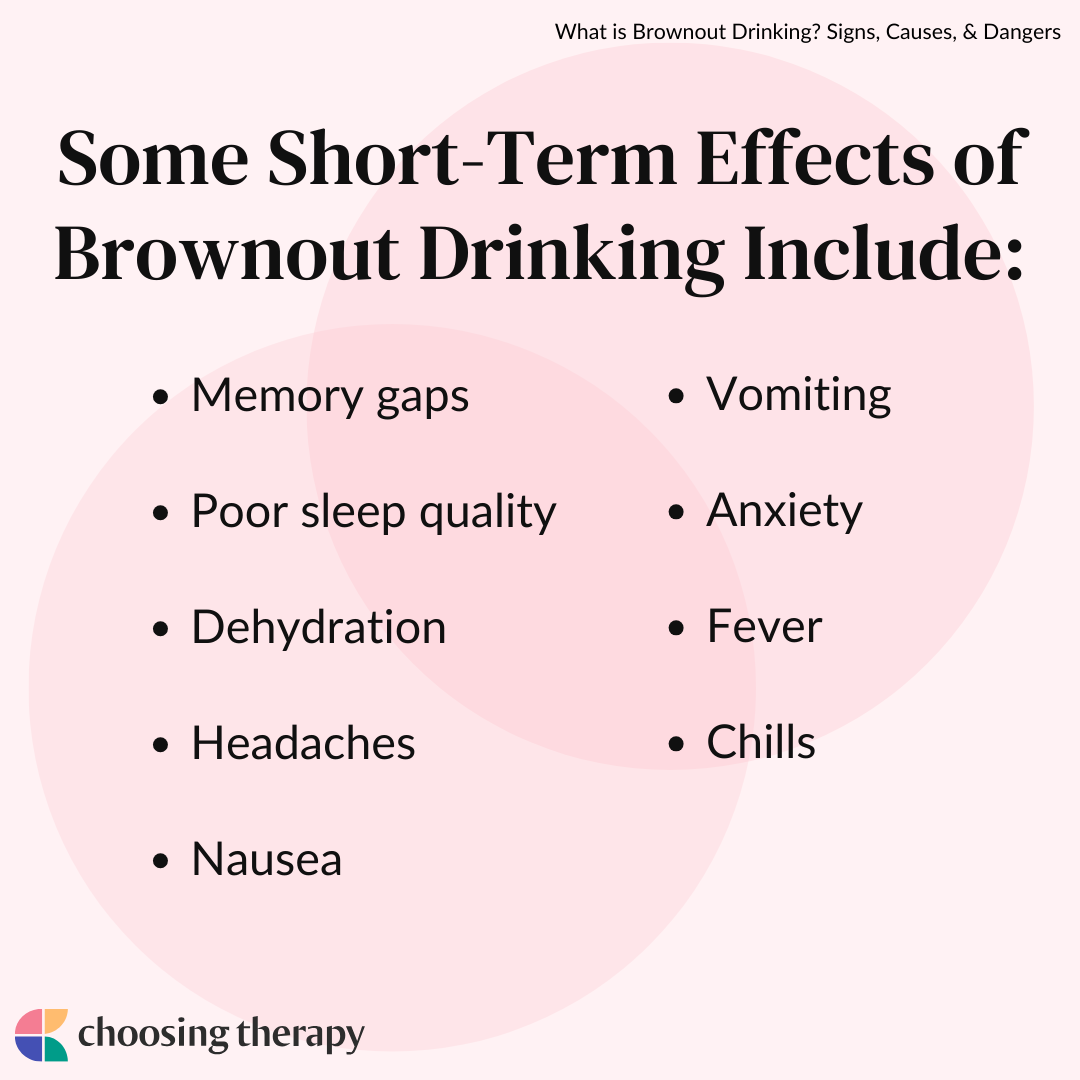
Some short-term effects of brownout drinking include:
- Memory gaps
- Poor sleep quality
- Dehydration
- Headaches
- Nausea
- Vomiting
- Anxiety
- Fever
- Chills
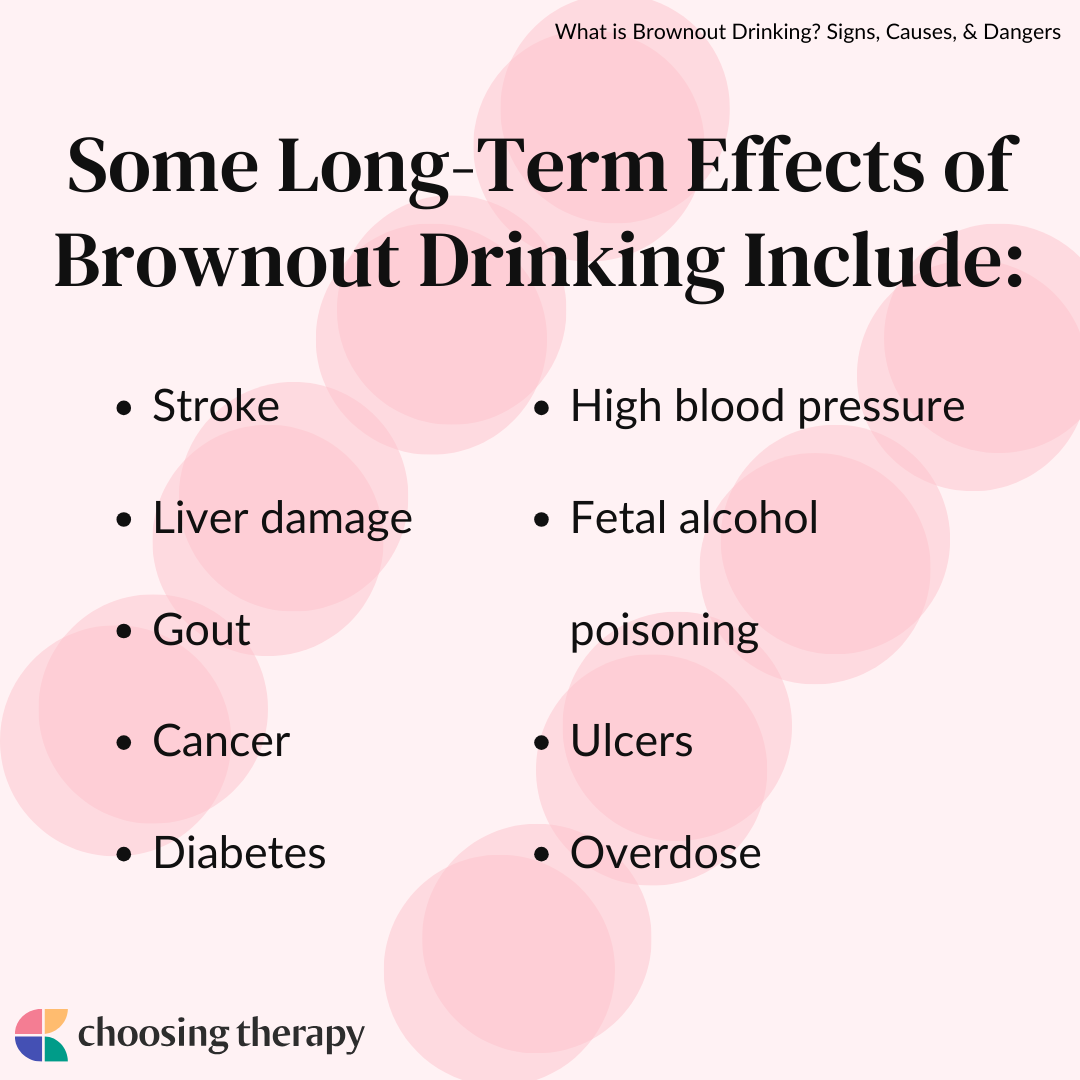
Some long-term effects of brownout drinking include:5
- Stroke
- Liver damage
- High blood pressure
- Cancer
- Diabetes
- Fetal alcohol poisoning
- Ulcers
- Gout
- Overdose
Preventing Brownout Drinking
Brownout drinking can be dangerous, however, it is preventable. Preventing brownout drinking requires responsibility and accountability to ensure you are drinking safely and in moderation.
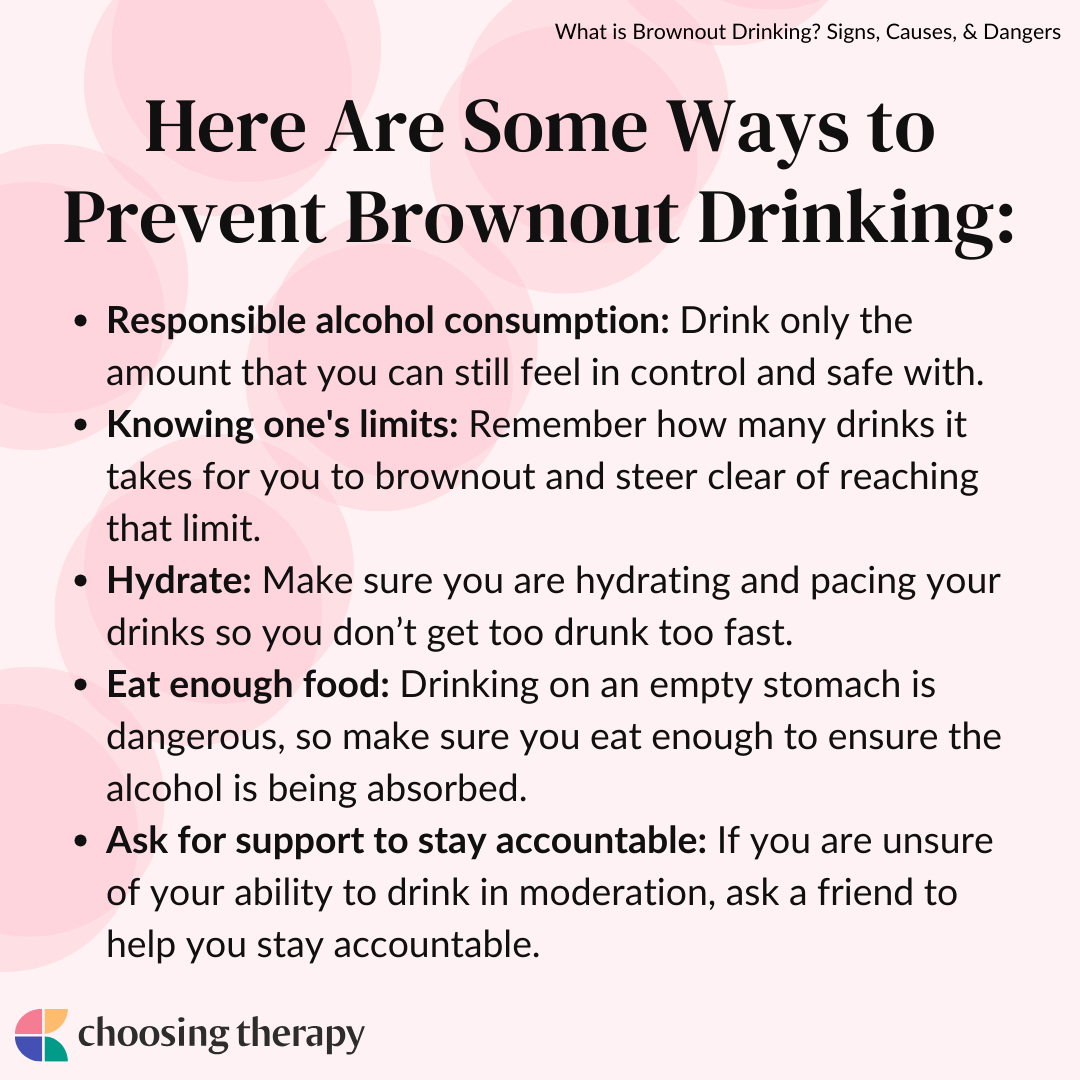
Here are some ways to prevent brownout drinking:
- Responsible alcohol consumption: Drink only the amount that you can still feel in control and safe with.
- Knowing one’s limits: Remember how many drinks it takes for you to brownout and steer clear of reaching that limit.
- Hydrate: Make sure you are hydrating and pacing your drinks so you don’t get too drunk too fast.
- Eat enough food: Drinking on an empty stomach is dangerous, so make sure you eat enough to ensure the alcohol is being absorbed.
- Ask for support to stay accountable: If you are unsure of your ability to drink in moderation, ask a friend to help you stay accountable.
How to Cope With a Brownout
If you or someone you know is dealing with brownout drinking, there are things you or your loved one can do at the moment. If you are out and experience brownout drinking, find a cool, quiet place and sit down with someone you trust. Make sure you get access to food and water to regulate your electrolytes. If you see someone struggling, help them recognize that they may want to consider safer choices and help them get access to it. Be patient with them and yourself. Consider getting additional help if they are having trouble moving around. Make sure they don’t drink, so taking away keys is important, and helping them get home safely can be helpful. Talk to them about it the next day and encourage them to consider talking to a professional if this is something that becomes a pattern.
Signs Your Loved One Might Be Misusing Alcohol
There are many signs that your loved one may be misusing alcohol which can go unnoticed. Alcoholism can look different in different people, and learning about the relationship your loved one has with alcohol can tell you a lot about how they may use it.
Some signs that your loved one might be misusing alcohol include:
- Depression: Depression can play a major role in the misuse of alcohol, as many can use it as a coping mechanism.
- Anxiety: Those with anxiety may use alcohol to loosen up, which can become habit forming.
- Poor impulse control: Drinking can impair your judgment.
- Craving alcohol: If you are finding yourself needing alcohol, it can be an indicator that you are becoming dependent.
- Poor sleep: Sleep changes after drinking can be a sign of alcohol misuse.
- Relationship issues: If drinking centers conflict, it can be a sign of alcohol misuse.
- Troubles at work or school: If you are missing work or classes because of drinking, you may be misusing alcohol.
- Risky behaviors: Engaging in risky behaviors can be a sign that you are using alcohol to the point of recklessness.
- Experiencing withdrawal symptoms: If you have sweats, chills and nausea as a result of not drinking, alcohol withdrawal symptoms can be a sign of alcohol misuse.
- Making plans that only involve drinking: If you are only making plans that involve alcohol use and consumption, it can be a sign that you are becoming dependent on alcohol in all social situations.
When to Seek Professional Help
If you or someone you know is struggling with drinking and alcohol dependence, there is hope. Whether it’s blackout drinking or brownout drinking, there are therapy options you can use. There are many therapists to choose from on an online therapist directory, and using an online therapy platform for virtual therapy sessions can be a good way to get quick access. It is important to seek out a therapist who has experience with addiction and dependency issues. If you are struggling with other mental health conditions and are using alcohol to cope, you may want to consider seeing a psychiatrist to learn about medication options for other conditions. There are online psychiatrist options that can be a good choice for finding alcohol addiction medication management.
Ria Health: Effective, Evidence-Based Alcohol Treatment 100% Online
Quickly change your relationship to alcohol with our at-home program. On average, Ria Health members reduce their BAC levels by 50% in 3 months in the program. Services are covered by many major health plans. Visit Ria Health
In My Experience
“In my experience, brownout drinking is far more common than we think or may realize. Brownout drinking is preventable and treatable with lifestyle changes and mental health support, and the long term outlook is positive. It can take some time to learn new coping mechanisms and learn about why you may feel the ways you do and resort to alcohol, but the more knowledge you have of yourself, the more agency you have over your life. I encourage you to work with a professional, and together, you and your therapist can come up with a treatment plan to help you meet your goals. There is hope, and you can live a full, happy life where alcohol is not ruling your every move.”

What is Brownout Drinking? Infographics
ChoosingTherapy.com strives to provide our readers with mental health content that is accurate and actionable. We have high standards for what can be cited within our articles. Acceptable sources include government agencies, universities and colleges, scholarly journals, industry and professional associations, and other high-integrity sources of mental health journalism. Learn more by reviewing our full editorial policy.
-
Merrill, J. E., Boyle, H. K., López, G., Riordan, B. C., Marie Ward, R., Rosen, R. K., & Carey, K. B. (2022). Recent alcohol-induced blackouts among heavy drinking college students: A qualitative examination of intentions, willingness, and social context. Experimental and clinical psychopharmacology, 30(6), 831.
-
Miller, M. B., Davis, C. N., Merrill, J. E., DiBello, A. M., & Carey, K. B. (2020). Intentions and motives to experience alcohol-induced blackout among young adults in college. Psychology of addictive behaviors, 34(6), 690.
-
Hamada, K., Ferguson, L. B., Mayfield, R. D., Krishnan, H. R., Maienschein‐Cline, M., & Lasek, A. W. (2021). Binge‐like ethanol drinking activates anaplastic lymphoma kinase signaling and increases the expression of STAT3 target genes in the mouse hippocampus and prefrontal cortex. Genes, Brain and Behavior, 20(6), e12729.
-
Patrick, M. E., Terry-McElrath, Y. M., & Bonar, E. E. (2022). Patterns and predictors of high-intensity drinking and implications for intervention. Psychology of addictive behaviors, 36(6), 581.
-
Lees, B., Meredith, L. R., Kirkland, A. E., Bryant, B. E., & Squeglia, L. M. (2020). Effect of alcohol use on the adolescent brain and behavior. Pharmacology Biochemistry and Behavior, 192, 172906.

Your Voice Matters
Can't find what you're looking for?
Request an article! Tell ChoosingTherapy.com’s editorial team what questions you have about mental health, emotional wellness, relationships, and parenting. Our licensed therapists are just waiting to cover new topics you care about!
Leave your feedback for our editors.
Share your feedback on this article with our editors. If there’s something we missed or something we could improve on, we’d love to hear it.
Our writers and editors love compliments, too. :)
Additional Resources
To help our readers take the next step in their mental health journey, ChoosingTherapy.com has partnered with leaders in mental health and wellness. ChoosingTherapy.com is compensated for marketing by the companies included below.
Alcohol Treatment – Cut Back or Quit Entirely
Ria Health – Quickly change your relationship to alcohol with our at-home program. On average, members reduce their BAC levels by 50% in 3 months in the program. Services are covered by many major health plans. Visit Ria Health
Drinking Moderation
Sunnyside – Want to drink less? Sunnyside helps you ease into mindful drinking at your own pace. Think lifestyle change, not a fad diet. Develop new daily routines, so you maintain your new habits for life. Take a 3 Minute Quiz
Treatment for Mental Health Conditions That Coexist With SUD
Talkiatry – Get help from a doctor who can treat the mental health conditions that commonly lead to or coexist with substance use disorders. Take our online assessment and have your first appointment in days. Take Assessment
Addiction Newsletter
A free newsletter from the experts at ChoosingTherapy.com for those impacted by addiction. Get helpful tips and the latest information. Sign Up

Best Online Medication-Assisted Treatment Programs
Online medication-assisted treatment programs are fairly new to the telehealth industry, but existing companies are expanding quickly with new programs emerging every day. It’s important to explore your options and understand the level of virtual care available so you can choose the best addiction treatment program for you.
Best Mindful Drinking Apps
If you’re thinking about joining the sober curious movement and you’d like to cut back on drinking, mindful drinking apps are a great place to start. Practicing mindful drinking can take some time, attention, and patience, but with the help of the right app, you can completely transform your relationship with alcohol.
