Relocation depression includes the deep feelings of sadness, grief, or loneliness that can occur after moving. Those who have recently moved may miss their old home, friends, and routine, which can greatly impact their overall mental and emotional well-being. If symptoms persist longer than a few months, professional treatment may be recommended.
ChoosingTherapy.com may earn a commission from the companies whose services are linked on this page.
Online Therapy & Medication for Depression
Together, medication and therapy can help you feel like yourself, faster. Brightside Health accepts United Healthcare, Anthem, Cigna, Aetna, and other major insurance. Appointments in as little as 24 hours. Personalized plans unique to you. 1 on 1 support from start to finish. Start your free assessment.
What Is Relocation Depression?
Relocation depression affects those who have recently moved to a new environment, and typically includes feelings of overwhelm and sadness. One will experience many common symptoms of depression, sometimes accompanied by symptoms of anxiety. While it is not considered an official diagnosis, relocation depression can be debilitating and disheartening for those who struggle with it.1
How Long Does Relocation Depression Last?
In some cases, a person struggling with relocation depression will have difficulty grounding themselves in their new home. When relocating, many things change all at once, and it can be tough to make adjustments quickly for anyone. Because of this, there is no timeline for how long a person may experience the sadness and loss associated with moving.
Some people may find that their depression dissipates within a few weeks. However, others might experience symptoms that last months, or even longer. If a person continues to experience relocation depression, it may be beneficial to reach out to a mental health professional.
Relocation Depression Vs. Sadness
There is a big difference between depression and sadness. Sadness is an emotion in itself that can come and go at many points throughout a person’s life. Depression may also affect someone at various times, but the sadness one feels is long-lasting and will greatly impact their ability to function in their daily life.
Symptoms of Relocation Depression
Symptoms of relocation depression can impact a person both physically and mentally. They often mimic those of other forms of situational depression. Some individuals may also experience symptoms of anxiety, possibly due to a fear of change or disruption to their routine.
Symptoms of relocation depression may include:
- Appetite changes
- Social withdrawal
- Low motivation
- Reduction in self-care
- Difficulty sleeping
What Causes Relocation Depression?
Relocation depression may be caused by any number of factors. While the first and foremost is generally the relocation itself, many other elements can contribute to the sadness one experiences. A person may struggle to meet friends, settle into their new routine, or stay connected with loved ones or old friends. In some cases, all of these changes can result in burnout as someone becomes overwhelmed with the need to make immediate adjustments.
Relocation depression may be caused by:
- Feeling disconnected from friends and family
- Disruption in routine
- Fear of change
- Fear of the unknown
- Difficulty connecting with new people
- Change in job
- Financial struggles
Options for Depression Treatment BetterHelp – Get help from a licensed therapist. BetterHelp offers flexible online therapy by video, phone, or live chat, and insurance options may be available for eligible members.* Free Assessment *Insurance availability and coverage may vary by state, plan, provider network, and therapist availability. Sesame Care – Looking for depression treatment without the insurance runaround? Sesame shows you the price upfront, with depression visits starting at $34 and no insurance required. Pick a top-rated provider yourself, read their reviews, and book a video visit the same day. Get Started With Sesame
7 Ways to Cope With Relocation Depression
There are many ways for you to seek support and cope with the sadness you may be feeling after moving. Finding outlets that work best for you is important when settling into a new community and home. Take time to focus on self-care, stay social, and explore. Doing so can help you experience relief from relocation depression symptoms.
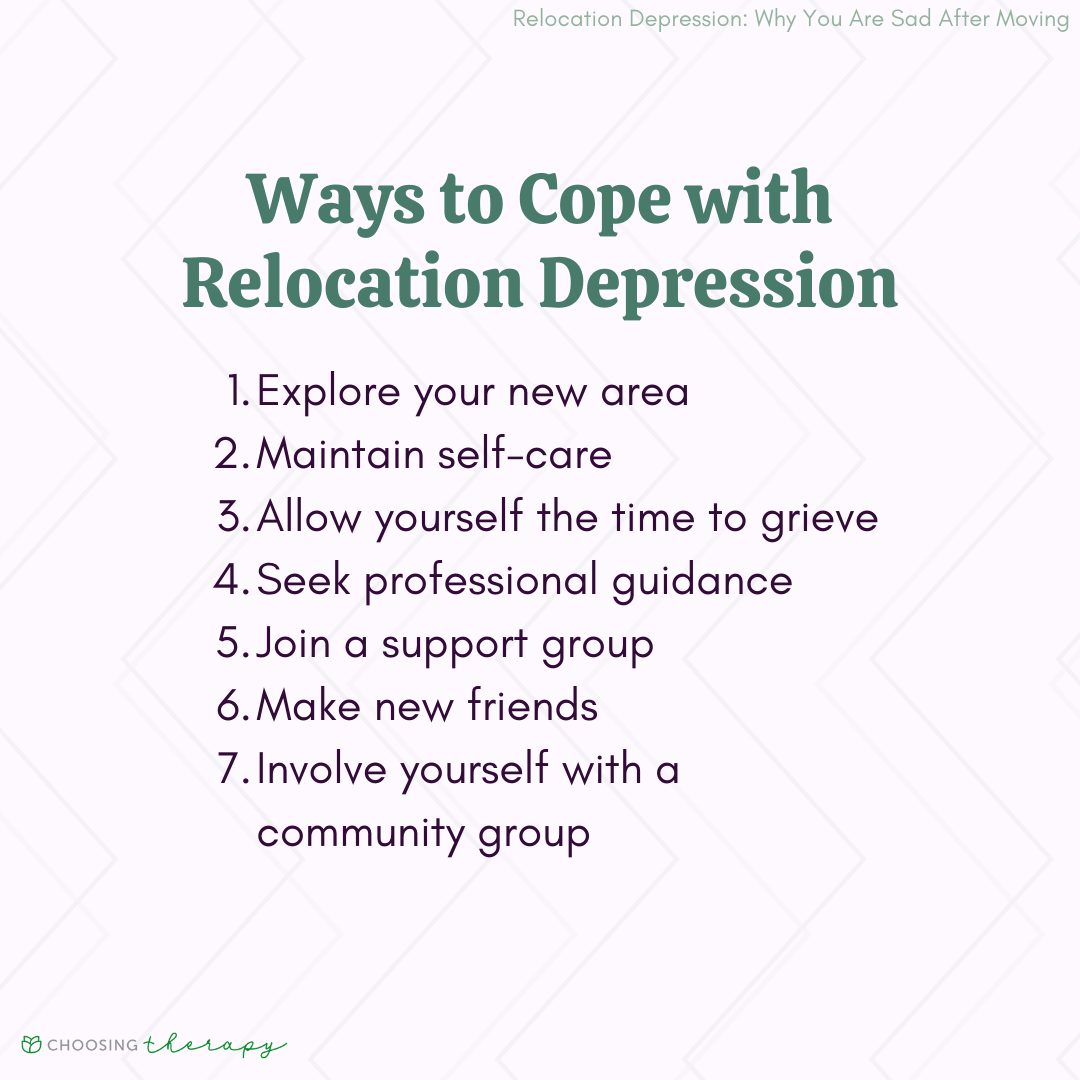
Here are seven tips for coping with relocation depression:
1. Explore Your New Area
Take time to get to know the area you have moved to. Go out and explore where there is to see, eat, and keep you entertained. For example, find a store where you can shop for hobby supplies or groceries. There are many mental health benefits of being in nature, so consider visiting a local park to get outdoors and check out the sights. You may also meet some new people along the way!
2. Maintain Self-Care
There are many benefits of self-care–maintaining it after moving is crucial. Self-care can look different for anyone, but it allows you the time to focus on yourself and your individual needs. Some examples include practicing meditation for depression, taking time to explore the area, or sitting down to write out your new routine. Finding the self-care methods that work best for you can help you deal with the negative impacts of relocation depression.2
3. Allow Yourself the Time to Grieve
Grieving is a normal part of change. When you relocate, you may grieve the loss of the life you had before. You may struggle with symptoms of grief that can be challenging to pinpoint and overcome. Allowing yourself the time to cope with grief and heal will help you ease into your new environment. Rather than trying to escape your loss, allow yourself to feel, acknowledge, and address it.
4. Seek Professional Guidance
Seeking the guidance of a professional will offer you a space to work through any sadness and overwhelm you are experiencing. If you are struggling with relocation depression, finding the right therapist can help you address your symptoms. Therapy for depression may provide you with the tools needed to adjust to and adapt to your new home.3
Therapy options to consider include:
- Cognitive behavioral therapy (CBT): CBT for depression helps a person identify how the negative feelings and emotions they are experiencing affect their behavior. A therapist can then help a client find ways to address these thoughts and reframe them in positive ways.
- Color therapy: Color therapy can be especially helpful when starting out in a new home. This includes the use of certain colors within one’s environment in order to produce positive emotions and calm.
- Grief therapy: After moving, one may grieve the parts of them that were left behind. Grief therapy can help a person process this loss.
- Dialectical behavioral therapy (DBT): DBT incorporates mindfulness into practice to help clients deal with overwhelming feelings as they occur. Using these techniques can allow a person to remain more present in their day-to-day life.
- Solution focused therapy: A solution focused therapist will help a person implement changes into their life so they can overcome the challenges they are facing.
5. Join a Support Group
Finding an online support group may be beneficial as it provides a space for you to share your experience with others who are struggling with the same issues. You can also gain insight from your fellow members, and possibly even learn some helpful tips for coping. Though members may not be in the same area, you can still develop close friendships with one another!
6. Make New Friends
While this is easier said than done, making new friends is helpful when moving to a new place. This might look like hanging out at a nearby coffee shop, joining a workout class, or taking your dog to the park. However you approach this, be open to forming new relationships. There are also many apps available that can help you search for new friends!
7. Involve Yourself With A Community Group
When entering a new location, growing a sense of community is important. Try signing up at a local gym, attending a church service, or engaging with a nearby chamber of commerce. This can help you learn more about what is happening within your neighborhood. Consider checking out a local event or activity that is being thrown by the city or other organization. Doing so allows you to feel more connected with your environment, feel grounded, and find social support.
Personalized Treatment for Depression Talkiatry can match you with an actual psychiatrist. Talkiatry psychiatrists can evaluate you for depression and other issues that may be impacting your mood then implement a personalized treatment plan. Insurance accepted. Get started with a short online assessment.

Depression Workbook
Our workbook contains our best depression worksheets to help you understand your depression, develop effective coping skills, and manage challenging moments.
In My Experience
Relocation depression can feel overwhelming and isolating, but there are many ways to move forward. It’s important to seek help early on and prepare for the feelings that might arise after moving. Take the time to develop coping skills to navigate these emotions so you can begin to experience relief.
Relocation Depression Infographics

Additional Resources
To help our readers take the next step in their mental health journey, ChoosingTherapy.com has partnered with leaders in mental health and wellness. ChoosingTherapy.com is compensated for marketing by the companies included below.
Personalized Treatment for Depression
Talkiatry – can match you with an actual psychiatrist. Talkiatry psychiatrists can evaluate you for depression and other issues that may be impacting your mood then implement a personalized treatment plan. Insurance accepted. Get started with a short online assessment.
Therapy for Depression & Medication Management
Brightside Health – If you’re struggling with depression, finding the right medication can make a difference. Brightside Health treatment plans start at $95 per month. Following a free online evaluation and receiving a prescription, you can get FDA approved medications delivered to your door. Free Assessment
Ketamine Therapy for Depression
Mindbloom – Ketamine is a prescription medication that clinicians can prescribe off-label to treat depression. Mindbloom pairs ketamine with clinician support and an immersive in-app experience to help you achieve your mental health breakthrough. Find out if you’re a good candidate for Mindbloom. Learn More
Depression Newsletter
A free newsletter from the experts at ChoosingTherapy.com for those impacted by depression. Get helpful tips and the latest information. Sign Up
ChoosingTherapy.com Directory
Find local therapists that offer online and in-person therapy. Search for therapists by specialty, experience, insurance, and location. Find a therapist near you.
For Further Reading
Online Depression Test A few questions from Talkiatry can help you understand your symptoms and give you a recommendation for what to do next. Best Online Therapy for Depression Depression is a very common mental health concern. To find the best online therapy for depression, we spent hundreds of hours personally using and researching over 50 platforms. Our resulting list offers options with easy access to appointments, affordable pricing, coverage for major insurance plans, and some of the best therapist availability in the industry. Read on to see our top picks for the best online therapy for depression. Best Online Psychiatry Services Online psychiatry, sometimes called telepsychiatry, platforms offer medication management by phone, video, or secure messaging for a variety of mental health conditions. In some cases, online psychiatry may be more affordable than seeing an in-person provider. Mental health treatment has expanded to include many online psychiatry and therapy services. With so many choices, it can feel overwhelming to find the one that is right for you.