


Valium is a benzodiazepine that can be prescribed for anxiety, alcohol withdrawal, muscle spasms, and seizures. It helps slow down the central nervous system and can reduce mental health distress.1 Valium can be habit-forming, even when prescribed, and it’s possible to develop an addiction to it. It’s important to know the risks and benefits before taking this drug.
ChoosingTherapy.com may earn a commission from the companies whose services are linked on this page.
Personalized Treatment for Anxiety
Talkiatry can match you with a real psychiatrist who accepts insurance. Talkiatry psychiatrists can evaluate you for anxiety and implement a personalized treatment plan, including medication. If appropriate for you and allowed by your state, this can include controlled substances. Get started with a short online assessment.
What Conditions Does Valium Treat?
Valium, which works under the brand name, diazepam, generally treats chronic anxiety, sleeping problems, and certain medical issues, including seizures and muscle spasms. It may also be prescribed for sedative effects before a medical procedure. Valium comes in many forms, including tablets, gels, oral solutions, and injections. It is generally only prescribed for short periods of time.2
Valium treats the following conditions:
- Anxiety disorders
- Acute alcohol withdrawal
- Major depressive disorder
- Status epilepticus (continuous seizures)
- Muscle spasms
- Sedation before anesthesia
- Skeletal muscle spasms and stiffness
Is Valium Addictive?
Valium can be addictive, and users and their loved ones must consider the impact of this risk before using this substance. Someone may be more prone to abuse or addiction if they have a history of substance dependence, co-occurring mental health issues, or poor distress tolerance skills. Addictive tendencies can occur gradually over time but may also happen quickly.
The difference between addiction and dependence is that addiction refers to a cluster of symptoms related to chronically using substances and dependence refers to the psychological/physical effects of becoming tolerant to a substance. Someone with an addiction will continue using substances despite potential consequences or relationship problems.3
Valium Abuse & Addiction
After taking Valium, people may experience immediate effects of drowsiness, relaxation, reduced pain, and a sense of calmness. Side effects can include feeling sleepy, mood changes, confusion, or problems with coordination. When abused, Valium can produce a sense of euphoria. If someone develops a tolerance to Valium (which can happen quickly), they must take higher amounts to achieve the same effects. Someone who experiences Valium withdrawal symptoms will experience unpleasant physical symptoms if they stop or reduce the amount taken.
Physical Symptoms of Valium Addiction
Abusing Valium can lead to changes in body functions related to brain and nerve activity, heartbeat, digestion, and respiration. How long it takes for someone to get addicted to Valium varies on individual factors, including how much Valium someone is taking, how long they’ve been taking it, past history of abusing substances, and individual mental health factors.
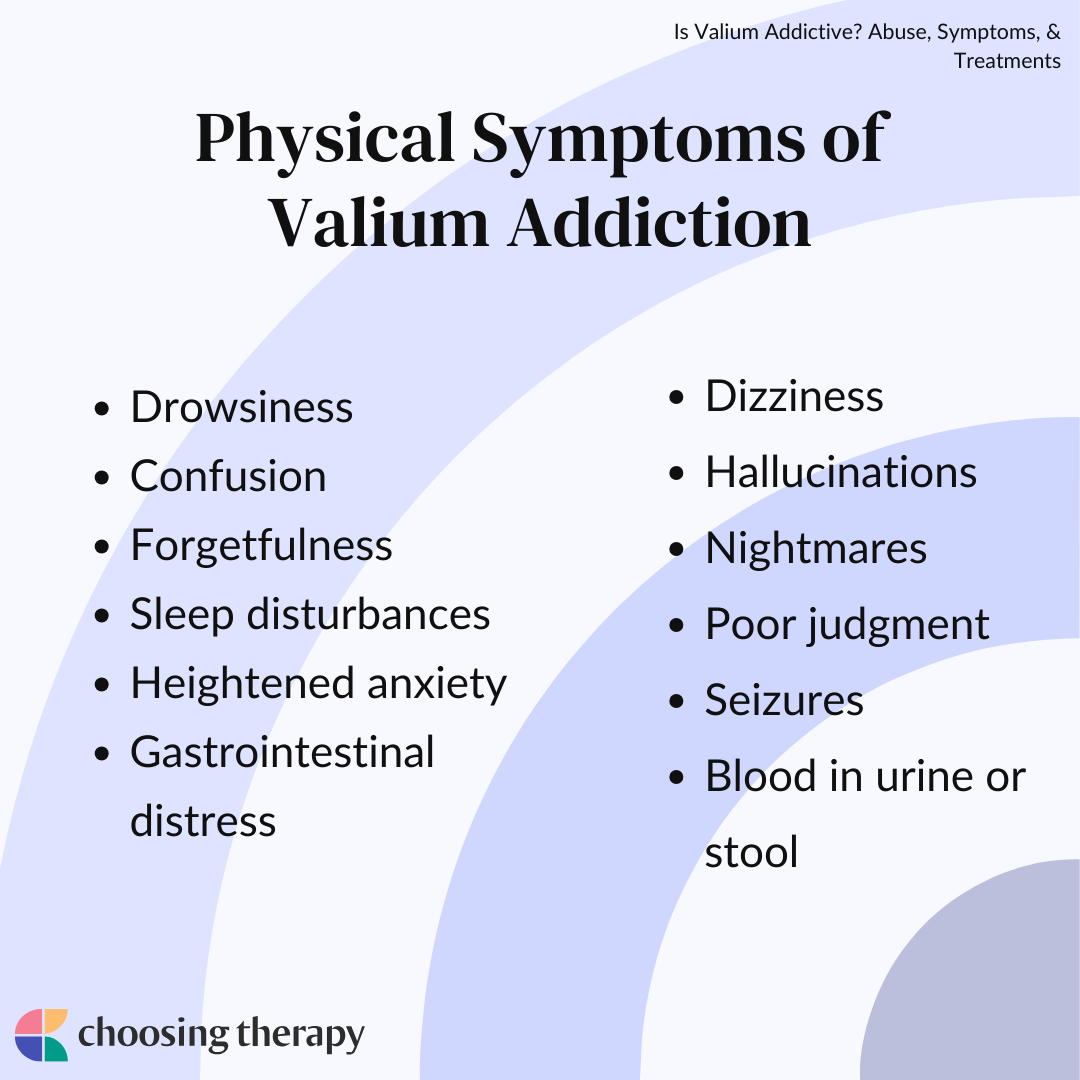
Physical symptoms of Valium addiction include:
- Drowsiness
- Confusion
- Forgetfulness
- Sleep disturbances
- Gastrointestinal distress
- Heightened anxiety
- Dizziness
- Hallucinations
- Nightmares
- Poor judgment
- Seizures
- Blood in urine or stool
Behavioral Signs of Valium Addiction
If someone is addicted to Valium, they will experience personality changes and disruptions in daily life. The severity of these symptoms ranges on a scale, but untreated addiction often progresses over time. The more tolerant someone is on Valium, the more of the drug they will need to achieve their desired effects. Addiction symptoms may be magnified if the person is also abusing other drugs.
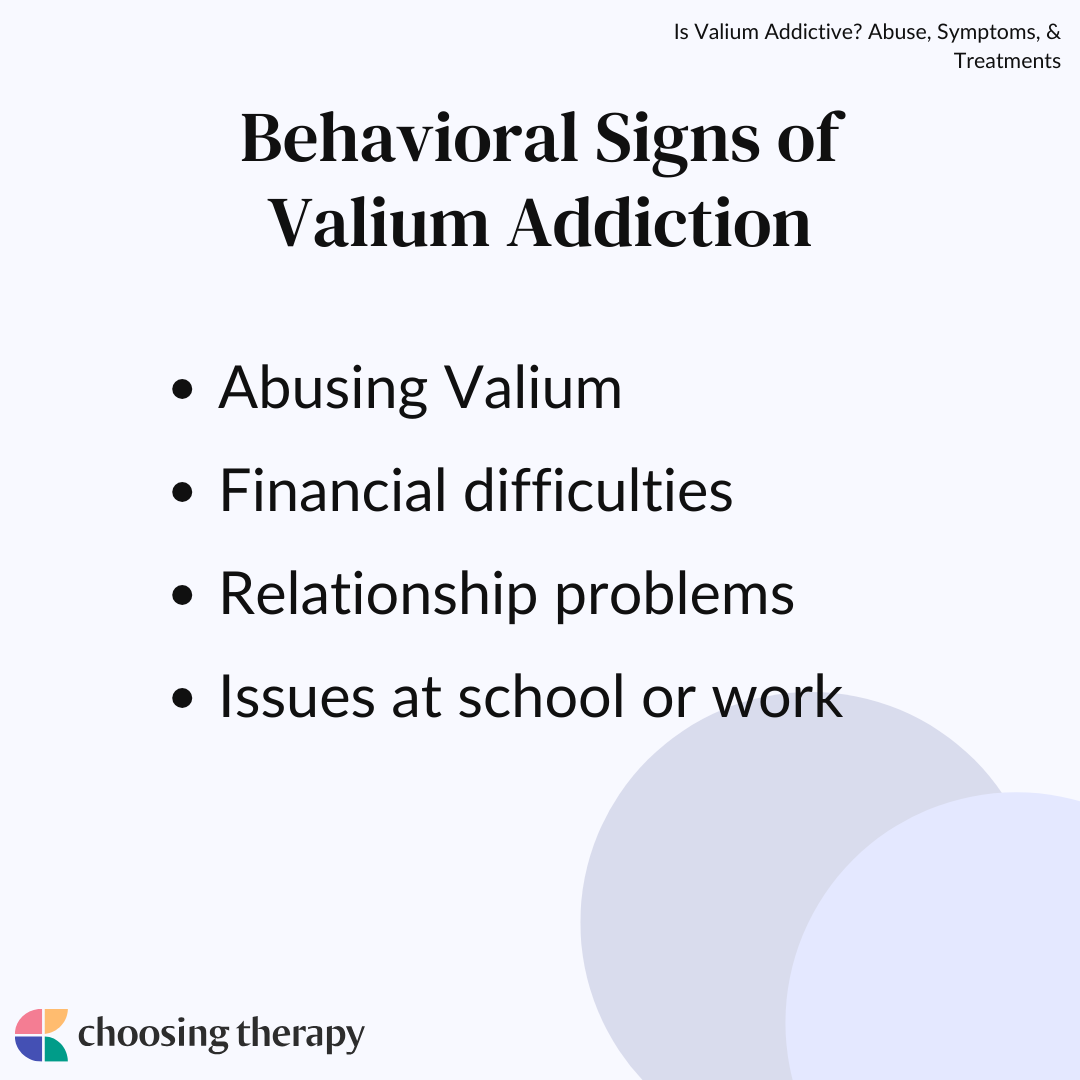
Behavioral signs of Valium addiction include:
- Abusing Valium: Addiction occurs when someone continues using drugs despite wanting to stop or reduce use. Abuse also refers to taking drugs illicitly or outside of the normal parameters of a prescription.
- Financial difficulties: Addiction can lead to money problems, and this is one of the first signs that someone may be struggling with substance use.
- Relationship problems: Drug abuse often affects relationships, as it can be hard for the individual to stay present or attuned to the needs of others.
- Issues at school or work: Taking, using, and recovering from the effects of Valium can take a toll on daily functioning, which may affect one’s overall productivity.
Psychological Symptoms of Valium Addiction
Both short-term and long-term abuse of Valium can result in psychological symptoms of addiction. There isn’t an exact formula for how long it takes someone to get addicted, and not everyone who uses Valium gets addicted to it. That said, addiction tends to be insidious, and someone may not realize how much they’re struggling at first.
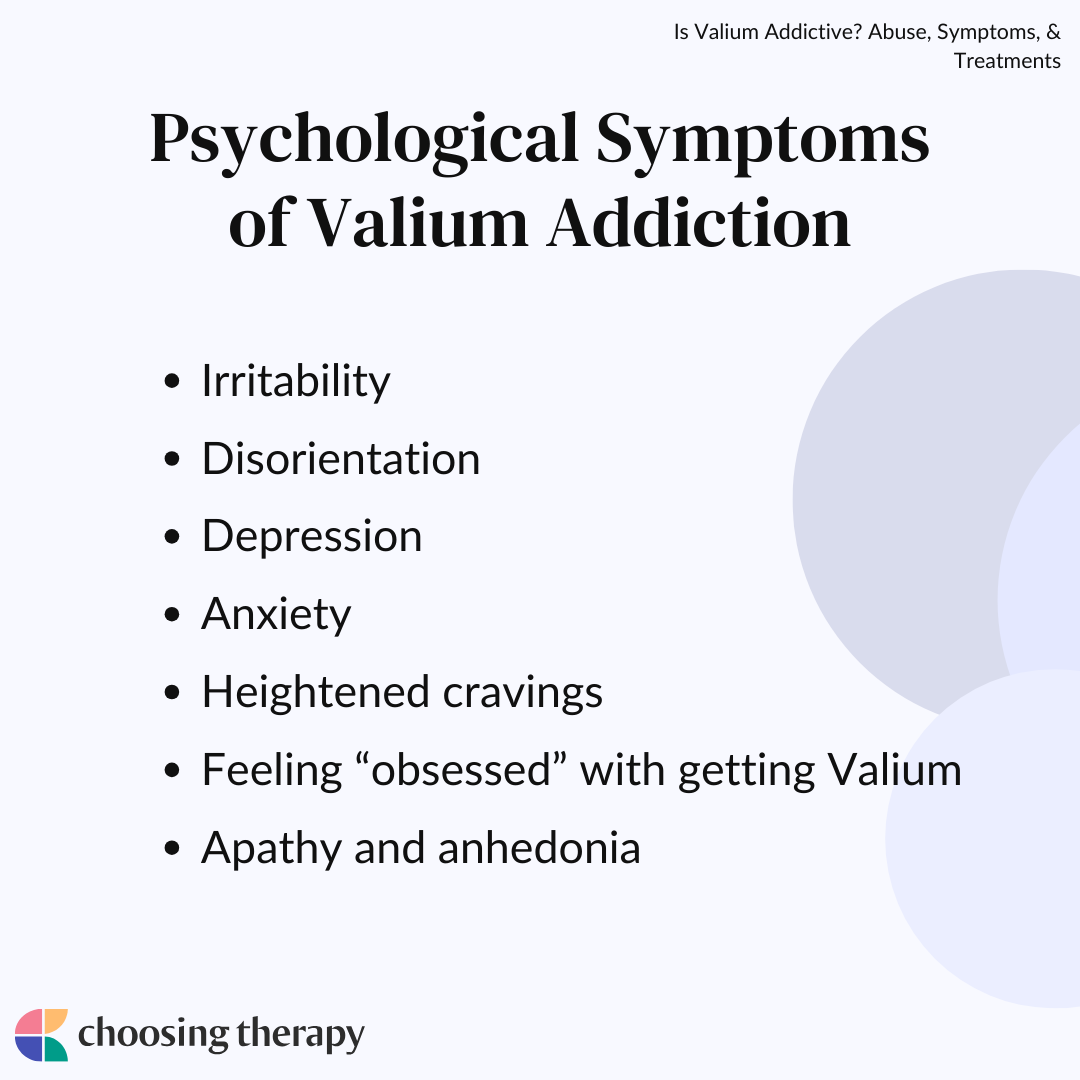
Psychological symptoms of Valium addiction include:
- Irritability
- Disorientation
- Depression
- Anxiety
- Heightened cravings
- Feeling “obsessed” with getting Valium
- Apathy and anhedonia
Help for Addiction
Ria Health: Effective, Evidence-Based Alcohol Treatment 100% Online Quickly change your relationship to alcohol with our at-home program. On average, Ria Health members reduce their BAC levels by 50% in 3 months in the program. Services are covered by many major health plans. Visit Ria Health
Workit Health – Online Treatment for Opioids or Alcohol, Including Medication. Modern, personalized recovery that combines medication, a supportive community, and helpful content. Covered by many insurance plans. Currently available in FL, TX, OH, MI, and NJ. Visit Workit Health
Causes of Valium Addiction
There isn’t a universal cause of addiction. However, benzodiazepines are known for their high addictive potential. They enhance the effect of GABA, which is associated with hypnotic sedative effects. Over time, someone can rely on this effect to function “normally” or to feel good. Long-term use of benzodiazepines and simultaneous abuse of other drugs likely increase the risk of addiction.4
Potential causes of Valium addiction include:
Misusing Valium
People can misuse Valium by taking more than prescribed, buying the drug off the street, hoarding pills to take larger doses at a single time, visiting multiple doctors, forging prescriptions, or attempting to lose prescriptions to seek more medication. Snorting or injecting Valium are other ways people may misuse this medication. That said, it’s still possible to get addicted to Valium even without abusing it.
Environment
Living in a stressful environment or experiencing high levels of stress can lead to a substance use disorder. Research shows that trauma and addiction are closely linked- people may turn to certain drugs to self-medicate mental health symptoms. While this strategy can provide short-term relief, it often exacerbates mental health issues and can cause even more trauma. That said, you could have trauma and a less-than-ideal environment and not end up with a substance use issue.
Genetic Factors
It’s well-known that addiction often runs in families. People with substance use often have a first-degree relative who experiences similar struggles. Studies show that at least half of a person’s vulnerability to drug addiction can be attributed to genetic factors.5 Research on this topic will probably continue evolving.
Co-Occurring Disorders
Someone with a co-occurring mental health issue, such as depression, anxiety, or PTSD, may be at a greater risk of having an addiction. Substances often provide a self-medicating effect- getting high offers temporary relief, even if it’s short-lived. Over time, however, most people find that their addiction worsens their mental health state.
What Are the Effects of Valium Abuse?
All addictions can impact someone’s mental and physical health. With that, Valium abuse is dangerous, and it shouldn’t be taken lightly. In some cases, the effects can be fatal. If someone purchases Valium illicitly, they must also be aware of the risk of the drug being laced with fentanyl.
Valium use can cause:
- Tremors
- Vertigo
- Confusion
- Hallucinations
- Reduced reflexes
- Low blood pressure
- Lethargy
- Low muscle tone
- Ataxia (a degenerative disease of the nervous system)
- Overdose
Valium Withdrawal Symptoms
When someone addicted to Valium suddenly stops taking the drug, they will experience benzodiazepine withdrawal symptoms. These symptoms range from mildly unpleasant to incredibly distressing. Because they are so painful, many people continue taking benzodiazepines or other drugs to curb this difficult experience. In severe cases, benzodiazepine withdrawal can be life-threatening.
Symptoms of Valium withdrawal may include:6
- Nausea
- Vomiting
- Fevers
- Concentration problems
- Sleep problems
- Tinnitus (ringing in ears)
- Unsteady legs
- Tingling in the hands and feet
- Panic attacks
- Appetite changes
- Increased sensitivity to noise and sights
- Blurred vision
- Anxiety
- Cramping
Drugs Commonly Used with Valium
People may use Valium with other drugs, including alcohol, stimulants, opioids, cannabis, and other benzodiazepines. Sometimes Valium is used to “heighten” the effect of other drugs or help with the comedown associated with withdrawal. It’s important to note that mixing Valium with other substances is dangerous and can increase the risk of overdose and death.
Treating Valium Addiction
Valium addiction treatment is often multifaceted. Addressing symptoms requires understanding the severity of the addiction and its function in someone’s life. Successful recovery is possible, but it’s also common for people to experience relapses along the way. Some people can stop using Valium on their own, but others may need professional treatment.
Treatment for Valium addiction may include:
Therapy for Valium Addiction
One of the main benefits of therapy for addiction is feeling supported during this vulnerable time. A therapist can provide you with reassurance and structured guidance for overcoming cravings and coping with stress productively. It’s important to work with a specialist who understands addiction as well as any other underlying issues you’re experiencing. There are numerous in-person and online therapy options available for someone seeking help.
Therapy methods that can provide effective treatment in managing addictive tendencies include:
- Cognitive-behavioral therapy (CBT): CBT for substance abuse focuses on changing negative thought patterns to improve mood and behavioral responses. This therapy can help people struggling with all types of addiction and mental health issues.
- Dialectical behavior therapy (DBT): DBT can treat addiction by strengthening emotional regulation, distress tolerance, and interpersonal skills.
- Eye movement desensitization and reprocessing therapy (EMDR): EMDR helps treat trauma symptoms, which can be an essential part of addiction recovery.
- Motivational interviewing: MI can be helpful for people experiencing ambivalence about their recovery, as it focuses on respecting clients in their current stage of change.
- Group therapy: Group therapy offers peer support, psychoeducation, and relapse prevention guidance for people recovering from addictions.
- Schema therapy: Schema therapy works by focusing on schema modes and exploring coping skills to deal with addictive problems effectively.
Intensive Outpatient Treatment
Intensive outpatient treatment (IOP) for Valium addiction consists of several days a week attending individual therapy, group therapy, and other counseling support. IOP may last anywhere from 1-6 months depending on the individual’s substance use and their treatment goals. Treatment costs vary, although most health insurance plans will cover some or all costs.
Rehab & Detox Centers
Some people with moderate or severe addictions will need to attend a formal detox to ensure the body fully eliminates the drug. Detox offers 24/7 support and monitoring. After detox, it’s common to transition into either inpatient or outpatient rehab. Rehab lengths also vary from about 1-6 months and are generally paid privately or covered by health insurance.
Workit Health - Online Treatment for Opioids or Alcohol, Including Medication.
Modern, personalized recovery that combines medication, a supportive community, and helpful content. Covered by many insurance plans. Currently available in FL, TX, OH, MI, and NJ. Learn more
In My Experience
It’s a red flag if you find it challenging to stop or cut down your substance use. It’s also concerning if other people have expressed being worried about how you use drugs or alcohol. Valium, along with all other benzodiazepines, can be highly addictive, even when taking them for prescribed purposes. If you’re struggling with your drug use, reaching out for help can help you start your recovery.

Is Valium Addictive? Infographics
ChoosingTherapy.com strives to provide our readers with mental health content that is accurate and actionable. We have high standards for what can be cited within our articles. Acceptable sources include government agencies, universities and colleges, scholarly journals, industry and professional associations, and other high-integrity sources of mental health journalism. Learn more by reviewing our full editorial policy.
-
Diazepam: Valium (2023, January). National Alliance on Mental Illness. Retrieved from: https://www.nami.org/About-Mental-Illness/Treatments/Mental-Health-Medications/Types-of-Medication/Diazepam-(Valium).
-
Drug dependence is not addiction—and it matters (2021, November). National Library of Medicine. Retrieved from: https://www.ncbi.nlm.nih.gov/pmc/articles/PMC8583742/.
-
Benzodiazepine Addiction. Semel Institute for Neuroscience and Human Behavior. Retrieved from: https://www.semel.ucla.edu/dual-diagnosis-program/Conditions_Treated/Benzodiazepine_Addictions.
-
Genes matter in addiction (2008, June). American Psychological Association. Retrieved from: https://www.apa.org/monitor/2008/06/genes-addict.
-
Sleeping pills and minor tranquilisers (2023). Mind.org. Retrieved from: https://www.mind.org.uk/information-support/drugs-and-treatments/sleeping-pills-and-minor-tranquillisers/withdrawal-effects-of-benzodiazepines/.

We regularly update the articles on ChoosingTherapy.com to ensure we continue to reflect scientific consensus on the topics we cover, to incorporate new research into our articles, and to better answer our audience’s questions. When our content undergoes a significant revision, we summarize the changes that were made and the date on which they occurred. We also record the authors and medical reviewers who contributed to previous versions of the article. Read more about our editorial policies here.
Author: ChoosingTherapy.com Editorial Team
Primary Changes: Removed 3 outdated or broken links.
Your Voice Matters
Can't find what you're looking for?
Request an article! Tell ChoosingTherapy.com’s editorial team what questions you have about mental health, emotional wellness, relationships, and parenting. Our licensed therapists are just waiting to cover new topics you care about!
Leave your feedback for our editors.
Share your feedback on this article with our editors. If there’s something we missed or something we could improve on, we’d love to hear it.
Our writers and editors love compliments, too. :)
Additional Resources
To help our readers take the next step in their mental health journey, ChoosingTherapy.com has partnered with leaders in mental health and wellness. ChoosingTherapy.com is compensated for marketing by the companies included below.
Personalized Treatment for Anxiety
Talkiatry can match you with a real psychiatrist who accepts insurance. Talkiatry psychiatrists can evaluate you for anxiety and implement a personalized treatment plan, including medication. If appropriate for you and allowed by your state, this can include controlled substances. Get started with a short online assessment.
Online Psychiatry
Circle Medical Anxiety and Depression Treatment. Meet with an online doctor today! All prescriptions are based on necessity determined by a medical professional. Diagnosis and prescription over video. Insurance accepted. No membership or hidden fees. Same day appointments. Visit Circle Medical
Online Therapy
BetterHelp Get support and guidance from a licensed therapist. BetterHelp has over 30,000 therapists, who provide convenient and affordable online therapy. BetterHelp starts at $65 per week and is FSA/HSA eligible by most providers. Take a Free Online Assessment and get matched with the right therapist for you. Free Assessment
Anxiety Newsletter
A free newsletter from the experts at ChoosingTherapy.com for those impacted by anxiety. Get helpful tips and the latest information. Sign Up

Online Anxiety Test
A few questions from Talkiatry can help you understand your symptoms and give you a recommendation for what to do next.
Best Online Psychiatry Services
Online psychiatry, sometimes called telepsychiatry, platforms offer medication management by phone, video, or secure messaging for a variety of mental health conditions. In some cases, online psychiatry may be more affordable than seeing an in-person provider. Mental health treatment has expanded to include many online psychiatry and therapy services. With so many choices, it can feel overwhelming to find the one that is right for you.
