


Treatments for obsessive-compulsive personality disorder often include a combination of medication, psychotherapy, and relaxation or mindfulness skills. Cognitive behavioral therapy and radically open DBT are the most common forms of therapy for OCPD, but there are numerous other modalities available. While treating OCPD be difficult, an individual’s often rigid adherence to rules and dedication to tasks can paradoxically be helpful when applied to a comprehensive treatment plan.
ChoosingTherapy.com may earn a commission from the companies whose services are linked on this page.
OCPD & OCD Treatment
Exposure And Response Prevention Therapy (ERP) – Do live video sessions with a therapist specialized in ERP, the gold standard treatment for OCD. Treatment from NOCD is covered by many insurance plans. Start With A Free 15 Minute Call
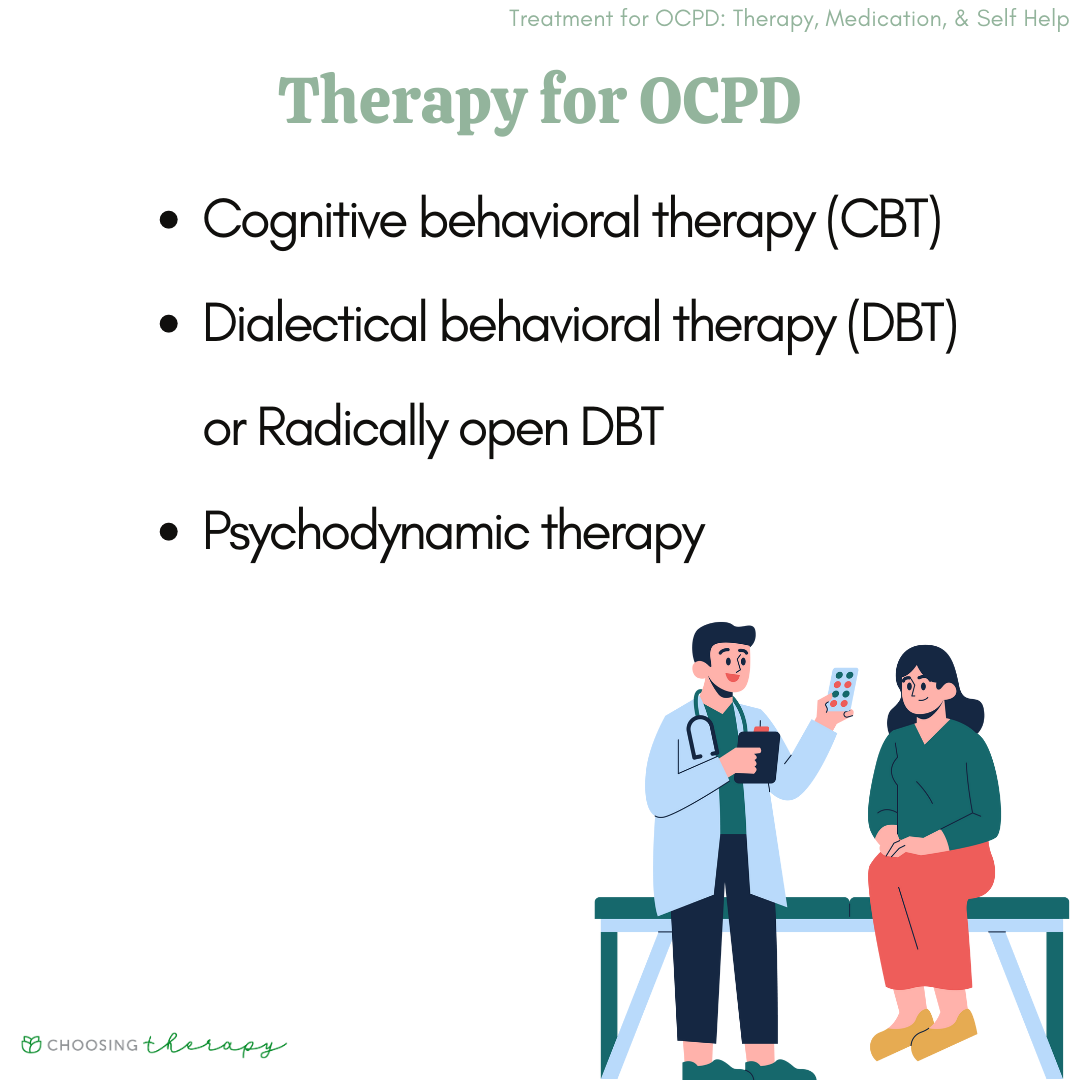
Therapy for OCPD
When choosing a therapy modality for obsessive-compulsive personality disorder (OCPD), there are several factors to consider. One should be sure that a therapy approach is evidence-based, supported by research, available in their area, and affordable. It may be beneficial to identify one’s goals (symptom reduction, improving relationships, improving insight) before selecting the form of therapy they are interested in.
Some insurance plans will limit the number of sessions covered depending on one’s diagnosis and prognosis, so treatment duration may not be determined until after the first appointment. Many clinicians are open to working with future patients to minimize treatment barriers and can offer sliding scale fees or referrals to other providers. Consulting with your insurance carrier and primary care provider about your concerns is a great place to start.
However, it is important to note that there is limited research on the best treatments for OCPD and the efficacy of each approach may vary.1,2 Still, treatment quality and the motivation of the individual will often be more important than the modality itself.1,2
Cognitive Behavioral Therapy (CBT)
There are no treatments specifically for OCPD, but cognitive behavioral therapy (CBT) is the most common form of therapy utilized and the most widely studied.1,2 CBT targets maladaptive thoughts, feelings, and behaviors, working to promote self-awareness and agency. This may be done both during sessions and with homework that focuses on building coping skills, emotional regulation, and cognitive reframing (thinking about one’s thoughts differently).
The therapist will determine the length of treatment based on one’s clinical severity and willingness to engage. However, CBT generally includes a minimum of 10 one-hour sessions. Treatment for OCPD is typically longer than that of obsessive-compulsive disorder (OCD) due to the persistent nature of disordered personality versus the primarily behavioral aspects of OCD.1,2,3
Dialectical Behavioral Therapy (DBT) or Radically Open DBT
Dialectical behavioral therapy (DBT) was developed to improve upon CBT by emphasizing the concepts of acceptance and change.4 A specific type of DBT, known as radically open DBT (RO DBT), has been found effective in treating OCPD. Traditional DBT targets under-controlled symptoms, such as excessive dysregulated emotions and behaviors (like substance use issues or overeating), whereas RO DBT best targets over-controlled behaviors and disorders, such as anorexia and OCPD.
RO DBT promotes flexibility (in thoughts and behaviors), openness, healthy interpersonal relationships, and social signaling (showing true emotions to foster better relationships).5 While research is limited, one study found that RO DBT improved symptoms of OCPD, making it a promising option for further research and clinical intervention. RO DBT treatments typically consist of 30 weekly individual and group sessions.5,6
Psychodynamic Therapy
Psychoanalytic or psychodynamic therapy emphasizes developing increased insight into one’s thoughts, motivations, and unresolved conflicts. This may be beneficial for those with OCPD who often struggle with insight into their disorder.1 This may be done by resolving childhood or past issues to improve current functioning.7
Traditional analytic psychotherapy concentrates more on bringing unconscious material to the conscious mind. A more transference-focused therapy brings special attention to the self in relation to others and the therapist.8 Brief psychodynamic therapy has a considerably shorter treatment time and is more goal-oriented than standard psychodynamic therapy.1,9
There is limited research assessing the efficacy of dynamic psychotherapies specifically for obsessive-compulsive personality disorder. However, psychodynamic therapies show similar clinical improvement when compared to other treatment modalities, indicating that the type of therapy someone receives may be less important than the quality of care and the client-therapist relationship.10
Other Therapy Options
Other types of therapy that you may encounter when seeking treatment for OCPD include:
- Schema therapy: Schema therapy has been found to be an effective treatment for many personality disorders.
- Interpersonal Therapy (ITS): ITS is a time-limited and structured approach that focuses on resolving interpersonal conflict.
- Relationship therapies: Family therapy and/or couples counseling can help improve relationship dynamics.
- Nidotherapy: Nidotherapy seeks to change one’s environment to ease distress as opposed to changing the person internally.
- Relaxation and mindfulness practices: Both mindfulness and relaxation practices may be incorporated into an existing treatment or practiced on their own.
Questions to Ask About Therapy for OCPD
Before beginning treatment with a new therapist, you should be sure to ask about their experience treating OCPD. It may also be helpful to find a therapist who offers online therapy options if mental health resources are limited in your area. Remember that when you start with a new clinician, there will be an initial intake appointment and they may come to different conclusions about your diagnosis. Discuss your concerns with your therapist and be open to their expertise.
These questions may be helpful to ask before beginning therapy with a mental health professional:
- What are your areas of expertise?
- Have you worked with OCPD before?
- What is your therapeutic orientation?
- Do you bill insurance? If so, what insurance do you take?
- Do you offer sliding scale payment plans?
Medication for OCPD
Currently, there is no specific medication for the treatment of OCPD. Medications may be prescribed by a medical provider to alleviate symptoms of OCPD and comorbid disorders, such as depression and anxiety. Contact your insurance company to determine any costs and copays if applicable.
Selective Serotonin Reuptake Inhibitors (SSRIs)
Selective serotonin reuptake inhibitors* (SSRIs) are a class of antidepressant medications that reduce the uptake of serotonin, a “feel good” neurotransmitter, with an aim to increase availability in the brain. This may be helpful for co-occurring anxiety disorders and depression along with characteristic OCPD rigidity and over-attention to detail.11,12
Some studies have shown that the use of SSRIs in conjunction with CBT can be the most effective OCPD treatment protocol. However, the findings in favor of certain treatments are typically based on uncontrolled studies, literature reviews, and case studies where causality cannot be completely confirmed.2,11 Commonly prescribed SSRIs for OCPD include fluoxetine (Prozac)* and paroxetine (Paxil)*.11
*This medication has a black box warning, the most serious kind of warning from the FDA for a risk of suicidal thoughts and behaviors in certain people. You should talk with your doctor about these risks before starting this medication.
Benzodiazepines
Benzodiazepines** are a class of drugs that are usually used to treat anxiety disorders but can also help improve conditions such as insomnia and seizures. Benzodiazepines reduce activity in the nervous system by impacting neurotransmitters in the brain. While the full mechanism of the drug is not fully understood, these medications enhance GABA neurotransmitters, aiding in suppressing nervous system activity.13
In recent years, benzodiazepines have fallen out of favor with providers due to their addictive properties and withdrawal symptoms. However, they are effective in reducing symptoms of anxiety in 70-80% of individuals.13 For people with OCPD who experience anxiety, this medication can reduce symptoms, their desire to over-control situations, and agitation.11,13
**This medication has black box warnings, the most serious kind of warnings from the FDA for abuse or misuse, risk of physical dependence and risk of serious side effects, including death, when combined with an opioid.
Anticonvulsants
Anticonvulsants may be prescribed to individuals with OCPD, especially those who are prone to irritability, hostility, and anger.14 It is well known that some anti-convulsant medications possess mood-stabilizing effects, which can help alleviate irritability that stems from being unable to sustain control over a situation or others failing to meet high standards.3 Ask your physician about anti-convulsant treatment benefits and side effects to see if it may be the ideal choice for you.
OCD Therapy That Works!
NOCD Therapy is clinically proven to reduce OCD symptoms in over 90% of members. Covered by many insurance plans.
Questions to Ask About Medication for OCPD
It is best to be informed about your options prior to starting a new medication regimen. Being prepared with questions will help you and your provider work collaboratively towards treatment goals.
These questions may be helpful to ask your doctor/prescriber before beginning a new medication:
- What are the common side effects of this medication?
- How long before my prescription starts to work?
- Are there foods, drinks, or substances I should avoid while taking this medication?
- Will I have to take this medication forever or can I stop whenever I start feeling better?
- Can I contact you or someone on your staff if medication side effects begin?
- How do I end the use of this medication if the side effects become too problematic?
How to Cope With OCPD
Making certain lifestyle changes can often have a large impact on mental health and functioning. Changes in exercise, diet, resiliency, and adaptive coping skills will help an individual feel better and enjoy life more. Additionally, being self-motivated and knowing you need support is a fundamental step in improving OCPD.
Strategies to reduce OCPD symptoms at home can be done regularly, both on their own or in conjunction with an existing treatment regimen. It is always advisable to discuss self-help strategies with your provider before implementing them on your own.
Lifestyle changes and self-help techniques that may help alleviate OCPD symptoms and promote overall wellness include:
- Getting proper sleep
- Eating a healthy diet
- Getting exercise regularly
- Following medical and mental health treatments
- Building a support network
- Practicing relaxation & mindfulness techniques
- Identifying values and goals for treatment
Final Thoughts
What you or your loved one is dealing with may feel challenging, but you’re not alone. Talking to a therapist and finding the right treatments can make a big difference in how you or your loved one feels.
Treatment for OCPD Infographics
ChoosingTherapy.com strives to provide our readers with mental health content that is accurate and actionable. We have high standards for what can be cited within our articles. Acceptable sources include government agencies, universities and colleges, scholarly journals, industry and professional associations, and other high-integrity sources of mental health journalism. Learn more by reviewing our full editorial policy.
-
Renzoni, C. (2021) Obsessive-Compulsive Personality Disorder vs. OCD. The Recovery Village. Retrieved from https://www.therecoveryvillage.com/mental-health/ocpd/treatment/
-
Alex, R., et al. (2010). Psychological interventions for obsessive-compulsive personality disorder. The Cochrane database of systematic reviews, (5), CD008518. https://doi.org/10.1002/14651858.CD008518
-
American Psychiatric Association. (2013). Diagnostic and Statistical Manual of Mental Disorders – Fifth Edition.
-
Linehan, M., M., (2014). DBT Training Manual. New York, NY: The Guilford Press.
-
Gilbert, K., Hall, K., & Codd, R. T. (2020). Radically Open Dialectical Behavior Therapy: Social Signaling, Transdiagnostic Utility and Current Evidence. Psychology research and behavior management, 13, 19–28. https://doi.org/10.2147/PRBM.S201848
-
Lynch, T. R. (2018). Radically open dialectical behavior therapy: Theory and practice for treating disorders of overcontrol. New Harbinger Publications, Inc.
-
Kikkert, M.J., et al. (2016) The role of avoidant and obsessive-compulsive personality disorder traits in matching patients with major depression to cognitive behavioral and psychodynamic therapy: A replication study, Journal of Affective Disorders, (205) 400-405, https://doi.org/10.1016/j.jad.2016.08.017
-
Kernberg, O. F., et al. (2008). Transference focused psychotherapy: Overview and update. The International Journal of Psychoanalysis, 89(3), 601–620. https://doi.org/10.1111/j.1745-8315.2008.00046.x
-
Perry, J. C., Bond, M., & Roy, C. (2007). Predictors of treatment duration and retention in a study of long-term dynamic psychotherapy: childhood adversity, adult personality, and diagnosis. Journal of psychiatric practice, 13(4), 221–232. https://doi.org/10.1097/01.pra.0000281482.11946.fc
-
Diedrich, A., & Voderholzer, U. (2015b). Obsessive–Compulsive Personality Disorder: a Current Review. Current Psychiatry Reports, 17(2). https://doi.org/10.1007/s11920-014-0547-8
-
Alex, R., et al. (2010). Pharmacological interventions for obsessive-compulsive personality disorder. The Cochrane database of systematic reviews, (5), CD008517. https://doi.org/10.1002/14651858.CD008517
-
M. Ansseau, (1994) Are SSRIs useful in obsessive-compulsive personality disorder? European Neuropsychopharmacology, Volume 4, Issue 3,1994, Pages 266-267,ISSN 0924-977X, https://doi.org/10.1016/0924-977X(94)90085-X
-
Ogrbu, A., & Marks, J.W. (2021). Benzodiazepines. RxList. Retrieved from https://www.rxlist.com/benzodiazepines/drug-class.htm
-
Greve, K. W., & Adams, D. (2002). Treatment of features of Obsessive-Compulsive Personality Disorder using carbamazepine. Psychiatry and clinical neurosciences, 56(2), 207–208. https://doi.org/10.1046/j.1440-1819.2002.00946.x
-
Elphick M. (1989). Clinical issues in the use of carbamazepine in psychiatry: a review. Psychological medicine, 19(3), 591–604. https://doi.org/10.1017/s0033291700024193
-
Thamby, A., & Jaisoorya, T. S. (2019). Antipsychotic augmentation in the treatment of obsessive-compulsive disorder. Indian journal of psychiatry, 61(Suppl 1), S51–S57. https://doi.org/10.4103/psychiatry.IndianJPsychiatry_519_18
-
Josephson, S. C., Hollander, E., & Sumner, J. (2007). Comprehensive treatment of three patients with comorbid OCPD and ADHD. CNS spectrums, 12(5), 338–342. https://doi.org/10.1017/s1092852900021131

We regularly update the articles on ChoosingTherapy.com to ensure we continue to reflect scientific consensus on the topics we cover, to incorporate new research into our articles, and to better answer our audience’s questions. When our content undergoes a significant revision, we summarize the changes that were made and the date on which they occurred. We also record the authors and medical reviewers who contributed to previous versions of the article. Read more about our editorial policies here.
Author: No Change
Reviewer: No Change
Primary Changes: Edited for readability and clarity. Reviewed and added relevant resources.
Author: Nicole Moreira, MA, DCR
Reviewer: Rajy Abulhosn, MD
Your Voice Matters
Can't find what you're looking for?
Request an article! Tell ChoosingTherapy.com’s editorial team what questions you have about mental health, emotional wellness, relationships, and parenting. Our licensed therapists are just waiting to cover new topics you care about!
Leave your feedback for our editors.
Share your feedback on this article with our editors. If there’s something we missed or something we could improve on, we’d love to hear it.
Our writers and editors love compliments, too. :)

Best OCD Therapy Online
To find the best online OCD therapy, our team reviewed over 50 providers. Many of these options accept insurance, prescribe medication, and provide peer- or therapist-led OCD support. The best, NOCD, offers evidence-based treatment from specialists, providing Exposure and Response Prevention (ERP) therapy for OCD and its many subtypes.
Best Online OCD Resources
We evaluated numerous online OCD resources and treatment options to bring you our top recommendations. These platforms, apps, and podcasts provide trustworthy information and support, whether through peer communities or expert guidance. Whether you’re looking for therapeutic options, medication management, or education, this list – compiled by a clinical psychologist – will meet your needs.
