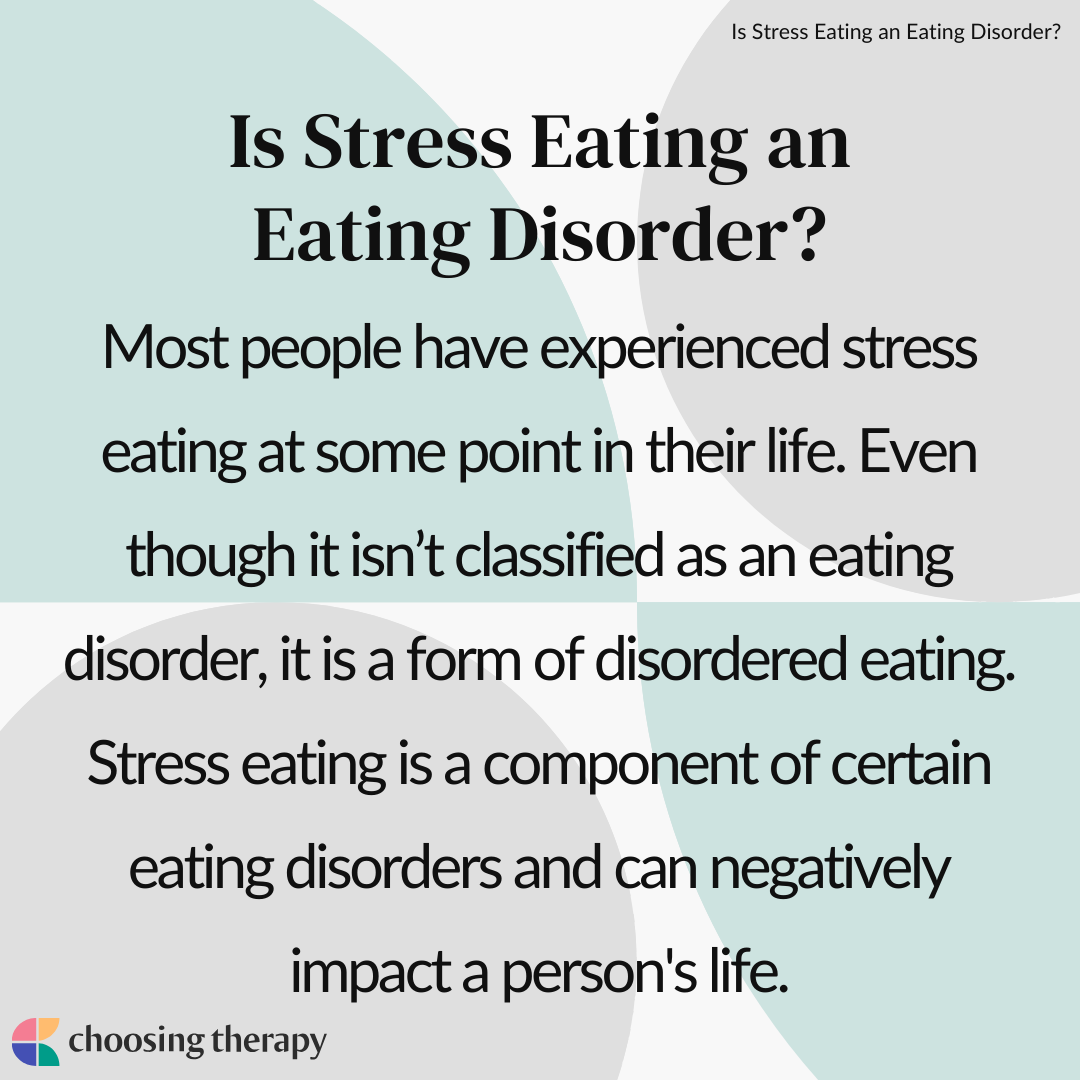
Most people have experienced stress eating at some point in their life. Even though it isn’t classified as an eating disorder, it is a form of disordered eating. Stress eating is a component of certain eating disorders and can negatively impact a person’s life.
Eating Disorder Treatment That Works – Delivered At Home Eating disorder treatment is hard – which is why you shouldn’t have to do it alone. Equip provides compassionate, evidence-based virtual treatment that supports you every step of the way, and allows you to recover at home without pressing pause on your life. Covered by insurance.
What Is Stress Eating?
Stress eating is a form of emotional eating, and it is not an eating disorder. It can be part of the criteria for eating disorders, but it is a symptom, not a medical condition. Stress eating is when a person turns to food to suppress stressful emotions, and oftentimes isn’t associated with hunger. For instance, a person turning to ice cream after a break-up or snacking on all the foods in the pantry while waiting for their exam results to be posted are examples of stress eating.
When a person experiences stress for an extended period of time, the stress hormone cortisol can affect the appetite and metabolism. Sometimes, it is said that the preference for “comfort” foods like bread or sweets counteracts some of the effects of cortisol.1 As the cycle continues, it gets reinforced each time and turns into a habit and, eventually, a maladaptive coping mechanism.
Is Stress Eating a Disorder?
Stress eating is not classified as an eating disorder. Eating disorders are a group of mental health disorders that are pathological and require a set of criteria that must be met in order to be diagnosed. Struggling with stress eating does not mean it will eventually turn into an eating disorder. It means it might be time to start exploring alternative methods of managing stress and anxiety.
Stress Eating vs. Clinical Eating Disorders
Stress eating is limited to times of overwhelm and distress, but the symptoms of an eating disorder occur all day, every day, and impact the physical and mental health of a person. Treatment for an eating disorder requires a comprehensive team and can take years to recover from. Therapy for stress eating can be managed by addressing the underlying cause, implementing healthy coping skills, and practicing more intuitive and mindful eating.
Binge Eating Disorder Vs. Stress Eating
Binge eating disorder (BED) is characterized as eating a large amount of food in a short period of time past feeling full.2 It can even involve dissociation. After a binge, there is usually shame and guilt and a restrictive component that follows. Stress eating is different because of the severity and motivators behind it. It also has different triggers and symptoms.
Some differences between stress eating and binge eating disorder include:
- Frequency and duration of episodes: Binge eating can occur multiple times a day for years if left untreated. Stress eating can occur more sporadically and can be something that comes and goes with different seasons of life.
- Sense of control during eating episodes: During a binge episode, there is a strong feeling of being out of control and like they have to finish whatever is in front of them. With stress eating, there is a sense of being out of control. However, it can be easier to acknowledge the behavior and step away.
- Associated feelings and aftermath: A binge episode is normally triggered by an intense emotion, feeling out of control, or another underlying insecurity. The binge is a way to numb or disconnect from the distress, which starts the binge-restrict cycle all over again. When stress eating occurs, it is normally for a short period of time and isn’t followed by compensatory behaviors.
- Stress Eating is normal, and Binge Eating Disorder is Pathological: Stress eating is common and normal. If you’re having a bad day and come home and help yourself to that last piece of cheesecake for some comfort, not only will it help, it is completely alright to do it. When we eat, it tells our body that we are safe and turns on our parasympathetic nervous system (PNS). The PNS is what allows our bodies to rest. Sometimes, we indulge in a food item because of positive emotions, like getting an ice cream cone when you feel happy. Binge Eating, however, is different from emotional eating.
Anorexia Nervosa Vs. Stress Eating
Stress eating is eating even when not hungry, and Anorexia nervosa is a restrictive disorder that stops the individual from eating, even when hungry. Anorexia involves a significant decrease in weight, and stress eating can cause weight gain.
Unlike stress eating, anorexia nervosa involves:3
- Intense fear of gaining weight
- Distorted body image
- Severe food restrictions
- Laxative or diuretic use
- Fixation with Food Preparation
- Calorie counting
- Denial of Hunger
Bulimia Nervosa Vs. Stress Eating
Bulimia nervosa is different from stress eating. Bulimia nervosa involves eating a large amount of food, experiencing guilt and shame, and then compensating for the consumption by purging. This behavior is motivated by a fear of weight gain and has many severe medical consequences.
Bulimia nervosa includes behaviors not typically seen in stress eating, such as:
- Frequent episodes of overeating followed by purging
- Intense feelings of guilt after eating
- Fear of weight gain despite being average weight
- Compensatory behaviors like compulsive exercising, induced vomiting, laxatives, & diuretic use
- Behaviors occur once a week at minimum for at least 3 months
Avoidant/Restrictive Food Intake Disorder Vs. Stress Eating
ARFID is an eating disorder that is normally caused by sensory issues or a traumatic experience that involves food. This fear or avoidance of certain foods limits the individual’s nutritional intake and variety. It is different from stress eating in that there isn’t an overeating component to it.
While both can involve limitations in diet, ARFID is distinguished by:4
- Lack of interest in food or aversion to certain textures/colors
- Not motivated by weight or appearance
- Limited variety
- Nutritional deficiencies
- Weight Loss
- Normally starts in childhood
Concerned About An Eating Disorder? If thoughts about food or your body are starting to cause daily stress, it’s well worth taking a closer look. Equip offers a free, confidential eating disorder screener to help you determine what’s going on and decide next steps.
Causes & Triggers of Stress Eating
Stress eating can be caused by many different experiences and may not be from just one isolated reason. Stress is a common and normal part of life. Food is more than just a form of nourishment for our bodies. It is also a form of comfort. It’s not uncommon to reach for a sweet or carb-related snack when feeling sad. Eating is also commonly used as a form of distraction when feeling overwhelmed.
Food can make you feel content or happy. When we are stressed, our body looks for something to regulate, and food is often an easily accessible solution. The relationship between food and comfort starts early in life. When upset as an infant, a bottle is offered for comfort, as a toddler, we’re offered a treat to end the tantrum or make the sadness go away, and this can lead some people to continue to rely on food as a form of coping.
The Potential Harm of Stress Eating
Stress eating can cause emotional distress. The sense of feeling out of control can feel uncomfortable and shameful. Eating past fullness or when we are not hungry can impact a person’s weight, in turn impacting how they view themselves. Due to our society’s diet mentality, weight gain and being in a bigger body can cause low self-worth and insecurities. As the shame around body image increases and continues, so does the cycle of stress eating.
Recognizing the Signs of Stress Eating
It’s important to have awareness of what to look for when considering if you or a loved one is struggling with stress eating. In order to begin addressing it, it’s important first to understand when it happens, what might be triggering it, and how often it is occurring.
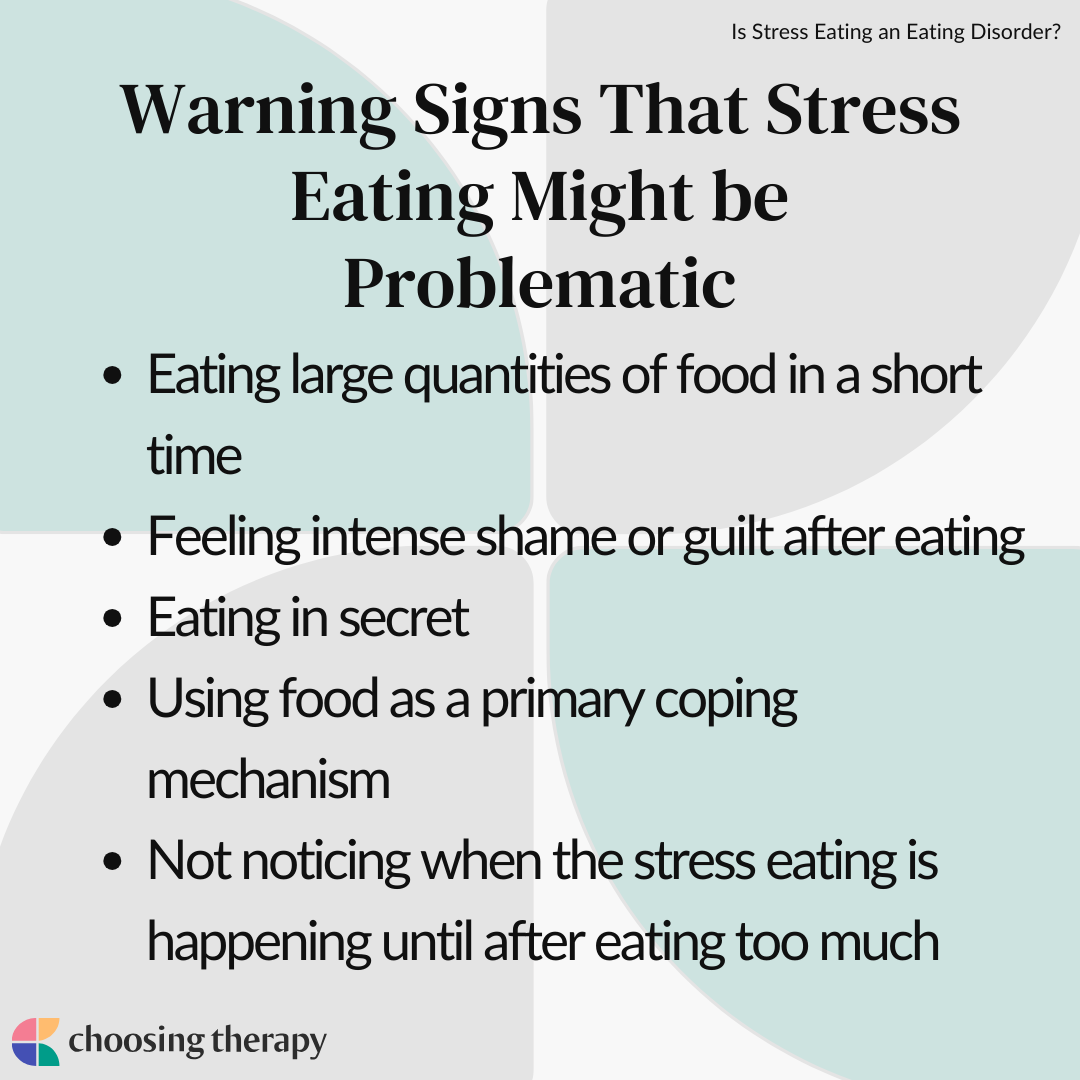
Some warning signs that stress eating might be becoming problematic include:
- Eating large quantities of food in a short time
- Feeling intense shame or guilt after eating
- Eating in secret
- Using food as a primary coping mechanism
- Not noticing when the stress eating is happening until after eating too much
How to Prevent Stress Eating
Once you have gained insight and awareness of the patterns around stress eating, you can begin taking action. Practicing being mindful while eating, and try to pay attention you your feelings of hunger and fullness. Try to gain awareness of your feelings so that you can take a pause and practice a new adaptive coping mechanism.
During distressing situations, reach out to someone you trust, journal, or do something safe and healthy that will allow you to work through the emotion instead of suppressing it. Get yourself out of the house and go on a walk. Something to distance yourself from the food pantry to allow yourself to ride the wave of emotion without leaning on food. This will take practice and intention, and it might take time. Give yourself grace and practice kindness after stress eating.
When to Seek Professional Help for Stress Eating
If stress eating is impacting your life and impacting your ability to function the way you would like, then reaching out to a specialist could benefit you. Locating a clinician that is the right fit can be challenging and time-consuming. Using an online therapist directory can help simplify things. If you are concerned that the issues go beyond stress eating or that you might have an eating disorder, then explore Within Health App to consider if a higher level of care might be in your best interest.
Equip Health Review 2024: Pros & Cons, Cost, & Who It’s Right For Equip Health provides evidence-based online treatment for eating disorders, including anorexia, bulimia, avoidant/restrictive food intake disorder (ARFID), and binge eating disorder. During our independent review of Equip Health, they earned 4.5 out of 5 stars overall. The company serves anyone aged 5 years and older throughout the United States via live video sessions.
In My Experience
In my experience, it is beneficial to know that stress eating is common and doesn’t mean there is anything wrong with you. If you find that it is something causing lingering distress or you are worried you might have an eating disorder, reach out to a specialist to gain clarity. Having a better understanding of anxiety and stress allows for more effective ways to manage it.

Is Stress Eating an Eating Disorder? Infographics
ChoosingTherapy.com strives to provide our readers with mental health content that is accurate and actionable. We have high standards for what can be cited within our articles. Acceptable sources include government agencies, universities and colleges, scholarly journals, industry and professional associations, and other high-integrity sources of mental health journalism. Learn more by reviewing our full editorial policy.
-
Why stress causes people to overeat. (2021, February 15). Harvard Health. Retrieved December 21, 2023, from https://www.health.harvard.edu/staying-healthy/why-stress-causes-people-to-overeat
-
Definition & Facts for Binge Eating Disorder – NIDDK. (n.d.). National Institute of Diabetes and Digestive and Kidney Diseases. Retrieved December 21, 2023, from https://www.niddk.nih.gov/health-information/weight-management/binge-eating-disorder/definition-facts
-
Anorexia Nervosa. (n.d.). Johns Hopkins Medicine. Retrieved December 21, 2023, from https://www.hopkinsmedicine.org/health/conditions-and-diseases/eating-disorders/anorexia-nervosa
-
Bushell, J. (2022, January 31). Understanding and treating ARFID – MEDA. Multi-Service Eating Disorders Association. Retrieved December 22, 2023, from https://www.medainc.org/understanding-and-treating-arfid/

Your Voice Matters
Can't find what you're looking for?
Request an article! Tell ChoosingTherapy.com’s editorial team what questions you have about mental health, emotional wellness, relationships, and parenting. Our licensed therapists are just waiting to cover new topics you care about!
Leave your feedback for our editors.
Share your feedback on this article with our editors. If there’s something we missed or something we could improve on, we’d love to hear it.
Our writers and editors love compliments, too. :)
Best Online Therapy Services There are a number of factors to consider when trying to determine which online therapy platform is going to be the best fit for you. It’s important to be mindful of what each platform costs, the services they provide you with, their providers’ training and level of expertise, and several other important criteria.
Eating Disorders: Types, Treatments & How To Get Help
If you or a loved one are dealing with an eating disorder, know you’re not alone. Treatment can significantly help improve thought patterns and symptoms that can contribute to eating disorders, and having a robust care team can be an effective prevention strategy long-term.