


Depression frequently occurs with people who have chronic illnesses like Parkinson’s Disease. The Parkinson’s Foundation reports that mood, depression, and anxiety have an even greater impact on health status than the motor impairments commonly associated with the disease.1 Fortunately, with proper mental healthcare, medical treatment, and a system of support, people can learn to manage and cope with Parkinson’s depression.
Online Therapy & Medication for Depression
Together, medication and therapy can help you feel like yourself, faster. Brightside Health accepts United Healthcare, Anthem, Cigna, Aetna, and other major insurance. Appointments in as little as 24 hours. Personalized plans unique to you. 1 on 1 support from start to finish. Start your free assessment.
The Connection Between Parkinson’s & Depression
Many times when people have a serious progressive medical illness, the attention is given to the physical symptoms. Parkinson’s patients naturally monitor their mobility and movement above all else. This can be true of their doctors as well, and the patient’s emotional reactions like depression can be overlooked.
Another complicating factor in diagnosing depression alongside a serious medical condition is that the symptoms can overlap, making it difficult to differentiate between the two. Depression can intensify the symptoms of Parkinson’s Disease.1
How Common Is Parkinson’s Depression?
Depression is closely connected to many medical diagnoses and can directly impact your quality of life and ability to function. Researchers found this to be true with Parkinson’s Disease, reporting that depression occurs in this population with a prevalence of 30%-40%.2 Additionally, if depression is left untreated, there is an increased risk for greater disability and reduced quality of life.2
Risk Factors For Parkinson’s Depression
Some research has found that the prevalence of depression in relation to PD is biphasic, with a peak early in the illness and another gradual increase as the illness reaches its latter stages. Depression also appears to be more common in people with rapidly progressive Parkinson’s, and may be a precursor to the onset.4,5
Additional risk factors for Parkinson’s depression include:3
- Age
- Sex (women are statistically more at risk for depression)
- History of anxiety or depression before PD diagnosis
- Severity of motor symptoms
- Disease duration
- Disease stage
- Extent of limitations to activities and daily living
- Non-motor symptoms such as sleep disturbance, anxiety, hallucinations, and memory issues
5 Ways to Cope With Parkinson’s & Depression
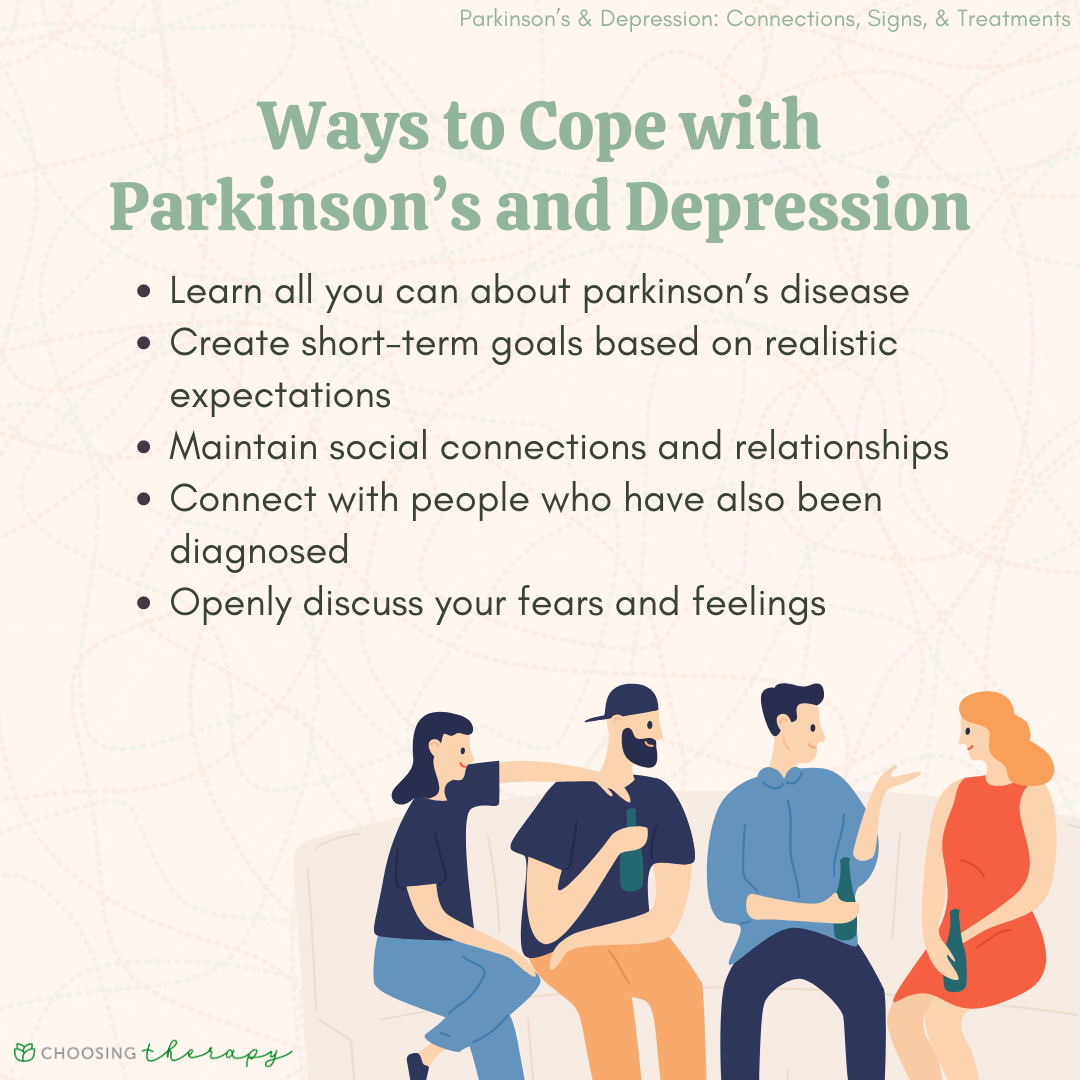
To cope with Parkinson’s and depression, arm yourself with knowledge, create short and long term goals, and build and rely upon your support system of loved ones, caregivers, and healthcare professionals. Don’t feel shame or embarrassment for needing help; remember that depression is a common reaction to Parkinson’s Disease.
Here are five ways to cope with Parkinson’s and depression:
1. Learn All You Can About Parkinson’s Disease
Educating yourself will help you understand what to expect when it comes to Parkinson’s and depression. It will also help you anticipate and prepare for future changes, and make realistic expectations and goals for yourself.
2. Create Short-Term Goals Based On Realistic Expectations
Create manageable goals and celebrate when those goals are achieved. Don’t berate yourself if you are unable to do something on a particular day. Set a new goal for tomorrow and keep moving forward.
3. Maintain Social Connections & Relationships
Make time to spend with your close family and trusted friends. These connections are more important than ever. They’re particularly useful for reducing feelings of isolation, which can contribute to depression.
4. Connect With People Who Have Also Been Diagnosed
Connecting with other people who have been diagnosed with Parkinson’s can help you feel less alone and more understood. It can also reaffirm your feelings regarding your illness. They may even be able to offer tips and resources that you can use to promote your own well-being.
5. Openly Discuss Your Fears & Feelings
Identify a trusted loved one, caregiver, friend, or healthcare professional to speak with about your fears for the future and other more difficult feelings. Talking can offer emotional relief, and expression is a good tool to combat depression.
Personalized Treatment for Depression
Talkiatry can match you with an actual psychiatrist. Talkiatry psychiatrists can evaluate you for depression and other issues that may be impacting your mood then implement a personalized treatment plan. Insurance accepted. Get started with a short online assessment.
Treatment For Parkinson’s Depression
When it comes to treating depression for patients with Parkinson’s, it should begin with an assessment of your emotional status. Parkinson’s disease changes brain function and chemistry, causing an imbalance that can lead to mood disorders like depression. After the initial assessment, there are other treatments available.
Antidepressant Medication
Medication for depression has been found to be both safe and well tolerated. Efficacy has been demonstrated for nortriptyline, venlafaxine extended release, desipramine, citalopram, and paroxetine.6 Ask your physician or psychiatrist about the interaction between antidepressants and medication for Parkinson’s Disease.
Psychotherapy
Depression therapy can be especially effective if doctors determine that medication management may not be appropriate. CBT for depression is often used, which focuses on changing negative thoughts. It helps you create a more positive mental framework, teaches coping skills, and enhances self-awareness.
Electroconvulsive Therapy (ECT)
Electroconvulsive therapy (ECT) is a brief electrical stimulation used to produce a generalized seizure while the patient is under general anesthesia. Some people have difficulty tolerating certain side effects, especially if they already have muscle aches or problems processing information or memory. However, it can be effective for people with severe depression.7
Holistic or Mindfulness Techniques
These include techniques in yoga, meditation for depression, relaxation, and other forms of exercise. They offer a way to increase control over your body and mind. Consult your physician about what is recommended and safe for you.
How to Get Help For Depression While Dealing With Parkinson’s Disease
Inform the doctor treating your Parkinson’s and a general practitioner that you’re experiencing depression and ask for a referral to a mental health professional. One simple way to find a mental health professional in your area is to use an online therapist directory where you can search based on specialty, price, experience, language, and more. Therapist profiles show open appointments and enable you to immediately schedule an appointment.
Counseling can help patients navigate and understand their depression. Family therapy and group therapy may also be beneficial to combat depressive emotions that grow with time within a family unit. Ideally, seek out a counselor who has expertise or special knowledge of working with people with chronic illnesses that can alter cognitive function, body function, and lifestyle.
Online Therapy & Medication for Depression
Together, medication and therapy can help you feel like yourself, faster. Brightside Health accepts United Healthcare, Anthem, Cigna, Aetna, and other major insurance. Appointments in as little as 24 hours. Personalized plans unique to you. 1 on 1 support from start to finish. Start your free assessment.
What Caregivers Can Do to Help
In their effort to provide care and support, caregivers should try to be positive and realistic. They may be called upon to offer ongoing physical help and emotional support, which can be challenging, especially for extended periods of time. Sometimes, caregiver burnout can happen, so if possible, be sure you have enough support that you can take breaks when necessary.
Here are seven tips for caregivers to help your loved one dealing with Parkinson’s and depression:
1. Be Realistic
In terms of the help you can offer, it’s important to be realistic. For example, if ongoing physical help becomes problematic, give yourself permission to ask for help. It is in the best interest of you and your loved one to have someone with the skills and abilities necessary.
2. Remember Your Attitude Impacts Your Loved One’s Resolve
Try to maintain a delicate balance between optimism and realism. It can be helpful to know what to say to someone who is depressed. Encourage your loved one to create goals, and help them celebrate when those goals are met. Be supportive when they struggle and keep a positive attitude whenever possible.
3. Practice Good Communication
Listen without imposing any judgment, and try to encourage candid discussions about how Parkinson’s and depression are impacting your loved one’s relationships and lifestyle.
4. Nurture Yourself
Make time to relax, reenergize, and experience comfort on a regular basis. Pick the things you enjoy doing like taking a walk, reading a book, or cooking a nice meal and incorporate them into your life on a regular basis.
5. Identify a Trusted Person to Talk With
It’s important to have someone you can trust to talk with about your loved one’s medical and mental health struggles. It may be a friend, family member, healthcare professional, or spiritual/religious guide.
6. Seek Individual Support
You may benefit from attending in-person or online support groups offered for family members and caregivers of people diagnosed with Parkinson’s Disease. This can be a good source of comfort, information, education, and resources.
7. Assume an Advocacy Role
Sometimes patients may not be fully aware of their own depression, or they may be in denial. If this is the case, you can reach out to healthcare practitioners on their behalf. Essentially, advocacy requires your trusted and undivided support of their well-being in public and in private.


Depression Workbook
Our workbook contains our best depression worksheets to help you understand your depression, develop effective coping skills, and manage challenging moments.
Parkinson’s & Depression Infographics
Additional Resources
To help our readers take the next step in their mental health journey, ChoosingTherapy.com has partnered with leaders in mental health and wellness. ChoosingTherapy.com is compensated for marketing by the companies included below.
Personalized Treatment for Depression
Talkiatry – can match you with an actual psychiatrist. Talkiatry psychiatrists can evaluate you for depression and other issues that may be impacting your mood then implement a personalized treatment plan. Insurance accepted. Get started with a short online assessment.
Therapy for Depression & Medication Management
Brightside Health – If you’re struggling with depression, finding the right medication can make a difference. Brightside Health treatment plans start at $95 per month. Following a free online evaluation and receiving a prescription, you can get FDA approved medications delivered to your door. Free Assessment
Ketamine Therapy for Depression
Mindbloom – Ketamine is a prescription medication that clinicians can prescribe off-label to treat depression. Mindbloom pairs ketamine with clinician support and an immersive in-app experience to help you achieve your mental health breakthrough. Find out if you’re a good candidate for Mindbloom. Learn More
Depression Newsletter
A free newsletter from the experts at ChoosingTherapy.com for those impacted by depression. Get helpful tips and the latest information. Sign Up
ChoosingTherapy.com Directory
Find local therapists that offer online and in-person therapy. Search for therapists by specialty, experience, insurance, and location. Find a therapist near you.
Final Thoughts On Parkinson’s & Depression
Your experience with Parkinson’s and depression is unique to you, but you’re not alone. There are universal feelings associated with this life-altering diagnosis, and while there may be moments of struggle, isolation, loss of control, and uncertainty, there also can be shared humanity, strengthened relationships, intimacy, and achievement. If you don’t know where to start, reach out to a loved one, trusted individual, support group, or healthcare professional.
For Further Reading

Online Depression Test
A few questions from Talkiatry can help you understand your symptoms and give you a recommendation for what to do next.
Best Online Therapy for Depression
Depression is a very common mental health concern. To find the best online therapy for depression, we spent hundreds of hours personally using and researching over 50 platforms. Our resulting list offers options with easy access to appointments, affordable pricing, coverage for major insurance plans, and some of the best therapist availability in the industry. Read on to see our top picks for the best online therapy for depression.
Best Online Psychiatry Services
Online psychiatry, sometimes called telepsychiatry, platforms offer medication management by phone, video, or secure messaging for a variety of mental health conditions. In some cases, online psychiatry may be more affordable than seeing an in-person provider. Mental health treatment has expanded to include many online psychiatry and therapy services. With so many choices, it can feel overwhelming to find the one that is right for you.

