Sensorimotor psychotherapy is specifically designed for the treatment of trauma, trauma-related disorders, and difficulties stemming from unhealthy attachment patterns in infancy and early childhood. Tailored to meet the needs of each individual client, sensorimotor psychotherapy varies in the number of sessions someone may attend. The overall goal is to address the body, thoughts, and emotions to promote total healing.
Recover from Trauma with the Help of a Therapist. Therapy can help you live a better life. BetterHelp provides convenient and affordable online therapy, starting at $65 per week and is FSA/HSA eligible by most providers. Take a free online assessment and get matched with the right therapist for you!
What Is Sensorimotor Psychotherapy?
Sensorimotor psychotherapy (SP) is a holistic approach to healing trauma or unhealthy attachment patterns formed in early childhood. It integrates the body and movement into traditional talk therapy to address and heal ongoing psychological and physical difficulties.1 Considered a “body-centered talking therapy,” sensorimotor psychotherapy addresses thoughts, feelings, and experiences for deeper and more complete healing than traditional therapies may provide.2
Traditional forms of mental health therapy can overlook physical or somatic manifestations and other effects of trauma and attachment difficulties.1,4 According to the Sensorimotor Psychotherapy Institute, research indicates that not only do trauma and attachment problems directly and significantly impact the body, but their emotional symptoms are often driven by the body, too.5
In SP, the mind, body, and spirit are addressed as a whole rather than as separate parts.6 The body is a source of information and a target for interventions.7 Understanding how the body reacts and contributes to thoughts, emotions, and behaviors helps clients deeply and thoroughly address experiences like intrusive symptoms, numbness, motor inhibitions, avoidance, affect dysregulation, and difficulties with relationships and general daily functioning.1,2
What Is the Goal of Sensorimotor Psychotherapy?
The goals of sensorimotor psychotherapy focus on helping clients develop their own internal resources to process the trauma, transcend the prolonged flight-flight-or-freeze reaction of the autonomic nervous system, recognize and self-regulate emotions, and respond calmly and thoughtfully to their world.1,6
Each client will have their own unique goals. Sensorimotor therapy is a collaborative effort between therapist and client.1 The therapist does not dictate goals or heal the client, nor do they believe a client needs to be “fixed.”6 Instead, they focus on teaching necessary information and provide gentle guidance and support.
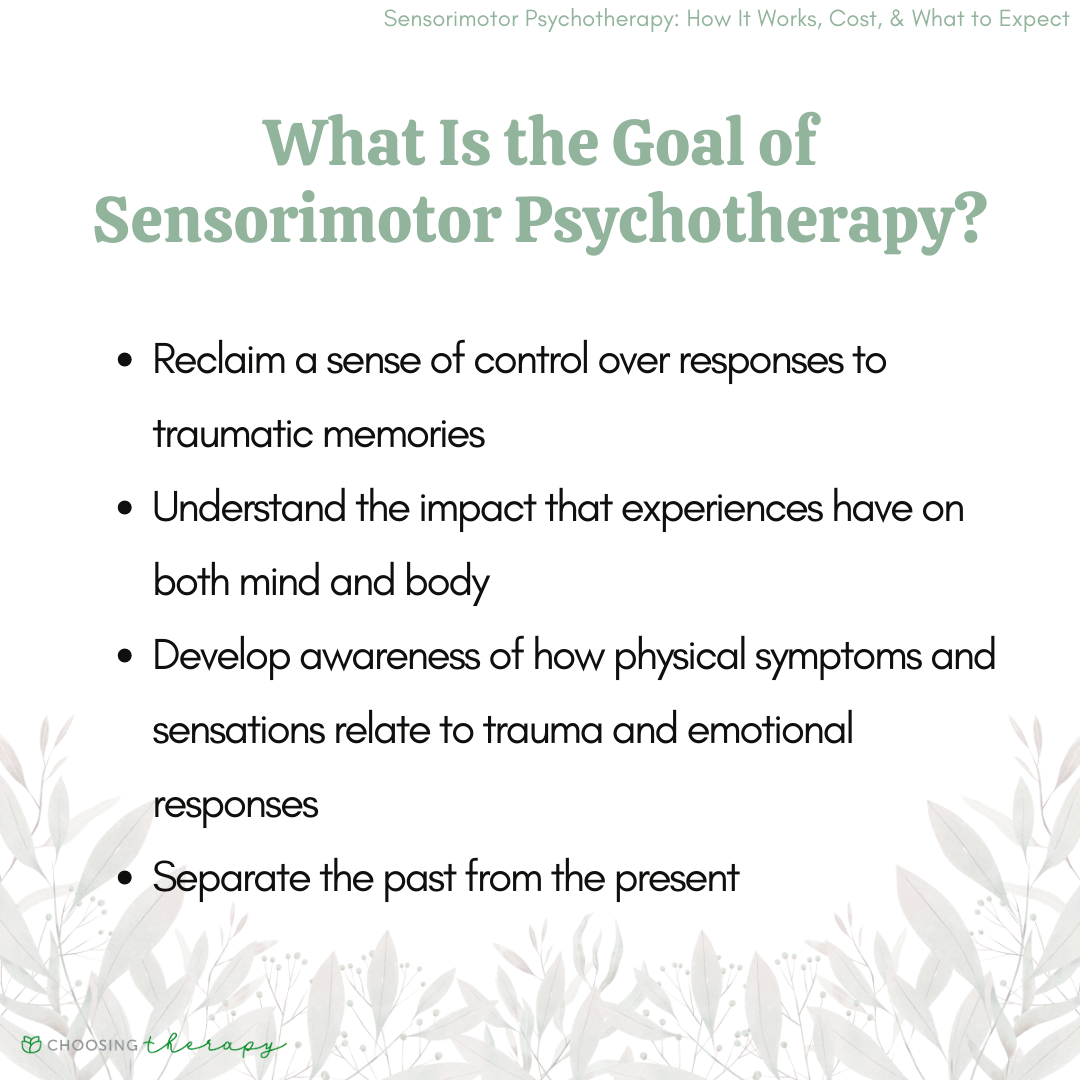
The goals of sensorimotor psychotherapy include:8
- Reclaim a sense of control over responses to the trauma and traumatic memories
- Understand the impact that experiences have on both mind and body
- Develop awareness of physical symptoms and sensations and how these relate to the trauma and emotional responses
- Separate the past from the present so mind and body respond appropriately to current happenings rather than reacting from traumatic memories
What Can Sensorimotor Therapy Help With?
Sensorimotor therapy helps heal emotions, thoughts, and the physical body. Early childhood maltreatment, including unhealthy attachment and trauma at any age, interferes with the proper development and functioning of the brain’s nervous system and emotional centers. Therefore, they often lead to emotional dysregulation—difficulty regulating emotions or tolerating negative emotions.2,3
Sensorimotor psychotherapy can help with a range of disorders, including:1,2,4,5,6,7
- Post-traumatic stress disorder (PTSD)
- Anxiety disorders
- Mood disorders like depression
- Borderline personality disorder (BPD)
- Substance use disorders/addictive behaviors
- Self-harm
- Suicidal behaviors
3 Phases of Sensorimotor Psychotherapy
Sensorimotor psychotherapy is a gradual process across three phases: safety and stabilization, processing, and integration.6 Alternatively, these phases have been labeled stabilization and symptom reduction, working with traumatic memory, and re-integration.6 These stages are not rigid or time-limited. Rather, therapists adjust the pace and process to meet the needs of individual clients.1
The therapist guides, supports, and teaches body-related skills to stabilize the autonomic nervous system and facilitate total healing. While achieving goals may require the client to leave their comfort zone, the counselor always explains the process, secures permission, and proceeds gently.1,2,6
Here are the three phases of sensorimotor psychotherapy:6,9
Phase 1: Safety & Stabilization
The first phase of sensorimotor psychotherapy is about gentle exploration. The therapist supports the client in gaining awareness of their inner experiences like thoughts, emotions, memories, images, and bodily sensations. The therapist helps them notice how thoughts and emotions are interconnected with bodily symptoms and movements.
The client also begins to explore what triggers their symptoms and reactions. The therapist helps them examine their unique coping resources and develop their strengths and natural abilities to cope with triggers. The therapist also teaches the client how to respond to stimuli physically, such as with specific movements and postures.
Phase 2: Processing
This phase revolves around healing the chronic effects of trauma or unhealthy attachment and building confidence and a sense of empowerment. The therapist and client engage in a deeper exploration of traumatic memories and their effects on mind, body, and spirit. Further, the client learns to separate past from present so they can be aware of what happened and how it has affected them without letting the effects spill into their present life.
Rather than discussing memories in full detail, the therapist and client explore them in small pieces using words, somatic sensations, and movements. During sessions in this phase, the client learns and practices empowering actions they could not use at the time of the trauma.
Phase 3: Integration
The sessions in the final phase are about helping the client develop a strong sense of self, pursue relationship goals, and foster life satisfaction and a sense of well-being. While building on skills learned during the first two phases, clients explore their limiting beliefs and how they impact thoughts, emotions, bodies, actions, and relationships.
Clients also learn to express previously uncommunicated emotions and practice movements and actions that increase positive interpersonal connections and healthy boundaries. The emphasis is on boosting positive emotions and participating in pleasant, playful activities to feel joy and contentment.
Treatment for Trauma & PTSD Therapy for PTSD – Get help recovering from trauma from a licensed therapist. BetterHelp offers online therapy starting at $65 per week and is FSA/HSA eligible by most providers. Free Assessment Online PTSD Treatment – Talkiatry offers personalized care from psychiatrists who listen and take insurance. Get matched with a specialist in just 15 minutes. Take their assessment.
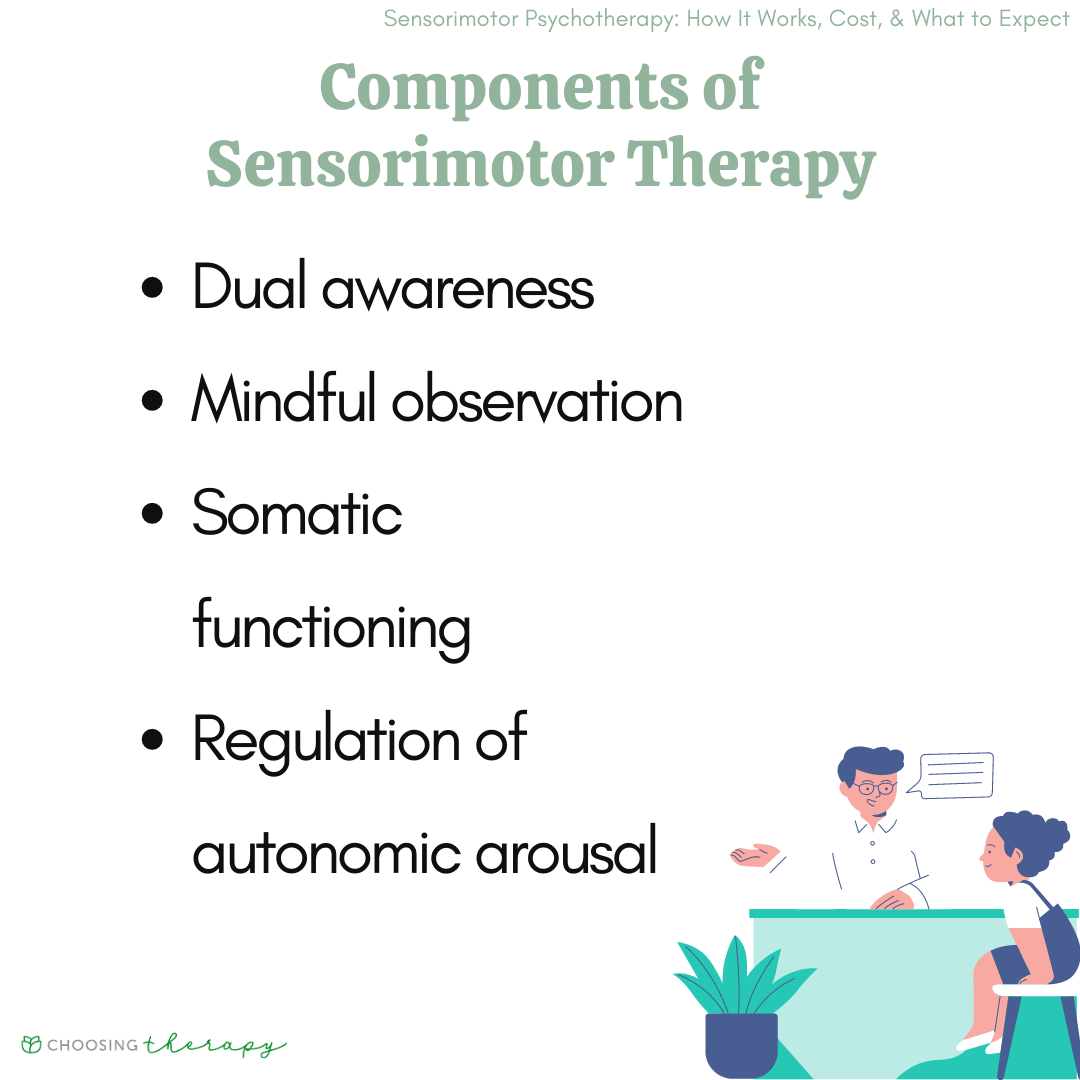
Components of Sensorimotor Therapy
Sensorimotor therapy addresses the psychological and physical effects of trauma and unhealthy attachment.7 Specific components, while tailored to each client, are used during the three phases of SP therapy to facilitate stabilization, processing, integration, and ultimately, deep healing.
Dual Awareness
In SP, Clients learn to become aware of their awareness; in other words, they learn to notice and observe both mind and body while remaining cognizant that the trauma of childhood attachment difficulties is over.2 Clients become aware of mental and physical reactions to traumatic memories while remaining present and distant from those memories.
Mindful Observation
Mindfulness is integral to SP to help clients realize and fully understand how their trauma or attachment style has impacted their internal and external lives. SP also helps clients separate the past from the present.2 Concentrating on movements and sensations allows the therapeutic process to happen.5
Somatic Functioning
In addition to becoming aware of how physical symptoms are connected to emotions and thoughts, SP teaches people how to use their bodies to regulate the autonomic nervous system and emotions.7 People learn how somatic functions like posture, positioning near or away from others, muscle tension, sensations of the heart beating, and breathing affect emotions and vice versa. Finally, they use this knowledge to induce calm and recover from traumatic memories.2
Regulation of Autonomic Arousal
The autonomic nervous system controls the the fight-flight-or-freeze reaction and the rest-and-digest response. By integrating mind and body with awareness, mindful observation, and somatic functioning, people can learn to regulate their nervous system and remain calm despite traumatic memories and other intrusive symptoms.2
How Much Does Sensorimotor Therapy Cost?
Sensorimotor therapy does not have a uniform, set rate. Typically, fees are determined by geographic location, level of education, and experience.
In the United States in 2018, the median cost of therapy in general, without accounting for specialties such as SP, was $125 for a 45-minute session and $130 for a 60-minute session.10 Therapists who have received extra training specifically in SP may charge more. Most mental health professionals do not publish their rates on their website or elsewhere online, but they do discuss their rates when you call their office to inquire.
Many insurance companies cover mental health therapy, but what they cover must be evidence-based and approved as a treatment for a specific disorder. Sensorimotor psychotherapy does not yet have significant credible research studies indicating that it is a valid and reliable form of trauma therapy. Its development, however, was informed by research.
Because of this, sensorimotor therapy falls into a gray area, which means that some insurance companies might cover it and others might not. Check with your provider by calling the number on the back of your card or visiting their website.
How to Find a Sensorimotor Psychotherapist
Sensorimotor psychotherapy for trauma-related disorders is offered in inpatient (hospital) and outpatient (public or private clinic) settings.2 Consider using an online directory to find a therapist specializing in SP and practices in your area. You can also get to know potential therapists by watching videos.
Who Can Offer Sensorimotor Psychotherapy?
To offer SP, a therapist should first have completed an advanced degree program to possess a master’s or doctorate-level degree and enough supervised hours to be licensed in their state. Then, they must complete SP-specific education and training through the Sensorimotor Psychotherapy Institute.
However, as mentioned above, the SPI does not verify the credentials of people taking their courses. However, they do provide in-depth training across multiple courses.
Questions to Ask Before Beginning Sensorimotor Psychotherapy
Before beginning therapy, it’s crucial that you feel comfortable with the therapist and their process. Therapists are usually happy to answer questions and provide as much explanation as needed, either over the phone or during an initial consultation. Look for a patient and compassionate therapist with whom you feel comfortable talking.11,12
Here are some questions to ask before beginning sensorimotor psychotherapy:
- How much experience do you have working with people who have experienced trauma? (Mention what you have experienced personally and how long you’ve been dealing with the effects.)
- How will the process work for me?
- Will I be forced to do something I don’t want to do?
- What if I am uncomfortable with any part of the treatment process?
- What types of exercises and techniques do you use?
- How quickly will I begin to feel better?
- Can I expect steady progress, or will I face setbacks?
- If I do have setbacks, how will you help me work through them?
- Will we mostly address what happened in the past, or will we also work on goals for the future?
Childhood Trauma Is Difficult to Overcome. Therapy can help you live a better life. BetterHelp provides convenient and affordable online therapy, starting at $65 per week and is FSA/HSA eligible by most providers. Take a free online assessment and get matched with the right therapist for you!
What to Expect at Your First Appointment
Sensorimotor psychotherapy is a gradual process that moves at the client’s pace. You won’t immediately jump into recalling traumatic details at your first appointment (or at any subsequent appointment, for that matter).1 The first session begins with an emphasis on establishing a sense of safety and building a trusting relationship between you and your therapist.
You may be asked to describe what brought you to therapy and what you hope to gain from the process. Your therapist will likely ask questions and begin to gather information about you so they can shape your specific SP plan, but this will be done gently and respectfully. You’ll learn specific information about sensorimotor therapy and what you can expect, and you may begin some initial body awareness work.
Is Sensorimotor Psychotherapy Effective?
Sensorimotor psychotherapy is informed by scientific research in physiology, psychology, sociology, and neuroscience, as well as principles from another form of body therapy known as the Hakomi method.6 It draws from established forms of mental health therapy such as psychodynamic psychotherapy, gestalt therapy, cognitive behavioral therapy (CBT), and body psychotherapy.2
Sensorimotor psychotherapy itself is not evidence-based. There are very few studies that have specifically and methodically analyzed its effectiveness. One small study conducted in 2012 involved 10 women who had been abused in childhood. While their body awareness improved after 20 weeks of group SP, their dissociative experiences did not change, nor did their ability to receive comfort.13
While sensorimotor therapy is not yet evidence-based, it is considered credible among mental health professionals. A 2015 article in BJPsych Bulletin states that SP is “endorsed by leading international experts and is neuroscientifically credible.”14 Anecdotal evidence does support sensorimotor psychotherapy, and it has demonstrated positive outcomes over the decades.6
Risks of Sensorimotor Psychotherapy
In any approach to trauma healing, people may become overwhelmed and experience re-traumatization and flashbacks.2 However, SP therapists are gentle in their approach, monitor and support clients during sessions, and explain everything they do. They will also ask for permission before using any technique. If the client leaves their comfort zone, it is always under the guidance and care of a trained professional.
History of Sensorimotor Psychotherapy
Dr. Pat Ogden founded sensorimotor psychotherapy. When working in a psychiatric hospital in the 1970s, Ogden noticed the extent to which people held traumatic experiences in their bodies and the interconnection between psychological and physical experiences.6,7 Passionate about this intimate physical and mental connection, Dr. Ogden devoted her career to helping people heal through body-centered therapy.
Dr. Ogden was a close colleague of Ron Kurtz from the 1970s until Kurtz died in 2011. Kurtz was a pioneer of body-oriented psychotherapy. He incorporated bodywork into psychodynamic therapy, CBT, theories of attachment and dissociation, and neuroscience and created the Hakomi method of body psychology.5
Over time, as she worked with people who survived sexual abuse, her focus became trauma. She founded her body therapy institute in 1981 with Kurtz’s encouragement and support.6 Ogden’s institute was first called Hakomi Bodywork, then transitioned to Hakomi Integrative Somatics, and in 2002 was renamed the Sensorimotor Psychotherapy Institute.6
Final Thoughts
Sensorimotor psychotherapy can reduce automatic fight-flight-or-freeze reactions and help people become unstuck from the past to live in the present moment with a sense of safety and stability.2 SP may be something to consider if other traditional forms of talk therapy haven’t worked for you in addressing the physical effects of past trauma.
Sensorimotor Therapy Infographics

ChoosingTherapy.com strives to provide our readers with mental health content that is accurate and actionable. We have high standards for what can be cited within our articles. Acceptable sources include government agencies, universities and colleges, scholarly journals, industry and professional associations, and other high-integrity sources of mental health journalism. Learn more by reviewing our full editorial policy.
-
Bartella, A. (2011). Sensorimotor psychotherapy: A somatic path to treat trauma. The Trauma & Mental Health Report. Retrieved from https://trauma.blog.yorku.ca/2011/10/sensorimotor-psychotherapy-a-somatic-path-to-trauma-treatment/
-
Fisher, J. (2011). Sensorimotor approaches to trauma treatment. Advances in Psychiatric Treatment, 17(3), 171–177. https://doi.org/10.1192/apt.bp.109.007054
-
Dvir, Y., et al. (2014). Childhood maltreatment, emotional dysregulation, and psychiatric comorbidities. Harvard Review of Psychiatry, 22(3), 149–161. https://doi.org/10.1097/hrp.0000000000000014
-
Fisher, J. (2019). Sensorimotor psychotherapy in the treatment of trauma. Practice Innovations, 4(3), 156–165. https://doi.org/10.1037/pri0000096
-
Sensorimotor Psychotherapy Institute. (n.d.). Sensorimotor psychotherapy training for mental health professionals. Retrieved from https://sensorimotorpsychotherapy.org/curriculum/
-
Sensorimotor Psychotherapy Institute (n.d.). About. Retrieved from https://sensorimotorpsychotherapy.org/about/
-
Sensorimotor Psychotherapy Institute. (n.d.). Why the body? Retrieved from https://sensorimotorpsychotherapy.org/
-
Zencare. (n.d.). Sensorimotor therapy. Retrieved from https://zencare.co/therapy-type/sensorimotor-therapy
-
Sensorimotor Psychotherapy Institute. (n.d.). Resources. Retrieved from https://sensorimotorpsychotherapy.org/resources/
-
Editorial Staff. (2019). Therapy session rates by CPT code. Simple Practice. Retrieved from https://www.simplepractice.com/blog/median-therapy-session-rates-by-state-and-city-cpt-codes/
-
American Psychological Association. (2009). How psychotherapy works. Retrieved from https://www.apa.org/news/press/releases/2009/12/wampold
-
National Institute of Mental Health. (2016). Psychotherapies. Retrieved from https://www.nimh.nih.gov/health/topics/psychotherapies/index.shtml
-
Bloch-Atefi, A., & Ja, S. (2015). The Effectiveness of Body-Oriented Psychotherapy: A Review of the Literature. Psychotherapy and Counselling Journal of Australia, 3(1). https://doi.org/10.59158/001c.71153
-
Corrigan, F. M., & Hull, A. (2015). Neglect of the complex: why psychotherapy for post-traumatic clinical presentations is often ineffective. BJPsych Bulletin, 39(2), 86–89. https://doi.org/10.1192/pb.bp.114.046995

We regularly update the articles on ChoosingTherapy.com to ensure we continue to reflect scientific consensus on the topics we cover, to incorporate new research into our articles, and to better answer our audience’s questions. When our content undergoes a significant revision, we summarize the changes that were made and the date on which they occurred. We also record the authors and medical reviewers who contributed to previous versions of the article. Read more about our editorial policies here.
Author: No Change
Reviewer: No Change
Primary Changes: Edited for readability and clarity. Reviewed and added relevant resources.
Author: Tanya J. Peterson, NCC, DAIS
Reviewer: Rayj Abulhson, MD
Your Voice Matters
Can't find what you're looking for?
Request an article! Tell ChoosingTherapy.com’s editorial team what questions you have about mental health, emotional wellness, relationships, and parenting. Our licensed therapists are just waiting to cover new topics you care about!
Leave your feedback for our editors.
Share your feedback on this article with our editors. If there’s something we missed or something we could improve on, we’d love to hear it.
Our writers and editors love compliments, too. :)
To help our readers take the next step in their mental health journey, ChoosingTherapy.com has partnered with leaders in mental health and wellness. ChoosingTherapy.com is compensated for marketing by the companies included below. Online Therapy BetterHelp – Get support and guidance from a licensed therapist. BetterHelp has over 30,000 therapists who provide convenient and affordable online therapy. BetterHelp starts at $65 per week and is FSA/HSA eligible by most providers. Take a free online assessment and get matched with the right therapist for you. Free Assessment PTSD Treatment & Medication Management Covered by Insurance Talkiatry – offers personalized care from psychiatrists who listen. They offer medication management and they’re in-network with every major insurer. Take a free assessment. Trauma & Abuse Newsletter A free newsletter from the experts at ChoosingTherapy.com for those impacted by trauma or abuse. Get encouragement, helpful tips, and the latest information. Sign Up ChoosingTherapy.com Directory Find local therapists that offer online and in-person therapy. Search for therapists by specialty, experience, insurance, and location. Find a therapist near you.Additional Resources
Best Online Therapy Services There are a number of factors to consider when trying to determine which online therapy platform is going to be the best fit for you. It’s important to be mindful of what each platform costs, the services they provide you with, their providers’ training and level of expertise, and several other important criteria. 9 Types of Therapy for Trauma Experiencing trauma can result in distressing and debilitating symptoms, but remind yourself that there is hope for healing. If you or a loved one is suffering from the aftereffects of trauma, consider seeking therapy. Trauma therapy can help you reclaim your life and a positive sense of self.