





The Christian Closet provides online counseling and coaching for folks struggling with their queer identity within Christianity. Every provider on the platform identifies as both Christian/spiritual and queer themselves, and you can read their bios to learn about their specific journeys with faith and queerness. As a small, niche platform, you’ll likely not get matched with someone licensed to practice therapy in your state, so the service will qualify as coaching, not official therapy.
The cost of each counseling/coaching session varies by provider, but generally ranges from as low as $170 to as high as $245, and will not qualify for insurance reimbursement. All providers on the platform are licensed therapists, which brings peace of mind to the process, but I’m a bit concerned that it’s labeled as therapy on the website, which feels a bit misleading to me.
The Christian Closet at a Glance


Cost: $170–$245 (varies by therapist/coach)
Insurance Accepted: No
Medication Available: No
Pros & Cons
 Pros
Pros
- Know you’ll be matched with someone with similar life experience
- Coaching/counseling given only by licensed therapists
 Cons
Cons
- Coaching/counseling, not therapy
- No insurance coverage
- Some providers are on the pricey end
Preview the Christian Closet

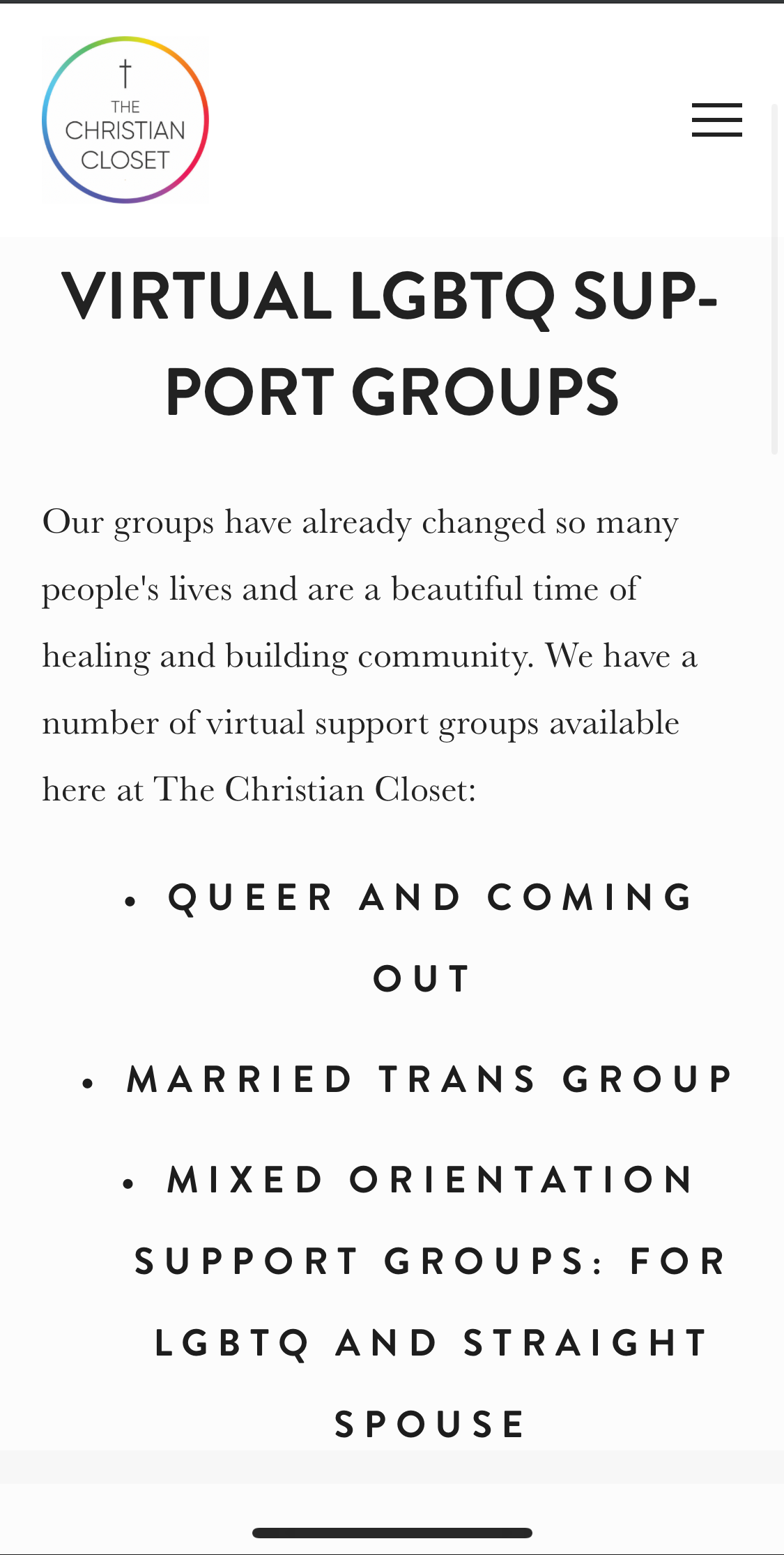



The Christian Closet is an online platform offering counseling, coaching, and spiritual direction specifically to Christians who also identify as LGBTQ+ or questioning. Everyone on the site identifies as both Christian/spiritual and queer. Its goal is to be a safe space for those wanting to reconcile their gender or sexuality with their faith, and each therapist’s bio shares their journey through that process.
Note that this resource should not be considered “therapy” unless you’re seeing a provider who’s licensed in your state (which could happen but is unlikely due to the small number of providers on the platform). When I met with someone through the platform, I was living in Ohio and she was licensed in Colorado, so our work together qualified as “coaching,” not therapy. Since it’s such a niche area I still think the service could be helpful for people trying to untangle their previous or current faith beliefs from any negative feelings they have toward their queerness, but I want to make it clear that this should be considered coaching, not therapy.
While The Christian Closet could be a great resource for a queer Christian (or someone questioning either of those things!) looking for understanding and support, it’s not your only option, and if you’d like to receive more full-service therapy (and perhaps use your insurance benefits) you should look elsewhere. Many online therapy platforms and directories offer search filters where you could potentially find a therapist with your same faith practice and a queer identity. We recommend Grow Therapy for its large provider base and plethora of search filters, or Inclusive Therapists for a directory dedicated to anti-oppressive care. Also check out Gay Therapy Center for queer-led therapy.
Detailed Review of The Christian Closet
The Christian Closet offers coaching, counseling, and spiritual direction services to folks questioning how their queerness and their faith can intersect. Prices vary by counselor but are generally on the higher end for coaching/counseling, though that may be quite justified if you’re interested in this niche service.




Review our scoring criteria for online therapy platforms here.
Review our complete editorial policies here.
Online Counseling & Coaching
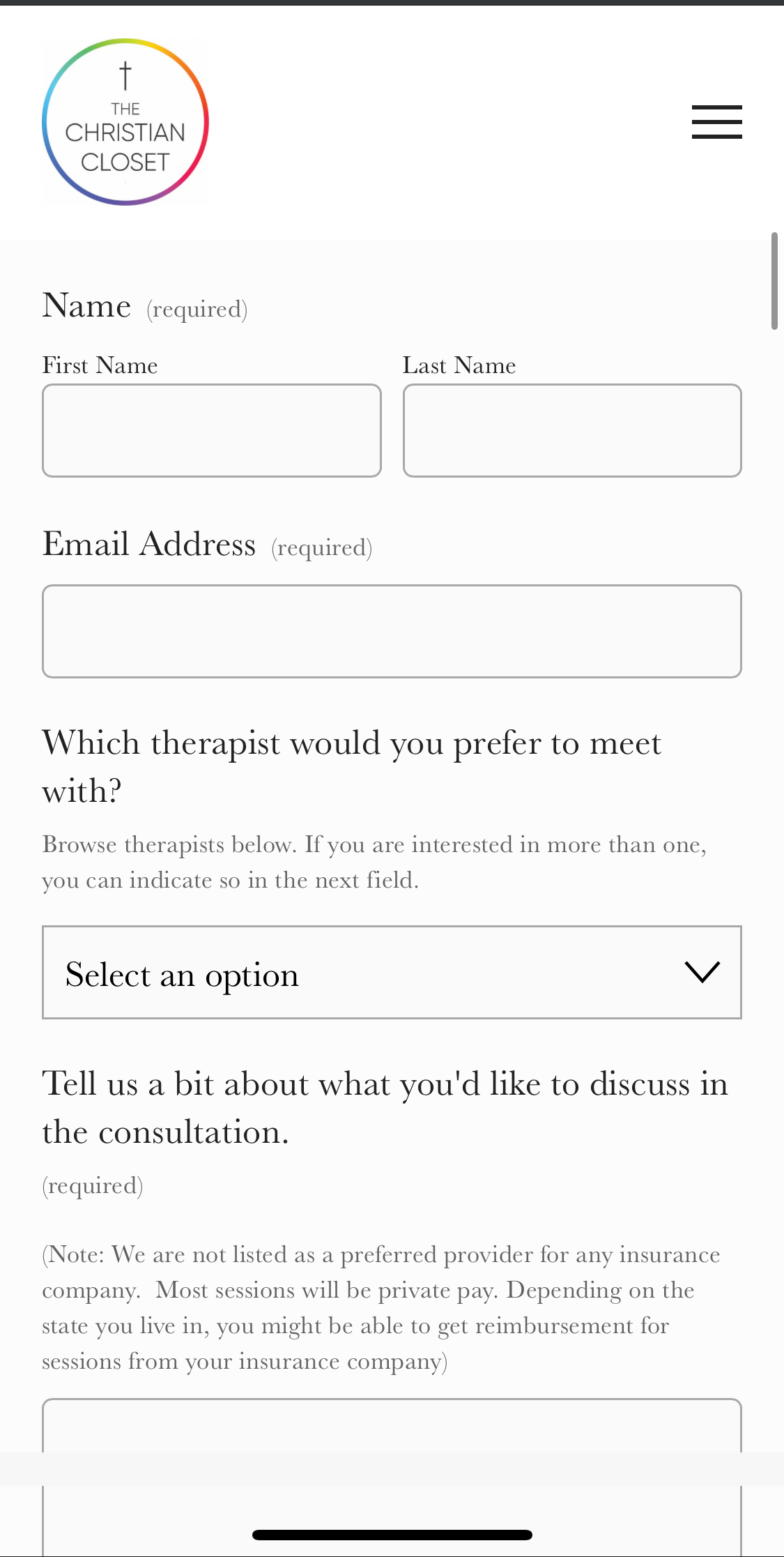
The Christian Closet’s online counseling services start with a free phone call to discuss your circumstances and ensure you feel like the counselor you’ve selected or been matched with feels like a good fit. I filled out the intake form on the website and got an email from the founder, Candice, the next day, including the email address of the counselor I’d be working with.
She emailed me the following day with some times that worked for her to schedule a 20-minute introductory phone call. This is standard on the site, and it’s a great way to ensure you’re comfortable with the person you’ll be talking to before paying for a session. On the call, my counselor was genial and friendly, and shared how her life experiences were incredibly similar to my own, which was reassuring.
After that, we scheduled a session and I was sent intake forms to fill out on the online portal. For my actual online coaching session, I received multiple emails with a link to our virtual room on TherapyAppointment and all I had to do was click to join.
My therapist gave the same vibes as on our previous phone call, and she let me lead the session with what was on my mind while still pointing out some observations and offering some helpful feedback and advice. She asked about specific goals I’d like to work on together in our coaching sessions and reassured me that everything I’d been experiencing lately was absolutely normal, and in fact, on target, for someone who came out as queer only a couple of years ago, well into adulthood. It definitely felt like a helpful resource to me, with the understanding that this is specific coaching for what I want my journey within queerness to look like, and not a full-blown therapy appointment.
Virtual Support Groups
On its website, The Christian Closet lists a few different virtual support groups:
- Queer Christian Women
- Gay Women’s Mixed Orientation Marriage
- Gay & Bi Men in a Mixed-Orientation Marriage Support Group
- Married Trans Support/Process Group
Groups run from six to eight weeks, and each session is 90 minutes long, led by a trained professional from the platform. Fees per session range from $60–$75. Fill out a brief form with your name, email, and a short message and select which group you’d like to join to receive more information.
Cost & Insurance
The costs per session vary based on the provider you choose, and no insurance is accepted for coaching sessions. However, if you do happen to find someone who is a licensed therapist in your state, there’s a small chance you could be able to get a superbill and receive out-of-network reimbursement from your insurance provider. Check with your counselor beforehand to see if that could be a possibility.
The cash pay costs I saw across the website were between $170 and $245 per session.
Who Does The Christian Closet Serve?
The Christian Closet was established to serve people who identify as LGBTQ+ and Christian. Each of the therapist’s profiles on the site share their own experiences with being Christian and queer and what that means to them.
Of note: The Christian Closet offers counseling and coaching, and should not be considered therapy unless you end up seeing a provider who is licensed in your state. While the providers are all licensed professionals, if they’re not licensed in the state where you live, this care should be clearly defined as coaching and not as therapy. Providers on the platform should not diagnose you and should refer you elsewhere if they believe it would be helpful for you to seek a higher-touch level of care.
Alternatives & Competitors
If you’re queer or questioning and Christian and wanting to talk to someone who’s been through it, The Christian Closet could be a great resource. For official therapy, Gay Therapy Center has a fabulous matching service, and Inclusive Therapists has a directory where you could likely find someone with experience with your faith who also identifies as queer.
Gay Therapy Center - Best for Therapist Matching

Price: $185–$250
Insurance Accepted: No
Therapy & Psychiatry: No
Gay Therapy Center is a similar platform in that it is specifically designed by LGBTQ+-identifying therapists for the queer community. Most of the providers are gay men, but there are some AFAB therapists as well. Also similar to The Christian Closet, Gay Therapy Center hand-matches prospective clients with therapists, but the difference here is that TGC will only match clients with licensed therapists in their state.
While not in-network with any insurance providers, the providers and intake specialists on GTC can help you figure out how to get out-of-network coverage if you have insurance benefits.
While not catering specifically to Christians, many of the therapist bios on GTC mention helping people with issues related to identity, self-esteem, and more problems unique to the queer community. It also offers couples therapy, and states that about 30% of the clients utilizing GTC are queer couples—a group that often feels misunderstood by straight/cis couples therapists.
Read our Gay Therapy Center review for more information.
Pros & Cons
 Pros
Pros
- Personalized matching service and top-tier customer support
- Only queer therapists on the platform
- Offers online and in-person therapy in several states
Cons
- Doesn’t accept insurance
- Not nationwide (in 42 states so far)
- Some states only have a couple providers
Inclusive Therapists - Best Directory for Queer Folks

Price: Varies by provider
Insurance Accepted: Yes
Therapy & Psychiatry: Yes
While not only for queer folks, the Inclusive Therapists directory has some of the most comprehensive search filters we’ve seen, including spiritual knowledge, provider identities, insurance coverage, cultural knowledge, and more. The “Provider’s Identity” filter alone has 35 options, including “Disabled,” “Gender Nonbinary,” “LGBQ+ Sexuality,” and “Third Culture Kid.”
Users can utilize all the search features, or fill out a brief form and get matched with a few potential therapist options. Whether you use insurance or pay with cash, therapist’s bios clearly state their cash-pay cost and which insurance providers they work with (if any), so you’ll know what to expect before getting started.
Note that Inclusive Therapists is a directory, not an online therapy platform, so communication and therapy sessions will happen off the platform and not be a one-stop-shop option.
Read our full review of Inclusive Therapists to learn more.
Pros & Cons
Pros
- Use the detailed search filters or the “get matched” service
- All therapists share a mission of anti-oppressive care
Cons
- Price and insurance coverage vary by provider
- Some states may offer fewer (or no) therapists of certain identities
Why You Can Trust My Review
I’ve spent hundreds of hours researching, using, and reviewing online therapy platforms and other online mental health resources, and The Christian Closet stood out to me due to the very niche client base it aims to serve. It was a seamless process to fill out an online form, chat with the person I was matched with, and then attend a live session.
If you’re queer and questioning elements of your faith, The Christian Closet could be a great resource. I’m a bit concerned that the website mentions therapy (which technically could be offered if you found a therapist in your state) when most of what it provides should be referred to as coaching, but as long as you’re aware of that going in and you can afford the cash-pay pricing, I was otherwise impressed with the service.

History & News About The Christian Closet
Year Founded: 2021
Owner & Founder: Candice Czubernat, LMHC, MFTI
Candice Czubernat founded The Christian Closet as a space for people trying to reconcile their sexual and gender identities with their faith. She herself was raised in a Christian home, which she explains didn’t give her the context or support for figuring out her sexuality.
She built the platform with only other practitioners who identify as both Christian and LGBTQ+. Czubernat also presents at workshops, speaking engagements, and trainings with churches on being more inclusive.
ChoosingTherapy.com strives to provide our readers with mental health content that is accurate and actionable. We have high standards for what can be cited within our articles. Acceptable sources include government agencies, universities and colleges, scholarly journals, industry and professional associations, and other high-integrity sources of mental health journalism. Learn more by reviewing our full editorial policy.
-
VIRTUAL THERAPY IS A SAFE PLACE. (2025). The Christian Closet. Retrieved from: https://www.thechristiancloset.com/virtual-therapy
-
Schedule Your Free Consultation. (2025). The Christian Closet. Retrieved from: https://www.thechristiancloset.com/free-consultation
-
YOUR TEAM OF ONLINE THERAPISTS. (2025). The Christian Closet. Retrieved from: https://www.thechristiancloset.com/find-a-therapist
-
Rueger, A. (July 8, 2025). Gay Therapy Center Review 2025: Pros & Cons, Cost, & My Experience. ChoosingTherapy.com. Retrieved from: https://www.choosingtherapy.com/gay-therapy-center-review/
-
Zeiger, K. (April 25, 2025). Inclusive Therapists Review 2025: My Experience Using the Directory. ChoosingTherapy.com. Retrieved from: https://www.choosingtherapy.com/i-tried-finding-a-therapist-on-inclusive-therapists/

Your Voice Matters
Leave your own reviews!
Have you used an online therapy company? Have you tried an online psychiatry service? Do you use a meditation or mindfulness app? We’d love to hear about your experience!
We want to hear about the companies you love and the companies you wish you never used.
Leave your feedback for our editors.
Share your feedback on this article with ChoosingTherapy.com’s editors. If there’s something we missed or something we could improve on, we’d love to hear it.
Our writers and editors love compliments, too. :)

