





In searching for the best online group therapy and support groups, we reviewed over 50 platforms, focusing on factors like cost, insurance compatibility, and availability of licensed therapists. With over three years of research and more than 250 hours of firsthand online therapy experience, our editorial team identified the top options for online group therapy.
Editor's Note
We regularly review and update our content to ensure it contains the most up-to-date information and trustworthy recommendations. In a recent update, we removed 7 Cups from this guide. This decision followed our editorial team’s recent review of 7 Cups, which uncovered concerns with the quality and oversight of care provided on the platform, as well as reports that 7 Cups created therapist profiles without their knowledge or consent, misleading users into their services. Learn more in our article, “The Ghost Network Behind 7 Cups.”
Online Group Therapy & Support Groups
- Best Overall - Grouport | Read review
- Best Free Peer-to-Peer Support - Therapy Tribe | Read review
- Best for Toxic & Narcissistic Relationships - Circles | Read review
- Best Therapist-Led Group Therapy - Brave Health | Read review
- Best for Women - LunaJoy | Read review
- Best for Men - Catalyss Counseling | Read review
- Best for Serious Mental Health Conditions - Charlie Health | Read review
- Best Group Workshops - Talkspace Go | Read review
Favorites At a Glance


Price: $140 monthly
Insurance: No
Therapist or Peer-led: Therapist
Pros & Cons
-
 Therapist-led groups
 -
Offers individual therapy too
-
 Doesn't accept insurance
 -
No single sessions


Price: Free groups
Insurance: No
Therapist or Peer-led: Peer
Pros & Cons
-
Free to use
-
Includes mood mapping & chat rooms
-
Peer-led and moderated (use with discernment)


Price: $30 monthly
Insurance: No
Therapist or Peer-led: Both
Pros & Cons
-
Anonymous, audio-only
-
24/7 live support groups
-
Doesn't accept insurance
-
No option for video

Price: $82.50 per group session
Insurance: Yes
Therapist or Peer-led: Therapist
Pros & Cons
-
Accepts most insurance
-
Therapist-led groups & peer support
-
Expensive initial consultation
-
Only available in 10 states


Price: $100 per group session
Insurance: Yes
Therapist or Peer-led: Therapist
Pros & Cons
-
Specialized care for women
-
Insurance accepted
-
Only available in 12 US States
-
No mobile app

Price: $60 per group session
Insurance: No
Therapist or Peer-led: Therapist
Pros & Cons
-
Men’s support groups nationwide
-
Has a variety of additional groups
-
Free 20-minute consultation
-
Paid group screening ($150)
-
Individual therapy only in CO

Price: Insurance dependent
Insurance: Yes
Therapist or Peer-led: Therapist
Pros & Cons
-
Evidence-based approaches like CBT, DBT, etc.
-
Fully virtual intensive outpatient program (IOP)
-
Covered by insurance
-
Out-of-pocket costs are unclear

Price: $29.99 monthly
Insurance: No
Therapist or Peer-led: Therapist
Pros & Cons
-
A self-directed app for group support
-
Led by experts
-
Workshop format vs. group therapy
-
No participation or collaboration
Why Trust Us

300+
Companies Reviewed
2,350+
Hours of Testing
1,150+
Data Points AnalyzedThe reviews on ChoosingTherapy.com are fair, honest, thorough, and based on firsthand experience. To date, we’ve reviewed mental health solutions offered by more than 300 companies. That has involved more than 2,350 hours of firsthand use and consideration of over 1,150 data points. Our editorial policies outline a rigorous review process, but they all boil down to this: produce reviews that our own friends and family can rely on. Learn more here.
Group Therapy vs. Support Groups
Before we get to our list, let’s distinguish between support groups and group therapy. Both involve sharing experiences in a group setting, but they serve different purposes. Group therapy is a more structured form of mental health help led by a licensed therapist or other mental health professional, often using evidence-based techniques like CBT or DBT to address specific issues.
Support groups, on the other hand, are not considered formal treatment. They offer emotional support, community, and a place to share, and may be led by either a mental health professional or a peer with lived experience.
Peer-led vs. Therapist-led Support Groups
In peer-led support groups, the facilitator is someone with firsthand experience of the group’s topic (e.g., recovery from addiction or managing anxiety) but typically no clinical training. These groups emphasize mutual support. Therapist-led support groups are facilitated by licensed professionals, but the focus is still on peer connection rather than clinical treatment, making them distinct from group therapy sessions.
Comprehensive Reviews
Below, we discuss our favorite group therapy providers, support groups, and group workshops in further detail.
- Price: $35/week, billed $140 monthly
- Insurance Accepted: No
- Location: US & international
- Therapist or Peer-led: Therapist
Grouport offers monthly subscriptions for group therapy—as well as individual, couples, family, and teen therapy—taking an approach that can consist of both modalities. With highly experienced therapists specializing in evidence-based treatments, Grouport provides a support system built on accountability, connection, and therapeutic progress. Serving patients across all levels of acuity, Grouport is built around the idea that clinically-faciliated group therapy is a cornerstone of mental health care.
Pros & Cons
 Pros
Pros
- Also offers individual, couples, teen, & family therapy
- Groups have a maximum of 12 people, allowing for lots of positive collaboration
- You can expect to see many of the same faces week over week
- Easy-to-navigate client portal
- Offers special bundled rates
- Accepts HSA/FSA cards
Cons
- Does not accept insurance
- Doesn’t let you purchase single sessions; monthly subscriptions only
- Little communication with therapist between sessions if you’re not in individual therapy
- Some groups are limited by location
Cost
Gouport’s therapy services are subscription-based and billed monthly at $140. Each plan includes at least one session per week at the same time. Months with five sessions are included at no extra cost, lowering the per-session rate. Members can switch therapists or groups anytime, as well as cancel at the end of their current billing period.
Here are Grouport’s costs:
- Group therapy: $35 per session, billed at $140 monthly
- Individual therapy: $112 per session, billed at $448 monthly
- Couples therapy: $123 per session, billed at $492 monthly
- Family therapy: $160 per session, billed at $640 monthly
- Teen therapy: $112 per session, billed at $448 monthly
- Self-guided DBT skills group: $299 for an initial 12-week billing cycle, after which you will be billed $100 at the start of each subsequent billing cycle.
For more on prices, read our in-depth Grouport review.
Overview


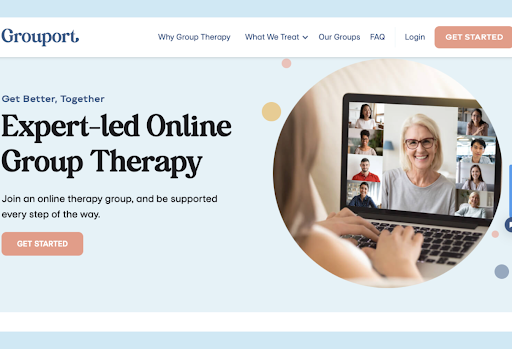


Grouport offers specialized, expert-led group therapy for a wide range of challenges, including anxiety, depression, trauma, grief, chronic illness, relationship issues, OCD, substance abuse, and more. It also offers a skills training group based on dialectical behavioral therapy (DBT), a type of therapy used to help with emotional regulation. When you sign up, choose the group that works best for you, noting that some groups may require an initial 20-minute consultation.
The licensed professionals at Grouport—psychologists, social workers, counselors, and marriage and family therapists—are all experts in evidence-based methods and typically bring over a decade of experience. The groups themselves consist of a maximum of twelve people, and according to Grouport, you can typically expect to see returning faces, giving you a chance to build a consistent community with a comfortable rapport.
For those who need or want one-on-one support, Grouport offers individual therapy, as well as couples, teen, and family therapy. When it comes to virtual mental health care, they have something for anyone who is willing and able to pay out of pocket. And if you have insurance, you may be able to receive out-of-network reimbursement.
To learn more about this platform, read our independent Grouport review.
- Price: Free
- Insurance Accepted: No
- Location: US
- Therapist or Peer-led: Peer
We included Therapy Tribe in our list for their free peer-to-peer support community, The Tribe. It is a peer-driven space where individuals can connect with others facing similar challenges like anxiety, depression, and OCD. This community is a resource for those seeking connection, but it doesn’t take the place of therapy or group therapy. It does, however, put you in close proximity to Therapy Tribe’s directory of licensed therapists, if you choose to pursue that line of care.
Pros & Cons
Pros
- Free to join support community
- Features member blog
- Can send & receive “kudos”
- Mood mapping
Cons
- Message boards are peer-moderated, meaning you should engage cautiously
- Doesn’t take the place of therapy or group therapy
Cost
It’s free to join Therapy Tribe’s online wellness community. If you’re using the directory to find a therapist, note that details like price and insurance acceptance will vary based on the provider.
Overview
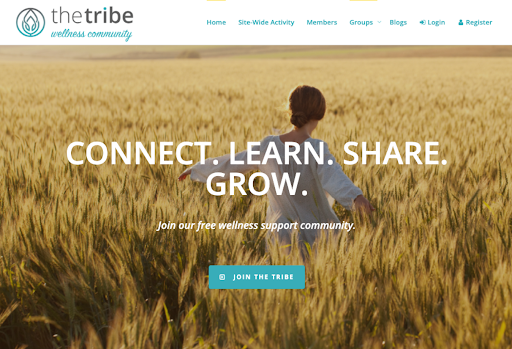
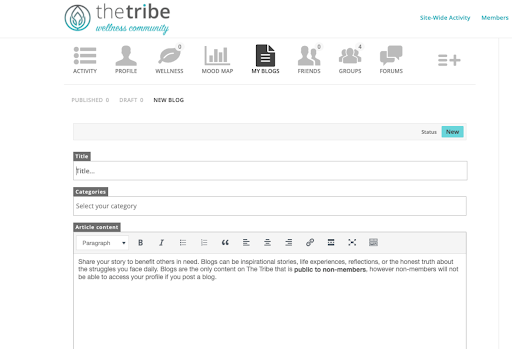
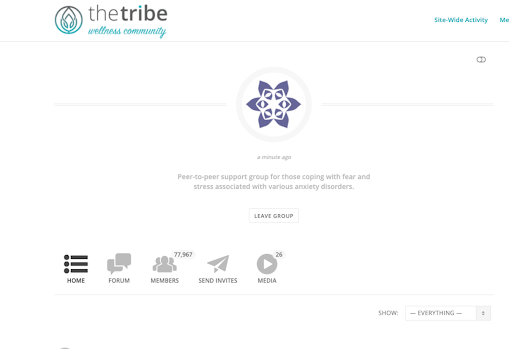
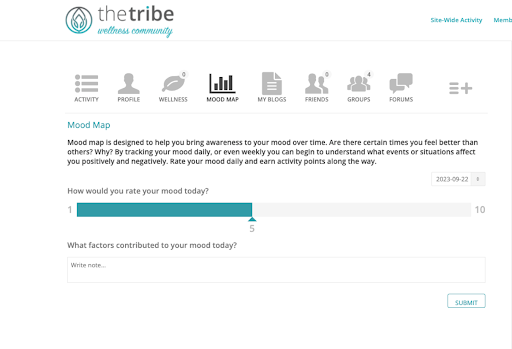
Therapy Tribe is a comprehensive therapist directory that helps you find qualified mental health professionals tailored to your needs. It also offers a free online support group, The Tribe, where you can connect with others facing similar challenges. It’s a welcoming space that functions kind of like a social media platform created specifically to share mental health experiences and receive peer support.
The platform features niche “tribes,” focused on topics such as depression, OCD, and HIV/AIDs. You can choose to participate in the broader conversation or limit your interactions to a core support group(s). This approach lets you find the level of interaction and support that best suits your needs.
- Cost: $30 monthly
- Insurance Accepted: No
- Location: US
- Therapist or Peer-led: Both
Circles provides a combination of expert-led group sessions, peer support, and educational tools for anyone recovering from a toxic relationship and narcissistic abuse, or those going through a difficult divorce. Their audio-only therapist-led groups are a safe place to connect anonymously with others who have been through similar struggles.
Pros & Cons
Pros
- 24/7 live support groups
- Allows users to stay anonymous or even just listen in
- 500+ group sessions available per week
- Seven-day free trial
- Access to moderated message board forums
Cons
- No option for video
- Not clear when you’re talking to a professional vs. peer
- Limited to two broad topics: divorce and narcissistic relationships
- Doesn’t offer individual therapy
- Does not accept insurance or HSA/FSA cards
Cost
Circles does not accept insurance. Here are the cost details for the app:
- Monthly plan: $30
- Annual plan: $179
- 6-Month plan: $119
If you’re interested in reading more about cost, read our Circles App review.
Overview
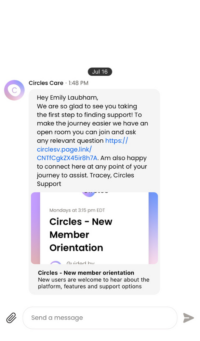
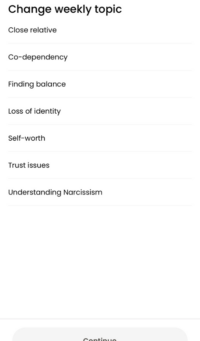
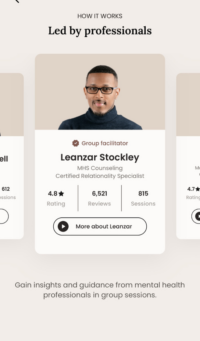
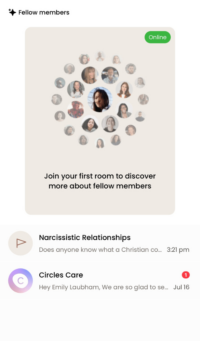
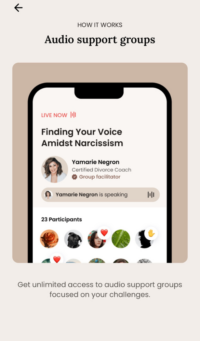
Circles helps you find the right support group based on your unique needs, whether you’re dealing with a narcissistic relationship or going through a messy divorce or breakup. The platform matches you with the right group based on your unique needs and provides unlimited access to audio-only meetings, called “Circles,” held multiple times daily, along with moderated message board forums.
Led by mental health professionals and/or trained peers, Circles takes a hybrid approach that combines expert guidance with the empathy of a supportive community, creating a well-rounded space for healing.
To learn more about this app, check out our Circles app review.
- Cost: $82.50 per group session
- Insurance Accepted: Yes
- Location: 10 US States
- Therapist or Peer-led” Therapist
With Brave Health, you can participate in clinician-led group therapy on its own or integrate it into a broader therapeutic plan that could include therapy, DBT, or even EMDR online. Most insurance is accepted, including Medicare and Medicaid, so if you are covered and you live in one of the ten US states they serve, it’s worth looking into.
Pros & Cons
Pros
- Most insurance accepted, including Medicare/Medicaid
- Clinician-led & peer support
- Also offers individual therapy, DBT, and EMDR online
- Also offers family counseling & pregnancy and postpartum support
- Can prescribe medication (including controlled substances in Florida and New York)
Cons
- Pricey without insurance
- Only available in ten states currently
Cost
Brave Health accepts insurance from over 200 providers, including some Medicare and Medicaid. It also accepts cash-pay clients.
Out-of-network costs include:
- 60-minute group session: $82.50
- Initial therapeutic consultation: $390
- Initial psychiatric evaluation: $550
- Medication management appointment: $258
- 30-minute counseling appointment: $150
- 45-minute counseling appointment: $225
- 60-minute counseling appointment: $300
- Family services: $270
Overview

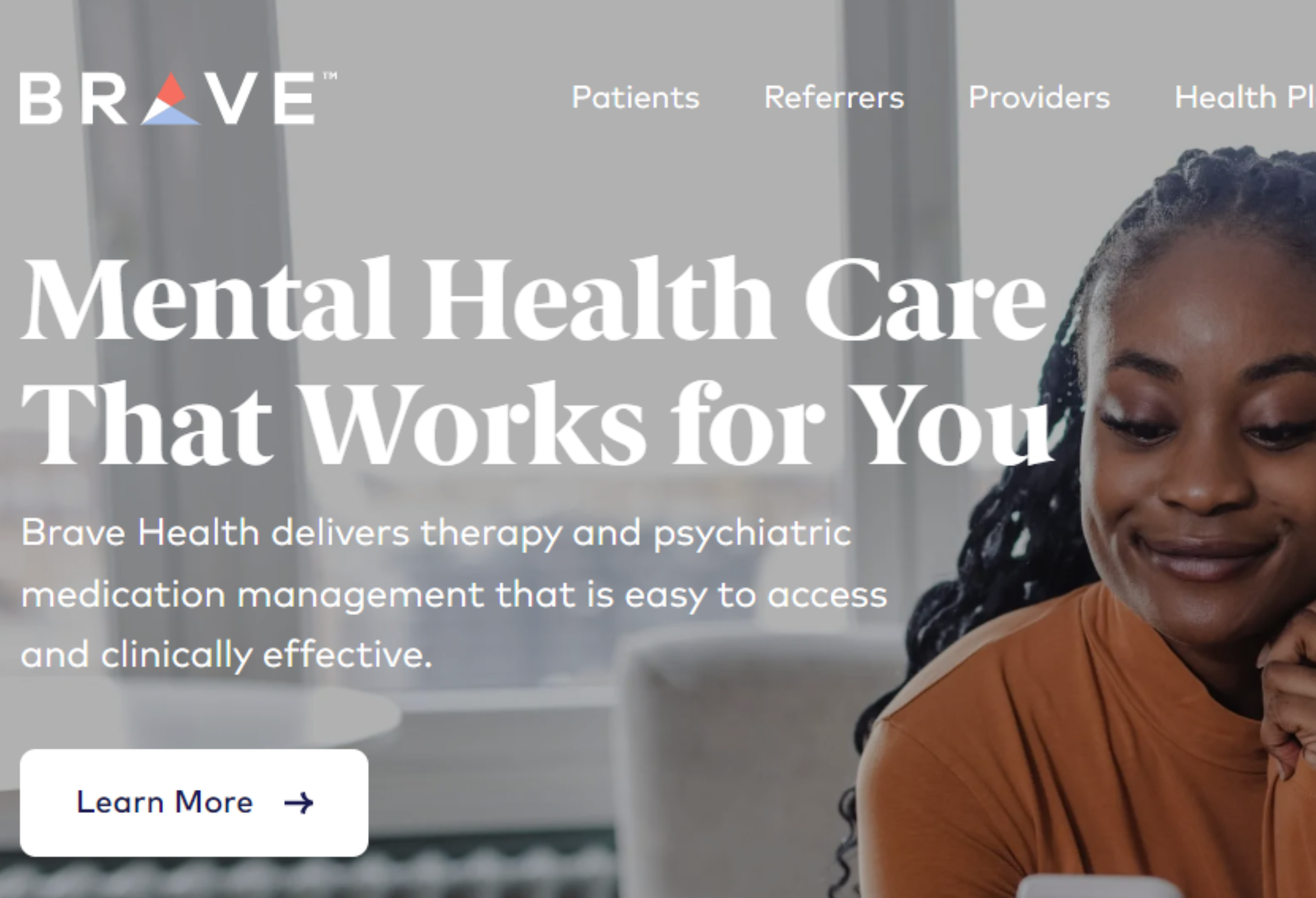
Brave Health offers individual therapy, psychiatry, marriage and family counseling, clinician-led group therapy, peer support, and more. With over 40 therapists-led groups, it provides expert-guided support for challenges like grief, depression, anxiety, addiction, and anger. For Florida and New York patients, Brave Health can also prescribe controlled substances, including stimulants, benzodiazepines, and hypnotics.
Virtual services, including but not limited to group therapy, are available in the following ten states: Texas, Ohio, Oklahoma, New Mexico, North Carolina, Florida, Georgia, Illinois, Indiana, and New York.
- Cost: $100 per session
- Insurance Accepted: Yes
- Location: 12 US States
- Therapist or Peer-led: Therapist
LunaJoy is dedicated to women’s mental health and wellness. Its specialized groups provide a supportive space to address unique challenges, including anxiety, postpartum care, and life transitions, all led by expert therapists who prioritize evidence-based care tailored to women’s needs.
Pros & Cons
Pros
- Specialized care for women
- Can prescribe medication
- Accepts insurance, including Medicare/Medicaid
- Also offers therapy, medication management, & wellness coaching
Cons
- Only available in 12 states
- No mobile app
Cost
Out-of-pocket, Wellness Coaching or group therapy costs $100 for new and follow-up sessions.
An initial psychiatry assessment with LunaJoy costs $240 with $150 per follow-up. Initial intake appointments for therapy cost $150 with $125 per follow-up. LunaJoy accepts insurance from many providers, including Medicare and Medicaid.
For additional cost details, read our comprehensive review.
Overview


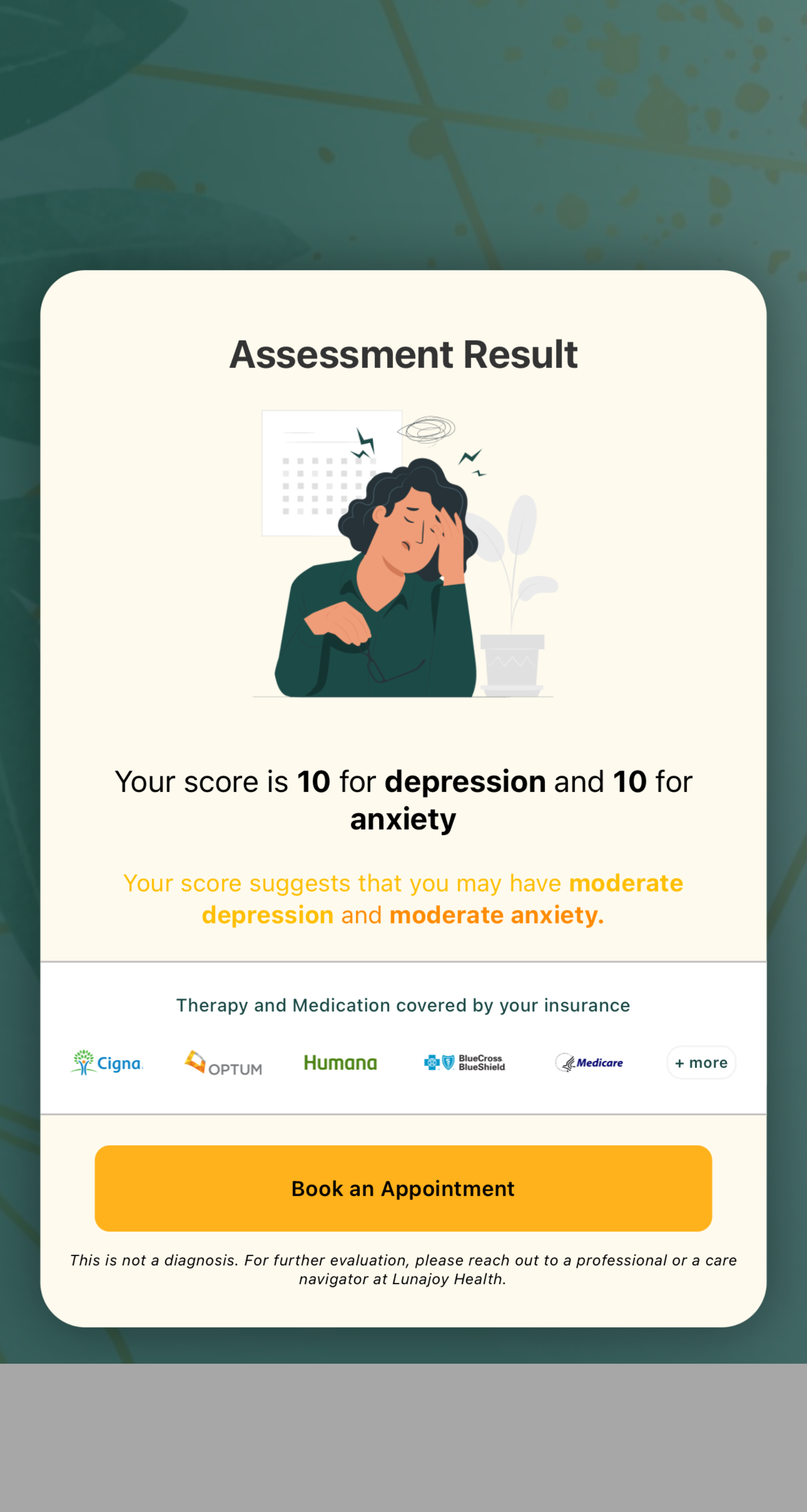
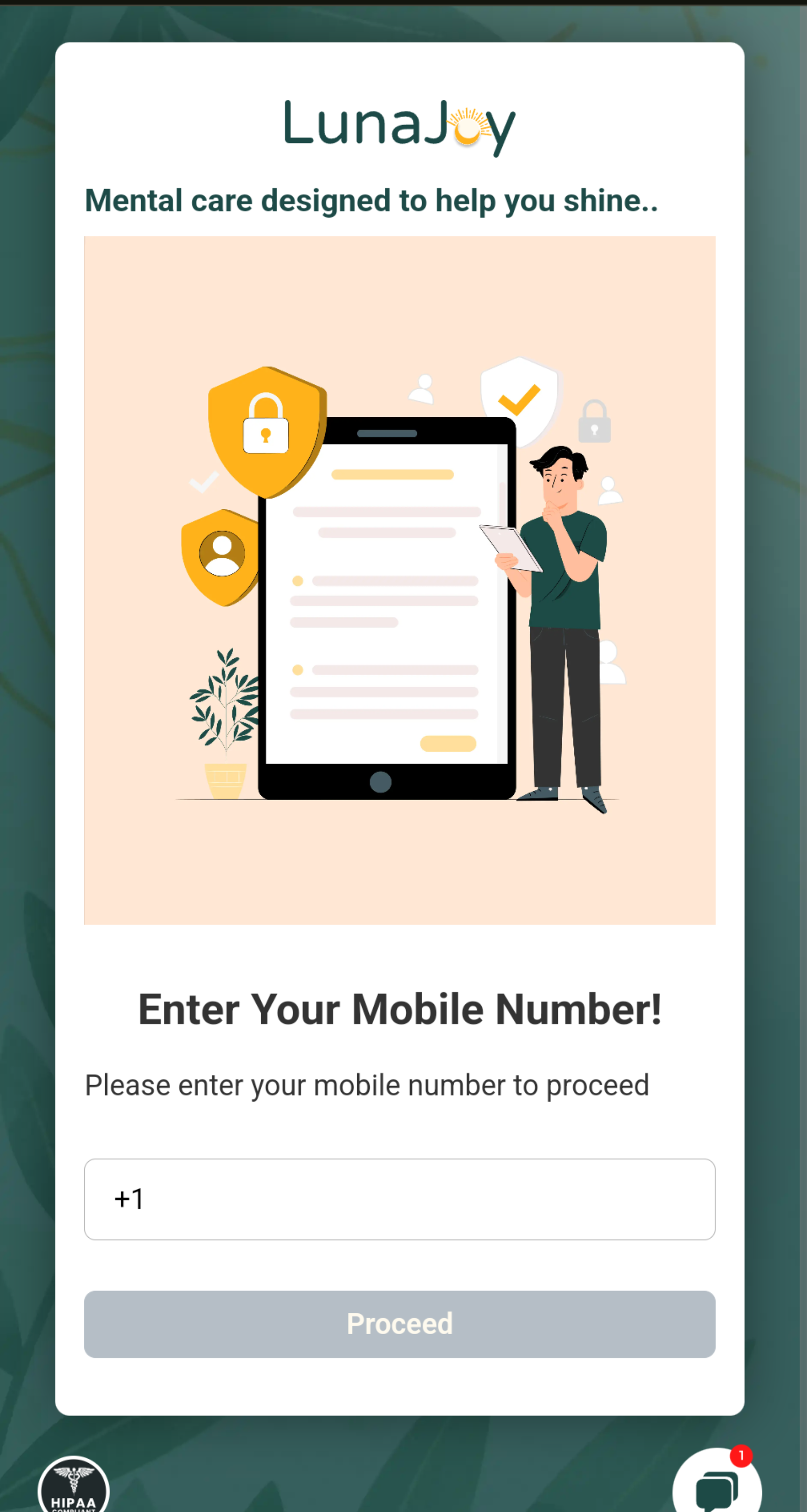

LunaJoy is dedicated to supporting women’s mental health through tailored therapy services, medication management, and group sessions. You can join hour-long expert-led groups on topics like stress and anxiety, self-care, pregnancy and postpartum, or perinatal grief and loss. Whether you’re navigating big life changes or just looking to improve your overall well-being, LunaJoy provides a safe, compassionate space for women to connect, grow, and heal.
Currently, LunaJoy is available in the following states, plus D.C.:
- Colorado
- New Jersey
- Virginia
- Illinois
- North Carolina
- Alaska
- Washington D.C.
- Georgia
- Florida
- New York
- Pennsylvania
- California
- Maryland
Read our full LunaJoy review.
- Cost: $60 per group session
- Insurance Accepted: Minimal
- Location: Most groups are nationwide
- Therapist or Peer-led: Therapist
We included Catalyss Counseling in our list of best online group therapy for their men’s virtual support groups, available nationwide. With groups designed specifically for men, which is quite rare on a lot of platforms, it offers a safe space to connect and explore topics like masculinity, relationships, confidence, and accountability, while receiving support for navigating the world and making positive life changes.
Pros & Cons
Pros
- Nationwide support groups for men, women, ADHD, and more
- Groups are kept on the smaller side
- You’ll likely see many of the same faces week after week
- Free 20-minute consultation
- Accepts HSA/FSA as payment
Cons
- Required paid group screening ($150)
- Ongoing enrollment means there won’t always be open spots
- Insurance not accepted
- Individual therapy only in CO
- Doesn’t have mobile app
Cost
Catalyss Counseling doesn’t typically accept insurance, although a few therapists are in-network with Health First Colorado (Medicaid, Colorado Access & CCHA only) and some are in-network with Kaiser.
For group therapy, there is a required initial $150 screening/intake appointment, which we don’t love; however, it does ensure a smaller, more curated group of individuals who are invested and ready to engage.
Support groups cost $60 per 55-minute session. There is also a $25/session grad student support group and young adult connections group. Process & therapy groups cost $70 per 55-minute session.
Overview
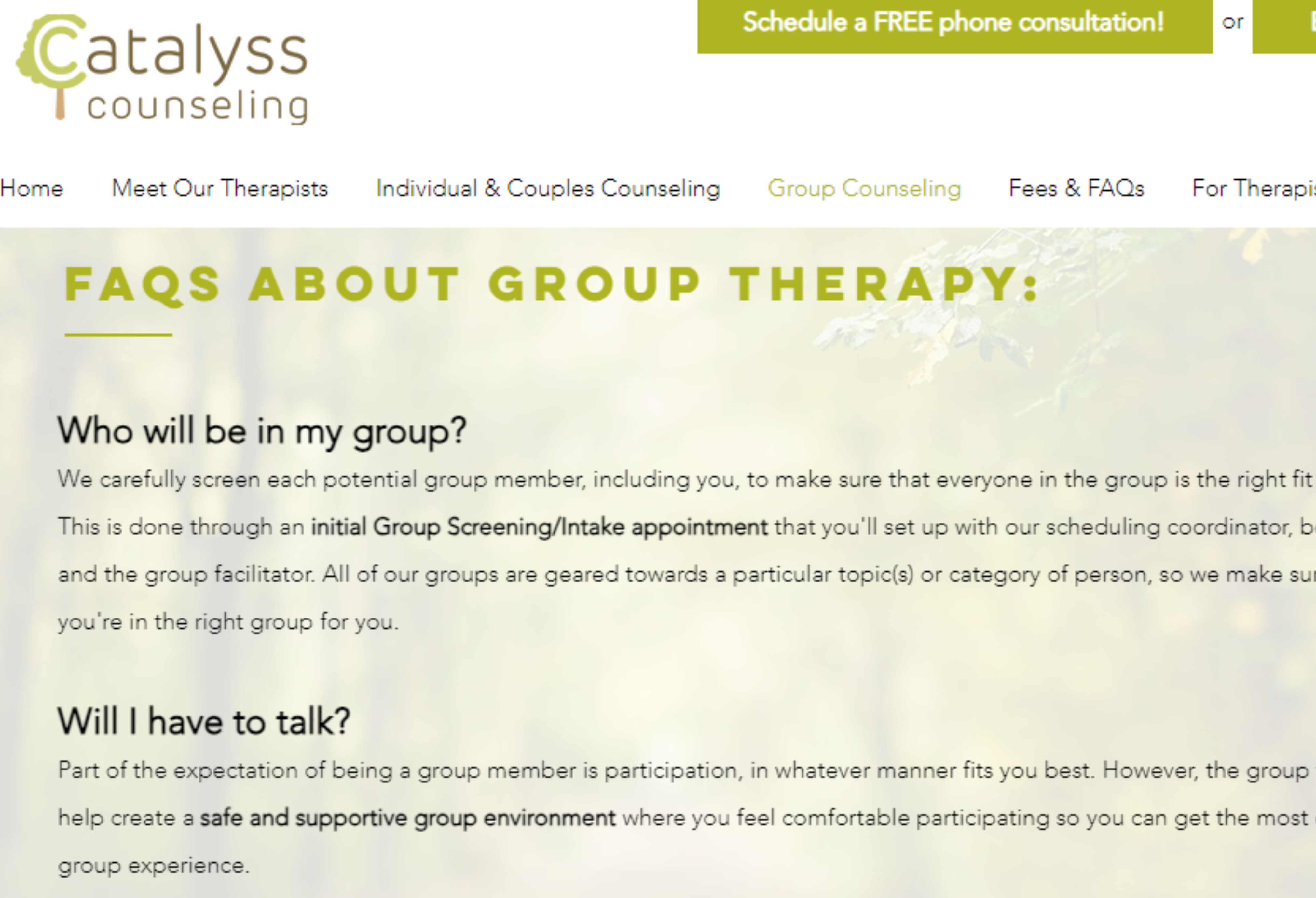
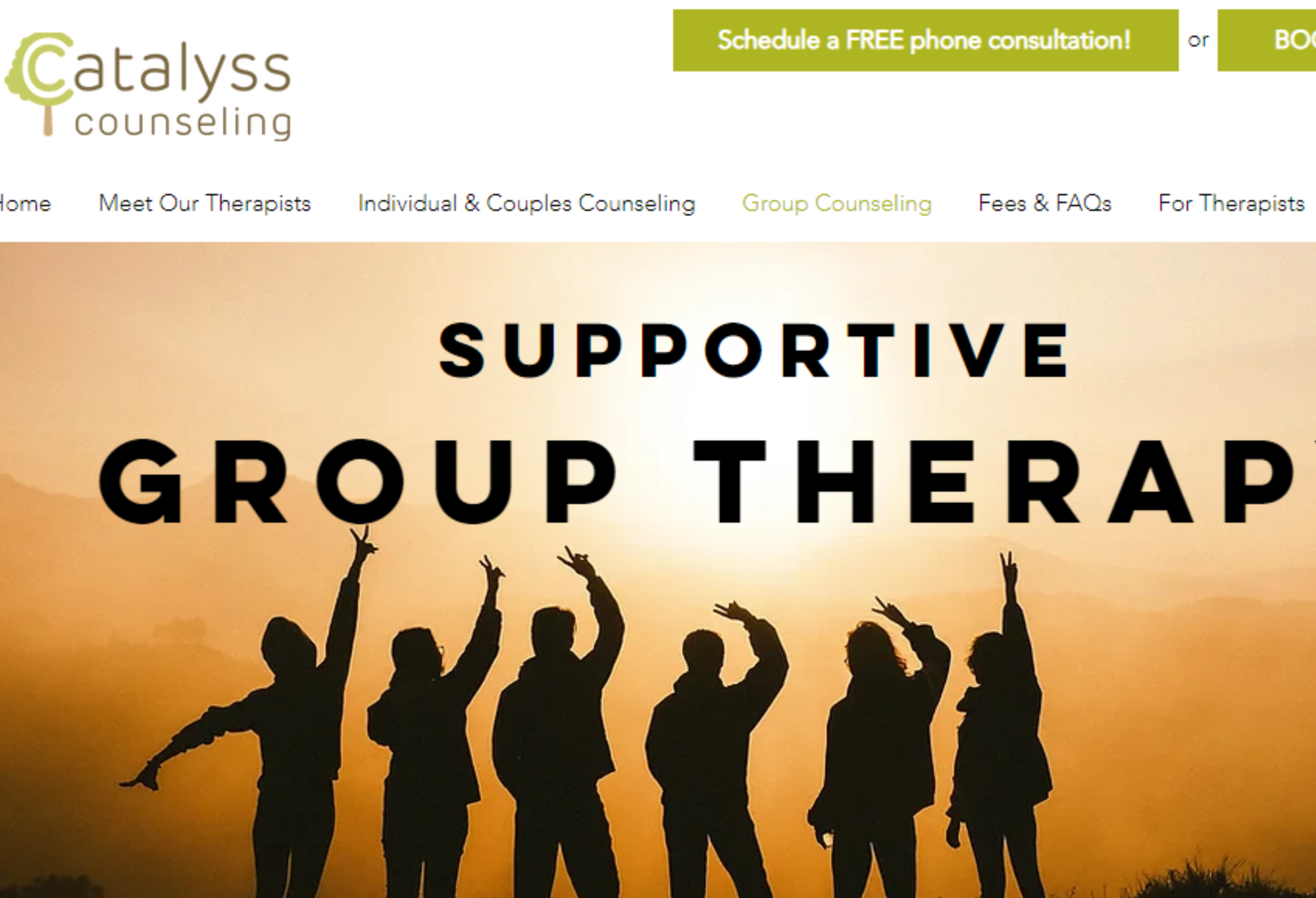
Catalyss Counseling offers individual therapy services in Colorado and therapist-led virtual support groups that are accessible nationwide. These support groups serve a range of clients, including men, women, and individuals with ADHD.
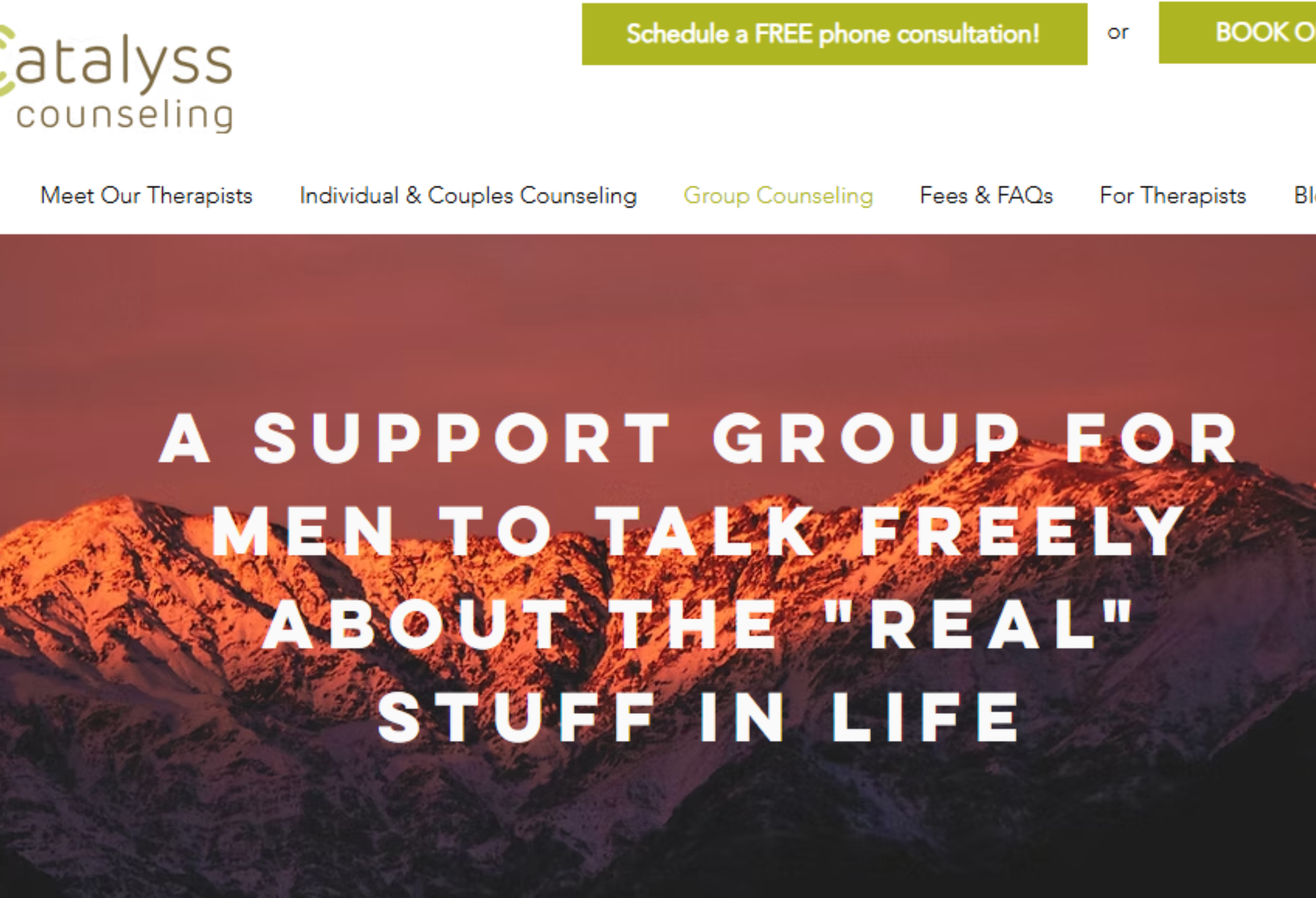
A key offering is the weekly online men’s support group, which focuses on helping participants build confidence in their masculinity, navigate life’s challenges in healthy ways, improve relationships, and take accountability for personal growth, all within a professionally led, supportive peer network. Group formats vary, with some designed as 10- to12-session programs, while others are open-ended.
- Cost: Insurance-dependent
- Insurance Accepted: Yes
- Location: 36 US states
- Therapist or Peer-led: Therapist
Charlie Health provides virtual intensive outpatient programs (IOPs) for teens, young adults, and families facing serious mental health challenges. IOP is a higher level of care than traditional weekly therapy, offering more structure and support for individuals who need comprehensive treatment but do not require inpatient or residential care. Charlie Health’s 9- to 12-week virtual program includes group therapy, individual counseling, and family sessions for mental health, substance use, and eating disorders.
Pros & Cons
Pros
- Intensive outpatient program (IOP) for higher acuity care
- Accepts many insurance plans
- Evidence-based approaches like CBT, DBT, etc.
- Treatment plans include individual therapy, family therapy, and support groups
Cons
- Costs are unclear and depend on insurance coverage
- Several user reviews cite disorganization
- Not for casual care
Cost
Charlie Health works with 300+ insurance plans, including Medicaid, TRICARE, Cigna, Aetna, Anthem, and Blue Cross Blue Shield. However, they can also work with you to assess cash-pay rates.
For more information, read our Charlie Health review.
Overview
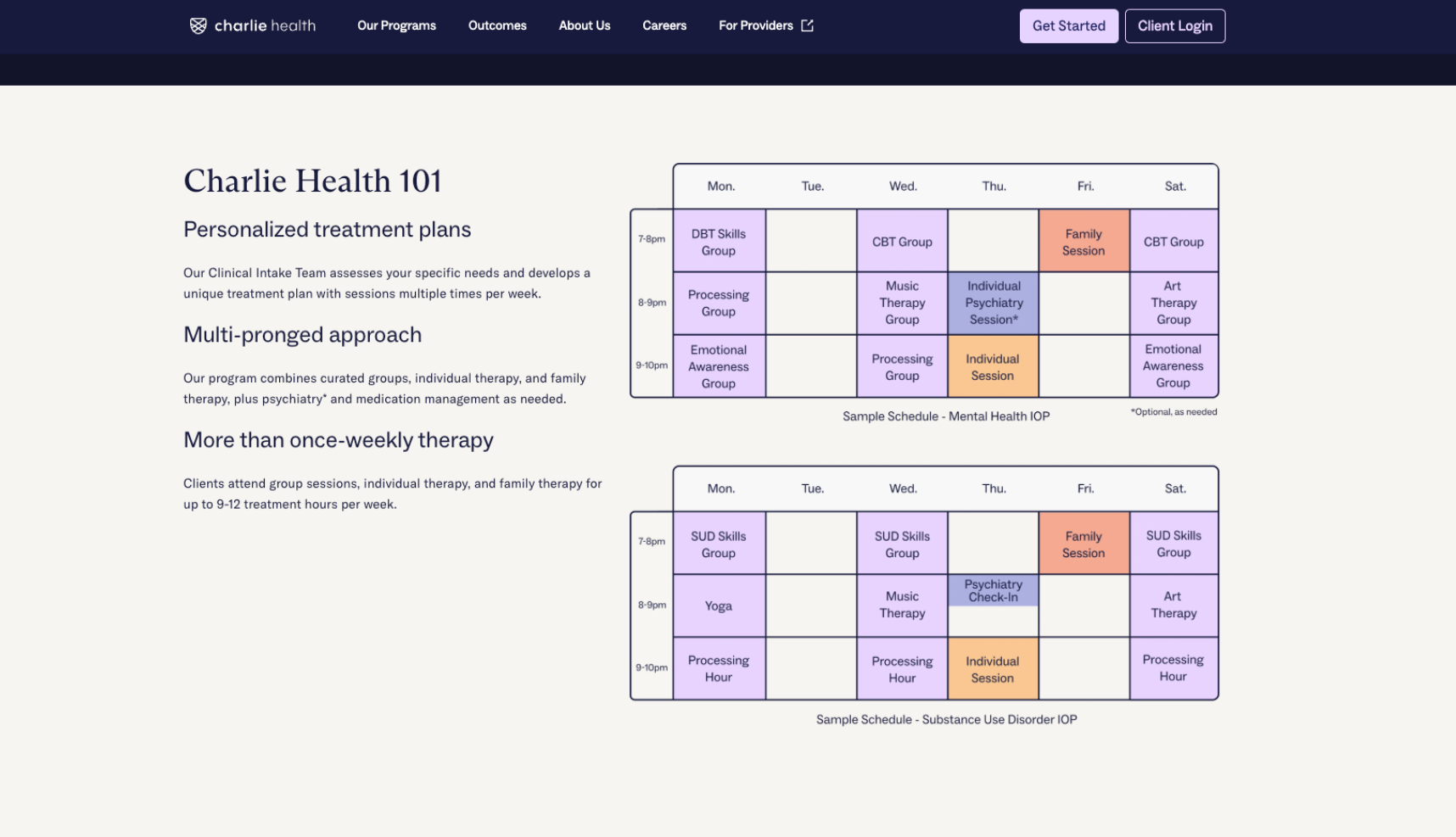

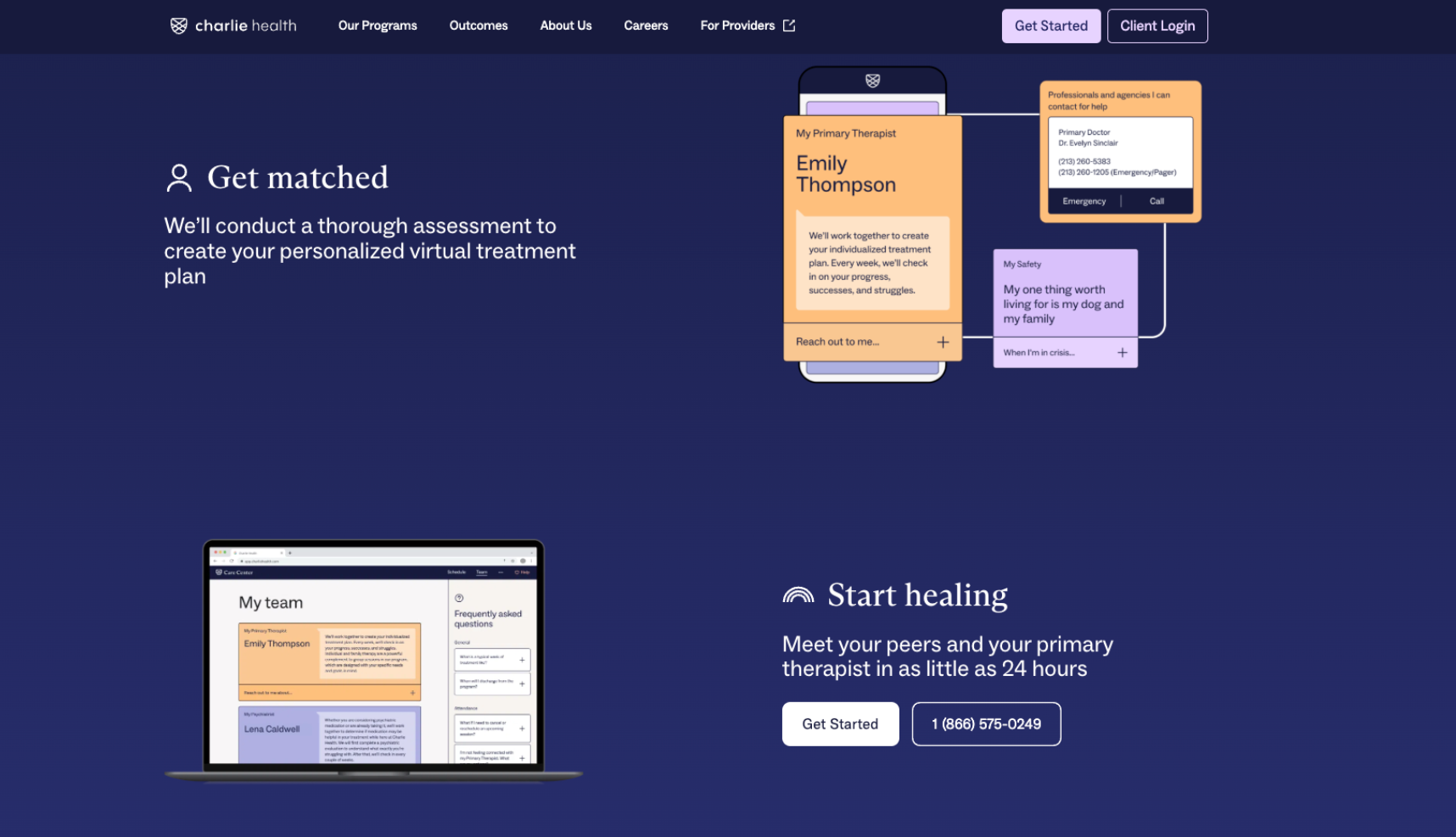


Charlie Health provides virtual intensive outpatient programs (IOPs) for teens, young adults, and families facing serious mental health challenges. Each client is matched with a team of therapists—including a primary therapist—offering evidence-based care tailored to their unique needs, preferences, and goals.
The IOP includes:
- 3–5 days of treatment per week
- 3 group sessions weekly
- Weekly individual therapy
- Weekly family therapy
- Medication management, if needed
Treatment plans typically last 9–12 weeks and are customized based on a comprehensive intake that considers each client’s mental health history, demographics, and lived experiences. Therapy is categorized into three core modalities: Evidence-Based (e.g., CBT, DBT), Experiential (e.g., art, music, mindfulness), and Processing (e.g., identity-focused work for LGBTQIA+ and BIPOC clients).
We included Charlie Health in our list of the best online group therapy options for more serious mental health concerns due to its structured, multidisciplinary approach and personalized care model.
In our independent Charlie Health review, we cover the platform in more detail.
- Cost: $29.99 monthly
- Insurance Accepted: No
- Location: US & international
- Therapist or Peer-led: Therapist
While Talkspace does not offer group therapy, it does give users an option to engage in its affordable Talkspace Go app, a self-directed platform with expert-led group workshops. It captures some of the energy of a good support group or group therapy session, although it does not take their place. It is designed more as an add-on or introduction to mental health care, empowering users to understand and take charge of their own mental wellness.
Pros & Cons
Pros
- A much cheaper alternative or add-on to therapy
- 7-day free trial
- Includes live classes, daily exercises, and other tools
Cons
- While live classes are led by experts, there is no true collaboration or conversation between patients
- Doesn’t take the place of individual or group therapy
Cost
Talkspace Go, which is a Talkspace app, costs $29.99 monthly after a 7-day free trial. You cannot use insurance for the app.
The primary Talkspace platforms offers access to some of these workshops in its Video + Messaging Therapy + Workshops plan, which costs $436 monthly before insurance.
It also accepts a variety of insurance plans, including Medicare and Medicare Advantage, but your cost with insurance will vary considerably depending on your individual coverage and needs. If your insurance plan covers Talkspace, you’ll only be responsible for any copays due. Keep in mind that you may be responsible for additional fees if you haven’t met your deductible. You can also use your FSA or HSA card for therapy with Talkspace.
Learn more about Talkspace and Talkspace Go in our review.
Overview


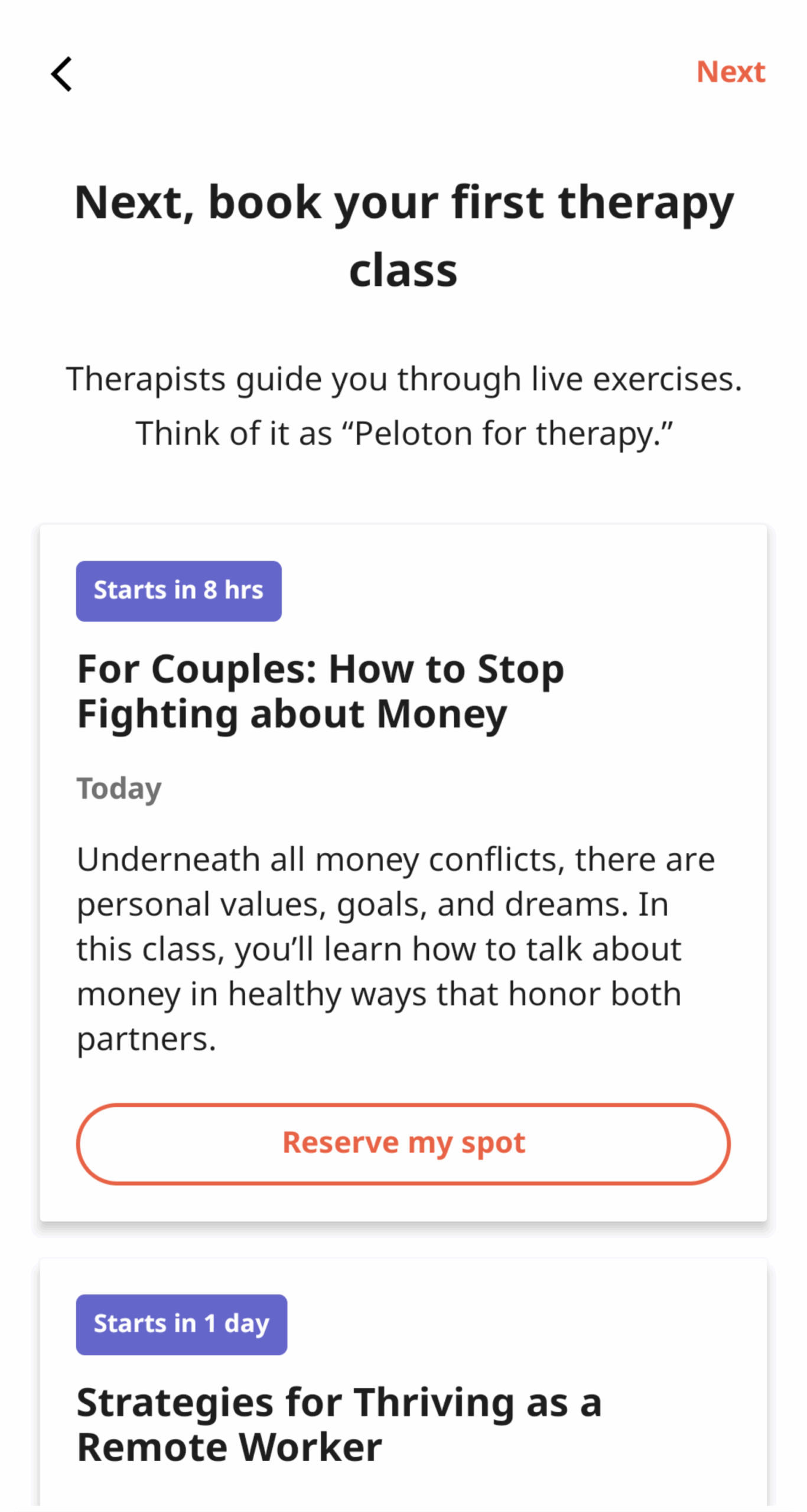
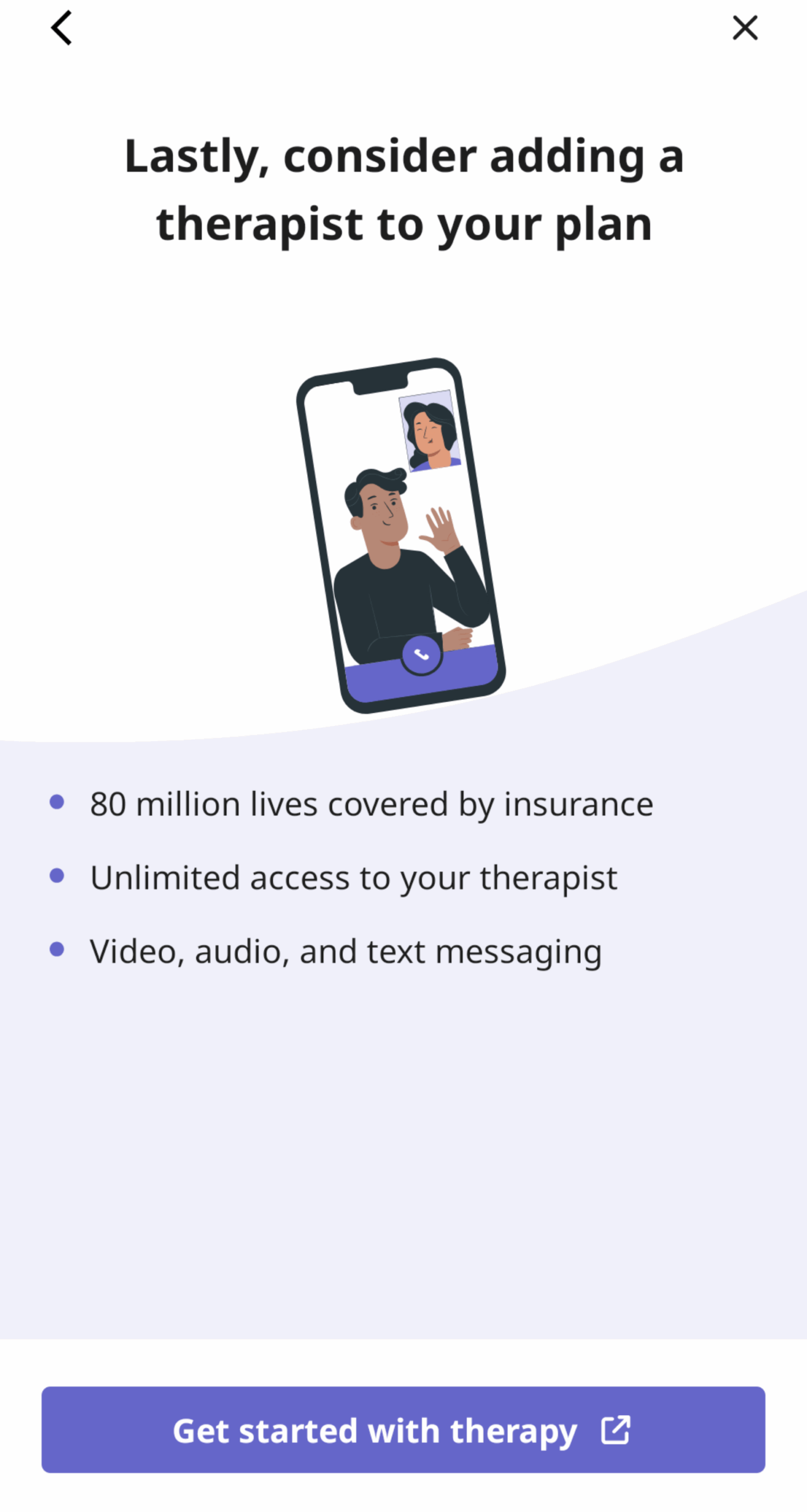


Talkspace Go is a self-guided mental health app designed to help individuals, couples, and parents build emotional resilience and improve their overall mental health. In addition to weekly live therapist-led workshops, the app offers tools to manage stress, anxiety, depression, and relationship challenges. It is available for download on both the Apple App Store and Google Play Store.
For more on the broader Talkspace platform, read our review.
Compare the Best Online Group Therapy & Support Groups
| Price | $140 monthly | Free | $29.99 monthly | $82.50 per session | $100 per group session | $60 per session | Insurance-dependent | $29.99 monthly |
| Insurance |  |
|
|

|
|
|
|
|
| Therapist or Peer-led | Therapist | Peer | Both | Both | Therapist | Therapist | Therapist | Therapist |
| Price | |||||||
| $140 monthly | Free | $29.99 monthly | $82.50 per session | $100 per group session | $60 per session | Insurance-dependent | $29.99 monthly |
| Insurance | |||||||
|
|
|
|
|
|
|
|
|
| Therapist or Peer-led | |||||||
| Therapist | Peer | Both | Both | Therapist | Therapist | Therapist | Therapist |
Final Verdict
“Online group therapy and support groups create space for powerful connection and specialized care from the comfort of home. Whether you’re seeking structured therapy led by licensed professionals or free, peer-driven support, there is a platform out there for you. Overall, Grouport stands out as the best for its blend of accessibility, affordability, and therapist-led groups on a wide range of issues.
Additionally, Platforms like Circles, Brave Health, LunaJoy, Catalyss Counseling, Charlie Health, and Talkspace each excel in serving specific populations or mental health needs. And for anyone who wants free peer-to-peer support, The Tribe from Therapy Tribe is a welcoming space. The right choice depends on your goals, budget, and the type of support you’re looking for, but with today’s options for online group therapy and support, meaningful group work is more accessible than ever.”

Other Companies to Consider
While the following companies didn’t make our top list, they are still worth considering, particularly if you’re someone looking for support with chronic illness, sobriety, OCD, or eating disorder recovery.

Cost: Free
Insurance Accepted: Not needed
Location: Worldwide
Therapist or Peer-led: Therapist
Learn MoreShow less
Center for Chronic Illness offers educational and support services related to many forms of illness, including chronic pain and disability. It’s a beautiful example of free group therapy online. Even better, they also have group therapy for caregivers, who are often overlooked.

Cost: $100 yearly
Insurance Accepted: No
Therapist or Peer-led: Therapist
Learn MoreShow less
Reframe is a private, anonymous online community that uses neuroscience to help individuals change their relationship with alcohol. Through its mobile app, users can access a seven-day free trial of its evidence-based alcohol reduction program and benefit from personalized support.
A membership costs $100 yearly with optional add-ons available. Monthly plans for one-on-one coaching range from $24.99 to $249.99.
Read our Reframe app review for additional details.

Cost: Free for members; starts at $14.99 monthly
Insurance Accepted: Yes
Therapist or Peer-led: Peer
Learn MoreShow less
Monument offers individual therapy with licensed therapists specializing in alcohol use and addiction recovery, along with access to anonymous community forums and moderated, peer-led support groups.
Pricing is as follows:
- Community membership: $14.99 monthly
- Bi-weekly therapy sessions: $149/month
- Weekly therapy sessions: $249/month
- Without a subscription: $100 per session
- For insured patients: Therapy and doctor visits are typically covered by your insurance co-pay
To learn more, read our independent Monument review.

Cost: Free with individual therapy; $120–$240 per session
Insurance Accepted: Yes
Therapist or Peer-led: Therapist
Learn MoreShow less
NOCD offers evidence-based treatment for OCD, focusing on exposure and response prevention (ERP) therapy. Their group therapy sessions provide a safe, non-judgmental space for individuals with OCD and their families to connect and receive support. Individual therapy costs $120–$240 per session before insurance, while group therapy is included at no extra cost. NOCD also provides a free initial consultation with an OCD specialist, along with mental health help tools and educational resources in their app.
For more information, read our NOCD review.

Cost: Free
Insurance Accepted: Not needed
Therapist or Peer-led: Peer
Learn MoreShow less
ANAD offers a free, virtual space for peer support in eating disorder recovery led by trained volunteers. Their support groups include weekly 75-minute Zoom meetings, with a participant cap of 20 people on a first-come, first-serve basis. ANAD provides a welcoming community for individuals seeking recovery and connection.

Cost: $35 per group session
Insurance Accepted: Yes
Therapist or Peer-led: Therapist
Learn MoreShow less
Available only in six states—Connecticut, Florida, Illinois, New Jersey, Michigan, and New York—Mindful Care’s group therapy is led by licensed therapists. It has regular groups on topics such as grief, anxiety, depression, trauma, and relationships. Mindful Care also offers groups for the LGBTQ+ community, teens, and Spanish speakers.
It also accepts most commercial insurance plans, including Medicare and Medicaid.
Frequently Asked Questions
How Can Group Therapy Be Done Online?


It’s actually really easy to conduct online group therapy and support groups. There’s a lot of video conferencing technology available, like Zoom and Google Meet, and many platforms take advantage of these existing systems. Some platforms have their own software built into the app that allows for video meetings with multiple people.
What is the Difference Between Group Therapy & Support Groups?
Group therapy is a structured treatment led by one or more healthcare providers. Support groups provide informal, open discussions facilitated by a peer or professional, allowing individuals with similar issues to connect and share.
Whether you opt for therapist-led group therapy or peer-led support, engaging regularly with an online community can put your own problems into perspective, reminding you you’re not alone.
Are Online Support Groups & Group Therapy Effective?
Yes, online support groups and group therapy can be highly effective. Research shows they provide emotional support, reduce isolation, and improve mental health symptoms, especially when facilitated by a trained professional. While results vary by individual and condition, many people find virtual groups just as impactful as in-person ones, with added convenience and accessibility.
Are There Any Companies Offering Free Group Therapy?
Most companies do not offer fully free group therapy led by licensed professionals, but some provide free peer-led support groups. For example, Therapy Tribe offers free online peer-to-peer support communities, and Circles occasionally hosts free emotional support sessions. While these aren’t substitutes for therapist-led care, they can be valuable for connection and shared experiences at no cost.
How Much Do Online Support Groups Cost?
The cost of online group therapy and support groups will vary depending on specific factors, such as the facilitators’ background, experience, and the quality of the platform. Group therapy typically costs more because it requires the group to be led by a licensed therapist in your state.
Can I Use Insurance for Group Therapy?
Not all insurance providers include group therapy in their coverage. Check with your insurance company to learn more about your plan. They can confirm whether group therapy is included in your plan and inform you about any potential limitations or requirements that might apply. Understanding these details in advance will help you navigate your treatment options more effectively.
Can I Use Insurance for Support Groups?
While online support groups offer emotional and social support, they’re generally not covered by insurance. Check with your insurance company to learn more.
How Long Should I Be in Group Therapy?
Everyone’s experience in group therapy will be different. How long you stay in group therapy will depend on your circumstances and personal goals.
Should I Go to Group Therapy or Individual Therapy?
In many cases, you don’t have to choose between individual therapy or group therapy. You can participate in both if you prefer to combine one-on-one time with a therapist and group work. However, if you have to choose between individual and group therapy, consider important factors like your personal needs, goals, and comfort level in both settings.
What Are the Benefits of Online Group Therapy & Support Groups?
Benefits of online group therapy and support groups include convenience and accessibility. Online groups can be convenient because you can attend the sessions from anywhere with an internet connection. This can be especially helpful if you have a busy schedule or live in a rural area. In addition, many platforms also offer chat rooms and message boards, so members have access to 24/7 peer support.
Can I Remain Anonymous in Group Therapy?
Anonymity in group therapy depends on the service you choose. Some apps, like Circles, allow you to use nicknames, and other platforms request that all members turn their cameras on in meetings and use their real names.
How Do I Choose the Best Online Group Therapy or Support Group?
Things to consider before choosing a program include:
- Personal preferences: Consider what type of group setting you feel most comfortable with. Do you prefer audio-only sessions, video meetings with capped attendance, or chat-based communities? Perhaps most importantly, do you want a therapist- or peer-led experience?
- Goals: Determine some of your initial mental health goals. What do you hope to achieve? Are you looking for support for a specific condition or challenge? Or are you seeking general mental wellness and coping strategies?
- Budget: Think about your budget. All platforms are priced differently, and while some accept insurance, others do not. Make sure the cost aligns with your financial situation.
- Schedule: Look for groups that meet at times that fit your daily schedule, routine, and commitments, ensuring you can participate on a consistent basis. This ensures you actually reap the benefits of group therapy.
Are Peer-moderated Groups Dangerous?
Peer-moderated groups aren’t inherently dangerous, but they do come with risks. Without professional oversight, there’s a higher chance of misinformation, unhelpful advice, or triggering content. That said, many people find peer-led groups supportive and validating, especially when the platform has clear guidelines and active moderation. It’s important to approach these spaces thoughtfully and seek professional help for more serious or complex mental health needs.
ChoosingTherapy.com strives to provide our readers with mental health content that is accurate and actionable. We have high standards for what can be cited within our articles. Acceptable sources include government agencies, universities and colleges, scholarly journals, industry and professional associations, and other high-integrity sources of mental health journalism. Learn more by reviewing our full editorial policy.
-
Department of Health and Human Services. (2021, July 2). Group Teletherapy. Retrieved from https://telehealth.hhs.gov/providers/telehealth-for-behavioral-health/group-teletherapy/
-
American Psychological Association. (2019, October 31). Psychotherapy: Understanding Group Therapy. Retrieved from https://www.apa.org/topics/psychotherapy/group-therapy
-
National Institute on Drug Abuse. (2019, October 1). Support Groups. Retrieved from https://archives.drugabuse.gov/publications/step-by-step-guides-to-finding-treatment-drug-use-disorders/if-you-have-problem-drugs-adults/support-groups
-
Sprintis, R. (April, 2024) “Grouport Review: Pros & Cons, Cost, & Who It’s Right For” ChoosingTherapy.com. https://www.choosingtherapy.com/grouport-review/
-
Adamek, E. (March, 2025). “Circles App Review: Pros & Cons, Cost, & Who it’s Right For” ChoosingTherapy.com. https://www.choosingtherapy.com/circles-app-review/
-
Rueger, A. (April, 2025). “7 Cups App Review: Pros & Cons, Cost, & My Experience” ChoosingTherapy.com. https://www.choosingtherapy.com/7-cups-review/
-
Church, C. (March, 2025). “Reframe App Review: Pros & Cons, Cost, & My Experience” ChoosingTherapy.com. https://www.choosingtherapy.com/reframe-app-review/
-
Sprintis, R. (April, 2024). “Monument Review 2024: Cost, Pros & Cons, & Who It’s Right For” ChoosingTherapy.com. https://www.choosingtherapy.com/monument-review/
-
Rueger, A. (March. 2025). “NOCD Review: Pros & Cons, Cost, & My Experience” ChoosingTherapy.com. https://www.choosingtherapy.com/nocd-review/

We regularly update the articles on ChoosingTherapy.com to ensure we continue to reflect scientific consensus on the topics we cover, to incorporate new research into our articles, and to better answer our audience’s questions. When our content undergoes a significant revision, we summarize the changes that were made and the date on which they occurred. We also record the authors and medical reviewers who contributed to previous versions of the article. Read more about our editorial policies here.
Author: Melissa Boudin, PsyD (No Change)
Medical Reviewer: Kristen Fuller, MD (No Change)
Primary Changes: Updated and edited for accuracy and clarity; added Charlie Health as Best for Serious Mental Health Conditions and Talkspace Go as Best Group Workshop; added a section describing the difference between group therapy and support groups, as well as the difference between expert-moderated support groups and peer-moderated support groups; added a FAQ about the potential dangers of peer-moderated support.
Author: Melissa Boudin, PsyD (No Change)
Medical Reviewer: Kristen Fuller, MD (No Change)
Primary Changes: Removed 7 Cups as Best Community Support Messaging; added an Editor’s Note linking to our article about the ghost network behind 7 cups.
Author: Melissa Boudin, PsyD (New Author)
Medical Reviewer: Kristen Fuller, MD (No Change)
Primary Changes: Complete rewrite of article. Fact-checked all information and reconsidered/made changes to the recommendations list based on research and product testing. Updated where necessary to improve factual accuracy and readability.Removed five companies (Reframe, Monument, NOCD, ANAD, and Mindful Care), adding them into Other Companies to consider; Added one new company (LunaJoy); rearranged placement of 7 Cups and Catalyss; Made LunaJoy Best for Women and Catalyss Best for Men.
Author: Emily Adamek, B.A. (New Author)
Medical Reviewer: Kristen Fuller, MD (New Medical Reviewer)
Primary Changes: Added six new platforms (Brave Health, Catalyss, NOCD, CCI, ANAD, and 7 Cups) and removed two platforms (Pace and Sesh). Fact-checked and edited entire article for improved readability and clarity. Added two new FAQs; removed two FAQs. New content written by Emily Adamek, B.A. and medically reviewed by Kristen Fuller, M.D.
Author: Randi Sprintis, MS (New author)
Medical Reviewer: Benjamin Troy, MD (No change)
Primary Changes: Complete revamp of overall style; updated logos for all companies.
Author: Eric Patterson, LPC
Medical Reviewer: Benjamin Troy, MD
Your Voice Matters
Leave your own reviews!
Have you used an online therapy company? Have you tried an online psychiatry service? Do you use a meditation or mindfulness app? We’d love to hear about your experience!
We want to hear about the companies you love and the companies you wish you never used.
Leave your feedback for our editors.
Share your feedback on this article with ChoosingTherapy.com’s editors. If there’s something we missed or something we could improve on, we’d love to hear it.
Our writers and editors love compliments, too. :)

