Social exhaustion or fatigue occurs when individuals feel socially drained, anxious, or overstimulated. Having little or no alone time when communicating with others can deplete emotional and mental energy, sometimes contributing to increased irritability, impatience, or stress. While anyone can develop social exhaustion, introverted people are more prone to this experience.
Find a Therapist for Burnout and Stress Get the support you need from a therapist focused on recovering from burnout and chronic stress. Use the ChoosingTherapy.com Directory to find a licensed therapist near you who specializes in recovering from and preventing future burnout. Many therapists accept insurance, offer in-person and online appointments, and have immediate availability.
What Is Social Exhaustion?
Social exhaustion (social fatigue) leaves individuals feeling overstimulated, stressed, tired, and anxious after spending too much time with others. Similar to burnout, some people may feel mentally or emotionally drained or as if their social resources are empty.1 Constantly interacting with friends, family, or coworkers without “me time” limits the ability to recharge and recoup, especially for naturally shy or introverted people.
Is Social Exhaustion Exclusive to Introverts?
Social exhaustion is not exclusive to introverts, but these individuals are more likely to report social burnout.2 Extroverts often find ways to self-soothe and avoid such overwhelm, and many also experience energy boosts from socializing rather than fatigue. Introverts need more alone time, meaning social exhaustion is an issue that can ultimately lead to an introvert hangover.3
Social Exhaustion Symptoms & Signs
Common indicators of social exhaustion include feeling annoyed with talking, texting, and socialization in general. Many dismiss these feelings and keep engaging with others, only to feel worse. Some may appear physically fatigued, uncharacteristically irritable, or withdrawn. Others may lose interest in daily activities, especially if they involve socialization. Recognizing the signs your social battery is low means you can make changes to avoid burnout or additional stress.
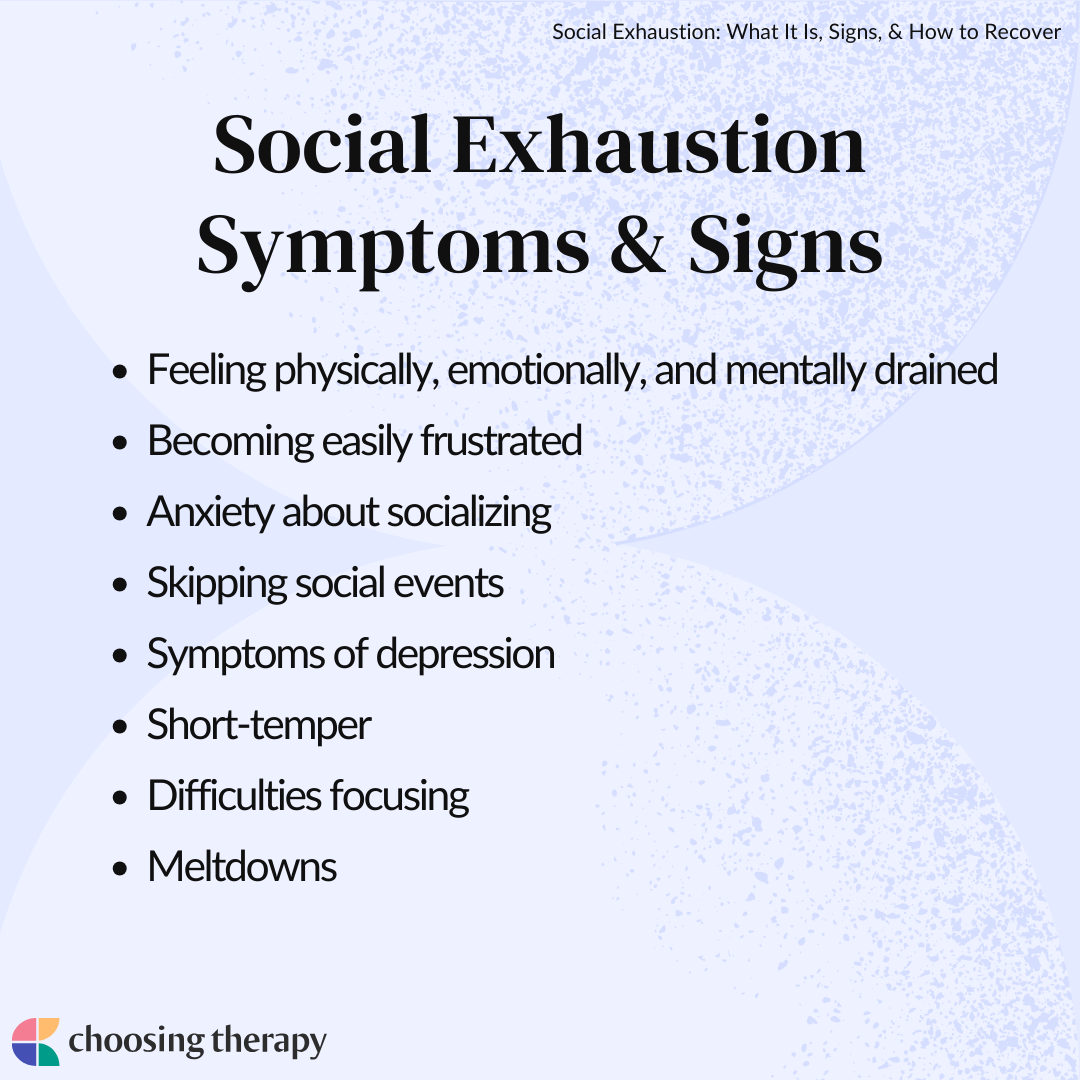
Below are signs of social exhaustion:
- Feeling physically, emotionally, and/or mentally drained
- Becoming easily frustrated
- Anxiety about socializing
- Skipping social events
- Symptoms of depression
- Short-temper
- Difficulties focusing
- Meltdowns
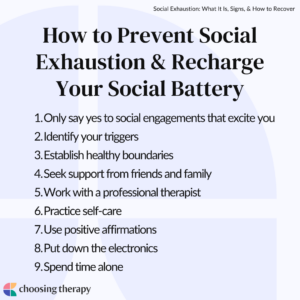
How to Prevent Social Exhaustion & Recharge Your Social Battery
Feeling socially drained can impact your entire life. While managing social exhaustion can be difficult, you can recharge your energy by prioritizing self-care. Learn to say “no” to activities that cause stress, adjust your social habits, establish healthy boundaries, and spend time alone.
Here are eight ways to prevent social fatigue, resist social burnout, and preserve your social energy:
1. Only Say Yes to Social Engagements That Excite You
Pick and choose social engagements that excite you. Continuously overextending yourself by saying yes to every invite will lead to overwhelm and undue stress. Don’t pressure yourself with feelings of obligation–protect your energy by prioritizing your social needs and limits.
2. Identify Your Triggers
You can help prevent social exhaustion by learning your triggers. For example, explore your feelings after specific situations, such as work parties, family get-togethers, or group outings. Do these events drain your social battery? Recognizing what causes social fatigue can help you learn methods to avoid triggers or manage your reactions.
3. Establish Healthy Boundaries
Setting boundaries protects your emotional and mental health when socializing with others. Sometimes, social exhaustion stems from interactions that exceed your limits and ability to cope. For instance, dealing with a toxic friend can leave you feeling socially overwhelmed and anxious. Start by identifying what you will and will not tolerate in your relationships. Express these limits with others and stand your ground if they push back.
4. Seek Support From Friends & Family
A support system of family or friends can provide validation when struggling with social exhaustion. Express your feelings and struggles with these trusted loved ones, and be open to hearing their suggestions or insight. They may have tips for reducing social overwhelm you may have otherwise overlooked.
5. Work With a Professional Therapist
Finding the right therapist is essential if you continuously struggle with social exhaustion. They can guide you on boundary-setting and self-care. Start by deciding what type of therapist you need and what you want to gain from the process.
Mental health professionals have many skills and specialties to help you change negative thought patterns, be more mindful, regulate emotions, and learn relaxation techniques to combat social burnout. Consider starting your search for a provider in an online therapist directory.
Therapy to Reduce Stress & Avoid Burnout A therapist can help you process thoughts and feelings, understand motivations, and develop healthy coping skills. BetterHelp has over 30,000 licensed therapists who provide convenient and affordable online therapy. BetterHelp starts at $65 per week and is FSA/HSA eligible by most providers. Take a free online assessment and get matched with the right therapist for you.
6. Practice Self-Care
Take time for yourself to reset and recharge. Implementing a self-care regimen can help build your sense of self and self-worth. Learning what makes you happy can show you the many benefits of being alone and caring for your needs.
7. Use Positive Affirmations
Positive affirmations are phrases you repeat to turn negative thoughts into positive ones. Examples include, “I am allowed to rest,” “I value myself,” and “Taking a break is okay.” Incorporate these statements into your routine when feeling anxious or tired after socializing to recharge and refresh your mind.
8. Put Down the Electronics
How often do you check what others are doing out of fear of missing out? These constant thoughts and urges can easily cause social fatigue. Slowly disengage from scrolling your newsfeed, and consider taking a social media break. This break allows you to rest and refill your social battery.
9. Spend Time Alone
Getting alone time can help you recover from burnout. Many people like being alone, and you may be one of them. Be kind to yourself by putting your well-being first. Spending time with yourself also fosters self-awareness and an understanding of how your body responds to social stress. With this knowledge, you can change your routine to align with your needs and social energy levels.
In My Experience
“The first step is to reach out to a therapist, counselor, or mental health professional when experiencing social fatigue. Working with someone at individual counseling can help you learn coping skills, value and enjoy ‘me time,’ and avoid exhaustion in the future. Getting the support of a therapist could help you avoid high-functioning depression or more severe outcomes.”

Social Exhaustion Infographics
ChoosingTherapy.com strives to provide our readers with mental health content that is accurate and actionable. We have high standards for what can be cited within our articles. Acceptable sources include government agencies, universities and colleges, scholarly journals, industry and professional associations, and other high-integrity sources of mental health journalism. Learn more by reviewing our full editorial policy.
-
Maslach, C., & Jackson, S. E. (1981). The measurement of experienced burnout. Journal of Organizational Behavior, 2(2), 100.
-
Lisechetzke, T., & Eid, M. (2006). Why Extraverts Are Happier Than Introverts: The Role of Mood Regulation. Journal of Personality, 74(4), 1127-1162. https://doi.org/10.1111/j.1467-6494.2006.00405.x
-
Mingchuan Hsieh, & Hsiao-Chi Juan. (2021). An Examination of the Effects of Personality Traits on Performance Scores. International Journal of Intelligent Technologies & Applied Statistics, 14(1), 33-45. https://doi.org/10.6148/IJITAS.202104_14(1).0003

We regularly update the articles on ChoosingTherapy.com to ensure we continue to reflect scientific consensus on the topics we cover, to incorporate new research into our articles, and to better answer our audience’s questions. When our content undergoes a significant revision, we summarize the changes that were made and the date on which they occurred. We also record the authors and medical reviewers who contributed to previous versions of the article. Read more about our editorial policies here.
Author: Jaclyn Gulotta, LMHC (No Change)
Reviewer: Naveed Saleh, MD, MS (No Change)
Primary Changes: Fact-checked and edited for improved readability and clarity.
Author: Jaclyn Gulotta, LMHC (No Change)
Reviewer: Naveed Saleh, MD, MS (No Change)
Primary Changes: Updated for readability and clarity. Reviewed and added relevant resources.
Author: Jaclyn Gulotta, LMHC
Reviewer: Naveed Saleh, MD, MS
Your Voice Matters
Can't find what you're looking for?
Request an article! Tell ChoosingTherapy.com’s editorial team what questions you have about mental health, emotional wellness, relationships, and parenting. Our licensed therapists are just waiting to cover new topics you care about!
Leave your feedback for our editors.
Share your feedback on this article with our editors. If there’s something we missed or something we could improve on, we’d love to hear it.
Our writers and editors love compliments, too. :)
Additional Resources
To help our readers take the next step in their mental health journey, ChoosingTherapy.com has partnered with leaders in mental health and wellness. ChoosingTherapy.com is compensated for marketing by the companies included below.
Learn Mindfulness, Meditation, & Relaxation Techniques
Mindfulness.com – Change your life by practicing mindfulness. In a few minutes a day, you can start developing mindfulness and meditation skills. Free Trial
Talk Therapy
BetterHelp Get support and guidance from a licensed therapist. BetterHelp has over 20,000 therapists who provide convenient and affordable online therapy. BetterHelp starts at $65 per week and is FSA/HSA eligible by most providers. Complete a brief questionnaire and get matched with the right therapist for you. Get Started
Stress & Burnout Newsletter
A free newsletter from the experts at ChoosingTherapy.com for those interested in reducing stress and preventing burnout. Get helpful tips and the latest information. Sign-Up
ChoosingTherapy.com Directory
Find local therapists that offer online and in-person therapy. Search for therapists by specialty, experience, insurance, and location. Find a therapist near you.
Online Stress Test A few questions from Talkiatry can help you understand your symptoms and give you a recommendation for what to do next. Best Online Therapy Services There are a number of factors to consider when trying to determine which online therapy platform is going to be the best fit for you. It’s important to be mindful of what each platform costs, the services they provide you with, their providers’ training and level of expertise, and several other important criteria.