


There are three primary types of ADHD: Inattentive type, hyperactive-impulsive type, and a combined type. Inattentive ADHD is a type of ADHD where an individual’s symptoms are primarily in the inattentive cluster of symptoms in the DSM-V. Hyperactive-impulsive ADHD is a type of ADHD where the majority of symptoms fall in the hyperactive-impulsive category, and combined ADHD is a type of ADHD where multiple symptoms from both categories are present.
ADHD Diagnosis & Treatment at Talkiatry
Talkiatry can match you with a psychiatrist who takes your insurance. Their clinicians can evaluate you for ADHD and prescribe medication. This can include controlled substances if they’re right for you and allowed by your state. Get started with a short online assessment.
What Is ADHD?
ADHD stands for attention deficit hyperactivity disorder. ADHD is a neurological disorder, meaning that individuals living with ADHD are believed to have different brain functions and processes than “neurotypical” individuals. Perhaps you are wondering, is ADHD genetic? ADHD has been found to have a strong environmental and genetic component.1 ADHD is a disorder where the executive function abilities of the brain, primarily located in the frontal lobe, do not function as efficiently as in neurotypical individuals.1
Types of ADHD
ADHD is separated into three main types: Inattentive, hyperactive-impulsive, and combined. These three types are distinguished by the severity and number of symptoms impacting an individual’s ability to function in one or both categories. These three separate types help determine the most appropriate treatment path for an individual and help target which areas of life and in what ways symptoms are causing the most interference.
Combined type ADHD is currently the most common type of ADHD. It was traditionally believed that all types of ADHD have an onset in childhood, but more recent research suggests the possibility of adult-onset ADHD.3 The way ADHD symptoms manifest is unique to each individual, and clusters of symptoms might manifest in many ways.
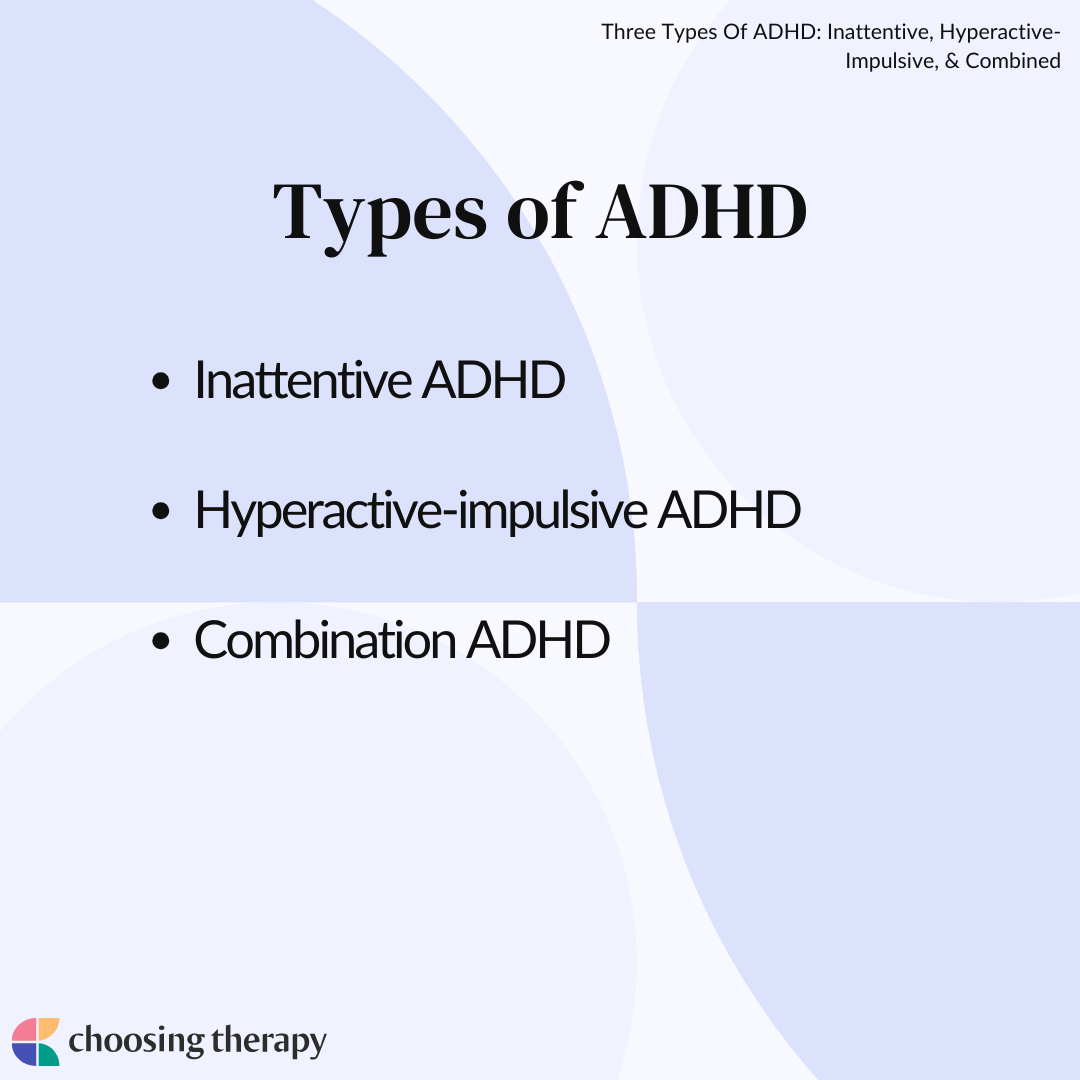
The three types of ADHD are:
- Inattentive ADHD
- Hyperactive-impulsive ADHD
- Combination ADHD
ADHD Subtypes
Because research on ADHD is rapidly changing, it is difficult to find consistent prevalence rates regarding subtypes of ADHD. Furthermore, research on subtypes of ADHD has been done on particular populations, which makes the information difficult to generalize. Research has historically found that boys are more likely than girls to be diagnosed with ADHD, however, these numbers will likely be changing due to increased flexibility in understanding the complexity of ADHD presentations in different genders as well as the part gender role socialization plays in diagnosis.4
Research findings also differ regarding adults with ADHD, children with ADHD, men with ADHD, and women with ADHD.5 These trends include an increase in the incidence of ADHD in adults and an increase in the incidence of women diagnosed with all types of ADHD. Some studies have also found that children are more likely to be diagnosed with inattentive type ADHD than combined ADHD.6
Inattentive ADHD
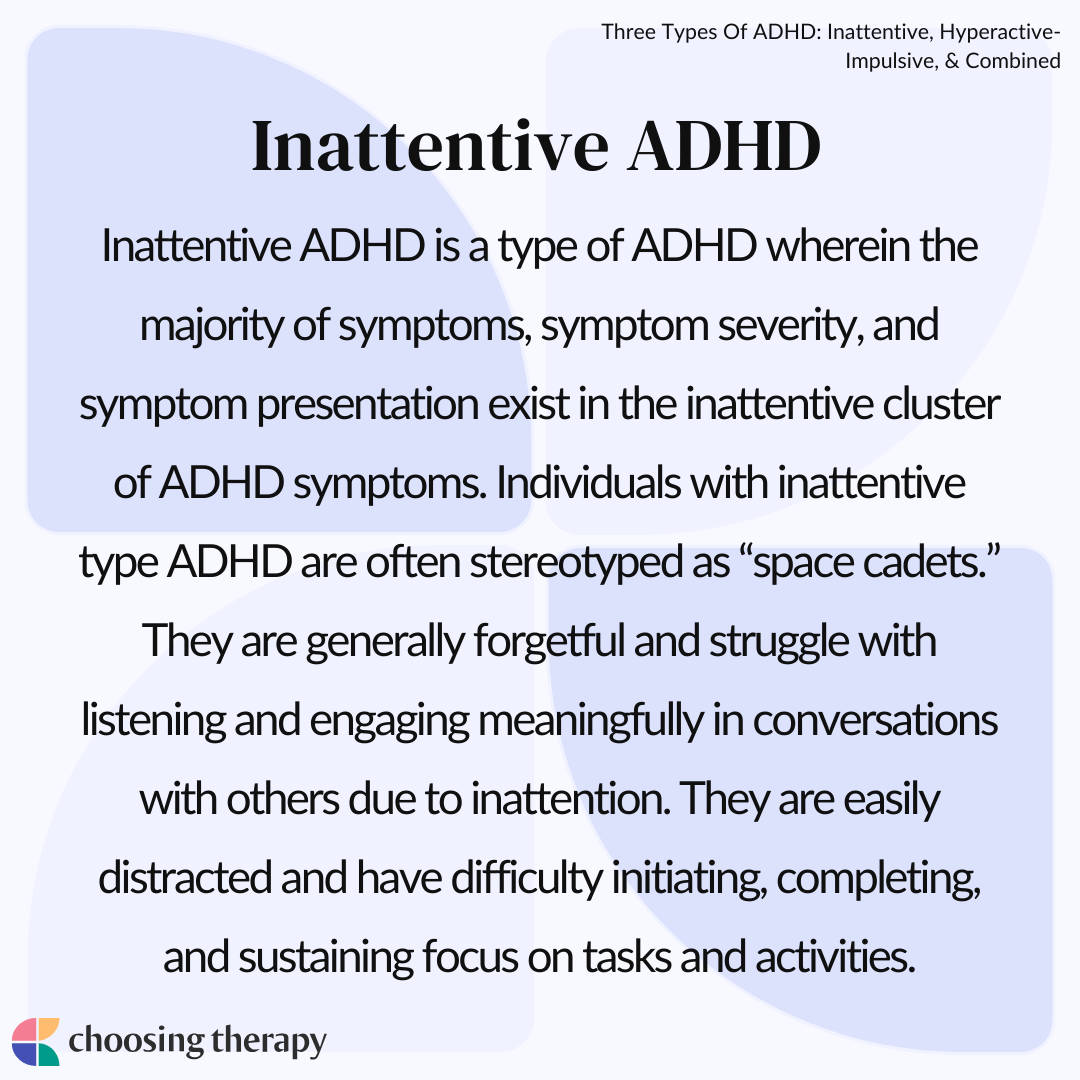
Inattentive ADHD is a type of ADHD wherein the majority of symptoms, symptom severity, and symptom presentation exist in the inattentive cluster of ADHD symptoms. Individuals with inattentive type ADHD are often stereotyped as “space cadets.” They are generally forgetful and struggle with listening and engaging meaningfully in conversations with others due to inattention. They are easily distracted and have difficulty initiating, completing, and sustaining focus on tasks and activities.
Common symptoms of inattentive ADHD include:
- Lack of attention to details
- Difficulty sustaining attention
- Difficulty following through on tasks
- Trouble with organizing tasks and activities
- Avoiding tasks that require sustained mental effort
- Often losing or misplacing important items
- Being easily distracted
- Being forgetful in daily activities
Hyperactive-Impulsive ADHD
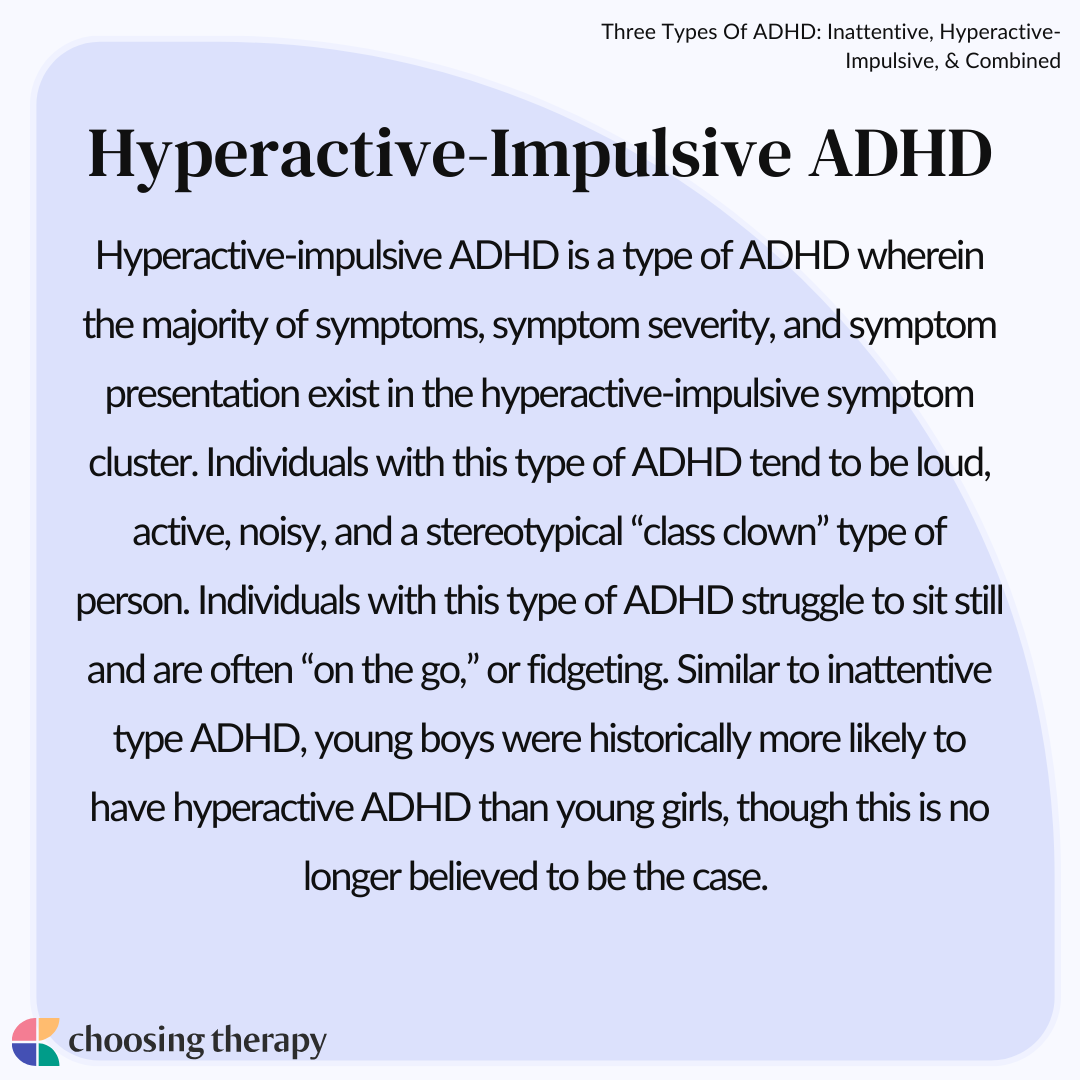
Hyperactive-impulsive ADHD is a type of ADHD wherein the majority of symptoms, symptom severity, and symptom presentation exist in the hyperactive-impulsive symptom cluster. Individuals with this type of ADHD tend to be loud, active, noisy, and a stereotypical “class clown” type of person. Individuals with this type of ADHD struggle to sit still and are often “on the go,” or fidgeting. Hyperactivity in children is more prevalent in the United States compared with other countries.7 Similar to inattentive type ADHD, young boys were historically more likely to have hyperactive ADHD than young girls, though this is no longer believed to be the case. The global prevalence rate for all types of ADHD is approximately 5%.7
Common symptoms of hyperactive-impulsive ADHD include:
- Fidgeting
- Difficulty sitting still
- Often “on the go” as if driven by a motor”
- Talks excessively
- Interrupts others
- Tends to act without thinking (impulsivity)
- Excessively loud or noisy
Combination ADHD
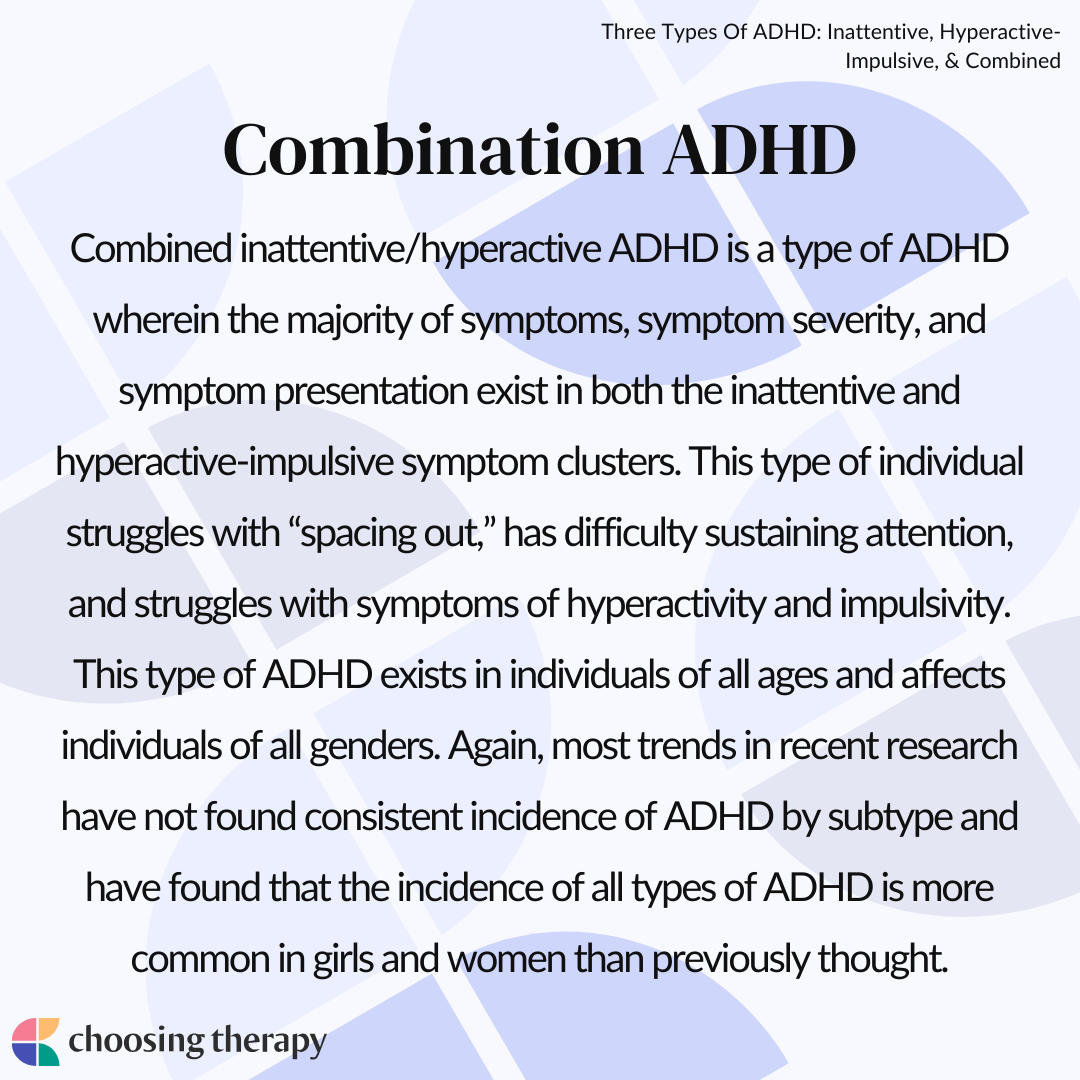
Combined inattentive/hyperactive ADHD is a type of ADHD wherein the majority of symptoms, symptom severity, and symptom presentation exist in both the inattentive and hyperactive-impulsive symptom clusters. This type of individual struggles with “spacing out,” has difficulty sustaining attention, and struggles with symptoms of hyperactivity and impulsivity. This type of ADHD exists in individuals of all ages and affects individuals of all genders. Again, most trends in recent research have not found consistent incidence of ADHD by subtype and have found that the incidence of all types of ADHD is more common in girls and women than previously thought.
Combined ADHD is diagnosed when six or more symptoms in each category of inattentive ADHD or hyperactive ADHD exist for children, and five or more symptoms in each category of inattentive ADHD and hyperactive ADHD exist for adults. There is no unique symptom cluster for combined ADHD. Instead, it is a product of both inattentive ADHD symptoms and hyperactive/impulsive ADHD symptoms listed above.
ADHD Management Tools
Inflow App is the #1 science-based app to help you manage your ADHD. Their support system helps you understand your neurodiverse brain and build lifelong skills. Free Trial
Causes of ADHD
ADHD has been found to have a genetic and environmental component. Genetic inheritance, brain development and neurochemical pathways play a role in the development of ADHD.
Environmental risk factors have also been found to play a role in the development of ADHD such as the following:
- Familial adversity
- Maternal stress during pregnancy
- Alcohol use during pregnancy
- Smoking during pregnancy
- Drug use during pregnancy
- Nutritional factors
- Other psychosocial adversity
How are the Types of ADHD Diagnosed?
The type of ADHD diagnosed depends on the number of symptoms present in each category of inattentive ADHD, hyperactive ADHD, or a combination of both. It is also important for clinicians to evaluate symptom severity within each cluster to obtain further information about which symptoms are causing the greatest interference or dysfunction in a person’s life. This can generally be done by giving a client a symptom checklist that lists all symptoms of ADHD and asking them to rate each symptom by severity.
Adults 17 years and older need five symptoms in at least one symptom cluster (inattentive or hyperactive), and children 16 years and younger need at least six symptoms in one symptom cluster (inattentive or hyperactive). Individuals of all ages diagnosed with combined type ADHD need at least five signs in both categories (for adults) and at least six (for children). These symptoms need to have been persisting with relative frequency for longer than six months to be diagnosed, and a history of symptoms dating back before the age of 12 also needs to be established for a diagnosis to be given, though with the rise in the incidence of adult-onset ADHD, this diagnostic criterion may be changing in the future.
To seek a diagnosis of ADHD, an individual should see a healthcare professional and consider neuropsychological testing to be accurately diagnosed. Psychiatrists and psychologists can perform formal assessments. The first step to getting a referral for assessment for individuals of all ages is to speak with their primary care provider (parents might consider speaking with a pediatrician) or counselor to ask if they think getting a formal assessment for ADHD would be appropriate. An individual can also directly seek a specialist who provides neuropsychological testing services for ADHD diagnosis, which will usually include formal measures of attention.
A diagnostic process for ADHD may include:
- Review of medical history
- Review of mental health history
- Review of family medical and mental health history
- History of symptoms extending back before the age of 12
- A symptom checklist and assessment of symptom severity
- Assessment of areas of life in which symptoms are causing impairment and/or distress
- Relevant genetic history of ADHD
- General mental health evaluation
- Neuropsychological testing
- Personality testing


ADHD Workbook
Our workbook includes all of our best ADHD worksheets to help you manage ADHD with goal-setting, planning, and coping skills.
How are the Types of ADHD Treated?
ADHD is generally treated behaviorally, with medication or a combination of both. Cognitive behavioral therapy is effective in treating ADHD. Creating an individualized treatment plan with a mental health professional can help target problem areas where symptoms are causing distress and work to decrease symptom severity. Acceptance-based therapy helps individuals accept their symptoms’ impact on their lives and make more affirming choices of their neurodiversity. This treatment approach also tends to improve self-concept in individuals with ADHD rather than making them feel something is wrong.
A combination of medication and behavioral therapy, such as CBT for ADHD, is the most effective treatment for ADHD.The behavioral therapies would include developing compensatory strategies and increasing acceptance. For options regarding medication for ADHD, or natural remedies for ADHD seek consultation with a prescribing provider specializing in ADHD treatment.
ADHD Treatment for Adults Vs. Children
ADHD symptom severity can improve with age if appropriately treated. ADHD treatment for adults may look different than treatment for children. For example, specific behavioral interventions for children may include play therapy, an individualized treatment plan at school, and other child-specific interventions that have been found to be effective. Behavioral treatment for ADHD will look different depending on where an individual is in their developmental process. The common thread of behavioral treatment is tailoring interventions to address problem areas and symptom severity specific to each individual.
How to Find Professional Support
If you’re seeking professional support for ADHD, it is helpful to find a neurodiverse-affirming therapist. You may consider using an online therapist directory or online therapy platform as a good source for finding a therapist specializing in ADHD treatment. If seeking medication for ADHD, online psychiatrist options are a good choice for finding ADHD medication management. If pursuing the medication online it is important to make sure that your psychiatrist would offer this service specifically for ADHD as many of the prescribed medications are under tighter regulations than other mental health treatments.
ADHD Diagnosis & Treatment at Talkiatry
Talkiatry can match you with a psychiatrist who takes your insurance. Their clinicians can evaluate you for ADHD and prescribe medication. This can include controlled substances if they’re right for you and allowed by your state. Get started with a short online assessment.
In My Experience
In my experience, seeking professional support for treating all types of ADHD is helpful when symptoms are causing impairment in one or more important areas of life, such as at work, school, relationships, or daily activities of living. Neuropsychological testing is currently the most reliable method for assessing what type of ADHD an individual might have. If diagnosed and treated correctly, the prognosis for ADHD is positive in reducing symptom severity over time. I would suggest individuals living with ADHD seek treatment that combines important behavioral changes with a big dose of acceptance and self-compassion. We live in a capitalist society that profits from making people believe they are deficient. Our society is also built around neurotypical individuals and expectations that are often excessive and unrealistic for people living within the spectrum of neurodiversity. It is important to remember that you are enough just as you are, no matter what mental health struggles you may be facing.

Three Types Of ADHD Infographics
ChoosingTherapy.com strives to provide our readers with mental health content that is accurate and actionable. We have high standards for what can be cited within our articles. Acceptable sources include government agencies, universities and colleges, scholarly journals, industry and professional associations, and other high-integrity sources of mental health journalism. Learn more by reviewing our full editorial policy.
-
Khan, S. A., & Faraone, S. V. (2006). The genetics of ADHD: a literature review of 2005. Current Psychiatry Reports, 8(5), 393-397.
-
Krain, A. L., & Castellanos, F. X. (2006). Brain development and ADHD. Clinical psychology review, 26(4), 433-444.
-
Moffitt, T. E., Houts, R., Asherson, P., Belsky, D. W., Corcoran, D. L., Hammerle, M., … & Caspi, A. (2015). Is adult ADHD a childhood-onset neurodevelopmental disorder? Evidence from a four-decade longitudinal cohort study. American Journal of Psychiatry, 172(10), 967-977.
-
Salari, N., Ghasemi, H., Abdoli, N., Rahmani, A., Shiri, M. H., Hashemian, A. H., … & Mohammadi, M. (2023). The global prevalence of ADHD in children and adolescents: a systematic review and meta-analysis. Italian Journal of Pediatrics, 49(1), 48.
-
Blair, K. N., & Kim, M. Y. (2023). Sex and Gender Differences in Attention-Deficit/Hyperactive disorder (ADHD): A Literature Review.
-
Uliel-Sibony, S., Chernuha, V., Tokatly Latzer, I., & Leitner, Y. (2023). Epilepsy and attention-deficit/hyperactivity disorder in children and adolescents: An overview of etiology, prevalence, and treatment. Frontiers in Human Neuroscience, 17, 1021605.
-
Faraone, S. V., Sergeant, J., Gillberg, C., & Biederman, J. (2003). The worldwide prevalence of ADHD: is it an American condition?. World psychiatry, 2(2), 104.
-
Volkow, N. D., Wang, G. J., Kollins, S. H., Wigal, T. L., Newcorn, J. H., Telang, F., … & Swanson, J. M. (2009). Evaluating dopamine reward pathway in ADHD: clinical implications. Jama, 302(10), 1084-1091.
-
Thapar, A., Cooper, M., Jefferies, R., & Stergiakouli, E. (2012). What causes attention deficit hyperactivity disorder?. Archives of disease in childhood, 97(3), 260-265.

We regularly update the articles on ChoosingTherapy.com to ensure we continue to reflect scientific consensus on the topics we cover, to incorporate new research into our articles, and to better answer our audience’s questions. When our content undergoes a significant revision, we summarize the changes that were made and the date on which they occurred. We also record the authors and medical reviewers who contributed to previous versions of the article. Read more about our editorial policies here.
Author: No Change
Reviewer: No Change
Primary Changes: Added ADHD Workbook with six worksheets.
Your Voice Matters
Can't find what you're looking for?
Request an article! Tell ChoosingTherapy.com’s editorial team what questions you have about mental health, emotional wellness, relationships, and parenting. Our licensed therapists are just waiting to cover new topics you care about!
Leave your feedback for our editors.
Share your feedback on this article with our editors. If there’s something we missed or something we could improve on, we’d love to hear it.
Our writers and editors love compliments, too. :)
Additional Resources
To help our readers take the next step in their mental health journey, ChoosingTherapy.com has partnered with leaders in mental health and wellness. ChoosingTherapy.com is compensated for marketing by the companies included below.
ADHD Diagnosis & Treatment at Talkiatry
Talkiatry – can match you with a psychiatrist who takes your insurance. Their clinicians can evaluate you for ADHD and prescribe medication. This can include controlled substances if they’re right for you and allowed by your state. Get started with a short online assessment.
ADHD Management Tools
Inflow App – Inflow is the #1 science-based app to help you manage your ADHD. Their support system helps you understand your neurodiverse brain, and build lifelong skills. Free Trial
Online Psychiatry
Circle Medical – Affordable online ADHD evaluations and treatment. Circle Medical can prescribe controlled substances when clinically appropriate. Insurance accepted. Same day appointments available. Visit Circle Medical
Free ADHD Newsletter
A free newsletter from Choosing Therapy for those impacted by ADHD. Get helpful tips and the latest information. Sign Up

Do you think you have ADHD?
Answering a few questions can help you understand your symptoms and give you a recommendation for what to do next.
Best Online ADHD Treatments
There are many considerations when looking for the best online ADHD treatments. It is important to know which online platforms can provide a diagnosis, which offers therapy only, which offers medication management only, and which offers a combination of treatments.
