


Recovering from substance use is often not linear, and some will experience relapse. Relapse involves prior abstaining from a particular substance and a regression in behavior involving using substances again. Relapses can be a one-time occurrence or occur several times, lasting days or years without treatment.
Ria Health: Effective, Evidence-Based Alcohol Treatment 100% Online
Quickly change your relationship to alcohol with our at-home program. On average, Ria Health members reduce their BAC levels by 50% in 3 months in the program. Services are covered by many major health plans. Visit Ria Health
What Is Alcohol Relapse?
A relapse involving alcohol is the same as any other relapse from substances. Relapsing after attempting to remain sober from alcohol can be disheartening and frustrating. Those who struggle with maintaining sobriety from alcohol, might struggle with alcoholism. Although a relapse is often considered part of the recovery journey, it does not have to be your story. Yes, relapses happen. However, if you tell yourself you will relapse, the likelihood of this occurring is significant.
Triggers That Can Lead to Alcohol Relapse
There are various triggers that can lead to a relapse, which can involve people, places, emotions, objects, and more. Triggers are sometimes unavoidable, which is why it is essential to build awareness. Once you can identify your triggers, you can cope ahead of them.
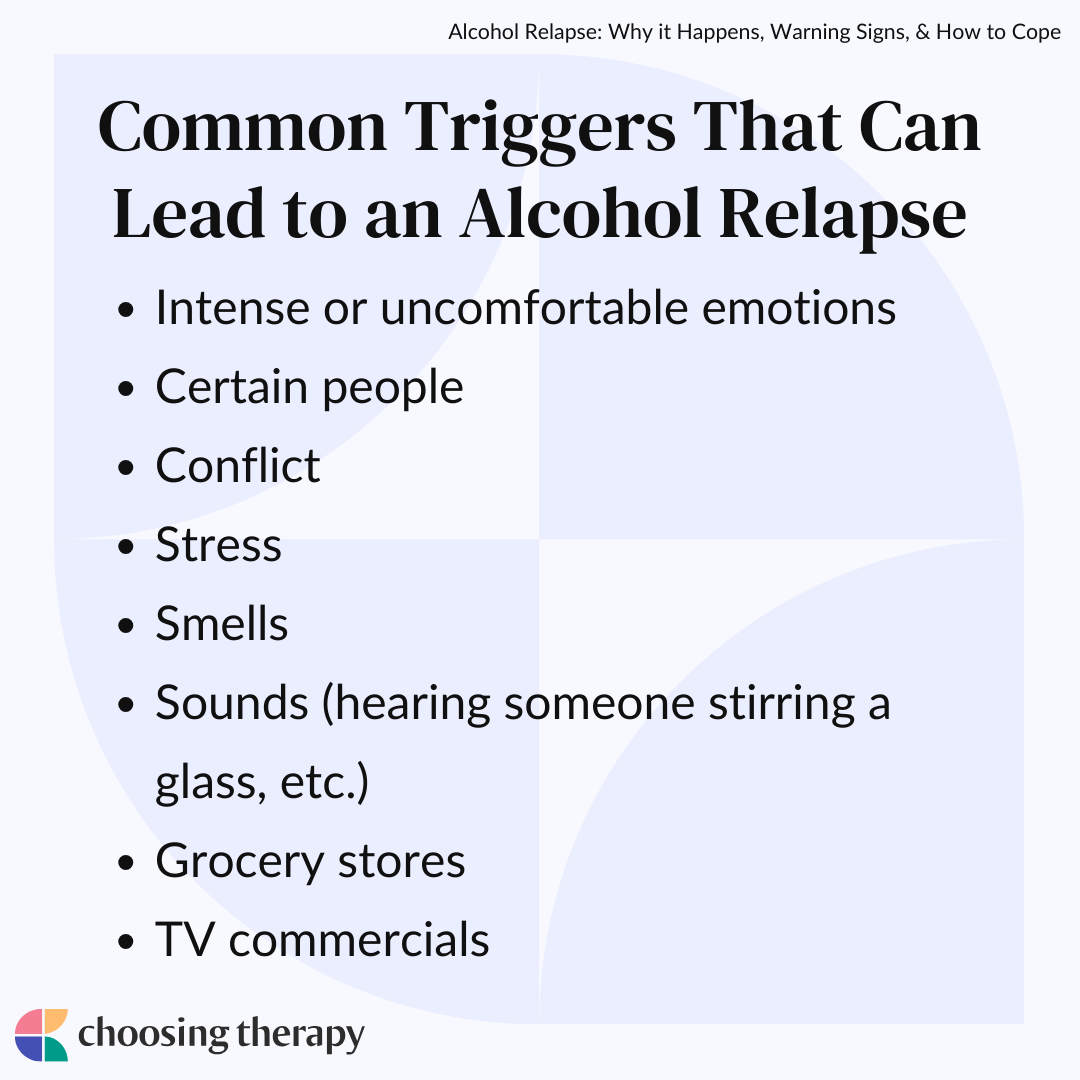
Common triggers that can lead to an alcohol relapse include:
- Intense or uncomfortable emotions
- Certain people
- Conflict
- Stress
- Smells
- Sounds (hearing someone stirring a glass, etc.)
- Grocery stores
- TV commercials
The Role of Emotions in Relapse
Emotions are felt on a spectrum and vary in intensity, leaving every person vulnerable to emotions influencing behavior. Any emotion can be uncomfortable due to them being unfamiliar or overwhelming in nature. It is important to know any individual’s emotional state can impact recovery from substances and has the potential to lead to a relapse.
Stages of Alcohol Relapse
Relapse does not happen randomly, and often, the relapse is already in motion prior to the person picking up the drink or drug. Experts in the field believe that there are stages of relapse: emotional, mental, and physical.1
Stages of alcohol relapse include:
Emotional Relapse
During an emotional relapse, individuals are not actively thinking about using or drinking. However, their emotions and behaviors are putting them at an increased risk for relapse down the road.
Signs to be cognisant of include suppressing or bottling emotions, isolating, not going to meetings, attending meetings but not sharing, focusing on others rather than yourself, and poor self-care.1
Mental Relapse
A mental relapse involves the battle going on inside the mind. It involves the desperate desire to drink or use combined with thoughts of wanting sobriety and recovery. This cognitive dissonance can cause extreme distress and often leads to relapse.
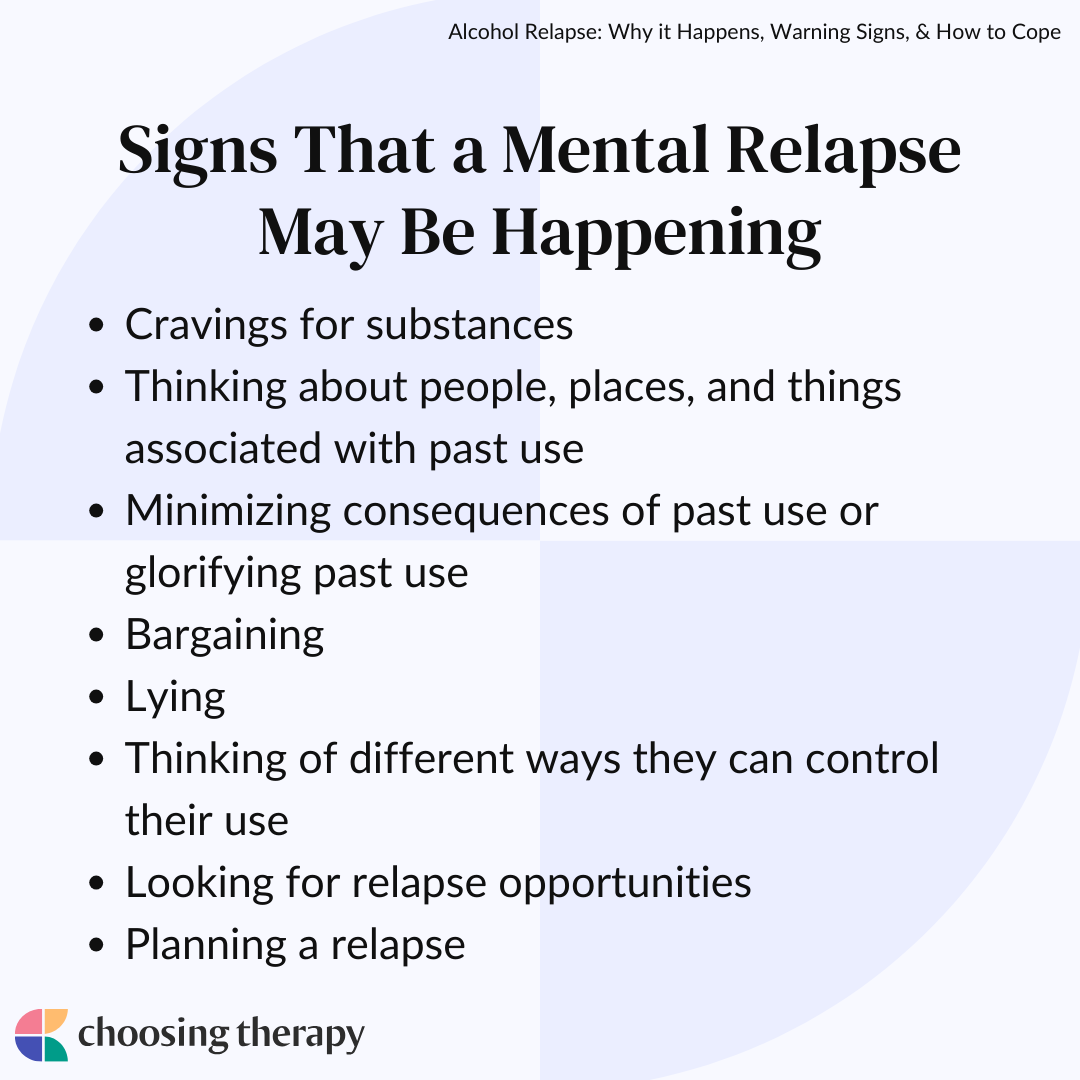
Signs that a mental relapse may be happening include:
- Cravings for substances
- Thinking about people, places, and things associated with past use
- Minimizing consequences of past use or glorifying past use
- Bargaining
- Lying
- Thinking of different ways they can control their use
- Looking for relapse opportunities
- Planning a relapse1
Physical Relapse
The final stage of relapse involves the physical act of picking up that drink or drug. This is the most difficult stage to backpedal, as with the nature of addiction, it is never just one drink. It is essential to learn how to recognize the early stages of relapse as it is easier to prevent a full-blown relapse early on.
Warning Signs of Alcohol Relapse
Warning signs of relapsing with alcohol will vary from person to person and will require awareness in order to prevent the relapse from happening. Educating ourselves and our loved ones on potential signs of relapse will allow for accountability and support.
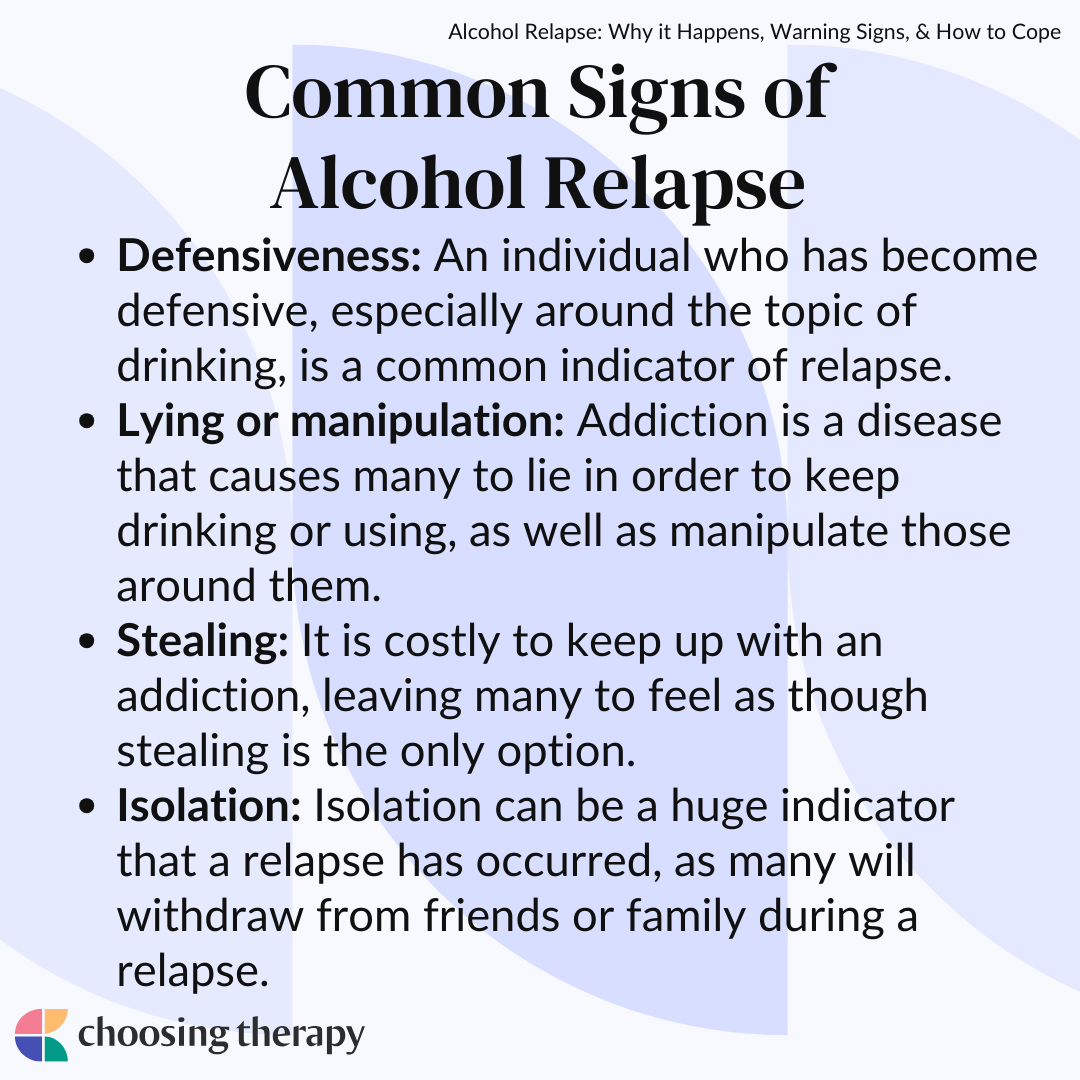
Common signs of alcohol relapse include:
- Defensiveness: An individual who has become defensive, especially around the topic of drinking, is a common indicator of relapse.
- Lying or manipulation: Addiction is a disease that causes many to lie in order to keep drinking or using, as well as manipulate those around them. This is a common behavior seen in addiction.
- Stealing: Another behavior that indicates an individual has relapsed. It is costly to keep up with an addiction, leaving many to feel as though stealing is the only option.
- Isolation: Relapse comes with immense shame and guilt. Isolation can be a huge indicator that a relapse has occurred, as many will withdraw from friends or family during a relapse.
Help for Alcohol Use
Ria Health: Effective, Evidence-Based Alcohol Treatment 100% Online Quickly change your relationship to alcohol with our at-home program. On average, Ria Health members reduce their BAC levels by 50% in 3 months in the program. Services are covered by many major health plans. Visit Ria Health
Want to drink less? Sunnyside helps you ease into mindful drinking at your own pace. Think lifestyle change, not a fad diet. Develop new daily routines, so you maintain your new habits for life. Take a 3 Minute Quiz
Alcohol Relapse Risk Factors
There are several risk factors that make individuals more vulnerable to not only becoming addicted to substances but also increasing risk for relapse significantly. Risk factors for relapse will not all be the same for each person. However, many will be able to relate to a few of them listed below.
Risk factors for alcohol relapse include:
Alcohol Dependence
Building up a dependence on alcohol can be a risk factor that contributes to a relapse. Once the body builds dependence on a substance, it will take more of that substance to feel intoxicated or a “buzz.” For those who chase this feeling, this can be a contributing factor to relapse.
Mood Disorders
The presence of a pre-existing mental health disorder is often a huge risk factor. Many will turn to drinking or using in order to cope with mental health symptoms. The connection between depression and alcohol is significant, and both must be treated in order to decrease relapse risk.
Exposure to Stressors
The inability to cope with daily life stressors increases an individual’s risk for relapse significantly. Many use their substance to cope – it is their greatest (although unhealthy) coping mechanism. Relapse prevention includes healthy coping skill development so that when stressors arise, they can cope effectively without turning to the substance.
Lack of Social Support
Social support can act as a protective factor for relapse. As you can imagine, lack of social support is a huge risk factor. Social support can provide connection and accountability, making it difficult to slip into a relapse. When there is no social support, this allows for isolation to occur, which increases the risk for relapse.
Peer Pressure
Being around others who drink or use or encourage you to join poses a significant risk for relapse. When there is peer pressure, it normalizes substance use, which can be detrimental to recovery. Surrounding yourself with positive, supportive peers can have a positive influence on your recovery journey.
Low Self-Esteem
Feeling less than or struggling with low self-esteem can contribute to or even cause a relapse. Low self-esteem normally follows automatic negative thoughts about ourselves, the world, and, in this case, recovery. The way you feel about and treat yourself has the power to influence other areas of your life.
Effects of Alcohol Relapse
Relapsing on alcohol can be mentally and physically taxing on the mind and body. When our body is used to not receiving something and then receiving it in large quantities, it is a shock to the system. Those who struggle with chronic relapses will likely experience physical and mental consequences.
Effects of alcohol relapse include:
Physical Effects of Alcohol Relapse
Relapse takes a toll on the body, and this can be seen through the physical side effects. When the body goes through multiple relapses and withdrawals, the body increases its sensitivity to withdrawal symptoms. Essentially, with each relapse, the withdrawal symptoms will be more intense; this is known as kindling.2
Physical effects of alcohol relapse include:
- Intense withdrawal symptoms
- Lethargy
- Decreased ability to concentrate
Mental Effects of Alcohol Relapse
The mental and emotional changes one experiences when relapsing into alcohol can be jarring. Mental effects of alcohol relapse often include personality changes from alcohol, which, although may be unnoticeable by the individual, can be easily noticed by friends and family.
Mental effects of alcohol relapse include:
- Irritability
- Change in sleep patterns
- Depression
- Restlessness or anxiety
- Isolation
How to Move Past an Alcohol Relapse
Many find comfort in normalizing relapse as a part of the recovery process. Dwelling on the fact that the relapse happened will not be helpful, as it can get in the way of recovery efforts. Identifying why the relapse occurred and working with professionals who treat addiction will be more effective and provide the individual with increased insight.
Things to do to move past an alcoholic relapse include:
Stop Drinking as Soon as Possible
You don’t have to let a lapse spiral into a relapse. Many feel that once they pick up that first drink, it’s pointless to try to stop, as a relapse is inevitable. Although this may feel true, it doesn’t have to be your reality. The sooner you stop drinking, the better, as it can decrease the intensity of withdrawal symptoms.
Seek Support
Recovery does not happen in isolation. Although reaching out for support after a relapse can seem terrifying, this brave step allows for accountability, which is essential in early recovery from any substance. Seeking support can look different to everyone and can include letting loved ones know, going to an AA meeting, seeking peer support or obtaining a sponsor, finding a therapist who specializes in addiction, or seeking more intensive treatment (Detox, residential, day treatment, etc.)
Identify Your Triggers
It is essential to take an inventory of what occurred prior to the relapse. Were you stressed? Were mental health symptoms getting in the way? Figuring out what triggered the relapse will allow you to cope ahead for when these events happen in the future. Identifying situations, events, or feelings that leave you vulnerable to relapse will be your best armor in recovery.
Make a Plan to Prevent Relapsing Again
Once you have identified triggers that contributed to the recent relapse, you can develop a relapse prevention plan. A relapse prevention plan identifies the problem behavior, applicable triggers, and specific coping skills for each trigger. The relapse prevention plan also helps identify different supports you can reach out to. The idea is that this plan can aid in preventing future relapses and should be something the individual can reflect back on.
Detox From Alcohol
A supervised, medical detox might be the safest option for those who have experienced a recent relapse. Detoxing from alcohol with medical oversight will allow providers to prescribe appropriate medications to lessen withdrawal symptoms. It is important to note that detoxing from alcohol is one of the most dangerous substances to detox from, as it can induce seizures and other medical complications.
Treatment for Alcoholism
Treating an addiction to alcohol will require safely detoxing from the substance, intensive mental health treatment to address underlying causes, and coping skill education to increase distress tolerance.
Treatment options for alcoholism include:
- Cognitive behavior therapy (CBT): CBT for substance use could help because it addresses negative thinking patterns.
- Dialectical behavior therapy (DBT): DBT teaches practical coping skills for interpersonal effectiveness, mindfulness, distress tolerance, and emotion regulation.
- Peer-led meetings: Meetings such as AA, NA, SMART Recovery, and Celebrate Recovery can provide positive peer support.
- Higher levels of care: More intensive support might be needed in order to recover. These levels of care range from the most intensive (Detox) to less intensive (day treatment). Many find a higher level of care essential to recovery, as it removes them from their normal, often triggering environment.
Ria Health: Effective, Evidence-Based Alcohol Treatment 100% Online
Quickly change your relationship to alcohol with our at-home program. On average, Ria Health members reduce their BAC levels by 50% in 3 months in the program. Services are covered by many major health plans. Visit Ria Health
When to Seek Professional Help
If you are finding yourself unable to quit drinking or your drinking is interfering with different areas of your life, it would be beneficial to reach out for help. Searching for a therapist who specializes in treating addiction can seem daunting. An online therapist directory or online therapy platform is a great choice for finding a therapist who specializes in alcohol use. If you believe that mental health concerns are interfering with recovery or contributing to alcohol use, a psychiatrist can help support you. There are online psychiatrist options that can help you find alcohol use medication management as well.
In My Experience
Some may view relapse as a failure, but as a clinician who works with those in recovery from substances, I find this so far from true. When I have a client sitting across from me, all I see is immense strength. I acknowledge that you are sacrificing your time, money, and sometimes freedom, to be in treatment so that you can give yourself an opportunity for a better life free from the grasp of addiction. Fall down seven times, get up eight.

Alcohol Relapse Infographics
ChoosingTherapy.com strives to provide our readers with mental health content that is accurate and actionable. We have high standards for what can be cited within our articles. Acceptable sources include government agencies, universities and colleges, scholarly journals, industry and professional associations, and other high-integrity sources of mental health journalism. Learn more by reviewing our full editorial policy.
-
Melemis S. M. (2015). Relapse Prevention and the Five Rules of Recovery. The Yale
journal of biology and medicine, 88(3), 325–332. -
Becker H. C. (2008). Alcohol dependence, withdrawal, and relapse. Alcohol research & health : the journal of the National Institute on Alcohol Abuse and Alcoholism, 31(4), 348–361.

Your Voice Matters
Can't find what you're looking for?
Request an article! Tell ChoosingTherapy.com’s editorial team what questions you have about mental health, emotional wellness, relationships, and parenting. Our licensed therapists are just waiting to cover new topics you care about!
Leave your feedback for our editors.
Share your feedback on this article with our editors. If there’s something we missed or something we could improve on, we’d love to hear it.
Our writers and editors love compliments, too. :)
Additional Resources
To help our readers take the next step in their mental health journey, ChoosingTherapy.com has partnered with leaders in mental health and wellness. ChoosingTherapy.com is compensated for marketing by the companies included below.
Alcohol Treatment – Cut Back or Quit Entirely
Ria Health – Quickly change your relationship to alcohol with our at-home program. On average, members reduce their BAC levels by 50% in 3 months in the program. Services are covered by many major health plans. Visit Ria Health
Drinking Moderation
Sunnyside – Want to drink less? Sunnyside helps you ease into mindful drinking at your own pace. Think lifestyle change, not a fad diet. Develop new daily routines, so you maintain your new habits for life. Take a 3 Minute Quiz
Treatment for Mental Health Conditions That Coexist With SUD
Talkiatry – Get help from a doctor who can treat the mental health conditions that commonly lead to or coexist with substance use disorders. Take our online assessment and have your first appointment in days. Take Assessment
Addiction Newsletter
A free newsletter from the experts at ChoosingTherapy.com for those impacted by addiction. Get helpful tips and the latest information. Sign Up

Best Online Medication-Assisted Treatment Programs
Online medication-assisted treatment programs are fairly new to the telehealth industry, but existing companies are expanding quickly with new programs emerging every day. It’s important to explore your options and understand the level of virtual care available so you can choose the best addiction treatment program for you.
Best Mindful Drinking Apps
If you’re thinking about joining the sober curious movement and you’d like to cut back on drinking, mindful drinking apps are a great place to start. Practicing mindful drinking can take some time, attention, and patience, but with the help of the right app, you can completely transform your relationship with alcohol.
