


Self-care means fulfilling your emotional, mental, physical, and spiritual needs to feel at peace and aligned with yourself. Many may view self-care as an extra or unnecessary activity. However, caring for yourself increases happiness, self-esteem, and overall well-being while decreasing stress, depression, and physical ailments. Self-care is an essential and beneficial practice to embrace.
ChoosingTherapy.com may earn a commission from the companies whose services are linked on this page.

Best Mental Health Apps
Our team of reviewers tested dozens of mental health apps to find the best options for your needs. Our top ten picks are affordable (or free) and offer features such as mood and symptom tracking, mindfulness, meditation, and even therapy. These tools make it easier to care for your overall mental wellness and achieve your goals, whatever they may be.
What Is Self-Care?
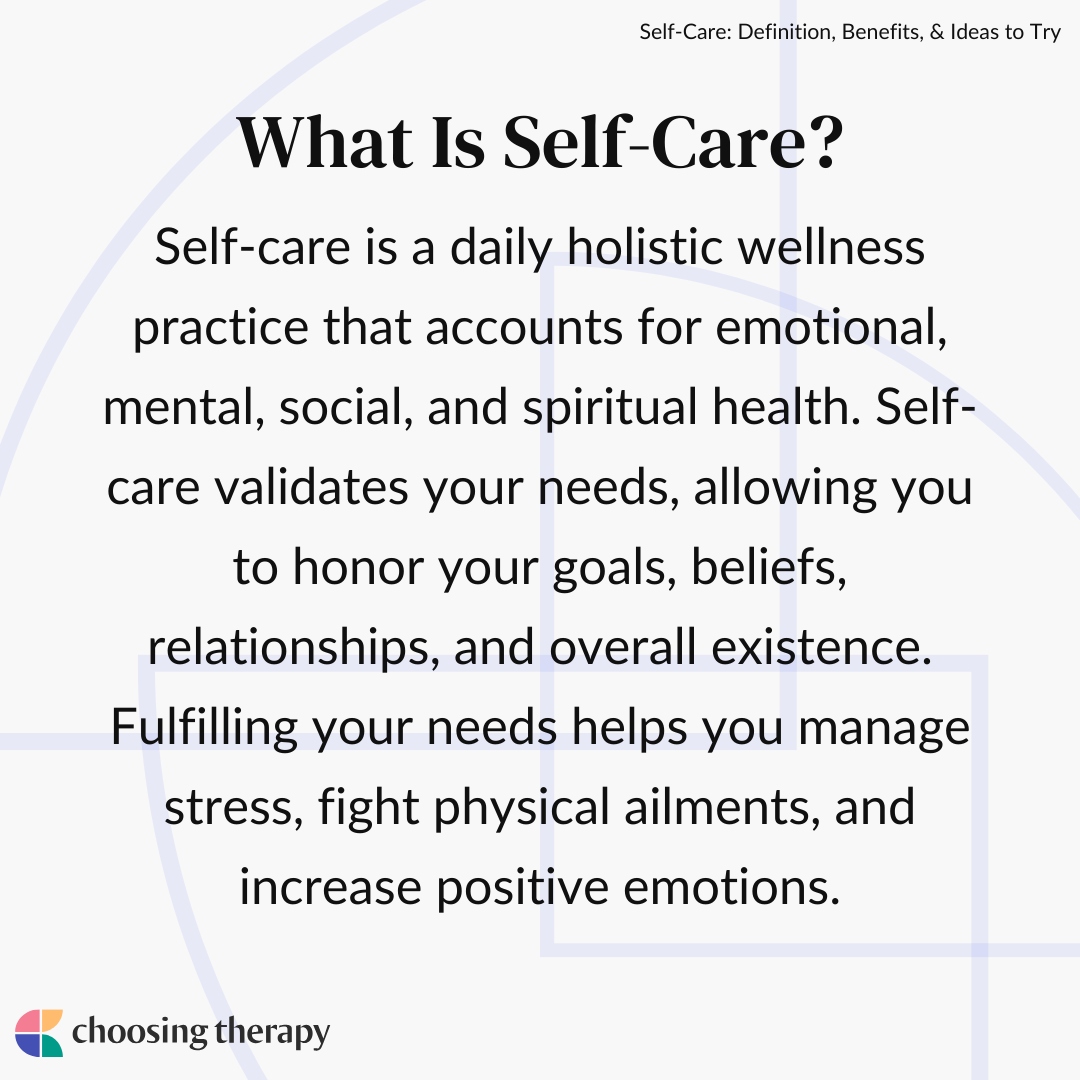
Self-care is a daily holistic wellness practice that accounts for emotional, mental, social, and spiritual health. Self-care validates your needs, allowing you to honor your goals, beliefs, relationships, and overall existence. Fulfilling your needs helps you manage stress, fight physical ailments, and increase positive emotions.1
Self-Care Vs. Self-Indulgence
Self-care means practicing deliberate actions to maintain or improve physical, emotional, and mental well-being. Self-care is often practical and geared toward long-term health benefits, such as getting enough rest, eating a balanced diet, and regularly exercising.
On the other hand, self-indulgence usually includes short-term, immediate gratification of personal desires without much consideration for long-term consequences. Examples of self-indulgent behaviors include binge-watching TV shows all day, overeating unhealthy foods, or overspending on luxury items. Self-indulgence may provide temporary joy or pleasure but is unsustainable and can harm overall well-being.
Types of Self-Care
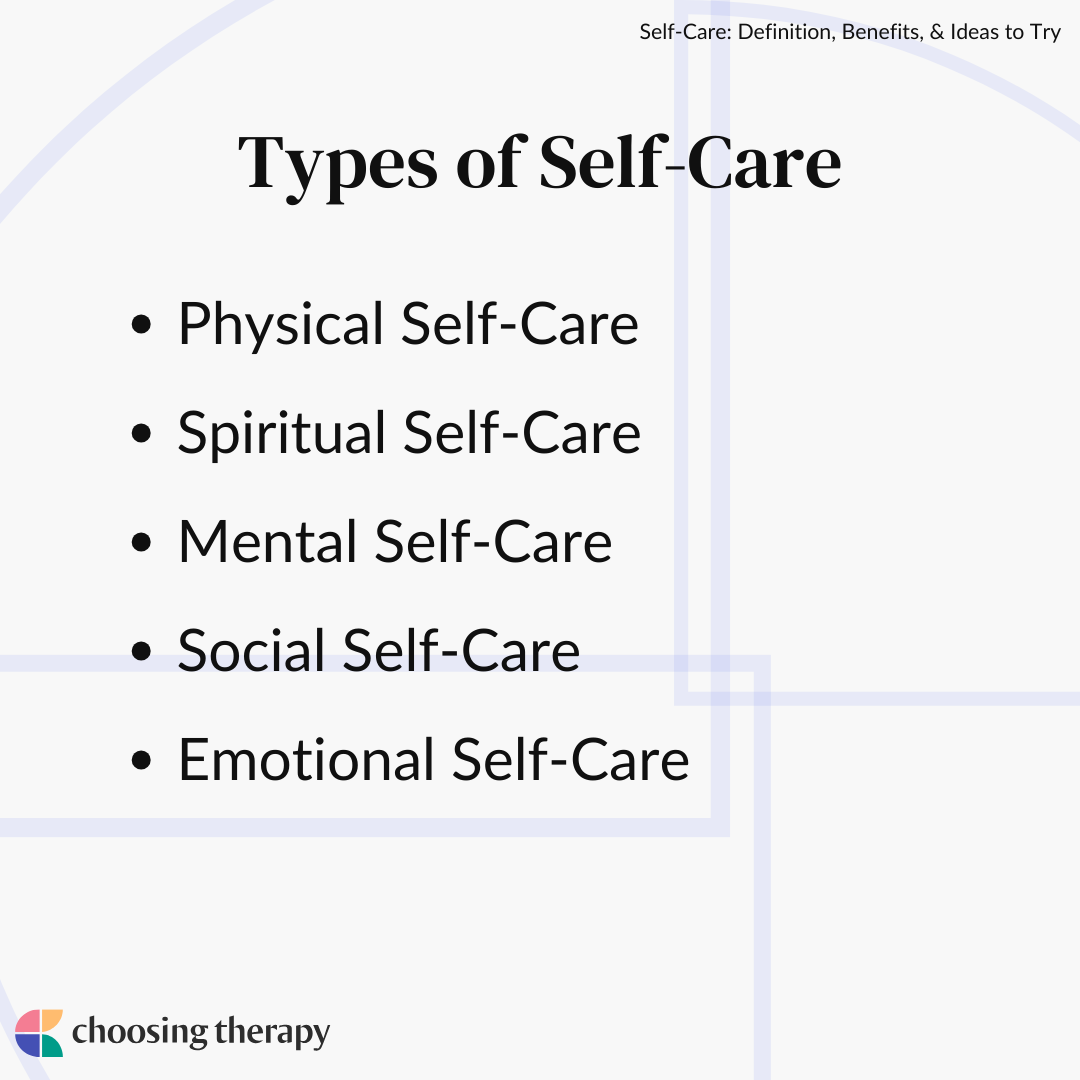
Individuals can incorporate various self-care practices into their routines to promote well-being. Different types of self-care include physical, emotional, mental, and social self-care. These exercises can lead to a more balanced and fulfilling life.
Physical Self-Care
This type of self-care focuses on attending to your physical health and well-being. Physical self-care means ensuring enough sleep, nutritious food, and exercise. Stress lingers in our bodies, so implementing ways to relax your body and release tension is essential.
Spiritual Self-Care
Spiritual self-care centers on faith or religious practices. You may practice this by reconnecting with a deity or cultivating spiritual connections and values. Outside of religion, meditation, journaling, or similar exercises can help align your mind, body, and spirit.
Mental Self-Care
Mental self-care involves activities that promote cognitive well-being and take care of your mind. Self-care and mental health are closely related, so prioritizing brain exercises is beneficial. For instance, self-care techniques for mental health include reading, learning new skills or hobbies, puzzles or brain games, and setting boundaries to manage stress and prevent burnout.
Social Self-Care
Social self-care means building and maintaining healthy relationships with others. For example, individuals may spend quality time with loved ones, seek support from friends and family, join social or community groups, or actively engage in activities that foster connection.
Emotional Self-Care
Emotional self-care focuses on nourishing and managing emotions. Journaling, practicing mindfulness or meditation, engaging in creative activities, seeking therapy, and spending time with loved ones are all positive examples.
Why Is Self-Care Important?
Self-care is critical to overall wellness. Practicing self-care requires you to routinely check-in with yourself like you would with friends and family. Considering where you are physically, mentally, emotionally, and spiritually helps you unwind and deal with stressful situations.
How you perform self-care is unique, and there are no right or wrong activities as long as you benefit. Self-care can help you maintain homeostasis, reduce anxiety without medication, and lower stress or depression symptoms.
Additionally, being attuned to your needs and overall wellness enhances your ability to be present with others. Your appreciation and recognition of the positive aspects of life increase–pausing to calibrate and take inventory of your life can be eye-opening.
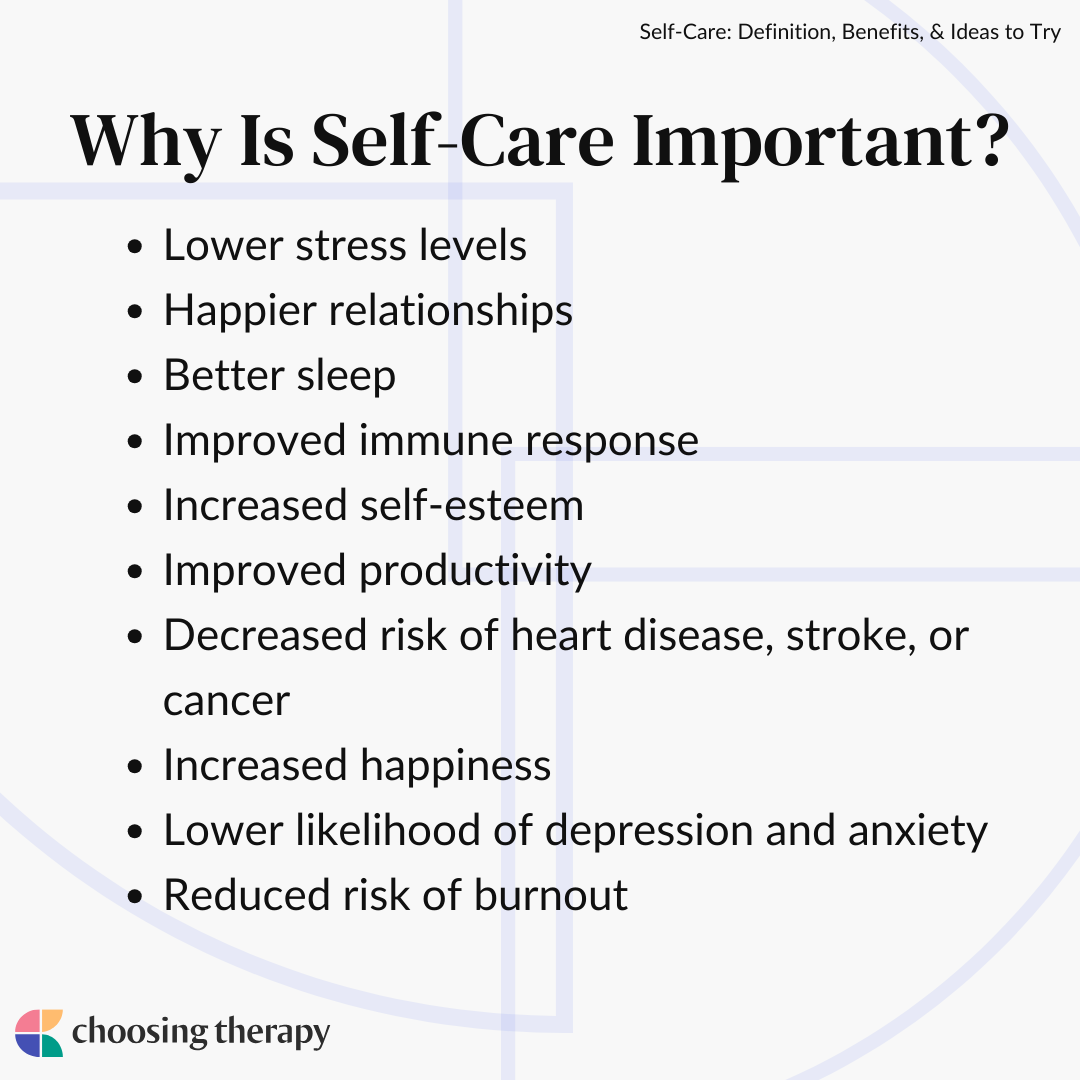
There are many benefits of practicing self-care, including:2
- Lower stress levels
- Happier relationships
- Better sleep
- Improved immune response
- Increased self-esteem
- Improved productivity
- Decreased risk of heart disease, stroke, or cancer
- Increased happiness
- Lower likelihood of depression and anxiety
- Reduced risk of burnout
Best Online Therapy Services
There are a number of factors to consider when trying to determine which online therapy platform is going to be the best fit for you. It’s important to be mindful of what each platform costs, the services they provide you with, their providers’ training and level of expertise, and several other important criteria.
How to Make a Self-Care Plan
Starting a self-care journey can be intimidating, especially if you have never considered your own needs and wants. The first way to plan self-care is sitting with and learning from your feelings. Take a moment to acknowledge your emotions and listen to your inner voice.
The best self-care routines fuel your individual goals and needs. Determine what you may need, such as time, quiet space, clean space, energy, or sleep–consider these factors to ensure your self-care experience is rejuvenating.
Below are six tips for self-care routines:
1. Determine the Activities You Enjoy
Caring for yourself involves doing activities that bring you joy and promote well-being. Identify activities that make you feel good, such as reading, walking, listening to music, or trying a new hobby. Incorporating these activities into your routine can help reduce stress and boost your mood.
2. Choose One Action or Activity to Add to Your Daily Routine
After identifying activities you enjoy, choose one to add to your daily routine. These practices can be as simple as taking a few minutes to meditate or doing a quick workout. Starting with one healthy change can help form habits and make adding new activities easier.
3. Note the Changes in Your Overall Mood
Looking after yourself involves self-awareness about your feelings and recognizing what activities improve your mood. As you start incorporating self-care routines into your daily life, notice any positive or negative mental, physical, and emotional health changes. Keep a journal and write down how you feel each day to identify which self-care practices work best for you.
4. Adjust Your Activities According to Your Present Needs
Taking care of yourself involves being adaptable and adjusting your self-care routines according to your present needs. For instance, consider adding more relaxing activities to your schedule when feeling particularly stressed. Or, add more social activities to your routine when lonely, such as joining a club or volunteering.
5. Add More Activities When You’re Comfortable
There are many ways to practice self-care, and you can add more activities as you become comfortable with your routine. Doing so can help you continue growing and developing healthy habits to support your overall well-being.
6. Ask for Advice When Struggling
Self-care can be challenging, and asking for help when struggling is okay. Ask friends, family, or mental health professionals for support and guidance on your self-care journey. Remember, self-care is a personal journey–finding a routine that works best for you may take time, but the benefits are worth the effort.
Examples of Self-Care to Try
Self-care is critical for mental and physical well-being and a healthy, balanced life. Forms of self-care and possibilities are endless, so explore your preferences to decide what routine best improves your life.
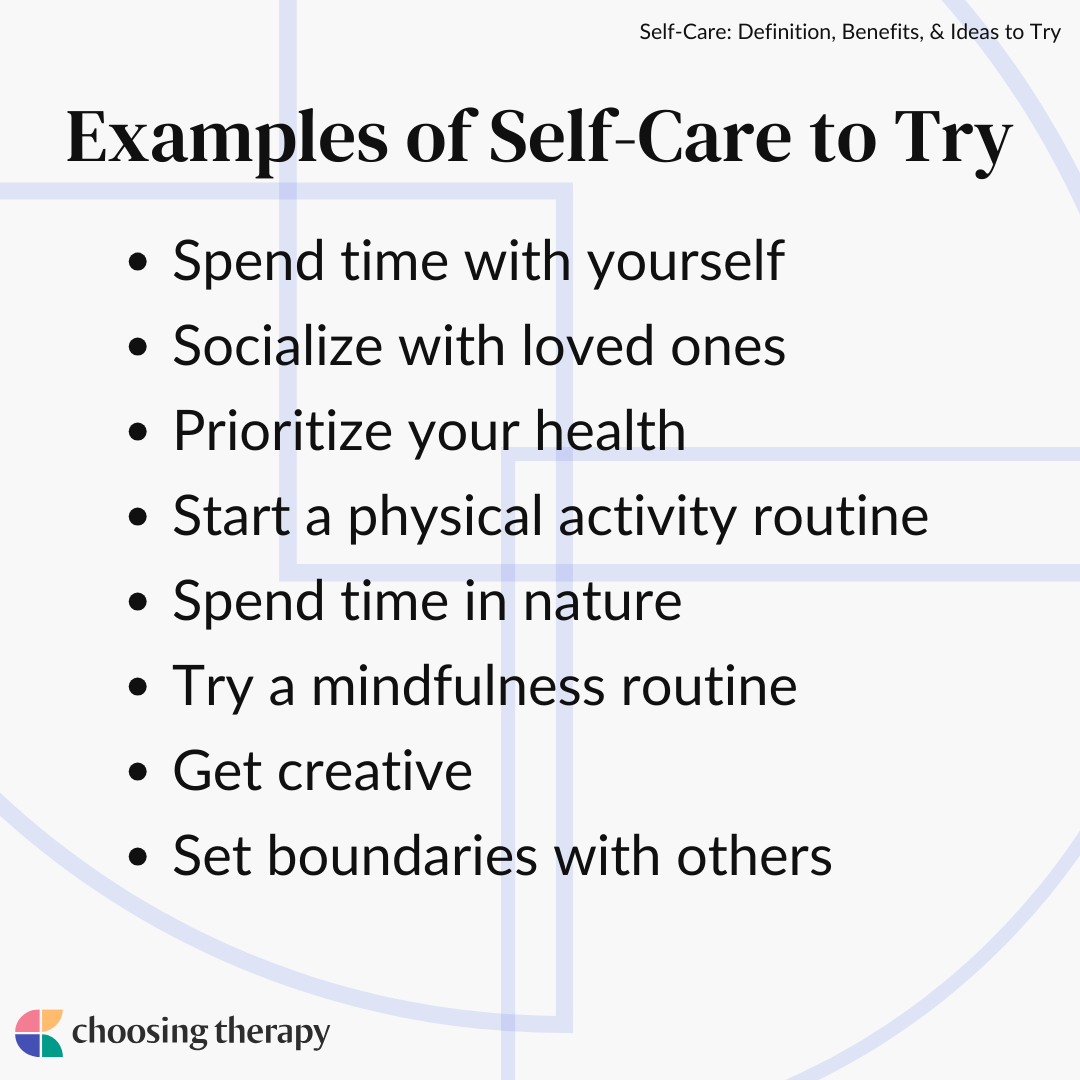
Below are healthy self-care examples and strategies to consider:
Spend Time With Yourself
Alone time and engaging in activities that bring you joy or provide relaxation are important aspects of self-care. For example, spend an evening reading, taking a long bath, walking in nature, or simply enjoying silence without distractions. These simple actions allow you to reconnect with yourself, recharge, and prioritize your own needs.
Socialize With Loved Ones
Nurturing relationships and spending quality time with loved ones is crucial for mental and emotional well-being. Whether having a heart-to-heart conversation with a friend or organizing a family gathering, making time for social connections can help reduce loneliness and increase feelings of happiness and support.
Prioritize Your Health
Taking care of your physical health is an integral part of self-care. Consider improving your sleep hygiene by creating a consistent sleep schedule and relaxing bedtime routine. Prioritizing a balanced and nutritious diet can also contribute to your overall well-being. Fueling your body with healthy foods can improve your energy levels and mood.
Start a Physical Activity Routine
Engaging in regular physical activity is not only good for your physical health but also has various mental health benefits. Whether going for a walk, practicing yoga, or joining a dance class, finding a physical activity you enjoy can help reduce stress, improve sleep quality, boost self-esteem, and increase overall happiness.
Spend Time in Nature
Nature has a calming and grounding effect on our well-being. Spending time in nature, like gardening, hiking, or simply sitting in a park, can reduce stress levels, improve mood, and increase feelings of relaxation. Connecting with the natural world can provide a sense of peace and rejuvenation.
Try a Mindfulness Routine
Incorporating mindfulness practices into your daily routine can help promote relaxation, reduce anxiety symptoms, and increase overall well-being. Meditation, journaling your thoughts and feelings, or practicing gratitude enhance your ability to remain present in the moment and embrace your life to cultivate a sense of inner calm.
Get Creative
Creativity allows you to express yourself and tap into your imagination. Painting, writing, playing a musical instrument, or engaging in crafts promote self-expression, relieve stress, and provide a sense of accomplishment and joy.
Set Boundaries With Others
Setting healthy boundaries involves recognizing your limits and communicating them effectively to others. Setting boundaries allows you to prioritize your own needs and well-being, protect your time and energy, and reduce feelings of overwhelm and burnout. Practice saying “no” when necessary and respectfully communicate your expectations with others.
When to Seek Professional Help
Seeking professional help is crucial when self-care techniques alone do not alleviate persistent or severe mental health concerns. Seek professional mental health and self-care advice when struggling with persistent sadness, anxiety, overwhelm, or any other concerning symptoms. Finding the right therapist can provide insight into what causes your distress, help you address your challenges, and adopt a healthy lifestyle.
Would You Like to Try Therapy?
Most people (76%) who try therapy have a positive experience! Stat Source BetterHelp has a large network of licensed therapists worldwide who provide convenient and affordable online therapy. Take a brief assessment and get matched with a therapist who fits your needs in as little as 48 hours. Insurance options may be available for eligible members.* *Insurance availability and coverage may vary by state, plan, provider network, and therapist availability.
In My Experience
There are many ways to define what self-care is for you. Incorporating self-care activities into your day-to-day schedule may take time. But, with baby steps, you can set yourself up for success, balance, and fulfillment.

Self-Care Infographics
ChoosingTherapy.com strives to provide our readers with mental health content that is accurate and actionable. We have high standards for what can be cited within our articles. Acceptable sources include government agencies, universities and colleges, scholarly journals, industry and professional associations, and other high-integrity sources of mental health journalism. Learn more by reviewing our full editorial policy.
-
DeMarchis, J., Friedman, L., & Garg, K.E. (2020). An Ethical Responsibility to Instill, Cultivate, and Reinforce Self-Care Skills. Journal of Social Work Education.
-
Narasimhan, M. (2019). Self care interventions to advance health and wellbeing: a conceptual framework to inform normative guidance. Self Care Interventions for Sexual and Reproductive Health, 1-3.

We regularly update the articles on ChoosingTherapy.com to ensure we continue to reflect scientific consensus on the topics we cover, to incorporate new research into our articles, and to better answer our audience’s questions. When our content undergoes a significant revision, we summarize the changes that were made and the date on which they occurred. We also record the authors and medical reviewers who contributed to previous versions of the article. Read more about our editorial policies here.
Author: No Change
Reviewer: No Change
Primary Changes: Edited for readability and clarity. Reviewed and added relevant resources. Revised “What Is Self-Care,” “Types of Self-Care,” and “How to Make a Self-Care Plan.” Added “Examples of Self-Care to Try” and “When to Seek Professional Help.” New content written by Alexa Donnelly, LCSW and reviewed by Kristen Fuller, MD.
Author: Silvi Saxena, MBA,MSW, LSW, CCTP, OSW-C
Reviewer: Dena Westphalen, PharmD
Your Voice Matters
Can't find what you're looking for?
Request an article! Tell ChoosingTherapy.com’s editorial team what questions you have about mental health, emotional wellness, relationships, and parenting. Our licensed therapists are just waiting to cover new topics you care about!
Leave your feedback for our editors.
Share your feedback on this article with our editors. If there’s something we missed or something we could improve on, we’d love to hear it.
Our writers and editors love compliments, too. :)
Additional Resources
To help our readers take the next step in their mental health journey, ChoosingTherapy.com has partnered with leaders in mental health and wellness. ChoosingTherapy.com is compensated for marketing by the companies included below.
Online Therapy
BetterHelp Get support and guidance from a licensed therapist. BetterHelp has over 30,000 therapists who provide convenient and affordable online therapy. BetterHelp starts at $65 per week and is FSA/HSA eligible by most providers. Take a free online assessment and get matched with the right therapist for you. Free Assessment
Online Psychiatry
Hims / Hers If you’re living with anxiety or depression, finding the right medication match may make all the difference. Connect with a licensed healthcare provider in just 12 – 48 hours. Explore FDA-approved treatment options and get free shipping, if prescribed. No insurance required. Get Started
Reduce Drinking
Sunnyside Want to drink less? Sunnyside helps you ease into mindful drinking at your own pace. Think lifestyle change, not a fad diet. Develop new daily routines, so you maintain your new habits for life. Take a 3 Minute Quiz
Mental Health Newsletter
A free newsletter from the experts at ChoosingTherapy.com for those interested in mental health issues and fighting the stigma. Get helpful tips and the latest information. Sign Up
Online Anxiety Test
A few questions from Talkiatry can help you understand your symptoms and give you a recommendation for what to do next.
Best Online Therapy Services
There are a number of factors to consider when trying to determine which online therapy platform is going to be the best fit for you. It’s important to be mindful of what each platform costs, the services they provide you with, their providers’ training and level of expertise, and several other important criteria.