Caregiver burnout refers to the emotional, physical, and mental exhaustion that occurs when individuals neglect their needs when caring for others. People may experience helplessness, stress, sadness, and fatigue that impact their functioning and well-being. Without support, caregivers face the risk of depression, physical illness, and strained relationships. However, therapy and setting boundaries can help alleviate symptoms.
Therapy & Medication Using Your Insurance Together, medication and therapy can help you feel like yourself, faster. Brightside Health develops personalized plans that are unique to you and offers 1 on 1 support from start to finish. United Healthcare, Anthem, Cigna, and Aetna insurance are accepted.
What Is Caregiver Burnout?
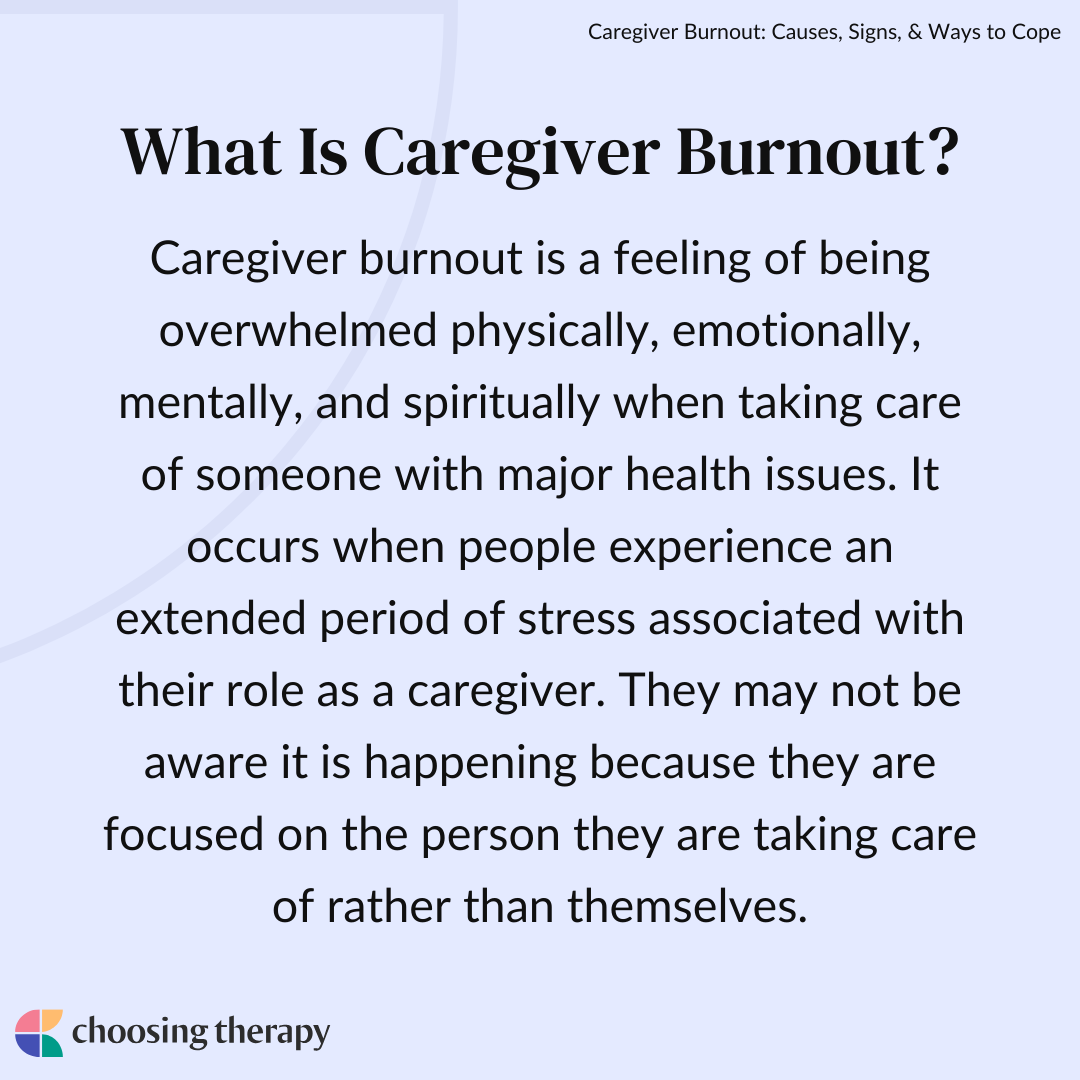
Caregiver burnout is feeling physically, emotionally, mentally, and spiritually overwhelmed when caring for someone. This fatigue occurs when people experience extended stress associated with their roles. Unfortunately, burnout develops gradually, and many may not notice the early signs as they focus on others rather than themselves.
Caregiver fatigue can feel like being pulled in many directions. Individuals may feel dissatisfaction with their ability to care for others as they set unrealistic expectations for themselves and take on more responsibilities than they can handle. Eventually, chronically neglecting personal well-being can impact functioning across various aspects of life, including relationships, work, and physical health.
Caregiver Burnout Vs. Compassion Fatigue
Compassion fatigue develops when someone becomes exhausted from feeling or encountering the pain of others.1 Over-empathizing can take a mental toll on individuals, sometimes leading to emotional numbness, detachment, and even apathy. Compassion fatigue often affects healthcare providers, as these individuals repeatedly encounter traumatic situations.
The symptoms associated with compassion fatigue and caregiver burnout can be similar, such as stress, helplessness, and depression. However, unlike compassion fatigue, caregiver burnout has no relationship to ongoing, repeated trauma.
Caregiver Burnout Vs. Depression
Depression is a mood disorder that often results in sadness, hopelessness, and a loss of interest in previously enjoyed activities. Many factors can contribute to depression, including genetics, trauma, and life transitions. Conversely, caregiver burnout relates specifically to the stress associated with caregiving. Additionally, depression is often chronic, while caregiver burnout can subside once individuals separate themselves from stressors and tend to their well-being.
How Common Is Caregiver Burnout?
Caregiver burnout is common, with one study showing that 57% of caregivers reported high levels of stress, anxiety, and depression during the COVID-19 pandemic. Many of these individuals maintain busy lives outside their roles, and juggling these responsibilities can make keeping up with demands increasingly difficult.1
Caregiver Burnout Symptoms
The critical symptom of caregiver burnout is ongoing exhaustion. This fatigue is not only physical, and people may feel mentally, spiritually, and emotionally drained. Attempting to manage daily life with this exhaustion can be debilitating, leading to toxic stress and dread. Eventually, individuals may feel increasingly irritable, depressed, or anxious, all of which can affect concentration and physical health.
Common symptoms of caregiver burnout include:
- Depressed mood
- Irritability
- Angry outbursts or loss of temper
- Feelings of helplessness
- Stomach upset
- Body aches
- Headaches
- Symptoms of anxiety
- Poor concentration
Signs of Caregiver Burnout
The signs of caregiver fatigue can mirror those of similar conditions, like depression. Individuals may appear socially withdrawn or disinterested in once-enjoyed activities. Many also report sleep and appetite changes, likely due to chronic stress. In severe cases, people may lose sight of their roles as parents, partners, family members, or friends outside caregiving.
Common signs of caregiver burnout include:
- Social isolation
- Increased alcohol or drug use
- Loss or negative changes in relationships
- Loss of interest in activities
- Revenge bedtime procrastination
- Changes in sleep patterns
- Expressing guilt
- Appetite changes
- Role confusion
What Causes Caregiver Burnout?
Caregiver burnout occurs when individuals focus on caring for others without recognizing and honoring their personal needs. They are unaware of (or ignore) negative changes in their physical, mental, emotional, and spiritual health. This dynamic, paired with unrealistic self-expectations, often ends with caregiver burnout.
Common causes of caregiver burnout include:2
- Emotional demands: Those caring for individuals with high support needs are at a heightened risk of caregiver burnout. Knowing they cannot make their loved one “well” can impact their outlook on providing care.
- Conflicting demands: Trying to meet the needs of spouses, children, employers, and co-workers creates additional conflict and stress when caring for someone.
- Ambiguity of roles: In professional environments, some supervisors do not articulate what they need from caregivers when providing support. This ambiguity can lead to taking on additional responsibilities or confusion about expectations.
- Workload: An unrealistic workload can contribute to caregiver burnout because people feel overwhelmed by the mountainous responsibilities and limited time to perform them.
- Conflicting policies and procedures: Some caregivers may feel conflicted about their roles due to policies preventing them from providing what they view as appropriate care for others.
- Lack of privacy: Providing 24/7 care to a loved one leaves little time for alone time or self-care.
Therapy & Medication Using Your Insurance Together, medication and therapy can help you feel like yourself, faster. Brightside Health develops personalized plans that are unique to you and offers 1 on 1 support from start to finish. United Healthcare, Anthem, Cigna, and Aetna insurance are accepted.
Long-Term Impacts of Caregiver Burnout
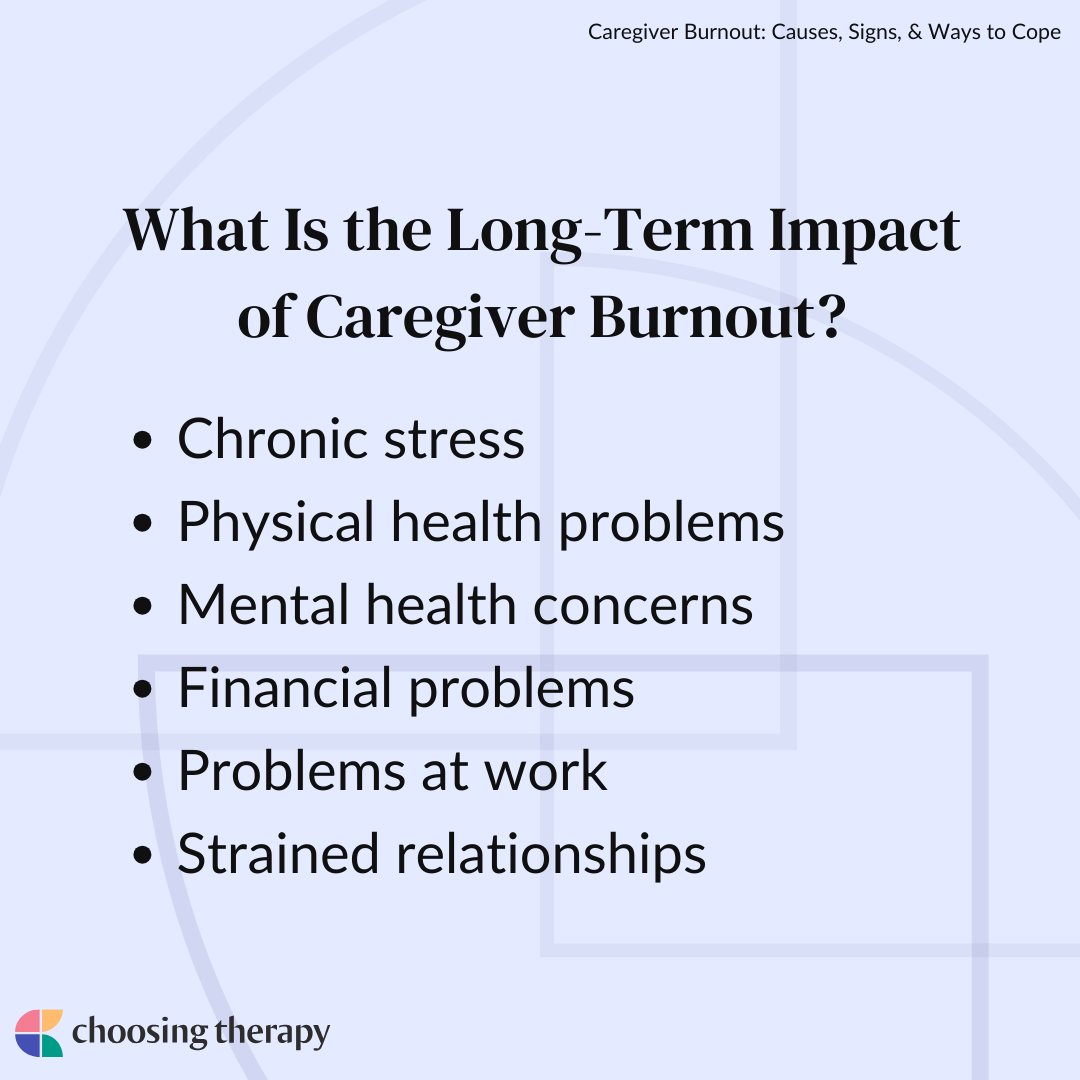
Untreated caregiver stress and burnout can lead to serious long-term consequences. Constant exhaustion and low mood can impact relationships, as individuals may lack the energy to maintain connections or social responsibilities. Additionally, those caring for loved ones may delve into savings to continue providing necessary medical treatment, ultimately leading to debt and financial stress. Neglected self-care can also cause or exacerbate mental and physical health conditions.
Long-term effects of unaddressed caregiver burnout may include:
- Chronic stress
- Physical health problems
- Mental health concerns
- Financial problems
- Problems at work
- Strained relationships
How to Prevent Caregiver Burnout
The key to preventing burnout is to make necessary changes before you feel incapacitated. Self-awareness is imperative, so pay attention to how you feel and cope with your role as a caregiver. Identify and implement actions to alleviate stress by seeking support, making healthy lifestyle changes, or prioritizing self-care.
Here are some tips for preventing caregiver burnout:
- Have a trusted confidant: Dwelling on negativity is unhealthy, but a trusted and supportive friend can help you process these experiences.
- Don’t avoid your negative feelings: We must feel, process, and release negative emotions. Stuffing them down will just backfire later. Journaling, drawing, or exploring other self-expressive outlets can be helpful.
- Set realistic goals and celebrate small wins: Set small, achievable goals and celebrate those small wins. While seeing the bigger picture can be difficult, you can still take small steps to get closer to improved well-being.
- Learn more about your loved one’s condition: Knowledge is powerful. Understanding symptoms, treatments, and impacts can help you expect and prepare for caregiving.
- Make time for self-care: You may have heard the saying, “You can’t pour from an empty cup,” This statement has never been more true than when in a caregiver role.
- Focus on what you can control: You only have so much control when caring for a loved one with a chronic health condition. Focus on what you can change and avoid overextending yourself to fix things outside your reach.
9 Ways to Cope With Caregiver Burnout
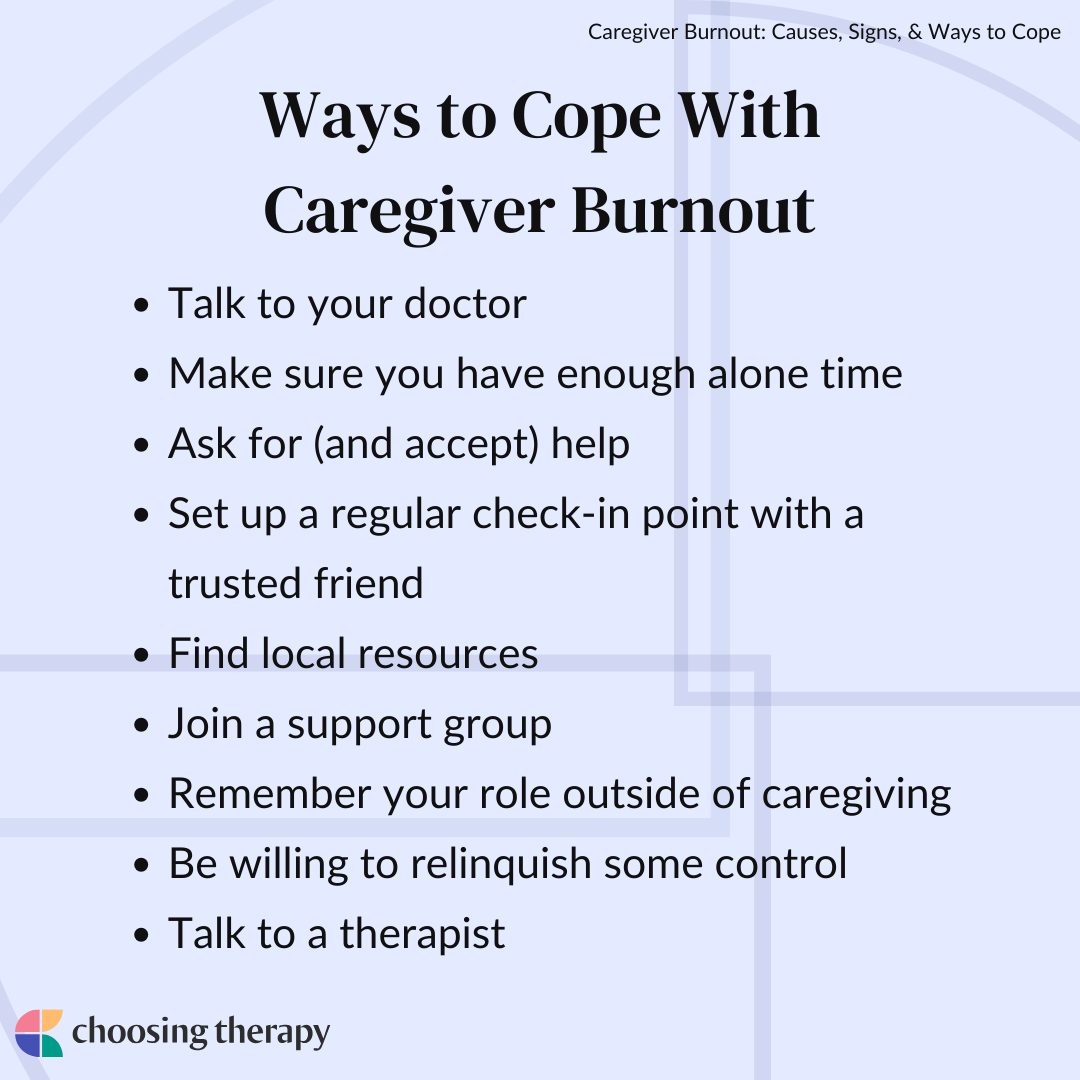
Coping with caregiver burnout often starts with small, achievable steps. First, acknowledge your need for support–don’t be afraid to ask for help. Stabilizing your emotions and overall health should be your goal, and prioritizing yourself can ultimately enrich your role as a caregiver.
Below are nine ways to cope when experiencing caregiver burnout:3
- Talk to your doctor: You are not alone. Talk to your doctor about what you are experiencing. They can help you address any medical problems that might impact your energy or provide a referral to a mental health professional.
- Make sure you have enough alone time: Time alone to unwind and decompress is necessary for your mental health and will make you better equipped as a caregiver.
- Ask for (and accept) help: Reach out to loved ones who have offered support. Consider asking for help with providing meals, running errands, or housework.
- Set up a regular check-in point with a trusted friend: A regular check-in can be an anchor as you navigate this difficult time. Set a standing date and check-in.
- Find local resources: Seek out local resources for you and your loved one. These can include organizations for specific conditions, respite, or home health resources.
- Join a support group: Sometimes, the best medicine is talking with people who understand your experience. A support group can provide support, helpful resources, and tools for coping with caregiving-related challenges.
- Remember your role outside of caregiving: Remember that you still have an identity outside of caregiving. Ensure to engage in things you enjoy.
- Be willing to relinquish some control: Sometimes, letting someone else make decisions can ease stress and anxiety.
- Talk to a therapist: A therapist can help you navigate difficult thoughts, build healthy coping skills, and care for yourself.
Therapy & Medication Using Your Insurance Together, medication and therapy can help you feel like yourself, faster. Brightside Health develops personalized plans that are unique to you and offers 1 on 1 support from start to finish. United Healthcare, Anthem, Cigna, and Aetna insurance are accepted.
When to Get Help for Caregiver Burnout
Many caregivers are reluctant to ask for help, especially therapy. However, you know yourself best. Carefully examine your satisfaction with meeting daily, relationship, and work-related demands. Examine how you feel at the end of each day. Constantly feeling worn out and depleted is unhealthy–consider seeking support to help alleviate these symptoms.
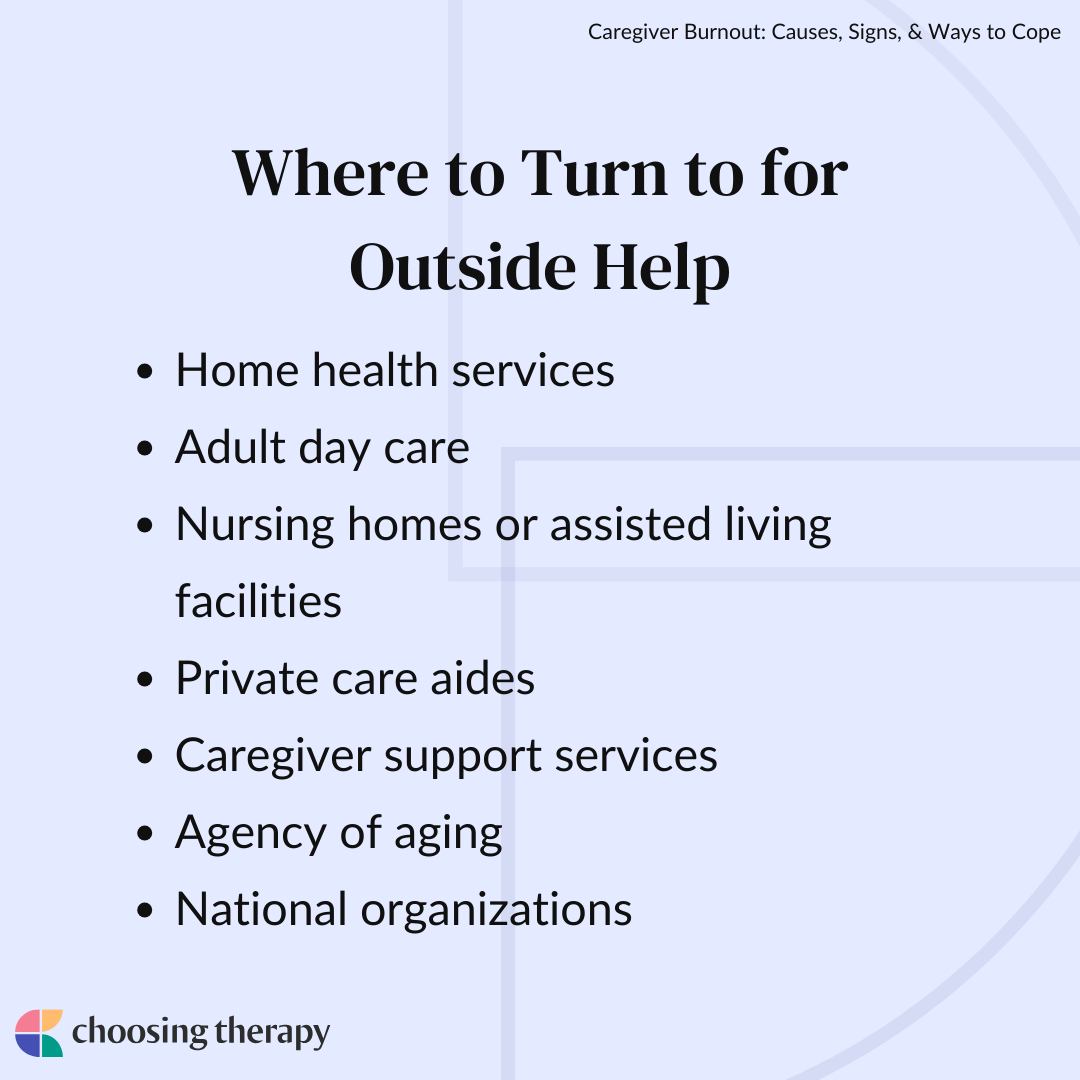
Below are outside resources for caregivers:
- Home health services: A home health aide can provide routine health care and sometimes even light household duties.
- Adult day care: Having your loved one go to an adult day care can give them a change of pace, new activities, and socialization while providing you with a break.
- Nursing homes or assisted living facilities: Consider whether a higher level of care is the next right choice. While making this decision is difficult, an assisted facility may be the best choice for your loved one.
- Private care aides: Private care aides can provide more intensive home support than home health aides by providing companionship.
- Caregiver support services: Resources are also available for caregivers. Support groups and respite services allow you to take a break while a trained provider stays with your loved one.
- Agency of aging: Your local agency on aging can be a resource for many local programs.
How Is Caregiver Burnout Treated?
The most successful caregivers recognize they cannot do their job alone. An excellent resource is reaching out to a family counselor or therapist. Their guidance can be crucial in helping you integrate self-care into your routine and set boundaries around your caregiving abilities. Choosing a therapist, counselor, or psychologist can be daunting, but resources are available to help. You can ask your doctor for a referral or use an online therapist directory to sort providers by specialty and insurance coverage.
Support groups, chat rooms, and blogs are also beneficial, as many take comfort in talking with others in similar situations. These spaces help normalize your feelings and make you feel less alone.
How to Support a Loved One Experiencing Caregiver Burnout
Watching someone you care about become overwhelmed and incapacitated in their caregiver role is difficult. However, simply listening to their experience can be beneficial. Let them know their efforts are appreciated.
Below are ways to support a loved one experiencing caregiver burnout:
- Ask how you can help: Ask your loved one how you can help alleviate their stress. The gift of your time is priceless. Encourage them to use time for themselves.
- Regularly check in with them: Caregivers often feel alone or abandoned. Your promise to check in and stay in contact can be a lifeline to your loved one.
- Help gather resources: Consider looking into local support resources for your loved one. Ask if you can share this information with them. However, do not pressure them into seeking help. You can always offer support if they request information in the future.
- Don’t criticize them: Caregivers often have conflicts with family or friends who disagree with their caregiving efforts. Do not make judgmental statements, and avoid criticizing their actions.
In My Experience
Dealing with caregiver burnout can be difficult, but resources are available to help you feel at your best. Don’t wait until you feel overwhelmed to seek support.

Caregiver Burnout Infographics
ChoosingTherapy.com strives to provide our readers with mental health content that is accurate and actionable. We have high standards for what can be cited within our articles. Acceptable sources include government agencies, universities and colleges, scholarly journals, industry and professional associations, and other high-integrity sources of mental health journalism. Learn more by reviewing our full editorial policy.
-
Czeisler, M. É., et al. (2021). Mental health among parents of children aged< 18 years and unpaid caregivers of adults during the COVID-19 pandemic—United States, December 2020 and February– march 2021. Morbidity and Mortality Weekly Report, 70(24), 879.
-
Johns Hopkins Medical Center. (2020). Causes and Symptoms of Caregiver Burnout. Retrieved from https://www.hopkinsmedicine.org/johns_hopkins_bayview/community_services/services/called_to_care/causes_symptoms_caregiver_burnout.html
-
Mayo Foundation for Medical Education and Research. (1998-2020). Caregiver Stress: Tips for Taking Care of Yourself, Mayo Clinic Staff. Retrieved from https://www.mayoclinic.org/healthy-lifestyle/stress-management/in-depth/caregiver-stress/art-20044784

We regularly update the articles on ChoosingTherapy.com to ensure we continue to reflect scientific consensus on the topics we cover, to incorporate new research into our articles, and to better answer our audience’s questions. When our content undergoes a significant revision, we summarize the changes that were made and the date on which they occurred. We also record the authors and medical reviewers who contributed to previous versions of the article. Read more about our editorial policies here.
Author: Iris Waichler, MSW, LCSW (No Change)
Reviewer: Dena Westphalen, PharmD (No Change)
Primary Changes: Fact checked and edited for improved readability and clarity.
Author: Iris Waichler, MSW, LCSW (No Change)
Reviewer: Dena Westphalen, PharmD (No Change)
Primary Changes: Updated for readability and clarity. Reviewed and added relevant resources. Added “How Common Is Caregiver Burnout?”, “What Is the Long-Term Impact of Caregiver Burnout?”, “Can Caregiver Burnout Be Prevented?”, “9 Ways to Cope With Caregiver Burnout”, “Where to Turn to for Outside Help”. New material written by Michelle Risser, LISW-S and reviewed by Kristen Fuller, MD.
Author: Iris Waichler, MSW, LCSW
Reviewer: Dena Westphalen, PharmD
Your Voice Matters
Can't find what you're looking for?
Request an article! Tell ChoosingTherapy.com’s editorial team what questions you have about mental health, emotional wellness, relationships, and parenting. Our licensed therapists are just waiting to cover new topics you care about!
Leave your feedback for our editors.
Share your feedback on this article with our editors. If there’s something we missed or something we could improve on, we’d love to hear it.
Our writers and editors love compliments, too. :)
Additional Resources
To help our readers take the next step in their mental health journey, ChoosingTherapy.com has partnered with leaders in mental health and wellness. ChoosingTherapy.com is compensated for marketing by the companies included below.
Learn Mindfulness, Meditation, & Relaxation Techniques
Mindfulness.com – Change your life by practicing mindfulness. In a few minutes a day, you can start developing mindfulness and meditation skills. Free Trial
Talk Therapy
BetterHelp Get support and guidance from a licensed therapist. BetterHelp has over 20,000 therapists who provide convenient and affordable online therapy. BetterHelp starts at $65 per week and is FSA/HSA eligible by most providers. Complete a brief questionnaire and get matched with the right therapist for you. Get Started
Stress & Burnout Newsletter
A free newsletter from the experts at ChoosingTherapy.com for those interested in reducing stress and preventing burnout. Get helpful tips and the latest information. Sign-Up
ChoosingTherapy.com Directory
Find local therapists that offer online and in-person therapy. Search for therapists by specialty, experience, insurance, and location. Find a therapist near you.
Online Stress Test A few questions from Talkiatry can help you understand your symptoms and give you a recommendation for what to do next. Best Online Therapy Services There are a number of factors to consider when trying to determine which online therapy platform is going to be the best fit for you. It’s important to be mindful of what each platform costs, the services they provide you with, their providers’ training and level of expertise, and several other important criteria.