Physician burnout refers to mental and physical exhaustion that affects healthcare providers. Being chronically exposed to stress, overwhelming workloads, and underappreciation can impact overall well-being, leaving physicians vulnerable to fatigue, self-doubt, lack of motivation, and cynicism. Over time, these symptoms can increase the risk of mental health conditions and impair their ability to care for patients.
Grow Therapy - Easy Insurance Acceptance & Client Referrals
Credentialing – Get paneled for free with the major payors in your state so you can also start seeing insurance clients.
Guaranteed Billing – Don’t worry about unpaid claims! Any insurance claims that you submit are guaranteed. Schedule A Call To Learn More
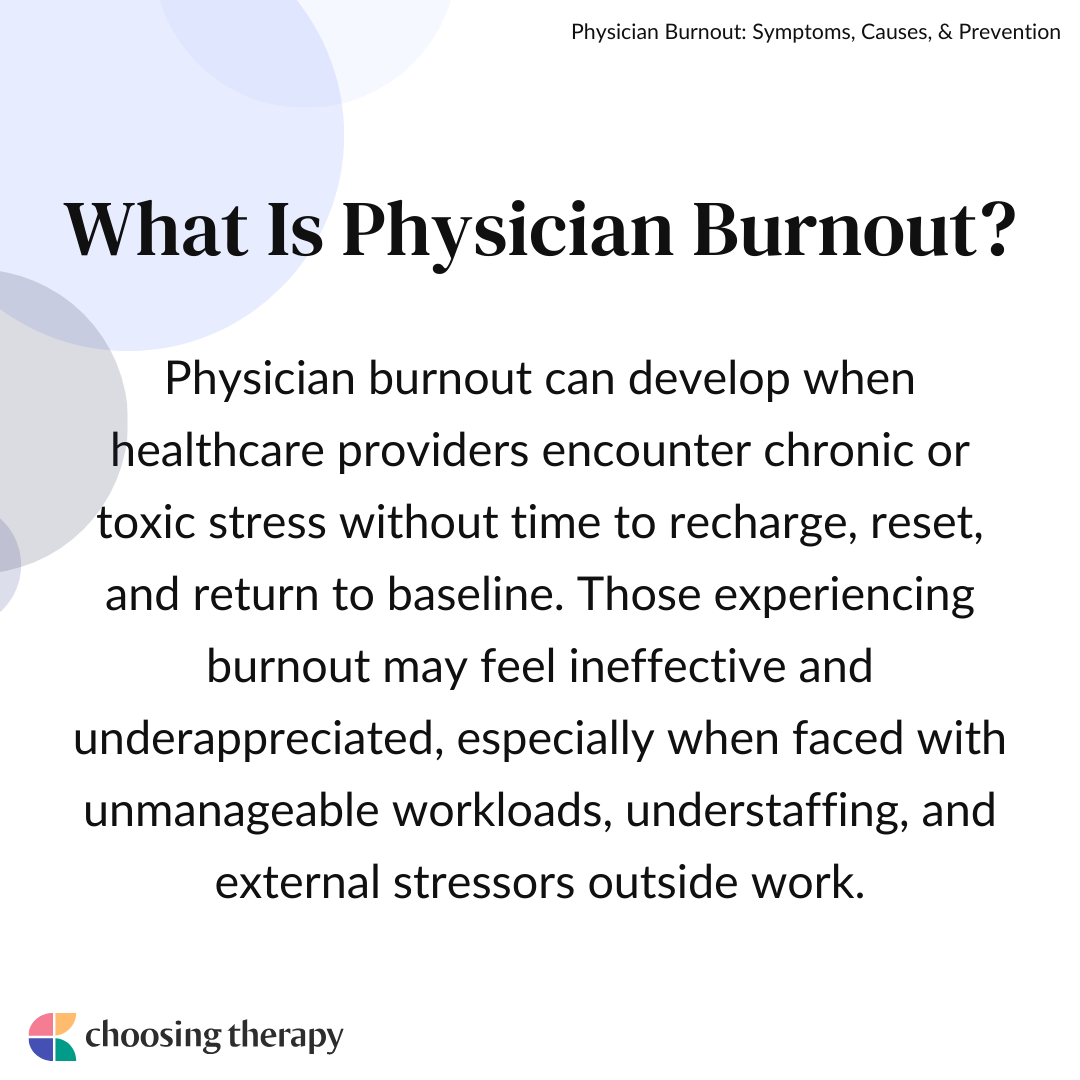
What Is Physician Burnout?
Physician burnout can develop when healthcare providers encounter chronic or toxic stress without time to recharge, reset, and return to baseline. Those experiencing burnout may feel ineffective and underappreciated, especially when faced with unmanageable workloads, understaffing, and external stressors outside work. These feelings can affect every aspect of life and deplete physicians of their sense of purpose.
Energy levels affected by physician burnout include:
- Emotional energy: Physician burnout can result in a reduction of emotional energy, which can cause a sense of exhaustion, detachment, and cynicism toward patients, colleagues, and the healthcare system.
- Physical energy: Burnout can drain physical energy, resulting in fatigue, sleep disturbances, and other physical health problems.
- Spiritual energy: Dealing with overwhelming stress at work can deplete spiritual reserves, resulting in a decreased sense of meaning and purpose.
How Common is Physician Burnout?
According to recent physician burnout statistics, approximately 63% of physicians report at least one associated symptom.1 These startling findings underscore the emotional, mental, and physical impacts of packed workdays, demanding schedules, and long-standing issues in the healthcare industry.2
Symptoms of Physician Burnout
Burnout in healthcare professions can start slow, building beneath the daily stress, trauma, and pain physicians face. They often feel emotionally and mentally fatigued, leaving them vulnerable to physical ailments, such as headaches and gastrointestinal distress. Additionally, they may doubt their ability to continue providing patient care due to difficulties concentrating or staying focused.
Signs of physician burnout can include:
- Emotional exhaustion
- Mental fatigue
- Self-doubt
- Feeling emotionally drained
- Appetite and weight changes
- Headaches
- Difficulty sleeping
- Stomach upset
- Restlessness
- Irritability
- Poor concentration
Signs of Physician Burnout
A common sign of burnout in healthcare workers is a reduced sense of personal accomplishment and job satisfaction. Professionals may begin to doubt the value of their work and feel unfulfilled in their roles. These feelings can also lead to decreased motivation and engagement at work and with patients.
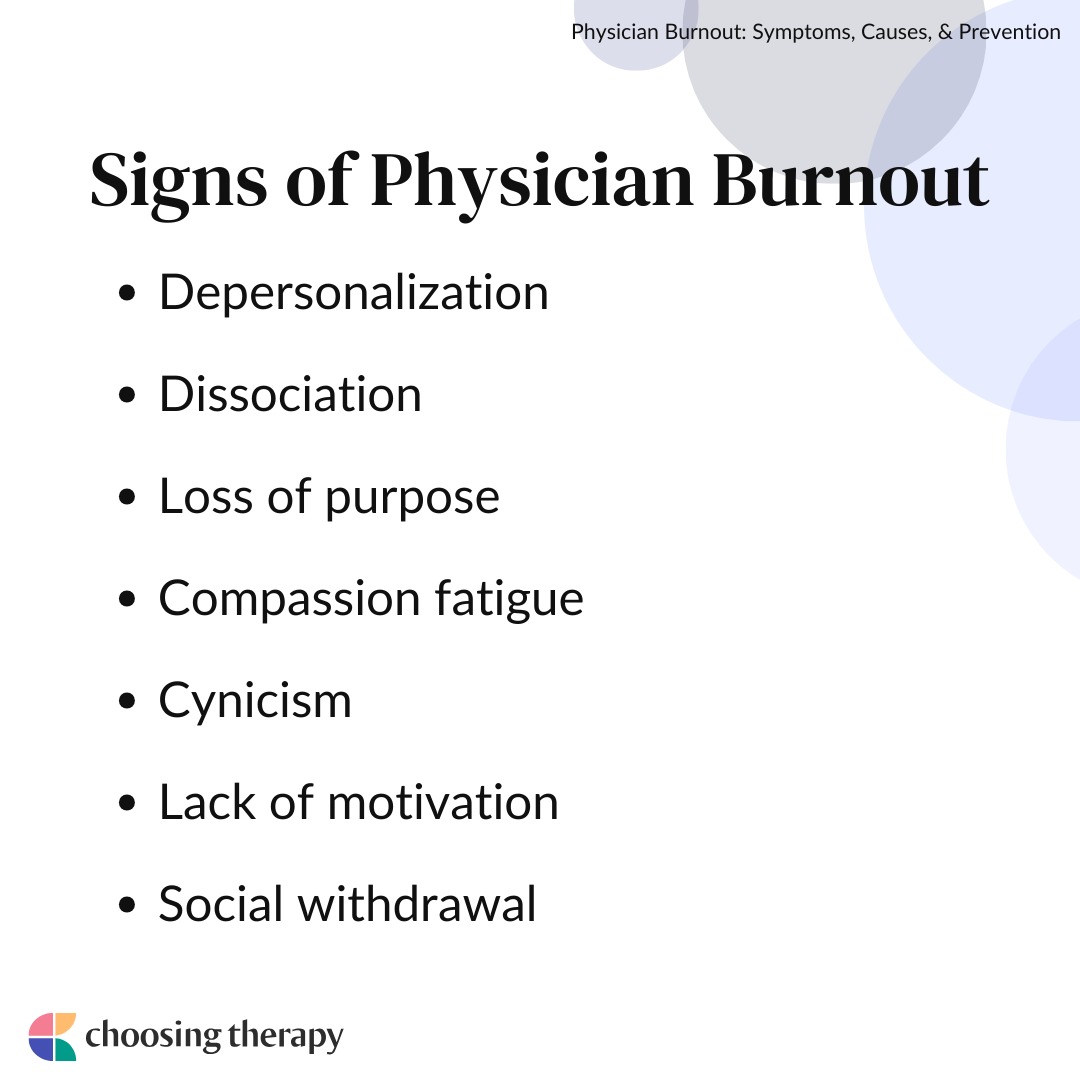
Common signs of physician burnout include:
- Depersonalization: One common sign of physician burnout is depersonalization or emotional detachment. Physicians may start viewing patients as merely a collection of symptoms or cases rather than individuals with unique needs and emotions.
- Dissociation: Dissociation can be a coping mechanism for professionals as they can mentally and emotionally disengage from their work.
- Loss of purpose: Physicians may experience a profound disillusionment and feel their work lacks meaning and purpose, contributing to feelings of emptiness and dissatisfaction.
- Compassion fatigue: Physicians struggling with burnout may lack the energy to connect with patients, sometimes resulting in compassion fatigue or a diminished ability to empathize and show compassion.
- Cynicism: Physicians can develop a pessimistic outlook. They may become increasingly critical of patients, colleagues, and the healthcare system, further eroding job satisfaction and collaboration.
- Lack of motivation: Lack of motivation is a common sign of burnout, where physicians may experience a significant decrease in their drive and enthusiasm for their work.
- Social withdrawal: Physicians may isolate themselves from social interactions and professional networks. They may withdraw from colleagues and avoid engaging in once-enjoyed activities.
Causes of Physician Burnout
Several factors can affect what causes physician burnout. Many healthcare providers deal with staff shortages, stressful work environments, and a surplus of patients. These factors, combined with external stressors at home or in relationships, can exacerbate feelings of ineffectiveness, self-doubt, and pre-existing mental health conditions.
Potential causes of physician burnout include:
- Driven personality: Often, people attracted to the competitive and rigorous field of medicine are more likely to be driven, competitive, or perfectionistic. These personality traits can put someone at a higher risk of physician burnout.3
- Healthcare worker shortages: Since the COVID-19 pandemic, worker shortages have been prevalent in the medical field. This factor can lead to higher patient loads, additional clerical or administrative duties, and long hours.
- Too many patients: COVID surges presented physicians with ever-increasing patient loads, stressors, and limited resources. Providers who chronically overextend themselves are vulnerable to fatigue and burnout.
- Financial stress: Many physicians face financial stress from enormous student loans and may find themselves in low-paying jobs, especially during residency and at the beginning of their careers. Constantly worrying about money can contribute to the chronic stress that leads to burnout.
- Dealing with patients: Physicians work with patients who are often scared, anxious, and overwhelmed. Physicians must navigate this complex emotional landscape while providing quality healthcare, often to the detriment of their well-being.
- Lack of respect for physicians: Physicians may feel disrespected by their healthcare team, staff, and patients, contributing to feelings of ineffectiveness and burnout.
- Feeling underappreciated: Physicians can feel like their hard work, effort, and contributions are undervalued and unappreciated in the workplace.
- Inefficient systems: Inefficient workplace systems, bureaucratic and administrative headaches, and supply-chain problems can create additional workload and stress for physicians.3
- Clerical burdens: Physicians are also responsible for administrative tasks like charting, coordinating with other providers, replying to messages, and researching and planning treatment. These tasks can add to long hours, leaving physicians feeling overburdened and overscheduled.3
- Beliefs that healthcare providers are immune: People may forget physicians are affected by chronic stress and burnout, too. For these reasons, providers and their colleagues may miss the early warning signs of burnout.4
- Pre-existing anxiety or depression: Studies show people with pre-existing mental health conditions like anxiety or depression are at higher risk for burnout.5
Resources For Your New Practice
SimplePractice – EHR For Therapists has everything you need to run your practice—from booking and scheduling to insurance and client billing. 7-day Free Trial and 50% Off For 4 Months. Free Trial
Grow Therapy – Easy Insurance Acceptance & Client Referrals Get paneled for free with the major payors in your state so you can also start seeing insurance clients. Don’t worry about unpaid claims! Any insurance claims that you submit are guaranteed. Schedule A Call To Learn More
Effects of Physician Burnout
Physician burnout can impact the individual and the healthcare system as a whole. On an individual level, symptoms can increase fatigue, sleep disturbances, and physical ailments like headaches or gastrointestinal issues. Struggling with chronic stress can also contribute to mental health conditions, such as anxiety and depression. As a result, physicians cannot provide adequate patient care, thus negatively affecting their institutions.
How to Prevent Physician Burnout
Preventing physician burnout starts with regular self-care, taking vacation time, and seeking outside support. Healthcare providers often overlook their need for rest, leading to the chronic stress associated with burnout. Prioritizing overall wellness is imperative for success when recovering from mental exhaustion.
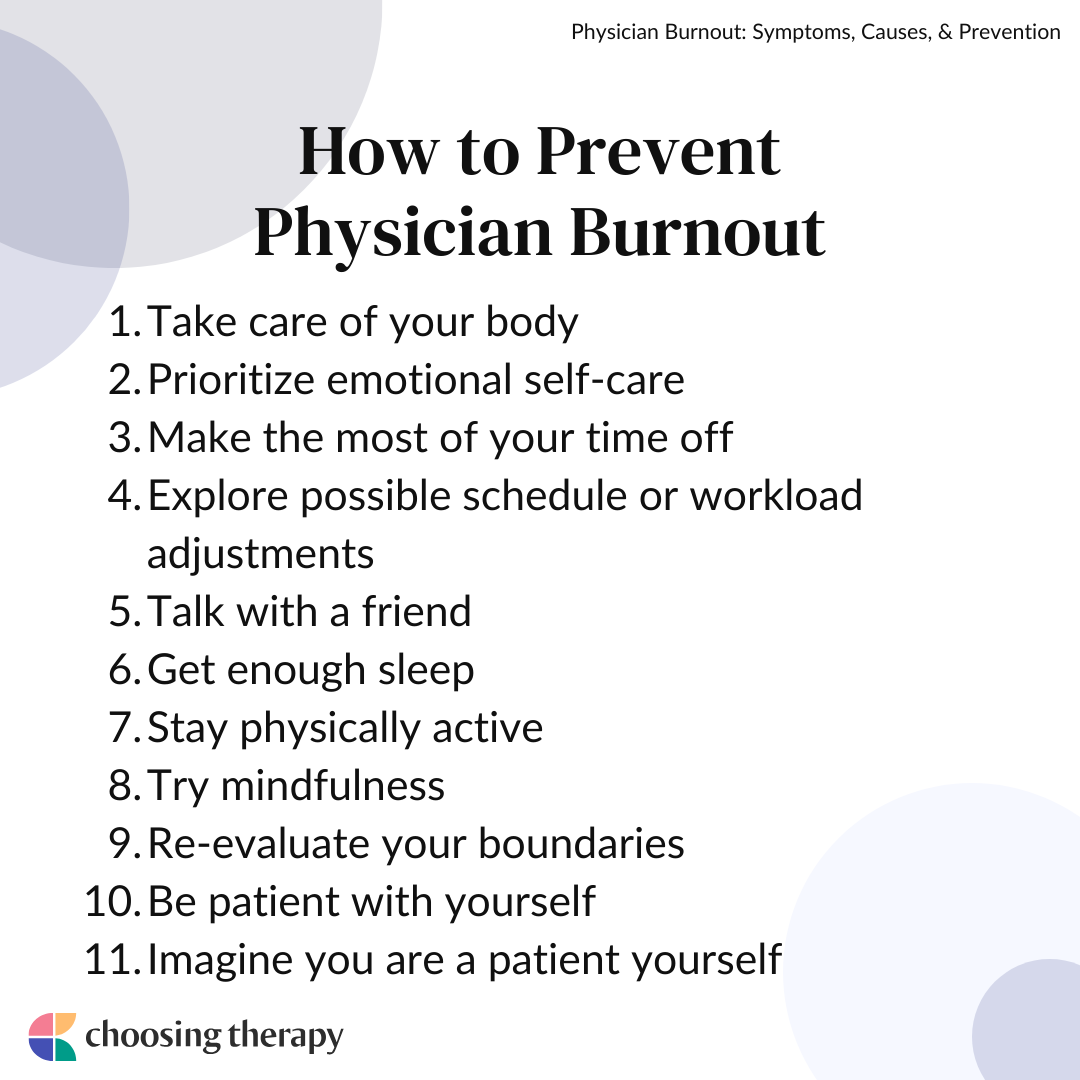
Here are 10 ways to prevent physician burnout:
1. Take Care of Your Body
Tending your physical health is essential when reducing physician burnout. The mind and body are inextricably linked, meaning you can help improve mental exhaustion by caring for your physical well-being. Start small by drinking enough water, spending time in nature, or stretching between patient visits. These subtle changes can combat the stress response and provide relief.
2. Prioritize Emotional Self-Care
Being a physician often means dealing with emotional patients and situations daily. For this reason, emotional self-care is one of the most important solutions for physician burnout. These activities enhance and support your inner world, thoughts, feelings, and emotions. Find what brings you joy, whether listening to upbeat music, watching your favorite TV show, journaling, or spending time with loved ones.
3. Make the Most of Your Time Off
Everyone needs to take breaks, especially when coping with burnout. Set aside a day to turn off your work-related emails and calls. Ensure you make time to relax, free from responsibilities and stress. While doing so can be challenging with on-call duties and high-need patients, physicians need to set boundaries around their time and energy so they can unplug and recharge when possible.
4. Talk With a Friend
Processing your anxieties with a trusted friend can be helpful when preventing physician burnout. Sometimes, expressing your feelings aloud can uncover possible solutions and ease internal stress.
5. Get Enough Sleep
Studies show insufficient sleep contributes to burnout among physicians. Allowing time to relax and unwind before bed, practicing good sleep hygiene, and avoiding caffeine are steps to get started. However, seek guidance from other physicians or your doctor if you experience symptoms of a sleep disorder like insomnia.6
6. Stay Physically Active
Staying physically active is a great way to mitigate physician burnout. Regular exercise can help reduce stress, improve sleep, and boost mood and energy levels. Physicians should consider implementing activities they enjoy, such as yoga or hiking, to make exercise a more enjoyable and sustainable habit.
7. Try Mindfulness
Mindfulness practices, such as meditation and deep breathing exercises, can help reduce stress and promote relaxation. Focusing on the present moment allows you to find mental clarity, recharge emotional energy, and recognize your need to rest.
8. Re-Evaluate Your Boundaries
Physicians may need to set limits around work hours, delegate tasks, or prioritize self-care activities to achieve a healthy work-life balance. Establishing clear boundaries is crucial, especially when navigating constant stress. For example, limit patient casework to office hours and avoid answering non-emergency calls or emails at home when possible. These small changes offer space to recharge and separate yourself from work.
9. Be Patient With Yourself
Physicians are often self-critical, which can exacerbate burnout. However, being patient with yourself is crucial in addressing symptoms. You cannot always be perfect–making mistakes is a natural part of life. Learning to accept this aspect of life can reduce stress and improve resilience.
10. Imagine You Are a Patient Yourself
Imagining themselves as patients can help physicians develop greater empathy. Considering these unique perspectives and needs can help physicians regain a sense of purpose. Knowing their support makes a difference in the lives of others can provide a much-needed confidence and energy boost.
Physicians also benefit from seeking patient feedback by listening to their concerns and incorporating their suggestions into practice. By doing so, physicians can maintain a focus on patient-centered care and remain engaged in their work.
Physician Burnout Treatment
Treatment for physician burnout may be necessary for some people. While overextended and stressed doctors may overlook their need for support, everyone can benefit from therapy or additional outside guidance.
Treating physician burnout often includes psychotherapy to help clients learn healthy coping skills, set work boundaries, and address secondary trauma. Finding a compassionate, skilled therapist ensures you can receive the best care possible while navigating the many stressors you face at and outside work. You can use an online therapist directory to choose a provider who fits your needs and goals for treatment.
When to Seek Professional Support
Seeking professional support for physician stress and burnout is crucial when symptoms impact daily life, well-being, and the ability to provide quality patient care. A mental health professional can provide valuable insight into your patterns to identify underlying issues contributing to chronic stress. Finding the right therapist takes time but is worth the effort. You are not alone–consider using an online therapist directory to start your healing journey.
Below are signs to seek professional support for physician burnout:
- Increased depression
- Worsening anxiety
- Sleeping too much or too little
- Suicidal ideation
- Panic attacks
- Weight or appetite changes
In My Experience

“Physician burnout is difficult to overcome, but moving forward and rediscovering your passion is possible. Physicians give so much to others–they deserve to feel healthy and live without burnout.”
Additional Resources
To help our readers take the next step in their mental health journey, ChoosingTherapy.com has partnered with leaders in mental health and wellness. ChoosingTherapy.com is compensated for marketing by the companies included below.
Accept Insurance & Get Client Referrals
With Grow Therapy, you can get paneled for free with the major payors in your state so you can start seeing insurance clients. Don’t worry about unpaid claims! Any insurance claims that you submit are guaranteed. Schedule a Call to Learn More
EHR For Therapists
SimplePractice has everything you need to run your practice—from booking and scheduling to insurance and client billing. 7-day Free Trial and 50% Off For 4 Months! Free Trial
Practice Website
TherapySites – Websites For Therapists Made Simple. Choose from a selection of high-end, mobile-friendly website designs created just for therapists. Attracting new clients is easy with a professional online presence. The first two months of website hosting services are Free. Learn More
Therapist Newsletter
Sign up for ChoosingTherapy.com’s free Therapist Newsletter. Receive encouragement, info, and tips on building your private practice. Twice-weekly newsletter.
Free ChoosingTherapy.com Directory
More than 30 million people visit ChoosingTherapy.com each year. Join our therapist directory for free to make sure potential clients can find you. No credit card required, and you can remove your profile at any time. Join For Free

Social Media Marketing for Private Practitioners
An active online presence can increase your visibility to prospective clients and establish a more human connection for your business. This ebook will give you actionable insights to create a meaningful and effective social media marketing strategy.
How to Start a Private Practice on the Side
Physician Burnout Infographics