


Phone anxiety, also known as telephonophobia, refers to experiencing excessive worry, fear, and avoidance around having conversations over the phone. Phone anxiety often coincides with social anxiety disorder, and causes people to avoid making phone calls or answering the phone. In today’s world, this type of anxiety may fly under the radar as many people prefer sending emails or texts.
Personalized Treatment for Anxiety
Talkiatry can match you with a real psychiatrist who accepts insurance. Talkiatry psychiatrists can evaluate you for anxiety and implement a personalized treatment plan, including medication. If appropriate for you and allowed by your state, this can include controlled substances. Get started with a short online assessment.
What Is Phone Anxiety?
Phone anxiety (also known as telephobia) isn’t a formal clinical diagnosis, but it’s used colloquially to describe the anxiety some people have when making or answering phone calls. This type of anxiety can be situational anxiety (similar to a specific phobia), but it can also be one of the symptoms of social anxiety disorder.
In severe cases, phone anxiety can significantly impact the quality of someone’s life. It may cause them to neglect essential responsibilities, like taking phone calls at work. It can also affect their interpersonal relationships with family members or partners. Some research suggests that the COVID-19 pandemic exacerbated social anxiety, particularly for people who were already anxious, and these symptoms may appear with phone anxiety as well.
Symptoms of Phone Anxiety
Phone anxiety symptoms include both physical and emotional symptoms, and look like general symptoms of anxiety. These symptoms include a sense of doom, restlessness, rapid heartbeat, and excessive worrying2. Someone experiencing phone anxiety becomes particularly anxious in situations where they think they might have to answer the phone or call someone. If you need to be on the phone often, you may feel heightened anxiety throughout the day.
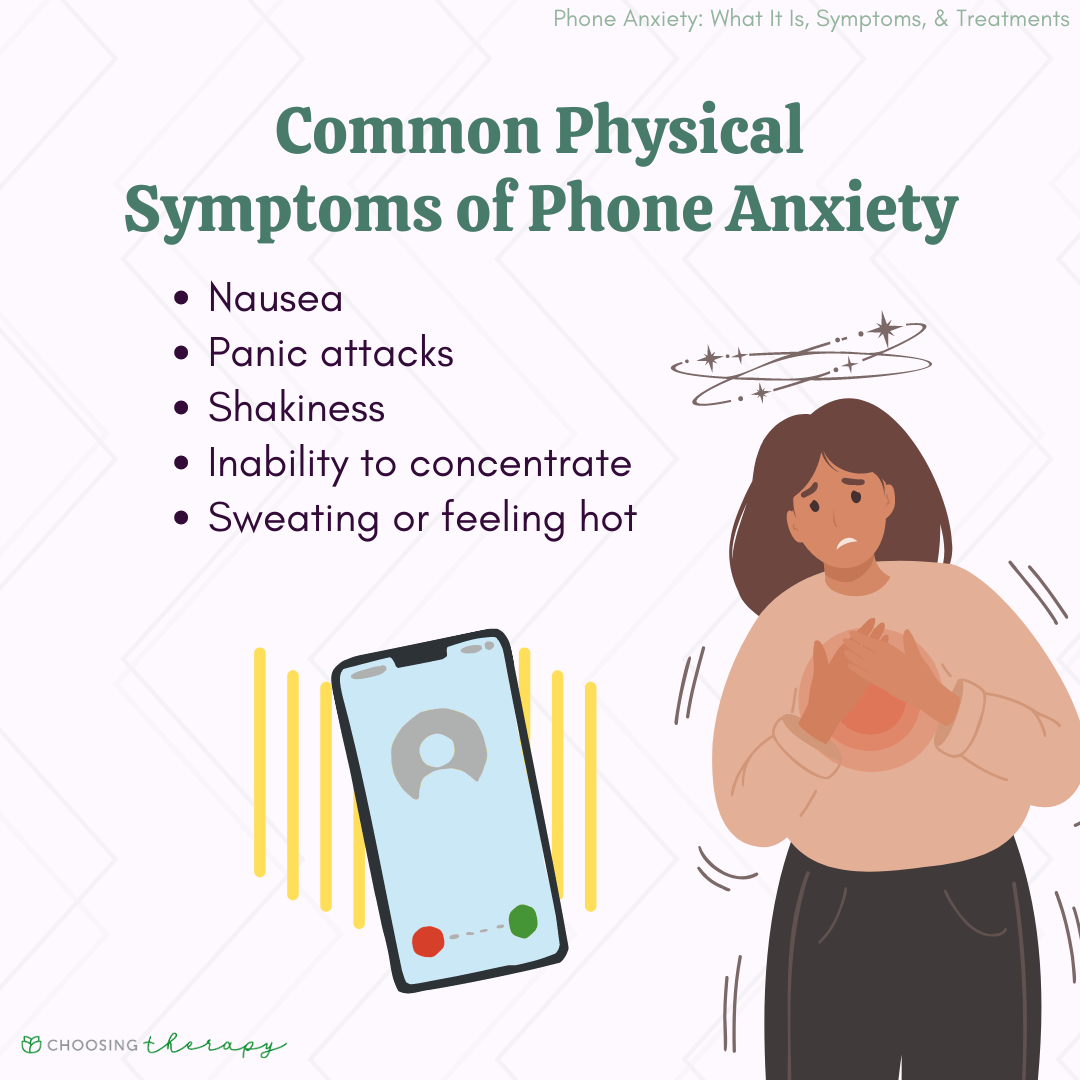
Common physical symptoms of phone anxiety include:
- Nausea
- Panic attacks
- Shakiness
- Sweating or feeling hot
Common emotional symptoms of phone anxiety include:
- Avoidance behaviors
- Obsessive thoughts about what to say during a call
- Fear of being judged over the phone
- Ruminating over past phone conversations
- Pretending/lying about being unavailable to answer the phone
Causes of Phone Anxiety
There isn’t one specific cause of phone anxiety. Instead, like all types of anxiety, it’s likely that a combination of genetic and environmental factors increases the chance of someone developing this condition. People with anxiety disorders are probably at a heightened risk of experiencing phone anxiety.
Possible causes of phone anxiety include:
- Genetic factors: If a biological relative has an anxiety disorder, you may be more likely to experience anxiety yourself3.
- Trauma: Direct or indirect exposure to stressful life events may increase the risk for anxiety.
- Physical health conditions: Certain health issues like thyroid problems, brain injuries, or autoimmune diseases can exacerbate stress, which may aggravate anxiety.
- Substances/medications: Both legal and illicit substances can affect the central nervous system, which may impact anxiety4.
- Personality traits: Specific traits like shyness or neuroticism may correlate with anxiety disorders.
Options for Anxiety Treatment
Talk Therapy – Get help from a licensed therapist. Betterhelp offers online therapy starting at $60 per week and is FSA/HSA eligible by most providers. Free Assessment
Psychiatry for Anxiety – Looking for anxiety treatment that prioritizes you? Talkiatry can help. Find an in-network psychiatrist you can see online. Get started with our short assessment. Visit Talkiatry
Treatment for Phone Anxiety
Although there isn’t a cure for anxiety, anxiety is treatable. The right treatment approach can significantly reduce the intensity of your symptoms. Keep in mind that some people need a multifaceted method to work on their anxiety, and progress doesn’t necessarily happen on a predictable or linear path.
Therapy
Therapy is often the first recommendation when developing a treatment plan for anxiety. There are numerous benefits of therapy, including having a safe environment to process your feelings, recognizing triggering situations, identifying unhelpful patterns, and learning new coping skills. When it comes to anxiety, therapy can help you better understand your symptoms and develop better strategies for managing your stress.
That said, finding the right fit is essential. Research consistently shows that the therapeutic alliance is one of the most reliable predictors of successful treatment outcomes5. When looking for the right therapist, consider what variables are most important to you. Do you prefer, for example, meeting someone in-person or online? There are many online therapy for anxiety options that make treatment more convenient. Do you want to work with someone older or younger? Do you gravitate towards a specific treatment approach? There are no right or wrong answers.
During your first therapy session, your therapist will ask about what brings you to therapy and obtain necessary background information about your life. Together, you will collaborate to form a treatment plan for your care.
Therapy options for phone anxiety include:
- Cognitive-behavioral therapy (CBT): CBT for anxiety focuses on recognizing the role negative beliefs play in shaping unwanted behaviors. Challenging these beliefs can encourage you to take more desirable actions.
- Exposure therapy: Exposure therapy is part of CBT, and it includes exposing someone to feared situations. Over time, this exposure creates a desensitization effect.
- Dialectical behavioral therapy (DBT): DBT focuses on skills rooted in emotional regulation, distress tolerance, and mindfulness. These core concepts can better help you tolerate stressful situations.
- Acceptance and commitment therapy (ACT): ACT blends behavioral strategies with mindfulness to help cope with anxiety. Instead of trying to directly reduce anxiety, people are encouraged to act in ways that are more aligned with their values.
- Interpersonal therapy (IPT): IPT helps with improving interpersonal conflict, and it can directly address anxiety symptoms. The idea is that there is an undeniable connection between trauma and interpersonal distress, and it’s important to strengthen interpersonal skills.
- Psychodynamic therapy: Psychodynamic therapy focuses on understanding how unconscious material affects current functioning. Reviewing the origins of anxiety can be helpful in resolving anxiety as it manifests today.
Medications
Some people benefit from taking anxiety medications to alleviate their mental health symptoms. SSRIs, such as Prozac, Zoloft, and Celexa tend to be the most common medications prescribed for anxiety. SSRIs work by increasing serotonin levels, which can help with behavior and attention regulation. SNRIs, such as Cymbalta, Effexor, or Pristiq, may also be prescribed. SNRIs work by increasing norepinephrine levels, which can support arousal and attention. While these medications are not addictive, the FDA has issued black-box warning labels, indicating that using these medications may increase the risk of suicidal ideations and behaviors6.
A psychiatrist or other healthcare professional is required to prescribe benzodiazepines such as Xanax, Ativan, or Klonopin to manage anxiety symptoms. Benzodiazepines can decrease anxiety, but they can also be habit-forming. In general, they should not be taken for long-term use. A qualified online psychiatrist can work with you to determine the best medication for your needs, and to monitor your use to reduce the likelihood of developing a benzodiazepine dependence.


Anxiety Workbook
Our workbook contains our best anxiety worksheets, designed to help you understand your anxiety, develop effective coping skills, and better manage challenging moments.
7 Tips for Coping With Phone Anxiety
If you have phone anxiety, it’s important to identify and implement healthy coping mechanisms. Avoiding the phone may provide temporary relief, but avoiding the problem only perpetuates more distress and makes the anxiety worse over time.
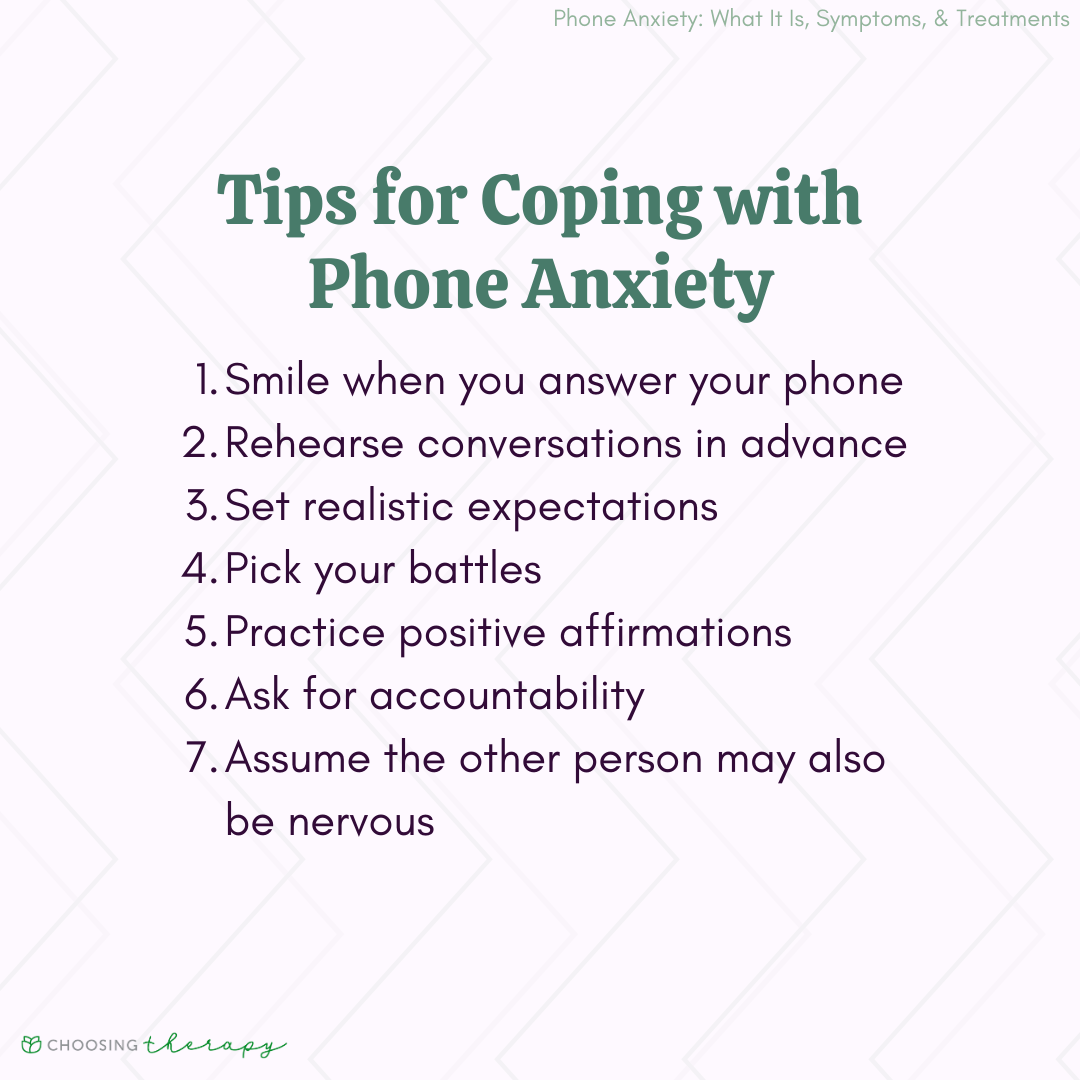
Here are seven tips for coping with phone anxiety:
1. Smile When You Answer the Phone
Although it may seem like silly advice, research shows that smiling impacts how we speak. Even if they never see your face, listeners can detect the type of smile used based on how you sound7.
Smiling can also help you reduce your heart rate and cope with stress better. For these reasons alone, it’s worth forcing a smile- you may trick yourself into believing you’re happier about talking on the phone than you actually are.
2. Rehearse Conversations in Advance
Anxiety may be heightened when you don’t know what to expect. Your mind jumps to the worst-case scenario, so you assume you’ll sound bad over the phone or that the call will go poorly. Consider practicing conversations in advance. Rehearsal doesn’t eliminate anxiety entirely, but it can lessen the effect.
3. Set Realistic Expectations
Anxiety often exists on a hierarchy, and certain situations exacerbate more worry than others. For example, you might find that making an important call to, say, your boss causes the most anxiety. Try to work your way up to that task by starting with smaller, manageable steps first.

4. Pick Your Battles
We now live in a society where, for the most part, phone calls are relatively infrequent. Most people communicate via email or text. So don’t assume that you need to tackle your anxiety by answering every phone call or learning to love talking on the phone. Choose when it’s important- and consider letting the more minor calls just go to voicemail.
5. Practice Positive Affirmations
How you talk to yourself can undoubtedly impact your anxiety. If you assume you’re going to sound immature or silly over the phone, you’re bound to feel worried. And because you’re so preoccupied, you might stumble over your words or come across as nervous.
Instead, try to consider grounding yourself with affirmations before and during the call. It can be as simple as saying, I am able to successfully have this conversation, or, I can absolutely get through this.
6. Ask for Accountability
Consider letting a trusted loved one know about your phone anxiety. Ask if they’re willing to hold you accountable for overcoming your fear by having regular conversations with you. Of course, you shouldn’t rely on someone else to do your recovery work, but it can still be helpful to have a loved one push you.
7. Assume the Other Person May Also Be Nervous
Many people experience some discomfort in social settings, and that can definitely translate to talking on the phone. You may find it helpful to go into your phone call believing that the other person also feels nervous or insecure. Having this mindset can lower your defenses and may make the conversation feel easier overall.
Final Thoughts
Phone anxiety can be a standalone type of anxiety, but it’s often a symptom of other anxiety conditions, low self-esteem, or poor interpersonal skills. If you find that your phone anxiety impacts your overall functioning, consider seeking help. Treatment can make such a valuable difference in your emotional well-being.
Phone Anxiety Infographics
Additional Resources
To help our readers take the next step in their mental health journey, ChoosingTherapy.com has partnered with leaders in mental health and wellness. ChoosingTherapy.com is compensated for marketing by the companies included below.
Personalized Treatment for Anxiety
Talkiatry – can match you with a real psychiatrist who accepts insurance. Talkiatry psychiatrists can evaluate you for anxiety and implement a personalized treatment plan, including medication. If appropriate for you and allowed by your state, this can include controlled substances. Get started with a short online assessment.
Therapy for Anxiety & Medication Management
Brightside Health – develops personalized plans that are unique to you and offers 1 on 1 support from start to finish. Brightside Health accepts United Healthcare, Anthem, Cigna, and Aetna. Appointments in as little as 24 hours. Start Free Assessment
Learn Mindfulness, Meditation, & Relaxation Techniques
Mindfulness.com – Change your life by practicing mindfulness. In a few minutes a day, you can start developing mindfulness and meditation skills. Free Trial
Anxiety Newsletter
A free newsletter from the experts at ChoosingTherapy.com for those impacted by anxiety. Get helpful tips and the latest information. Sign Up
ChoosingTherapy.com Directory
Find local therapists that offer online and in-person therapy. Search for therapists by specialty, experience, insurance, and location. Find a therapist near you.

Online Anxiety Test
Answering a few questions can help you understand your symptoms and give you a recommendation for what to do next.
Best Online Therapy for Anxiety
Anxiety is one of the most prevalent mental health issues in the world. To find the best online therapy for anxiety, we reviewed over 50 providers. Our evaluation focused on their geographic coverage area, cost, convenience, extra features, and more. Our top recommendations are based on more than three years of research and over 250 hours of hands-on testing. Read on to see our top picks for the best online anxiety counseling platforms.
Best Online Psychiatry Services
Online psychiatry, sometimes called telepsychiatry, platforms offer medication management by phone, video, or secure messaging for a variety of mental health conditions. In some cases, online psychiatry may be more affordable than seeing an in-person provider. Mental health treatment has expanded to include many online psychiatry and therapy services. With so many choices, it can feel overwhelming to find the one that is right for you.

