


Symptoms in ADHD often differ from boys to girls. Boys tend to be more hyperactive, meaning they show behaviors like having trouble sitting still or waiting their turn, interrupting others, impulsivity, or restlessness. ADHD symptoms don’t always fit the gender mold, though, and some boys may show more symptoms of inattentiveness, like daydreaming, forgetfulness, or being disorganized.

Find a Therapist for Your Child on ChoosingTherapy.com
Therapy can change your child’s life. Use the ChoosingTherapy.com Directory to find a licensed therapist near you who specializes in working with children and adolescents. Many therapists accept insurance, offer in-person and online appointments, and have immediate availability.
What Is ADHD?
Boys with attention-deficit/hyperactivity disorder (ADHD) would show symptoms related to inattentive ADHD, hyperactive-impulsive ADHD, or combined ADHD. These symptoms are observed throughout typical childhood development. Symptoms must be present for a minimum of six months with significant impacts to academic, social, and adaptive skills to meet the criteria for diagnosis. However, the degree of impairment can vary from low to high in each of those areas.1
According to the CDC, six million children, or 1 in 10, in the US are diagnosed with ADHD, mostly commonly between ages 12-17. Disorders related to anxiety, depression, conduct, Autism, and Tourette syndrome are also diagnosed frequently with ADHD in children. Boys are twice as likely to be diagnosed with ADHD than girls, although this difference may be in part due to the hyperactive and impulsive symptoms more often shown by boys than girls.
Symptoms of ADHD in Boys
Symptoms of ADHD can be observed as early as toddler age and would present as motor delays. Children with ADHD would also show signs of language, social, or developmental delays during this age. As they get older, school-aged children would show symptoms like difficulty completing tasks, excessive motor activity, or not considering action’s consequences. As they age to teenagers, significant academic, behavioral, and relational impairments may be present.3
Common symptoms of ADHD in boys include:
- Having trouble sitting still
- Being unable to wait their turn
- Interrupting others often
- Being forgetful
- Fidgeting
- Difficulty with staying organized
- Blurting out answers in class
- Having a short attention span or an inability to stay focused on tasks
Hyperactivity in Boys with ADHD
Boys are more likely to present with hyperactivity. This looks like constant movement, fidgeting, and inability to stay seated in appropriate situations. Impulsivity is the counterpart to hyperactivity in this presentation of ADHD. Impulsivity in boys would look like difficulty in controlling urges, or acting without much thought. Boys with hyperactive-inattentive ADHD may have a significant impairment in their relationships and performance at home and at school due to these behaviors.
What Age Does ADHD Start in Boys?
Symptoms can begin in early childhood, but to be diagnosed with ADHD, boys must show six or more symptoms of inattention or hyperactivity/impulsivity for a period of at least six months, with symptoms beginning before the age of 12. Symptoms would be present in at least two settings, such as school and home, and the symptoms would interfere with the child’s quality of life.1
Symptoms of ADHD in Boys Vs. Girls
While not all with ADHD will fit into the gender mold, boys and girls tend to present differently with ADHD. For boys, ADHD may look like external behavior problems related to impulsivity and hyperactivity. For girls, symptoms may be internalized, such as inattention and emotional dysregulation. Internalized symptoms are less visible, and, therefore, can be missed or not viewed as significant.
While biology and genetics play a role in ADHD symptom presentation, it is thought that social constructs also influence ADHD symptoms. Social conformity and perfectionism have a high impact on young people, especially girls, and symptoms present or are masked in ADHD in girls.4
How to Know the Difference Between Typical Boy Behavior & ADHD in Boys
There is a common area between typical behavior and ADHD symptomatology in boys. Boys with ADHD would not be able to sit still, focus, or show self-control at least some of the time, or would struggle to do so. These struggles will impact their friendships at school, relationships with family members at home, and academic performance. Checking in with a pediatrician about typical development in young boys may be helpful to see if a behavior is typical or symptomatic of ADHD.


ADHD Workbook
Our workbook includes all of our best ADHD worksheets to help you manage ADHD with goal-setting, planning, and coping skills.
How Does ADHD Affect Boys in Daily Life?
ADHD can affect how anyone thinks, feels, and behaves. For boys with ADHD, their behaviors can look like high-energy, impulsive, or out-of-control actions for those with externalizing behavioral symptoms. Less common is boys with internalizing behavioral symptoms, where they may be more likely to daydream, be disorganized, or easily distracted from a task.
Boys with ADHD may also be more prone to feeling anger or frustration, and, overall, may feel their emotions like joy and sadness more intensely or for longer periods of time. They may have trouble regulating their emotions or may have trouble motivating themselves to complete a task they are not interested in.5
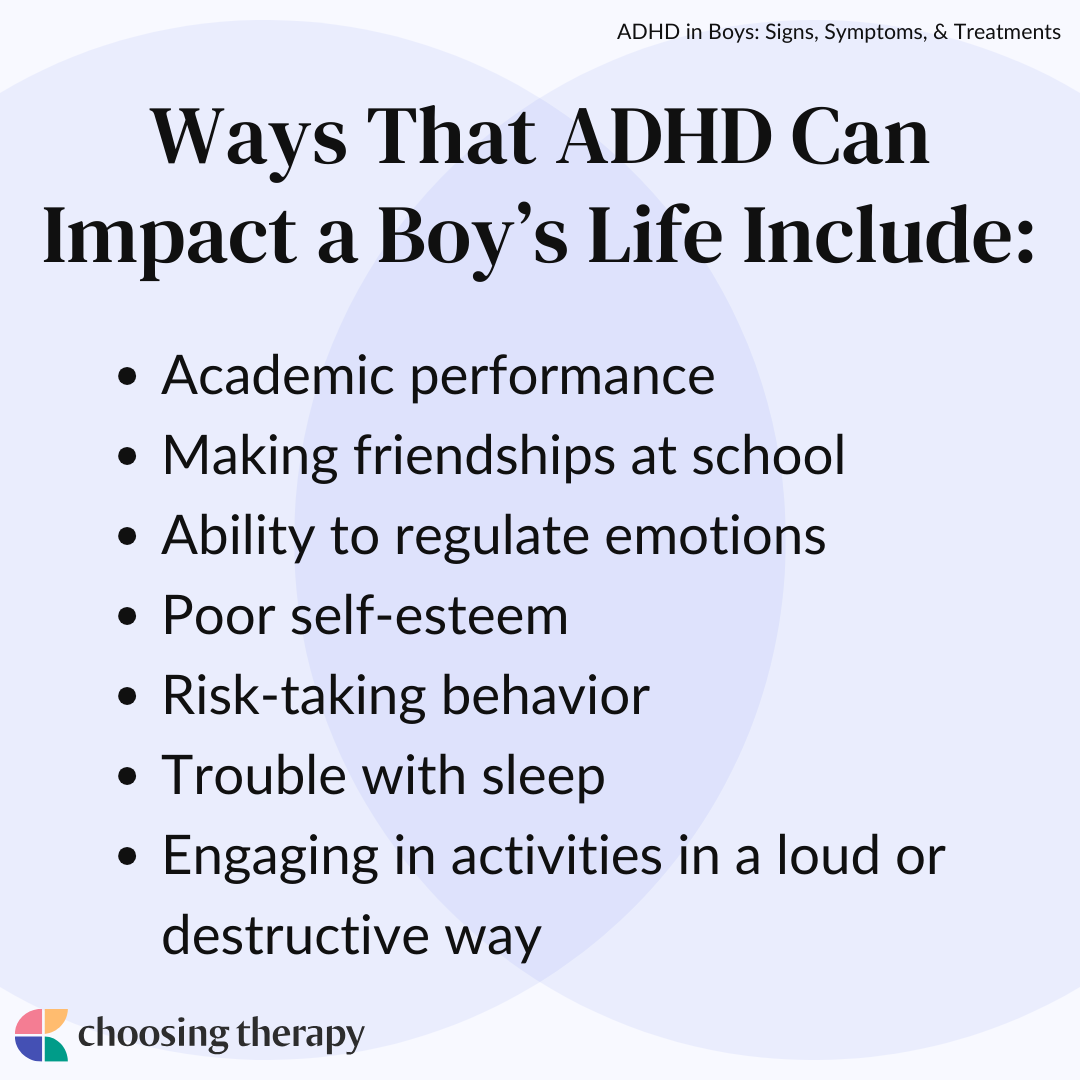
Ways that ADHD can impact a boy’s life include:
- Academic performance
- Making friendships at school
- Ability to regulate emotions
- Poor self-esteem
- Risk-taking behavior
- Trouble with sleep
- Engaging in activities in a loud or destructive way
Are There Benefits of ADHD in Boys?
Rest assured that boys with ADHD can flourish as well. They may be more likely to benefit from hyperfocus, which is being totally checked in and focused on a task through completion. Boys with ADHD can excel beyond their peers on a topic they are interested in or passionate about. Spontaneity and courage can lead to great creative success, as well.
High levels of energy can result in boys with ADHD, which can lead to success with sports and other physical activities. These kids are great conversationalists, have the capacity to connect well with others, and can be very charismatic and funny. Research indicates that children with ADHD display remarkable resiliency or strength to overcome challenges.6
Diagnosis & Assessment of ADHD in Boys
A certified professional such as a therapist, school counselor, or doctor, can provide a formal assessment to determine if your child meets diagnostic criteria for ADHD. Several screening tools can be administered, with the Conners Abbreviated Symptom Questionnaire or Vanderbilt ADHD Diagnostic Teacher and Parent Rating Scales being the most research-backed tools.7
Assessment may also include interviewing the parent and child, reviewing family medical history due to the genetic component of diagnosis, or reviewing school and medical records. Educational or intelligence testing may also be administered. Other screenings to rule out other medical, physical, neurodevelopmental, hearing, and vision impairments can be run to rule out other diagnoses.
According to the DSM-V-TR, the criteria for diagnosing ADHD in boys include:
- Six or more symptoms of inattention that have persisted for at least six months to a degree that is inconsistent with developmental level and that negatively impacts directly on social and academic activities:
- Often fails to give close attention to details or makes careless mistakes
- Often has difficulty sustaining attention in tasks or play activities
- Often does not seem to listen when spoken to directly
- Often does not follow through on instructions and fails to finish school work or chores
- Often has difficulty with organizing
- Often avoids, dislikes, or is reluctant to engage in tasks that require sustained mental effort
- Often loses things necessary for tasks or activities, such as school supplies
- Often easily distracted by extraneous stimuli, such as TV
- Often forgetful in daily activities
- Six or more symptoms of hyperactivity and impulsivity that have persisted for at least six months to the degree that is inconsistent with developmental level and that negatively impacts directly on social and academic activities, and are not the manifestation of oppositional behavior, defiance, hospitality, or failure to understand tasks or instructions:
- Often fidgets or squirms in seat
- Often leaves seat in situations where it is expected to stay seated, such as during class
- Often runs about or climbs in situations where it is inappropriate
- Often unable to play or engage in leisure activities quietly
- Often “on the go,” activity as if “driven by a motor”
- Often talks excessively
- Often blurts out answers before a question has been completed
- Often have difficulty waiting their turn
- Often interrupts or intrudes on others
- Symptoms of ADHD in boys will be present before age 12, with several symptoms being present in two or more settings.
Overdiagnosis of ADHD in Boys
Gender stereotypes may factor into the overdiagnosis of ADHD in boys, due to the typical presentation of hyperactivity and impulsivity in boys with ADHD mirroring typical childhood behavior or presentation of milder symptoms. Research indicated that further research is needed to see the long-term impact of overdiagnosis and treatment of ADHD in boys.8, 9
Co-occurring Conditions in Boys With ADHD
Research indicates that 45% of children with ADHD have a co-occurring learning disability; 27% have co-occurring conduct disorder; 15% have co-occurring anxiety; 15% have co-occurring depression; and 12% have co-occurring speech impairment.10 Rates of diagnoses for these disorders are significantly higher than for children without an ADHD diagnosis. Oppositional defiant disorder (ODD), Minor Depression or Dysthymia, and Generalized Anxiety Disorder are the three most common co-occurring conditions.10
Boys with ADHD may show a tendency towards disorders with externalizing symptoms, such as behavioral symptoms or conduct disorder. However, this is not the case for every boy with ADHD, and each child should be assessed without the influence of gender stereotypes influencing diagnosis. It is important to note the link between anxiety and ADHD in boys as well.
Treatment for ADHD in Boys
For boys with ADHD, a customized treatment plan can be developed between parents, school staff, therapists, and psychiatrists to target the individual needs of each child most effectively. Different children will have different needs. There is no one right way to treat ADHD, so discuss with your team the best way to improve the quality of life of your child.
Medication for ADHD in Boys
According to data collected by the CDC, 62% of children ages 3-17 in the US were taking ADHD medication in 2016-2019.11 ADHD medication for kids is often stimulant, but non-stimulant options are available, with the latter being ineffective or side effects are bothersome. Medication is best considered for children over six years old, who have already started behavioral therapy treatment.
Children who take medication for ADHD should see their prescribing doctor consistently and frequently, to make sure that the medication is working effectively and to make any changes as needed if it is not. Do not take any medication that has not been prescribed, and do not stray from directions provided by the prescriber.
Medications used to treat symptoms of ADHD in boys include:
- Short-acting stimulants including Ritalin (Methylphenidate), Adderall (Amphetamine), or Focalin (Dexmethylphenidate).
- Long-acting stimulants, including Adderall XR, Ritalin LA, Ritalin SR, or Focalin XR.
- Non-stimulant medications, including Strattera (Atomoxetine), Kapvay (Clonidine), or Intuniv (Guabfacine).
Therapy for ADHD in Boys
Data collected by the CDC reports that 47% of children between 3-17 years old in the US received behavioral therapy for treatment of ADHD symptoms from 2016-2019.11 Consider that most behavioral interventions are labor intensive on the part of the child, the parents, and the school support. However, the labor included will add to effective outcomes for the child.
Behavioral interventions should target specific behaviors. For example, inattentive symptoms can be treated by the use of checklists or a planner. Rewards systems and token economies are effective behavioral interventions for most children. Behavioral therapy for the treatment of ADHD in boys would also include school-based interventions like a daily report card to monitor behavior, and parent training interventions performed by a clinician.
Therapy options for symptoms of ADHD in boys include:
- Cognitive behavioral therapy (CBT): CBT for ADHD focuses on behavioral interventions, organization skills, and social skills while challenging negative thinking patterns. This can allow the child to become more flexible emotionally and function better daily.
- Music therapy: music therapy for ADHD can reduce feelings of anxiety while improving communication and memory through musical patterns and favorite songs. Feeling calmer and more self-confident are additional benefits of this treatment.
- Family therapy: ADHD is a condition that can affect the whole household, so involving everyone in treatment can often be effective. Family therapy focuses on teamwork, improving communication, and parenting skills for a child with ADHD.
- Social skills training (SST): SST involves the utilization of role play and behavioral rehearsal to practice coping skills, effective communication, and reducing impulsivity. Addressing these symptoms allows boys with ADHD to develop better relationships and become stronger problem-solvers.
- Neurofeedback: Where available, neurofeedback can be an effective intervention to improve attention and concentration while decreasing impulsivity in boys with ADHD. Neurofeedback targets brain waves emitted when focusing to encourage the brain to produce more of them.
- Play therapy: Another intervention focused on creative expression, play therapy allows children with ADHD to improve their ability to connect with others and communicate through what is projected during play. Additional outcomes include improved self-esteem and mood.
Find a Therapist for Your Child on ChoosingTherapy.com
Therapy can change your child’s life. Use the ChoosingTherapy.com Directory to find a licensed therapist near you who specializes in working with children and adolescents. Many therapists accept insurance, offer in-person and online appointments, and have immediate availability.
Resources for Boys With ADHD
There are many resources available both online and in the community for boys with ADHD and their families. Websites for national organizations supporting children and families with ADHD, such as CHADD, are effective resources to learn more about ADHD and find effective strategies to reduce the negative impact of symptoms.
Schools, pediatricians, and counseling offices, for example, may have information available on services available for the child as well as the family. Therapy groups or support groups in the community can be a good therapeutic community for both children and their families. Doctors can provide guidance and insight on when to explore medication and what medication may be most effective.
Some helpful resources for boys with ADHD include:
- Educational resources: Boys with ADHD have access to educational resources such as special education programs, tutoring services, and educational therapists. These resources can help those struggling academically catch up with their peers.
- Support groups and organizations: Schools and community centers in your area may have support groups available. Organizations such as NAMI and CHADD also offer both in-person and online resources with valuable information, workshops, and forums available for parents and children.
- Healthcare resources: Child psychologists, psychiatrists, and ADHD specialists in your area can offer professional guidance and treatment for your child with ADHD. Your child’s pediatrician can offer a referral if needed.
- Tools and technology: Resources online can provide information on assessment, treatment, and additional supportive resources for your child with ADHD, or for adults. ADHD Online and Done, for example, offers a telehealth platform with additional resources to use as needed without needing to sign up for their service.
- Books and blogs: Local libraries offer a selection of books to help parents and families understand and manage the ADHD condition effectively. Blogs online can provide insight from others with lived experience managing ADHD.
How to Support a Boy With ADHD
In addition to formal treatment and school-based interventions, creating consistency and structure in the home environment is instrumental to supporting a boy with ADHD to manage their symptoms, and to help the family function effectively. Creating structure, establishing routine, positive reinforcement, and fostering a supportive home environment will be key components to maintaining that support.
Here are 10 tips on how to support a boy with ADHD:
1. Establish a Structured Routine
Consistency is key for boys with ADHD, and creating a safe environment with clear expectations is instrumental to success. Daily routines can include time for chores, play, homework, and other activities. Having dialogues about expectations is important for a routine to be effective.
2. Give Clear Instructions
Boys with ADHD might be impacted in their ability to focus, organize, or complete tasks. Providing clear and detailed instructions, with specific information and breaking tasks down into smaller and more manageable steps can be effective in improving task completion. Visual aids can be helpful for boys with ADHD as it will redirect him back to his routine and task at hand.
3. Create a Supportive Environment
Parents’ relationships with their children can make or break a situation. Boys with ADHD can experience lower self-esteem due to the feeling that they are making mistakes or letting others down. Using patience, understanding, and acceptance when connecting with children helps them build resiliency.
4. Supervising & Monitoring Medication
Parents must be involved in communicating with the prescriber about the efficacy of the medication and must have an open dialogue with the child taking medication to observe any negative side effects or improvements from the medication. Parents should hold and dispense the medication to children to make sure it is taken as prescribed. Parents can keep a record of any changes in symptoms or mood to report back to the treatment team.
5. Manage Your Frustration
Frustration is a normal emotion when dealing with challenges, but do not let it affect the way that you communicate. Frustration can lead to aggressive communication, which can damage a relationship or impact the self-esteem of the child. Parents can attend their own therapy, participate in support groups, and connect with others for support and awareness of the ADHD experience.
6. Advocate for Him at School
Talking to the school about receiving support through an IEP or 504 plan if the school has not started that process can be effective to make sure that children with ADHD receive the support they need to succeed. Meet with the teacher often to discuss the child’s progress, and collaborate.
7. Leave Room for Bonding
Caregivers who make time to have fun with their child while giving them their full attention have better relationships together. Boys with ADHD will thrive with time to connect with their caregivers in a meaningful way. Caregivers will also experience less stress while maintaining positive connections.
8. Exercise
Boys with ADHD excel often with physical activities, like sports. Caregivers can connect with children in these activities, like riding bikes together or coaching a sports team the child is on. Exercise is shown to improve concentration and mood, and is a great tool to use for ADHD treatment.
9. Know the Effects of ADHD
Identify the unique ways in which your child is impacted by ADHD. Understand what behaviors are symptomatic of ADHD rather than ‘bad behavior.’ Connect with your child’s teacher, therapist, or other support to stay consistent with goals and identify what skills to practice and improve on.
10. Find Out If You Have ADHD
There is a genetic factor in boys with ADHD, meaning that someone else in the family may also have ADHD. Caregivers who treat their ADHD, or any other of their needs, are able to show up as their best self to parent.
When to Seek Professional Support
It may be time to seek professional support when symptoms of ADHD are significantly impacting one’s quality of life. Warning signs to look out for in boys with ADHD would be failing or skipping classes, fighting, high-risk behaviors, substance use, or failure to establish effective relationships. It is never too late to seek treatment for ADHD, or any other mental health condition that may occur with it.
Using an online therapist directory to find a therapist is a great way to find a therapist in your area and in your insurance network these directors can be used to find a neurodiverse-affirming therapist. An online therapy platform can be helpful in creating accessibility to a specialized therapist that may be outside of travel distance for your family. Medication is often included in the course of treatment for ADHD, and for those seeking medication management consultation, linking with online psychiatrist options may be helpful.
In My Experience

“ADHD is a common diagnosis for many children, and treatment has shown to be effective in helping those children live happy and fulfilling lives. I advise that parents and teachers pay attention to all potential signs of ADHD in boys – not just externalizing behaviors – to prevent missing an accurate diagnosis and helpful treatment. Additionally, be aware that a part of kids being kids is being hyperactive, impulsive, or inattentive at times.
Children with ADHD are often pragmatic, so include them in the dialogue on why certain actions are being taken, or certain lessons need to be learned. If they understand the function of an action, they are more likely to participate willingly. ADHD is highly treatable in any presentation through behavioral therapy, effective parenting, and medication management when appropriate.”
ADHD in Boys Infographics

Additional Resources
To help our readers take the next step in their mental health journey, ChoosingTherapy.com has partnered with leaders in mental health and wellness. ChoosingTherapy.com is compensated for marketing by the companies included below.
Online Therapy
TeenCounseling (ages 13 -19) – Help your child thrive with professional counseling. Get matched with a licensed therapist who specializes in teens. Discuss your child’s issues and situation. When you approve, the therapist is connected with your child. The therapist interacts with your child over text, phone, and video. Starting for as little as $65 per week. Get Started
ChoosingTherapy.com Directory
Find local therapists that offer online and in-person therapy. Search for therapists by specialty, experience, insurance, and location. Find a therapist near you.
Newsletter For Kids and Teen Mental Health
A free newsletter for those interested in mental health in kids and teens. Get helpful tips and the latest information. Sign Up

How to Find & Choose the Right Therapist for Your Child
Discovering and selecting the right therapist for your child often comes down to two things: research and persistence. Be willing to put in the time and effort to call around to different therapists or therapy organizations in your area. Read through therapist profiles to see if their style, approach, and expertise resonate with you and your child.
Depression in Children: Signs, Symptoms, & Treatments
If you or someone you know is concerned about symptoms related to depression, seeking professional help from a mental health provider is highly recommended. Licensed professional counselors, social workers, psychologists, or psychiatric medication prescribers are able to determine whether a person is experiencing depression and the best methods of treatment.

