





Our team used over a dozen mental health practice management systems to identify the top eight options. All the behavioral health EHR software in my list offer affordable features for managing your therapy notes, billing insurance, and seeing clients virtually. The best mental health EHR platforms provide thoughtful automation to make running your practice effortless.
Editor’s Note
We regularly review and update our content to provide the most accurate and current information. In this round of updates, we added Carepatron as our Most Affordable pick. Healthie took the spot for Best Telehealth Platform, while TherapyNotes is now recognized as the Most Straightforward & Simple option. We updated the TheraNest entry to reflect its recent rebrand to Ensora Health.
Our Favorite EHR Systems
- Best Overall - My Best Practice | Read review
- Most Comprehensive - SimplePractice | Read review
- Most Affordable - Carepatron | Read review
- Easiest to Use - Sessions Health | Read review
- Best Telehealth Platform - Healthie | Read review
- Most Reliable All-in-One Platform - Ensora Health | Read review
- Most Straightforward & Simple - TherapyNotes | Read review
- Best for Extra Features - Practice Better | Read review
Best Options At a Glance


Price: $39+ monthly
Scalability: Excellent
Value for Cost: High
Time to Set Up: Moderate
Pros & Cons
-
 Very customizable notes and forms
 -
Good library of assessments
-
Simple pricing—no client limit
-
 Telehealth costs extra
 -
Insurance billing is mediocre


Price: $49 – $99+ monthly
Scalability: Good
Value for Cost: Moderate
Time to Set Up: Moderate
Pros & Cons
-
All-in-one practice management
-
Wiley Treatment Planner integration
-
Relatively expensive
-
Lowest-cost tier doesn’t offer much
-
Extra features may not be necessary for everyone

Price: $0 – $29+ monthly
Scalability: High
Value for Cost: Excellent
Time to Set Up: Moderate
Pros & Cons
-
Free plan available with strong core features
-
Scales affordably as your practice grows
-
Some customization options are basic
-
Insurance billing isn’t perfect

Price: $0 – $39+ monthly
Scalability: Good
Value for Cost: High
Time to Set Up: Minimal
Pros & Cons
-
Incredibly simple and easy to use
-
All features included in a single price
-
Somewhat barebones compared to other EHRs
-
Free tier only allows for 3 clients
-
Extra provider fee may be prohibitive for group practices

Price: $18 – $135+ monthly
Scalability: High
Value for Cost: High
Time to Set Up: Time-consuming (bulk import is slow)
Pros & Cons
-
Very strong telehealth tools with built-in note access and multitasking
-
Flexible pricing with a feature-rich free tier
-
Bulk client import takes up to two weeks
-
No AI charting tools like some newer competitors


Price: $29 – $89+ monthly
Scalability: Excellent
Value for Cost: High
Time to Set Up: Moderate
Pros & Cons
-
Customizable documentation with powerful dynamic forms
-
Responsive onboarding and support team
-
Some automation tools locked behind higher-tier plans
-
Relatively small library of prebuilt forms

Price: $69 – $79+ monthly
Scalability: Moderate
Value for Cost: Good
Time to Set Up: Minimal
Pros & Cons
-
Relatively affordable
-
Easy to use and set up
-
Underwhelming telehealth platform
-
Not very customizable

Price: $35 – $155+ monthly
Scalability: Excellent
Value for Cost: Excellent
Time to Set Up: Minimal
Pros & Cons
-
Powerful client engagement tools
-
Strong automation and integration options
-
Pricing can climb quickly with add-ons
-
More focused on holistic and integrative practices
Why Trust Us

300+
Companies Reviewed
2,350+
Hours of Testing
1,150+
Data Points AnalyzedThe reviews on ChoosingTherapy.com are fair, honest, thorough, and based on firsthand experience. To date, we’ve reviewed mental health solutions offered by more than 300 companies. That has involved more than 2,350 hours of firsthand use and consideration of over 1,150 data points. Our editorial policies outline a rigorous review process, but they all boil down to this: produce reviews that our own friends and family can rely on. Learn more here.
Detailed Company Reviews
Price: $39+ monthly
Scalability: Excellent
Value for Cost: High
Time to Set Up: Moderate
My Best Practice is one of the most well-balanced EHR systems our team has tested, offering simple, intuitive tools backed by thoughtful design. Its combination of ready-to-use functionality and deep customization makes it easy to tailor the platform to your practice’s unique needs, whether you’re just starting out or scaling up.
Pros & Cons
 Pros
Pros
- Session notes are intuitively designed and promote quick workflow during sessions
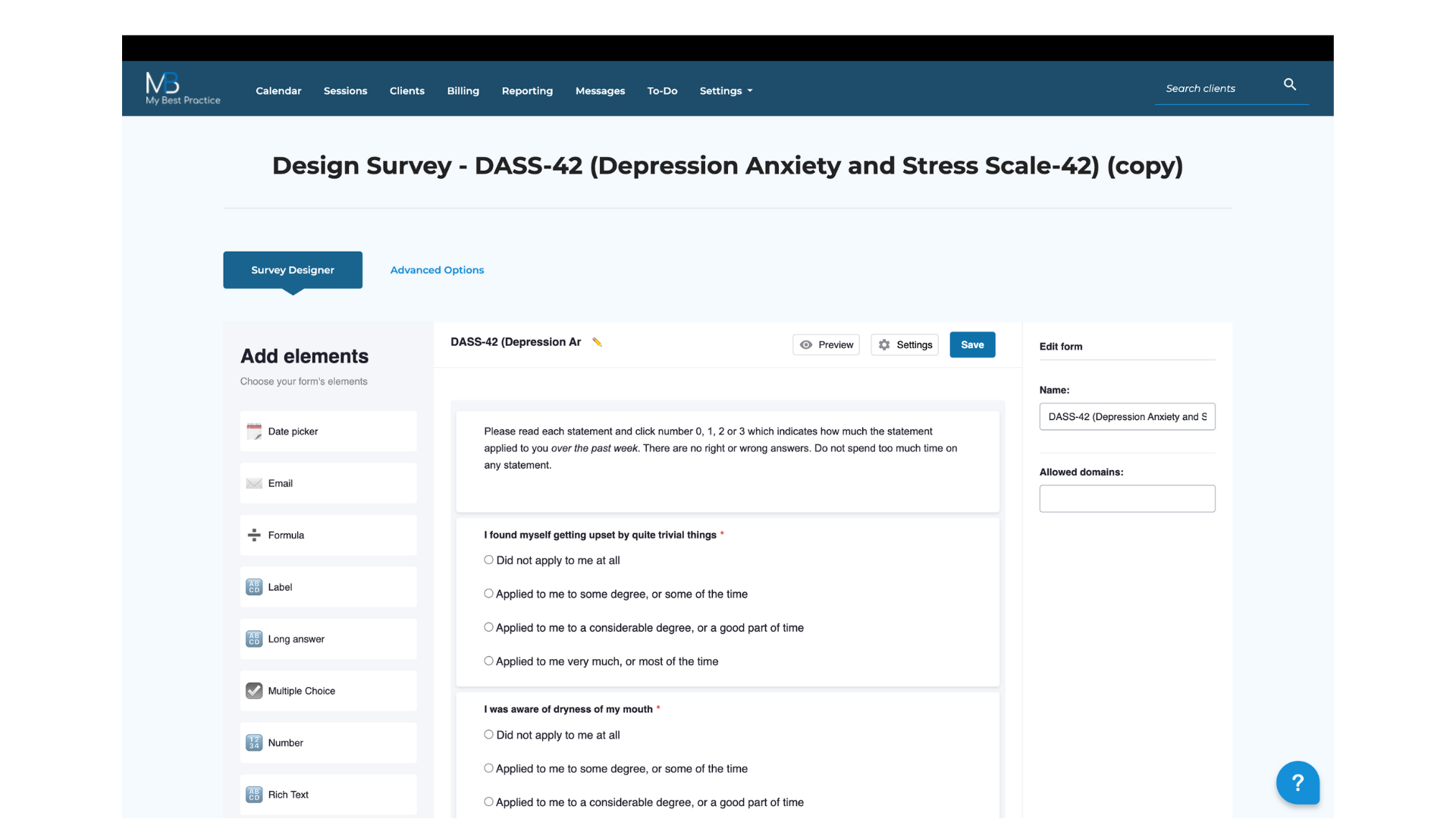
- Large library of assessments, with the ability to add custom forms
- Robust customization options for clinical documentation
- Impressive reporting and analytics options
- Electronic prescription functionality
Cons
- Telehealth and electronic prescriptions incur extra fees
- Billing is less innovative than certain competitors
- Some fees are hidden, or difficult to find
- Somewhat lackluster telehealth platform
Cost
Plans start at $39 monthly for a solo provider and include core features like documentation, scheduling, billing, secure messaging, and client management. The pricing structure is refreshingly straightforward and makes it easy to predict costs over time.
A few extras include:
- Additional providers: $19 monthly each
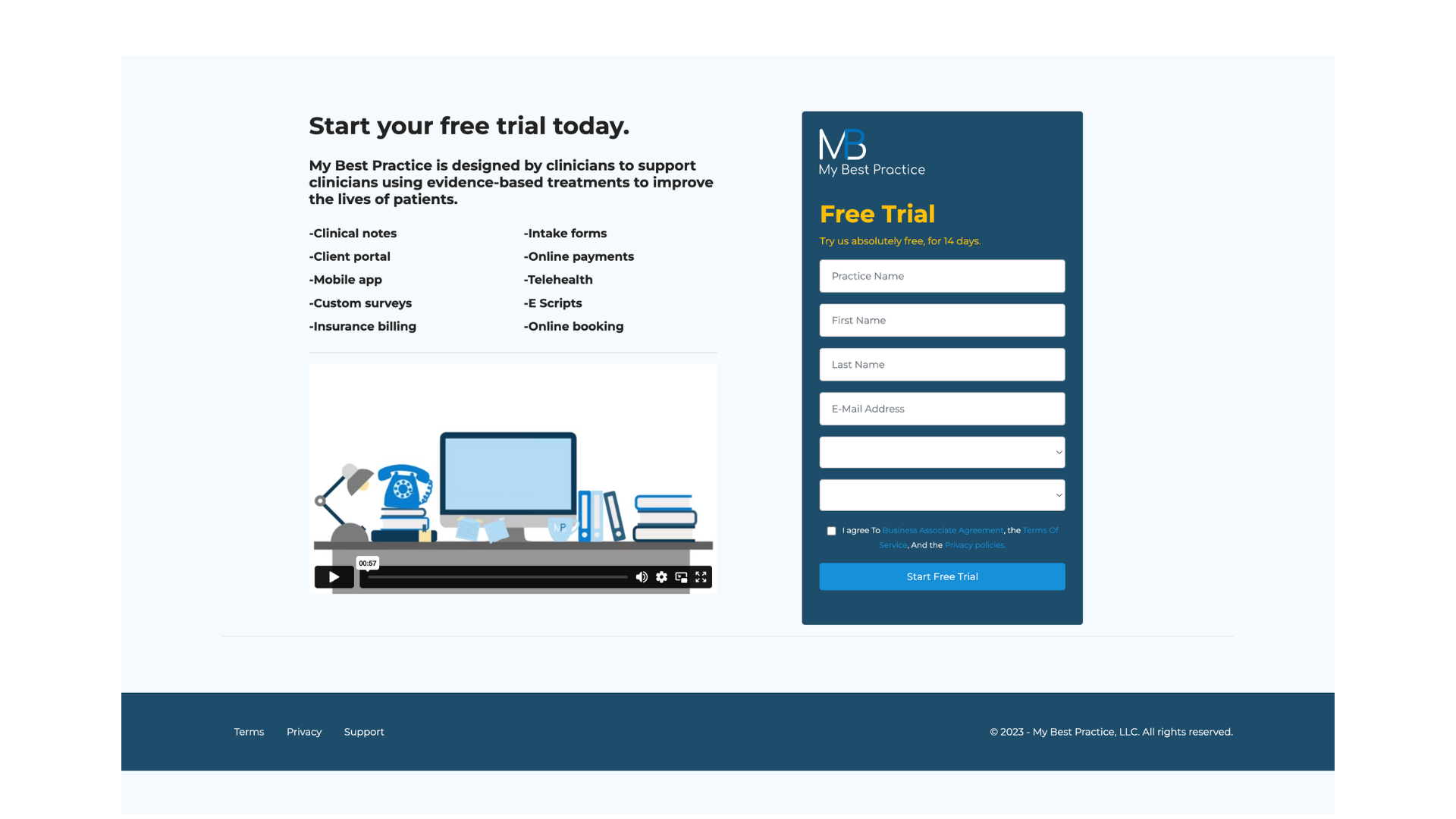
- Telehealth add-on: $20 monthly
- Electronic prescribing: $99 monthly
While telehealth and e-prescribing are separate fees, which can be a downside given how essential telehealth has become, they’re optional and don’t affect your core functionality if you’re not using them.
One of the biggest advantages of My Best Practice is how smoothly it scales. There’s no client limit, no tiered feature gating, and the per-provider pricing means transitioning from a solo to a group practice is relatively painless. The low additional user cost is especially appealing for growing teams who want to keep budgets predictable while adding new clinicians.
Find more details in our review of My Best Practice.
Overview
My Best Practice is one of the best behavioral health EHR systems we’ve tested. Its all-in-one platform supports client management, clinical documentation, billing, a client portal, telehealth, and electronic prescriptions. These tools are designed to help practices of any size streamline their operations from a single, intuitive interface.
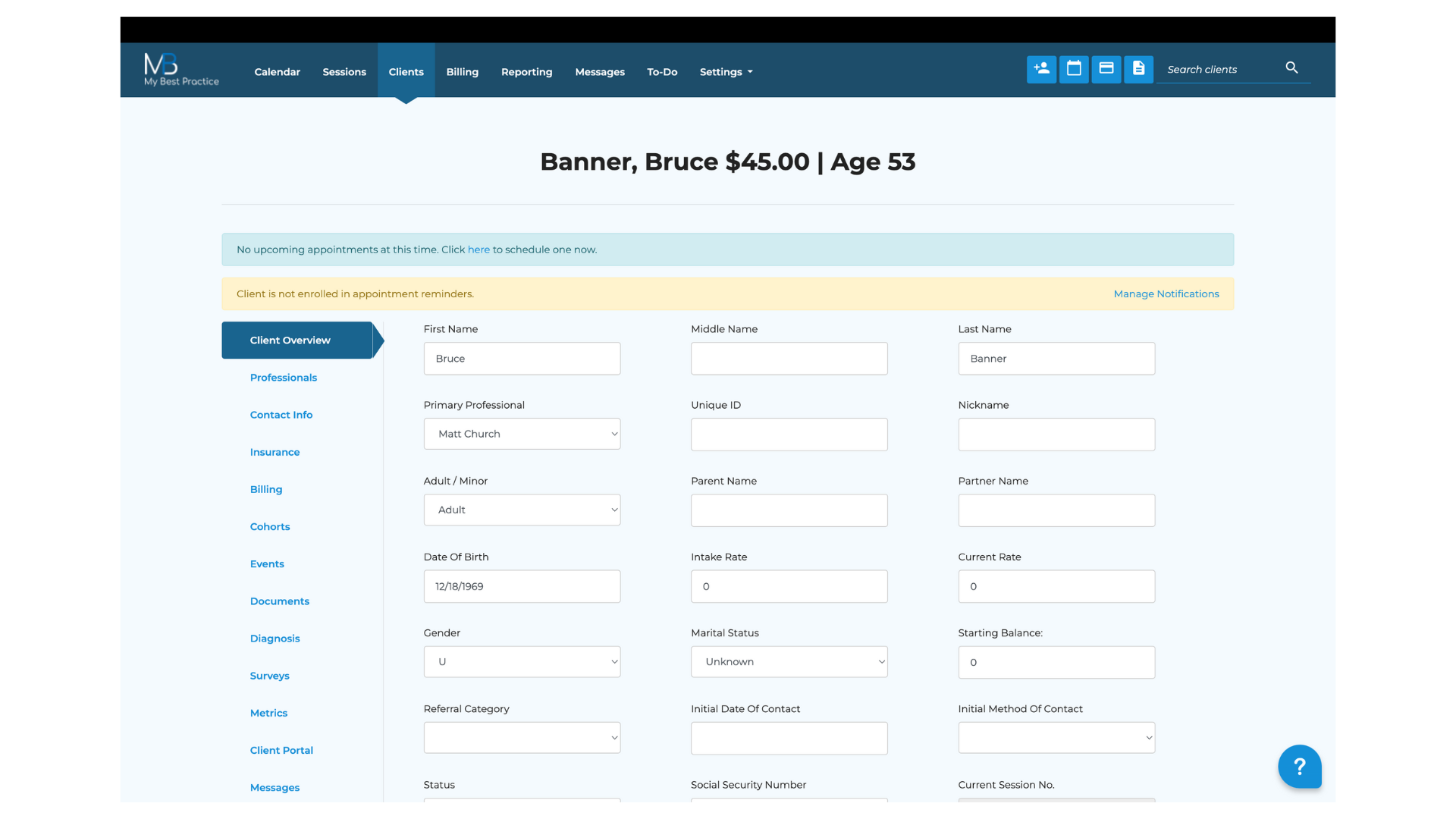
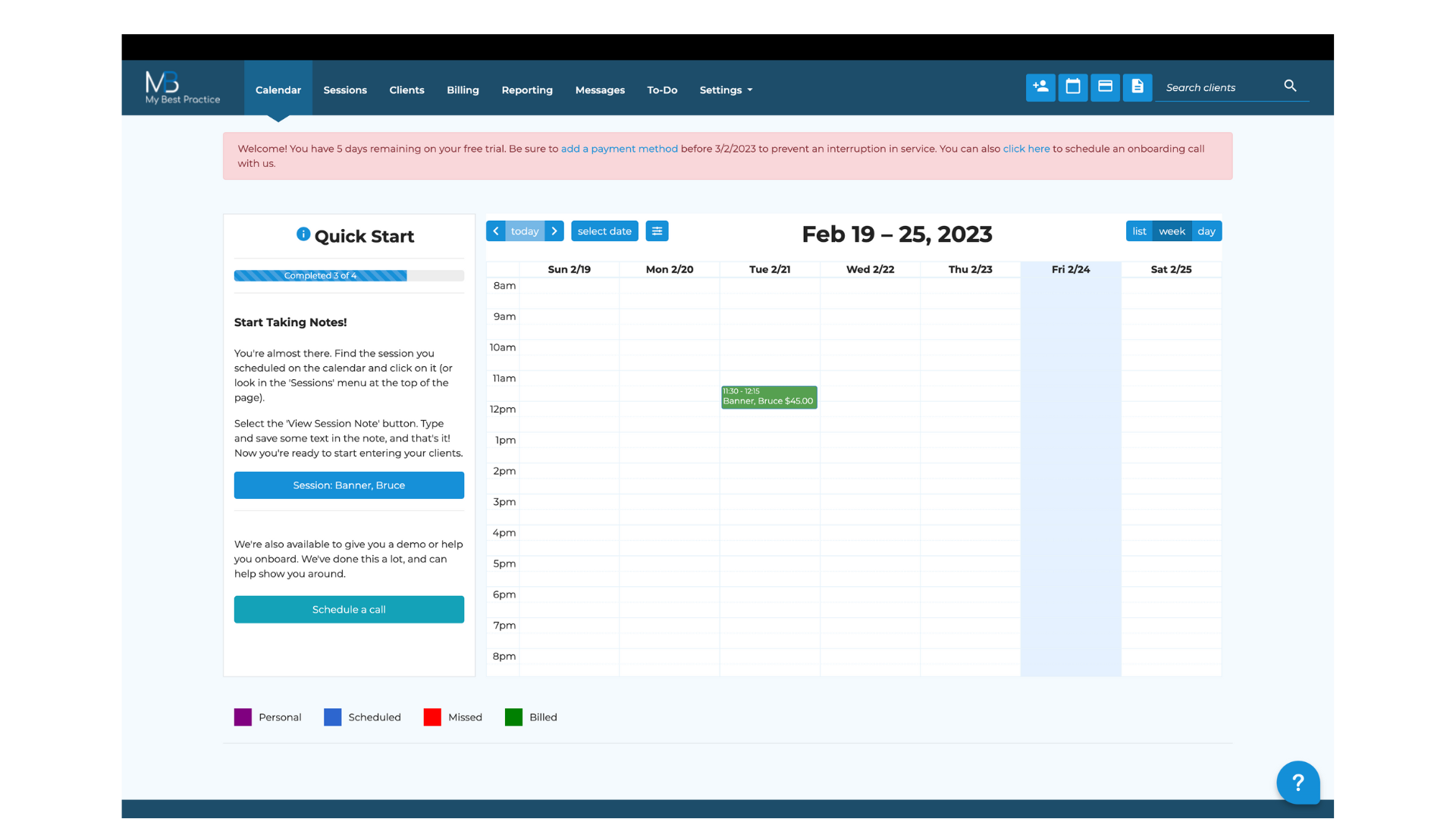
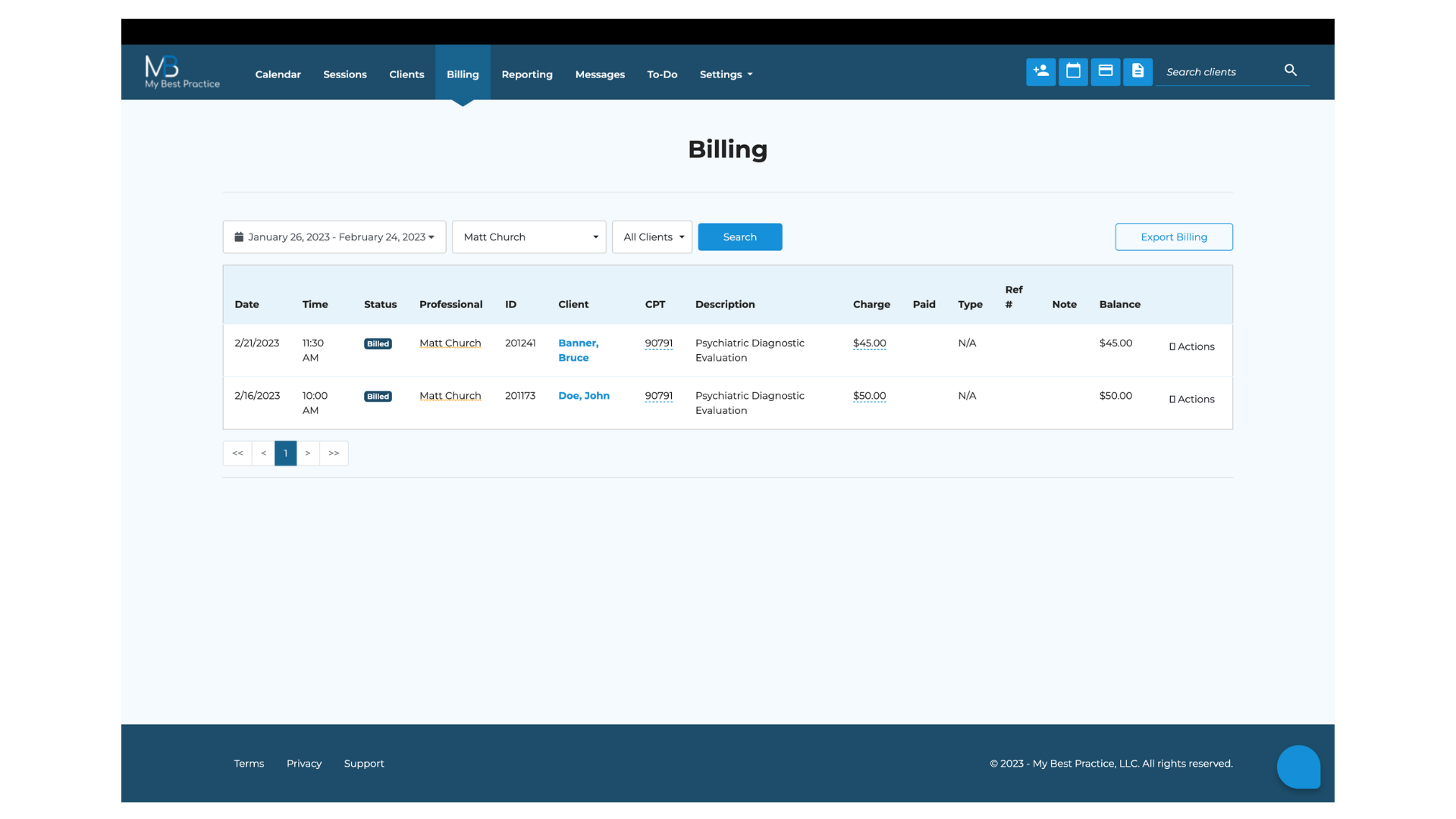


What sets it apart is how streamlined and flexible it feels. You can jump in and use it right out of the box, but there’s also room to customize forms, notes, and workflows as your practice evolves. It’s a rare blend of simplicity and depth that works just as well for new solo providers as it does for established teams.
We’ve used and monitored My Best Practice over several years and consistently found it to be one of the most intuitive and cost-stable EHRs available. It’s an excellent choice for mental health professionals looking for an all-around reliable system that won’t box them in as they grow.
Learn more in our full My Best Practice review.
Price: $49 – $99+ monthly
Scalability: Good
Value for Cost: Moderate
Time to Set Up: Moderate
SimplePractice is a popular, all-in-one EHR platform used by thousands of behavioral health professionals. It combines modern design with a wide range of features to support nearly every aspect of private practice. While it’s not the most affordable system, its polish, consistency, and deep toolkit continue to make it one of the top picks in the field.
Pros & Cons
Pros
- Beautiful, modern interface
- AI tools and helpful automation
- Offers Wiley Treatment Planner
- Intuitive calendar
- Good onboarding support
- Professional website builder
- Mobile app for practitioners and clients
Cons
- Relatively expensive compared to competitors
- May not be customizable enough for very large practices
Cost
Plans for solo providers start at $49 monthly, with tiered pricing based on features. Most practices will need the Essential ($69/month) or Plus ($99/month) plan to unlock core tools like Wiley integration, secure messaging, and custom templates.
SimplePractice works well for growing solo providers and group practices, but scaling can get expensive. There’s no client cap, but important features are gated behind higher-tier plans. It also has a reputation for raising prices and adjusting what’s included, so we recommend budgeting for the mid-to-top tier from the start.
Review pricing details in our review of SimplePractice.
Overview
SimplePractice is one of the most well-known EHR systems in the behavioral health space. It delivers a broad suite of features in a clean, modern interface, from scheduling and documentation to billing, client messaging, and telehealth.
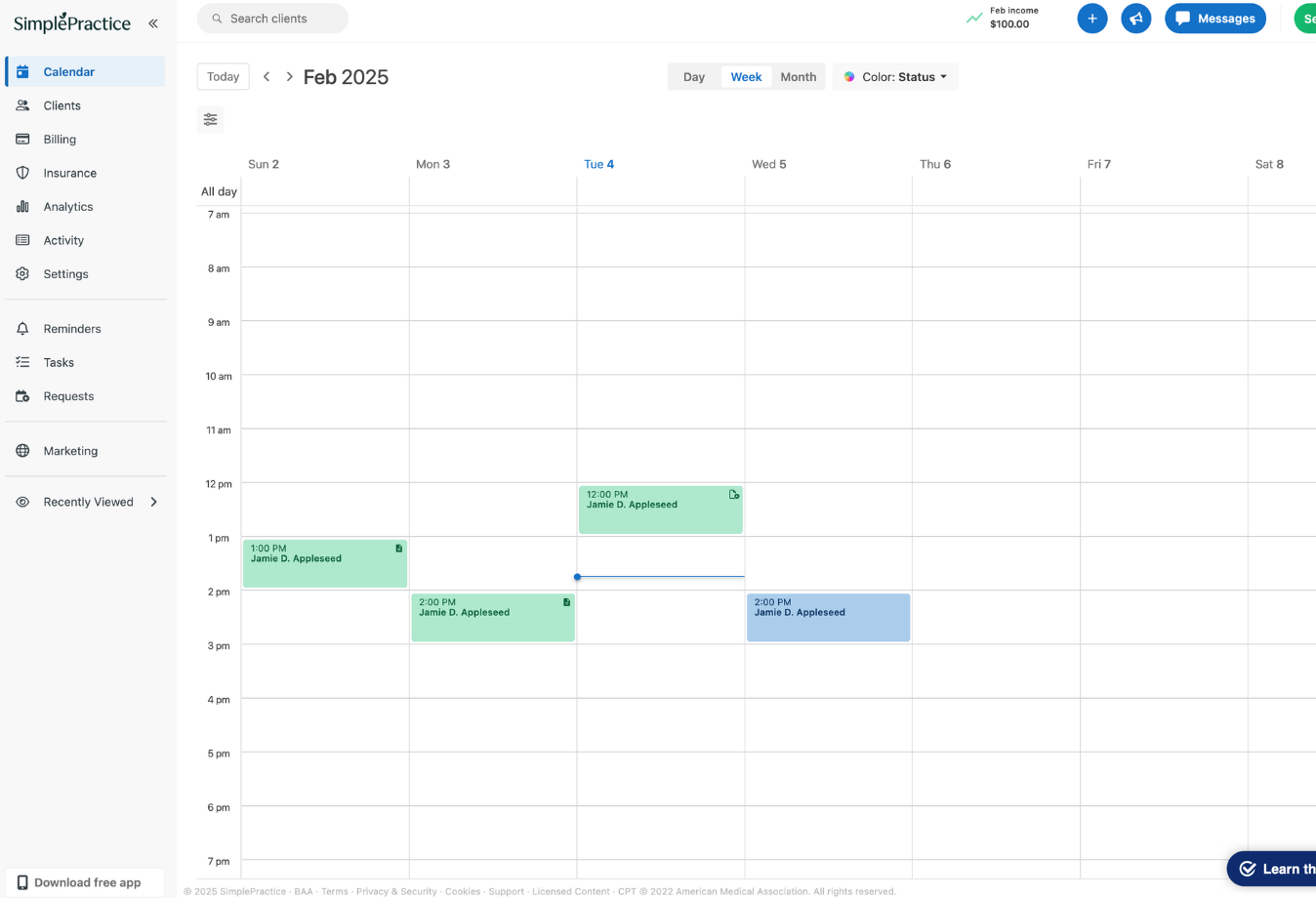

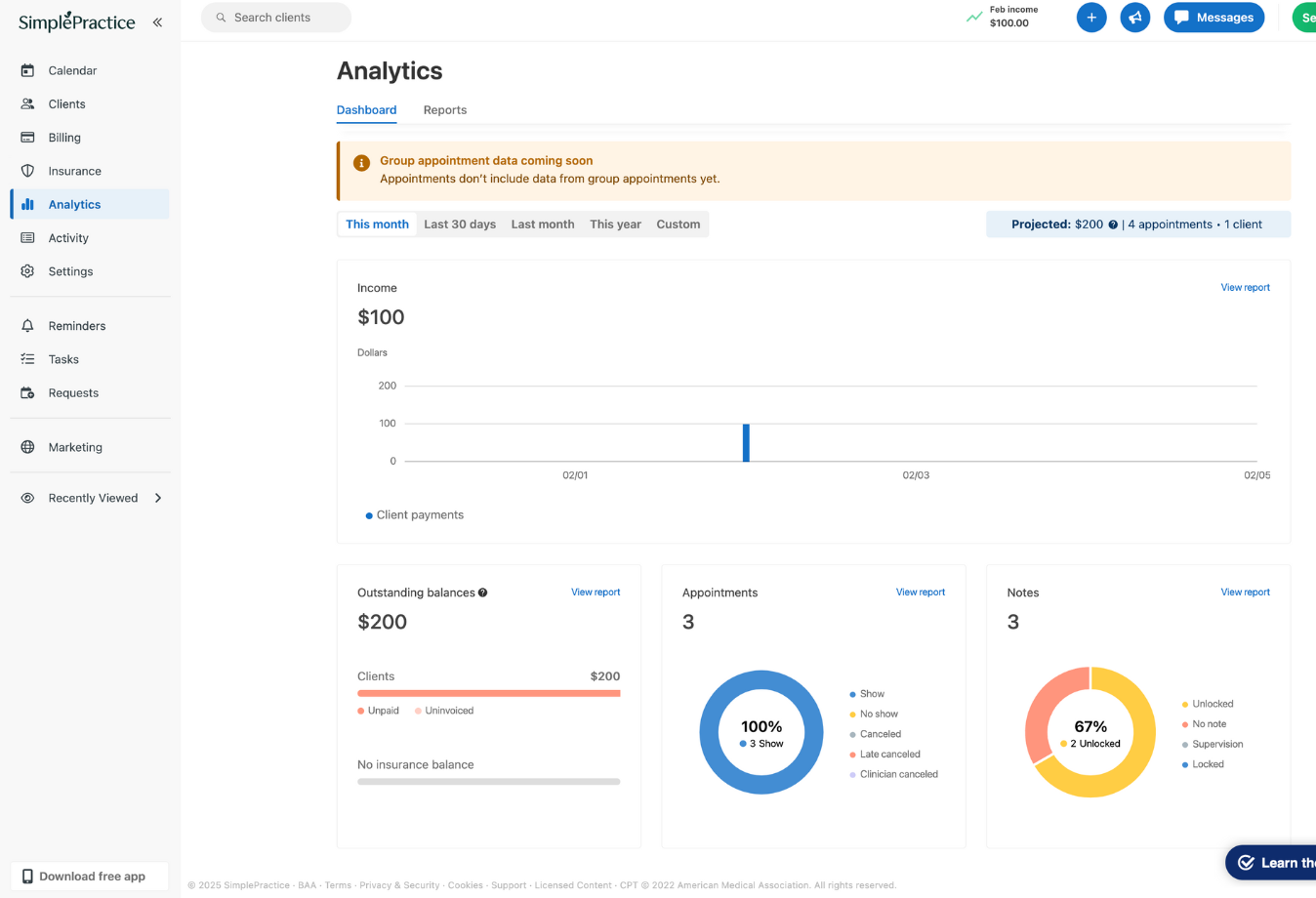
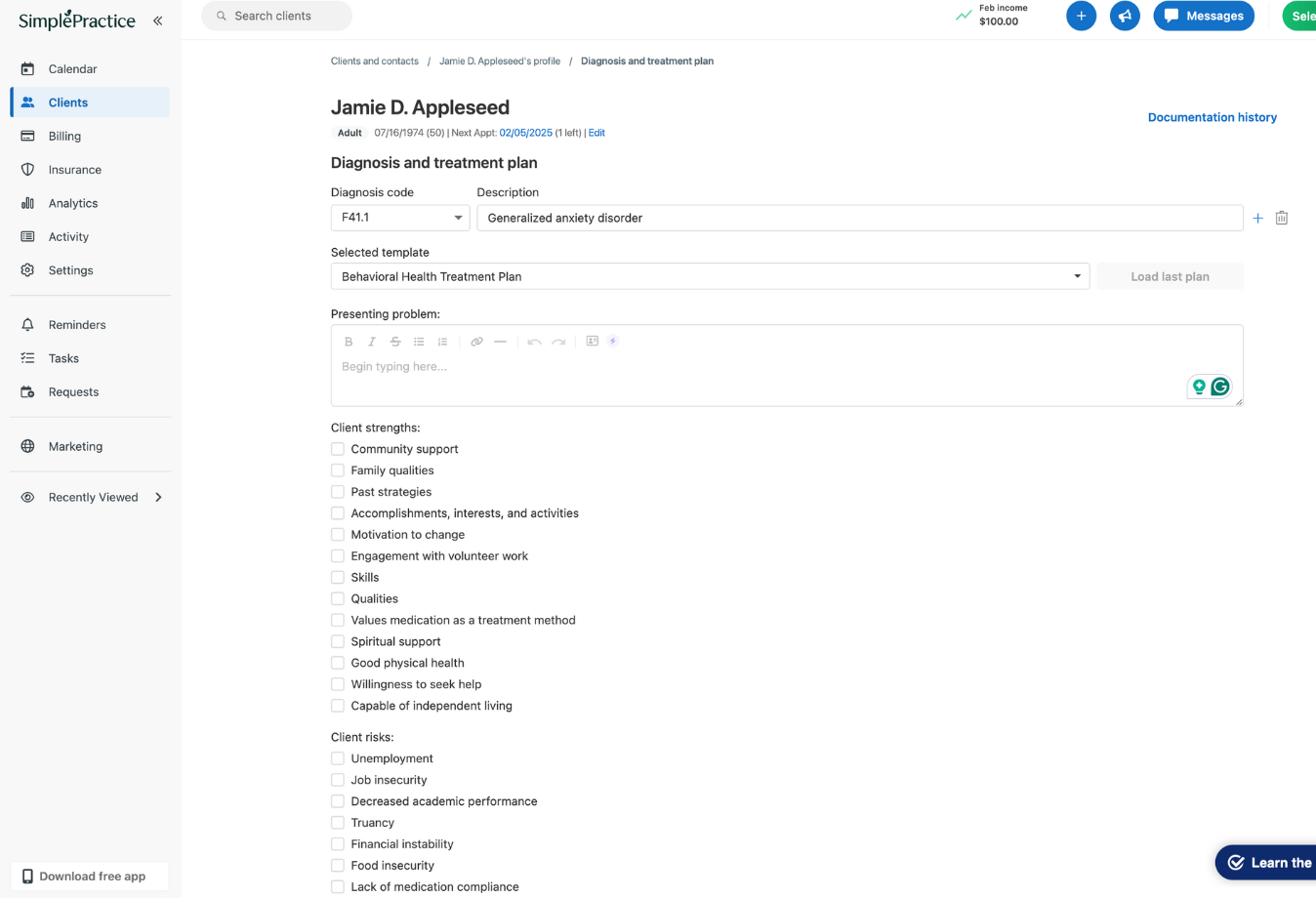
What stands out most is how thoughtfully connected everything feels. Notes, billing, reminders, and forms are all part of a streamlined workflow. Tools like Wiley Treatment Planners and automated intake forms make admin and documentation easier, and optional extras like a website builder help practices grow their online presence.
That said, it’s certainly not the most budget-friendly system. To get the most out of it, you’ll likely need one of the higher-tier plans. And while it’s a great fit for many, some users may find they’re paying for features they don’t need.
Still, if you’re looking for a true all-in-one system with a strong support community and years of iteration behind it, SimplePractice remains a top-tier option.
Check out our full review of SimplePractice for more details.
Price: $0 – $29+ monthly
Scalability: High
Value for Cost: Excellent
Time to Set Up: Moderate
Carepatron stands out for offering an unusually generous free plan and low-cost paid tiers that support real practice growth. With strong core features like telehealth, documentation, and billing included from the start, it delivers exceptional value and scalability without locking key tools behind expensive upgrades.
Pros & Cons
Pros
- Free plan available with strong core features
- Modern, intuitive design
- Built-in telehealth with group session support
- Good automation tools even at lower tiers
- Scales affordably as your practice grows
Cons
- Limited storage without paid upgrades
- Some customization options are basic
- Insurance billing isn’t perfect
Cost
Carepatron offers one of the most affordable pricing structures among behavioral health EHRs. All plans allow for unlimited clients, and pricing scales only as you add features or team members:
- Free Plan: $0 monthly – 1 GB storage, 1M AI tokens, telehealth, secure messaging, notes, billing, and basic scheduling tools
- Essential Plan: $19 monthly per user – Adds calendar sync, reminders, and template import
- Plus Plan: $24 monthly per user – Adds shared inbox, branding, and group telehealth
- Advanced Plan: $29 monthly per user – Includes full white labeling, customer success support, and all premium features
Despite the tiered structure, even the free plan is impressively functional and suitable for solo practitioners or new businesses. Each paid tier adds meaningful upgrades without steep price jumps.
Carepatron is ideal for practices that want to keep long-term costs low without sacrificing essential functionality. It scales pretty seamlessly from solo use to team-based workflows, with transparent pricing and no forced client limits. Adding users is simply billed per person, with no hidden fees or hard feature gating. That said, Carepatron is still a relatively new company (founded in 2019), and it’s worth keeping in mind that pricing structures can shift over time, as is common in the EHR space.
Overview
Carepatron is a sleek, modern EHR platform designed for behavioral health and wellness professionals. What makes it stand out is how much value it delivers even at the free tier. Telehealth, documentation, billing, and a robust client portal are all included right out of the gate.

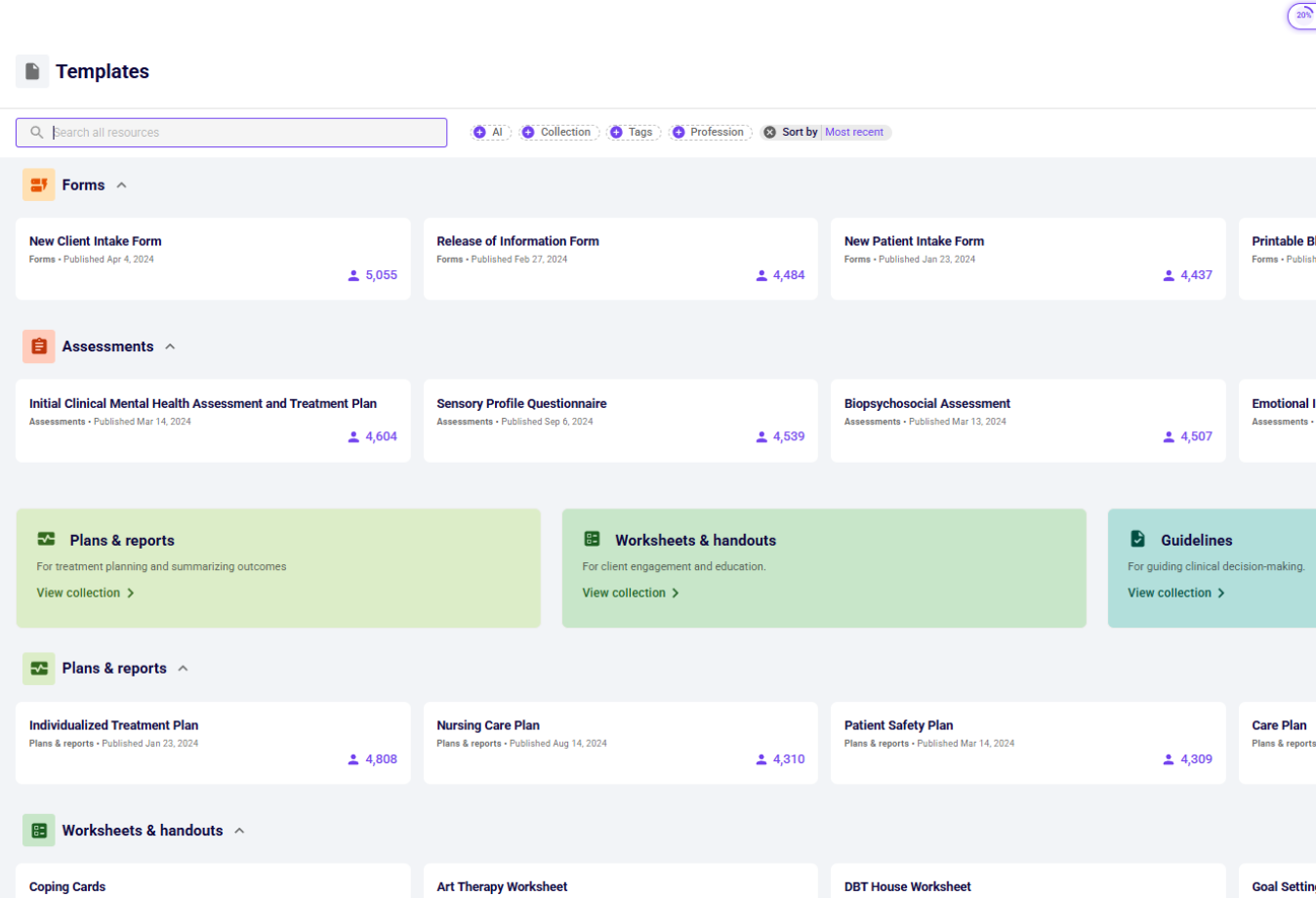
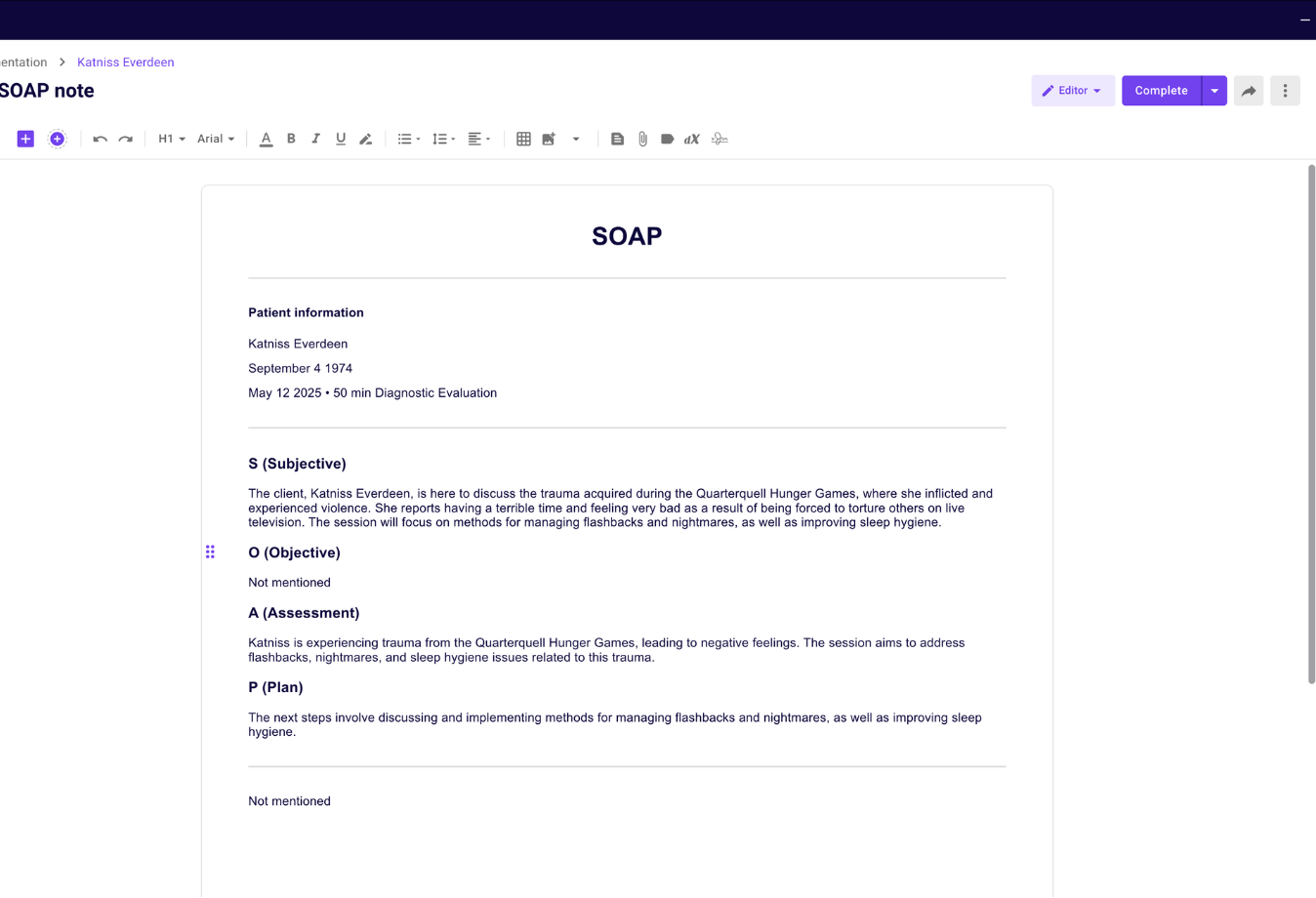
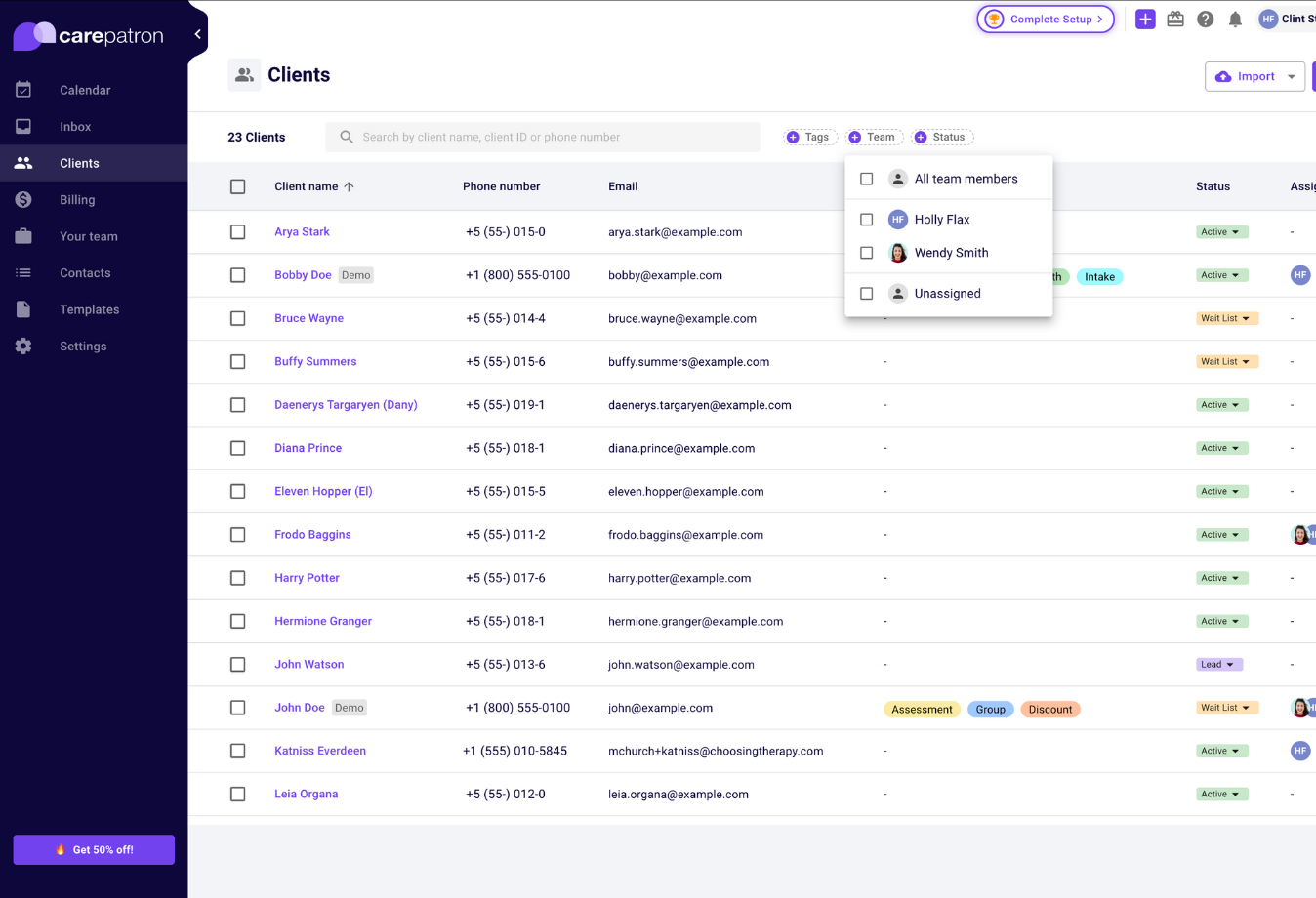
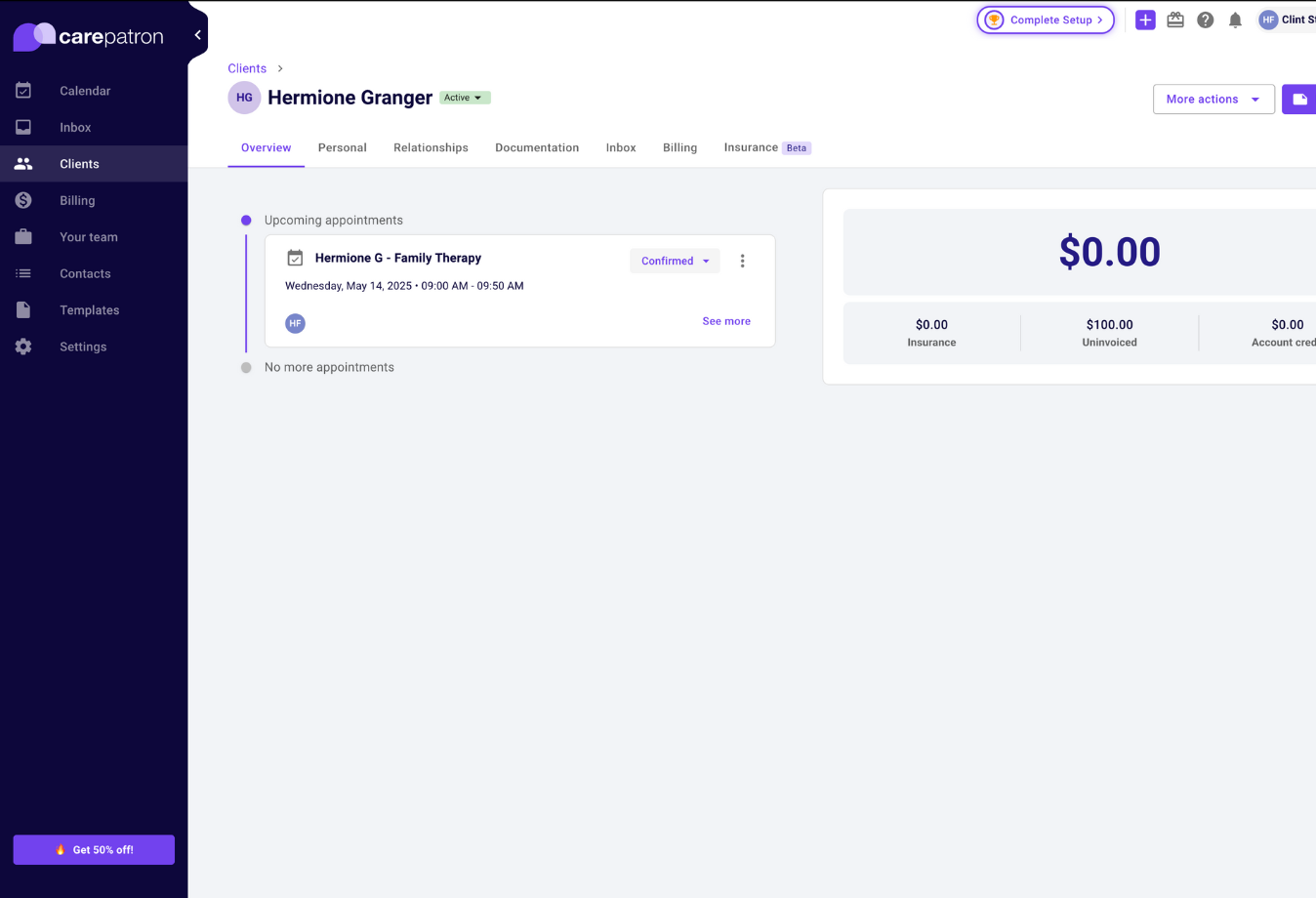

As your practice grows, Carepatron grows with you. Paid plans introduce advanced tools like automated reminders, AI charting and summarization, group sessions, and full white-label branding—all at prices well below most competitors. While it lacks some of the deep customization options found in older or more specialized platforms, its ease of use, automation features, and client-facing tools make it an excellent fit for modern practices focused on engagement and efficiency.
Learn more in our full Carepatron review.
Price: $0 – $39+ monthly
Scalability: Good
Value for Cost: High
Time to Set Up: Minimal
Sessions Health offers one of the simplest EHR experiences available, with a clean interface, no-nonsense tools, and flat-rate pricing that covers all features. While it doesn’t include advanced extras like AI documentation or extensive integrations, it’s a fantastic choice for solo providers or small teams who want something easy, affordable, and reliable.
Pros & Cons
Pros
- Very clean, simple, and easy to use
- All features included in a single price
- Good selection of forms and assessments
- Easy-to-use form customizer
- Base price includes unlimited clients, storage, and sessions
Cons
- Form customization is a bit basic
- Somewhat barebones, compared to other EHRs
- Occasional glitches that can lead to lost work
- No support for electronic prescriptions
Cost
Sessions Health uses a refreshingly simple pricing model: $39 monthly for a solo provider, which includes unlimited clients and full access to all features (except telehealth, which is $10 extra per month). Additional clinicians can be added for $29/month each. There are no tiered plans or feature gates, and no surprise fees. A free tier is also available, though it limits users to just three active clients. A 30-day free trial of the full platform lets you try before committing.
Scalability is solid for small teams. Transitioning from solo to group practice is straightforward, with costs scaling predictably per clinician. Larger teams or practices seeking automation, integrations, or advanced analytics may eventually outgrow it, but for early growth stages, it’s an excellent fit.
For more pricing insights, visit our full Sessions Health review.
Overview
Sessions Health is a behavioral health EHR designed to cut out the clutter and let you focus on your practice. With built-in tools for scheduling, documentation, billing, and secure messaging, it provides everything most solo or small-group providers need to operate efficiently without unnecessary complexity.
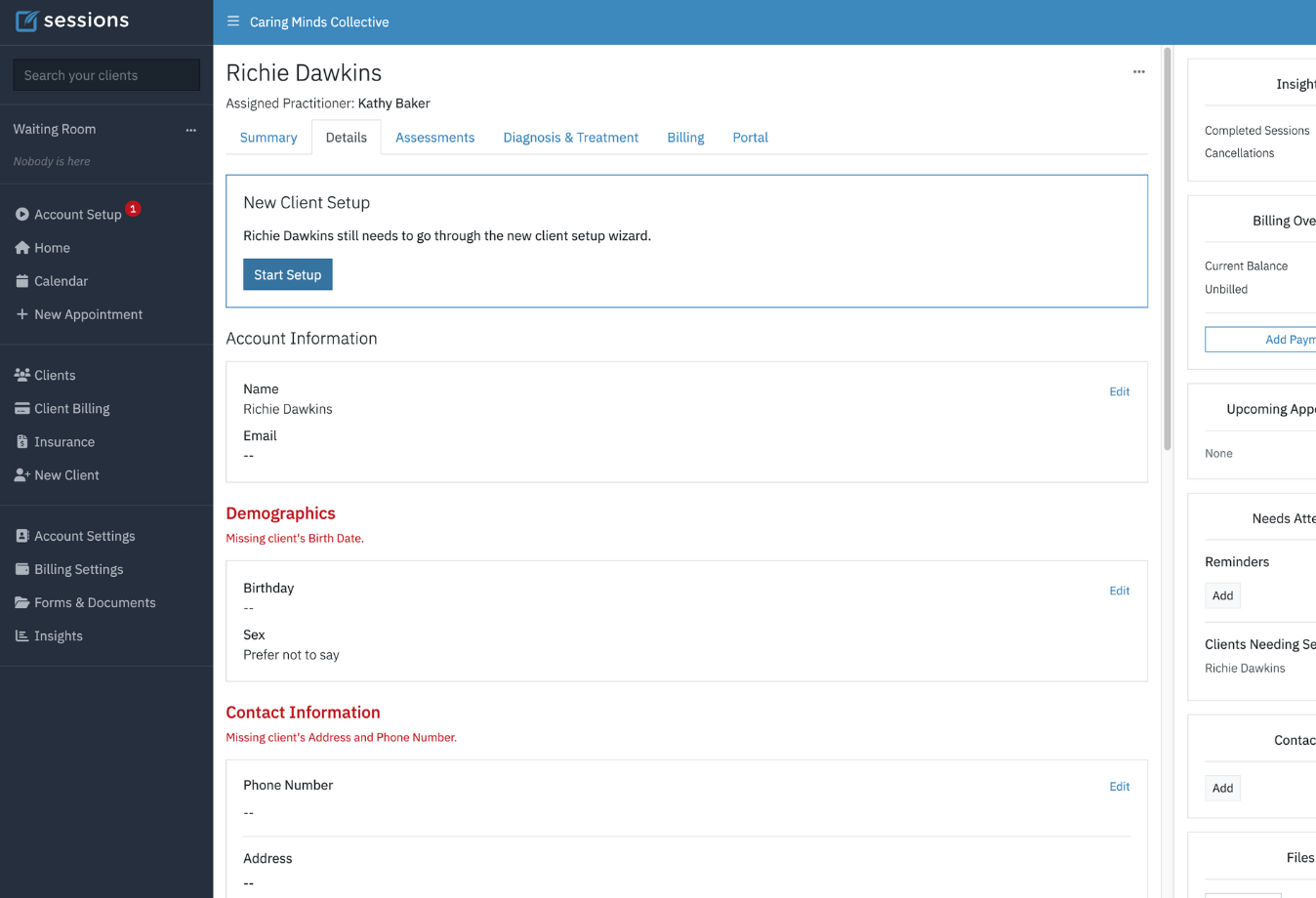
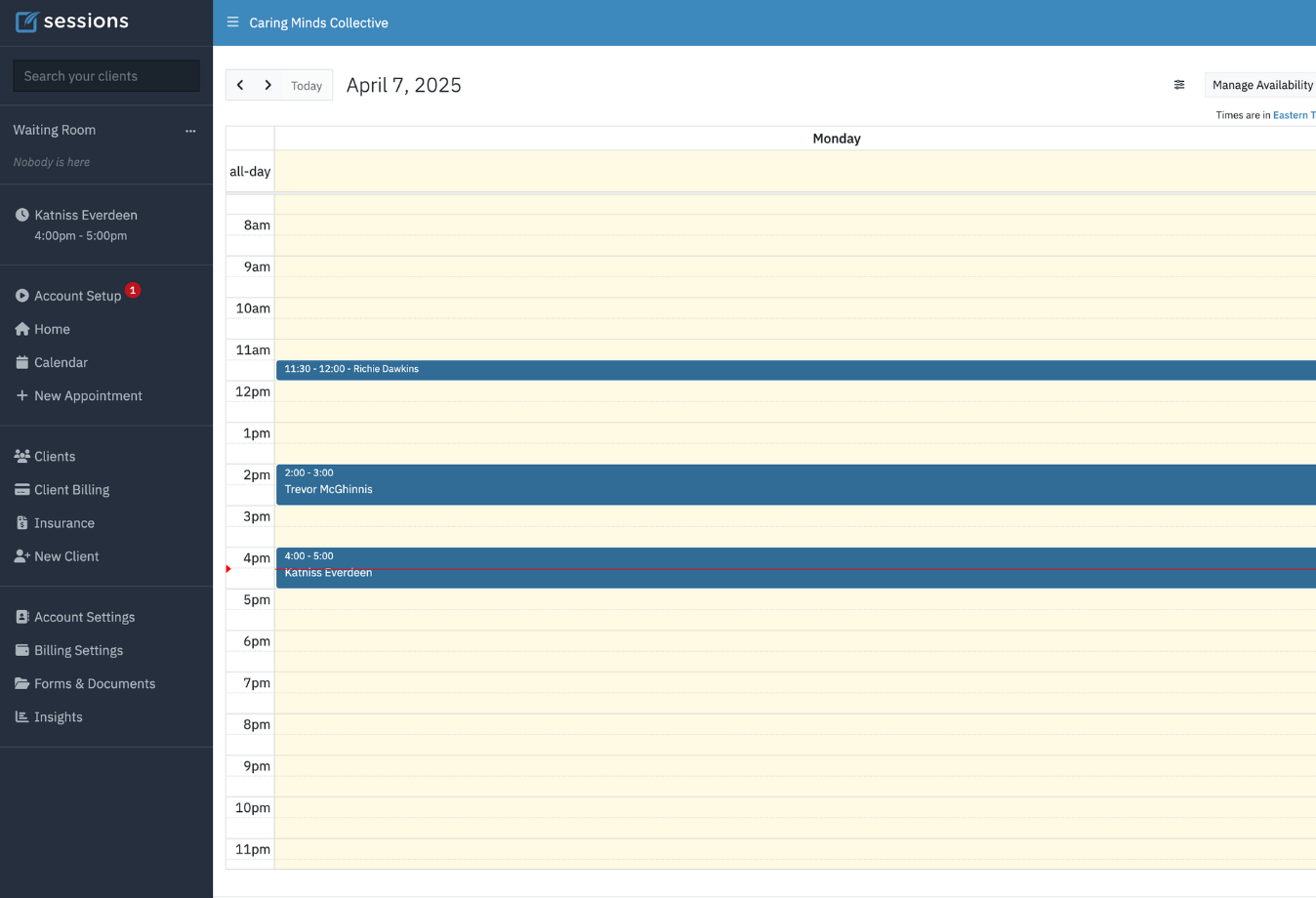
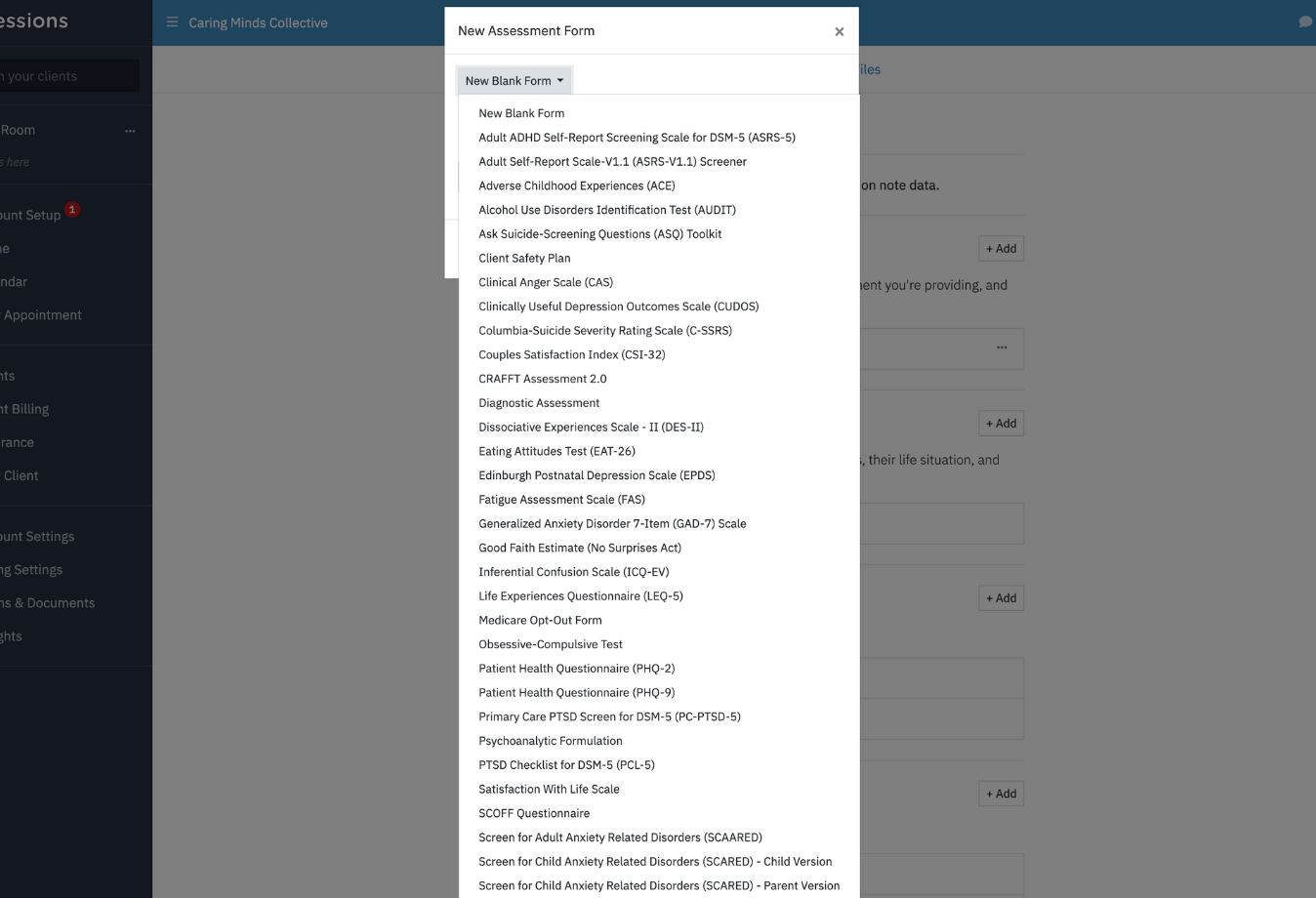
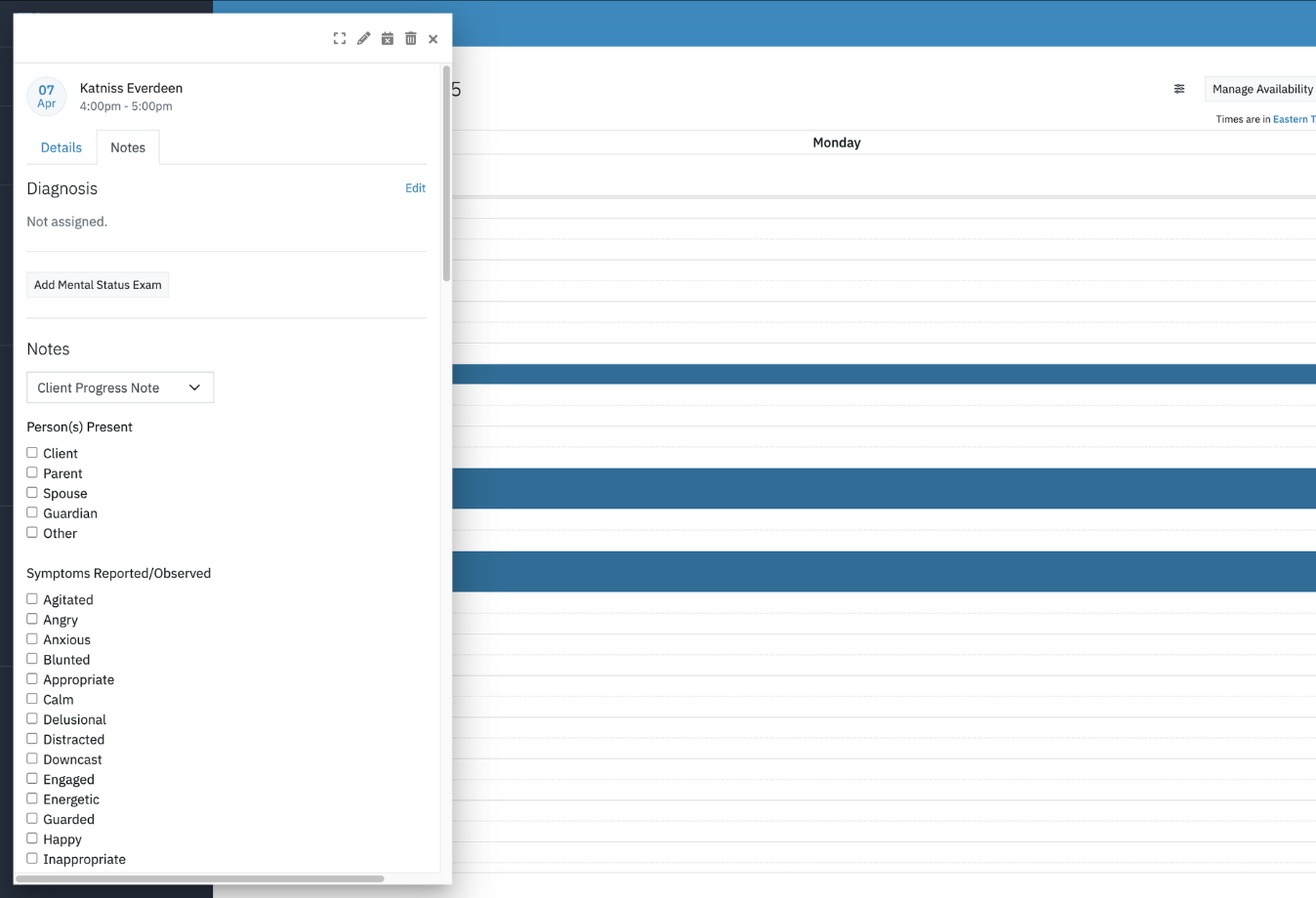
While it doesn’t have advanced features like AI charting or deep third-party integrations, Sessions Health stands out for being exceptionally easy to use. For clinicians who want a no-frills, stress-free experience with predictable pricing, it’s one of the best options available.
Learn more about our team’s experience using it in our full Sessions Health review.
Price: $18 – $135+ monthly
Scalability: High
Value for Cost: High
Time to Set Up: Time-consuming (bulk import is slow)
Healthie stands out for its modern interface, excellent telehealth tools, and flexible pricing—including a strong free plan for solo providers. While it doesn’t have every advanced feature on the market, it covers an impressive amount of ground at a relatively low cost. With built-in client engagement tools like journaling, goal tracking, and customizable care plans, Healthie is a top pick for providers who want a well-rounded, wellness-oriented platform that’s both affordable and effective.
Pros & Cons
Pros
- Flexible pricing with a feature-rich free tier
- Clean, modern interface with smooth navigation
- Very strong telehealth tools with built-in note access and multitasking
- Customizable programs and care plans for client engagement
- Solid integration options for labs, supplements, and calendar sync
Cons
- No instant bulk client import — can take up to two weeks
- Limited phone support, which may frustrate some users
- No AI charting tools like some newer competitors
- Fewer community templates compared to some platforms
Cost
Healthie offers one of the most flexible pricing models on the market, starting with a completely free plan that supports up to 10 active clients. Paid plans range from $49 to $149 per month, scaling by client capacity and team features rather than restricting core functionality.
Some notable details on pricing plans:
- Starter Plan ($0 monthly): 10 clients, telehealth, billing tools, and the mobile app. Essentially an extended basic free trial.
- Essentials ($49 monthly): Up to 250 clients, eFax, CMS-1500 generation.
- Plus ($129 monthly): Unlimited clients, group telehealth, online programs.
- Group ($149 monthly): Multi-user support, shared calendars, team chat.
- Additional providers: $50/month each.
- Optional add-ons include e-prescribing ($40–$60/month) and dedicated eFax lines ($9.99 monthly).
Scalability is quite strong for wellness practices, and pricing remains predictable as you grow. However, Healthie, for the most part, lives at the higher end of the pricing spectrum. You can test the platform with the free tier and upgrade as needed.
Learn more in our full review of Healthie.
Overview
Healthie is a versatile EHR and practice management platform built with wellness and behavioral health providers in mind. It combines standard tools, like charting, scheduling, and telehealth, with client-facing features like journaling, goal tracking, and customizable care plans. Its clean design and highly usable interface make it a pleasure to navigate, even for newer users. Its multitasking features are some of the best our team has seen.
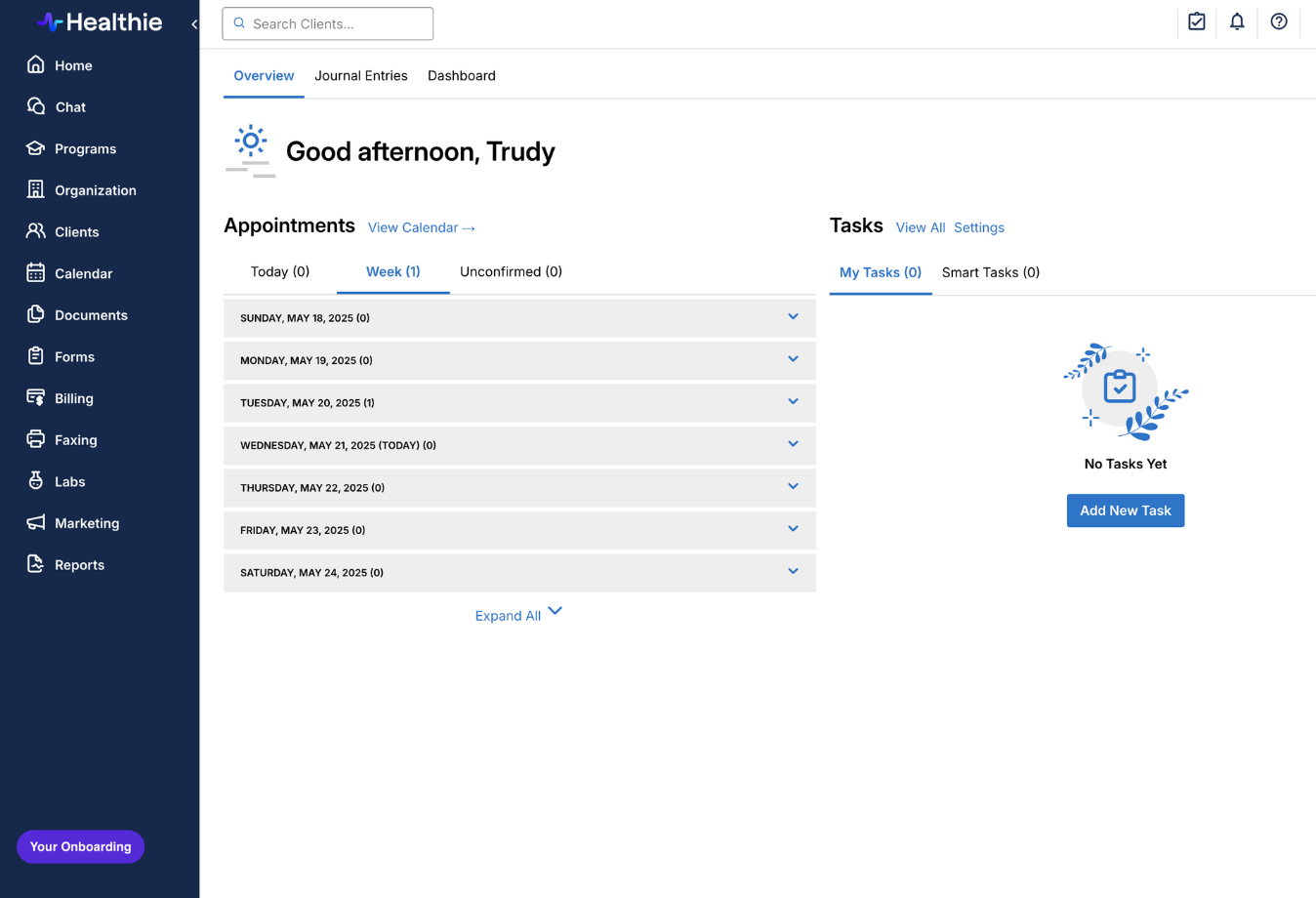
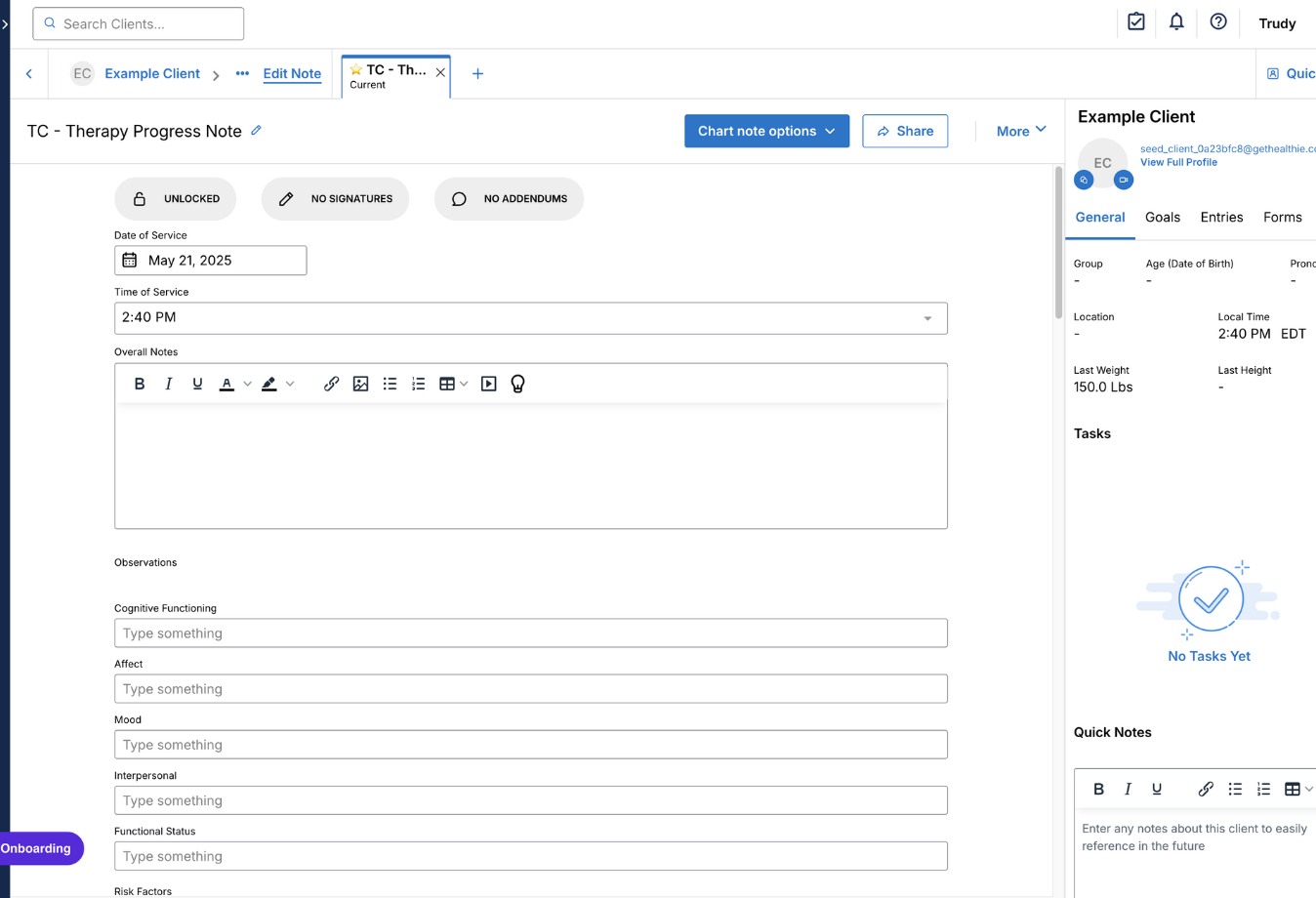
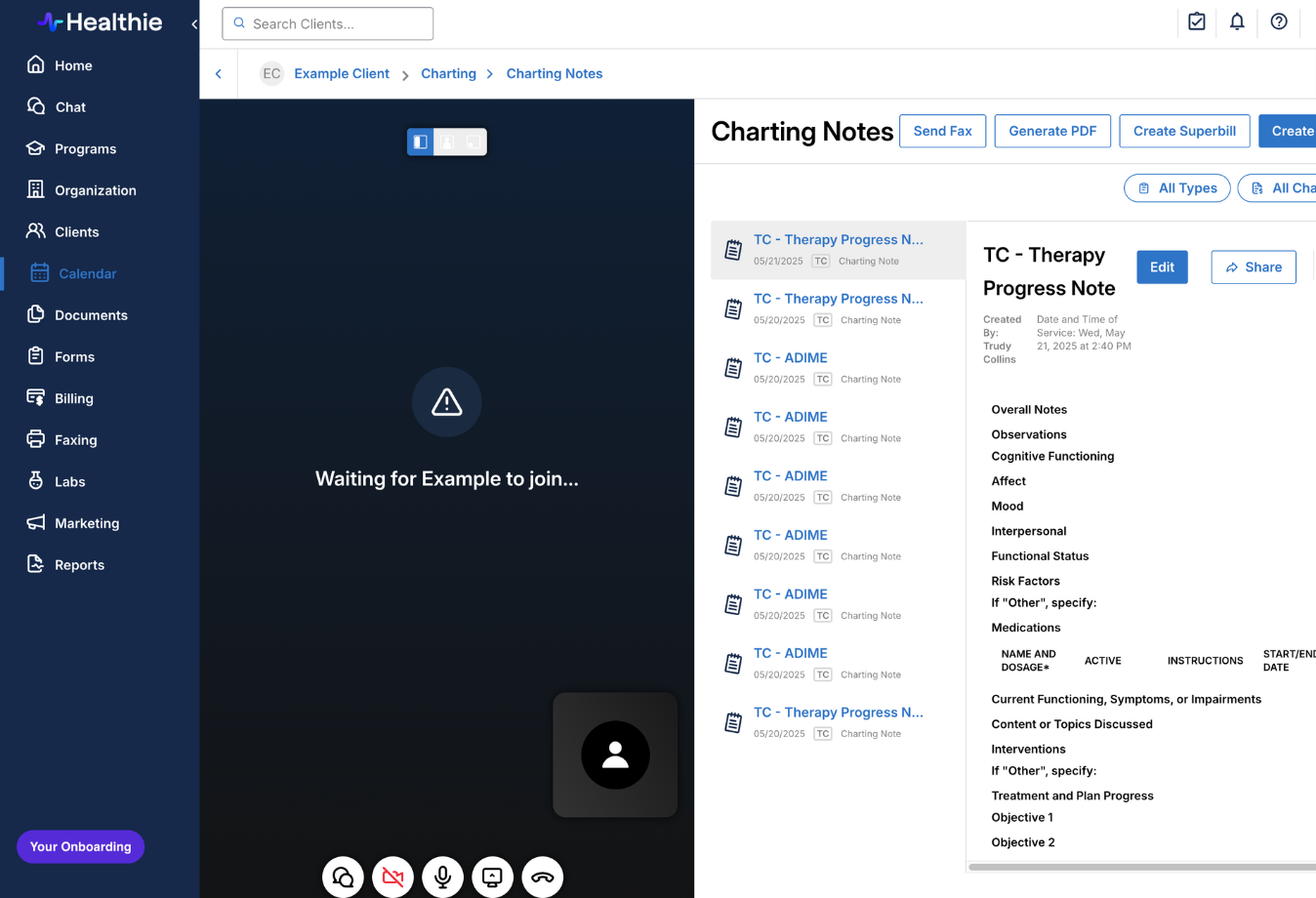
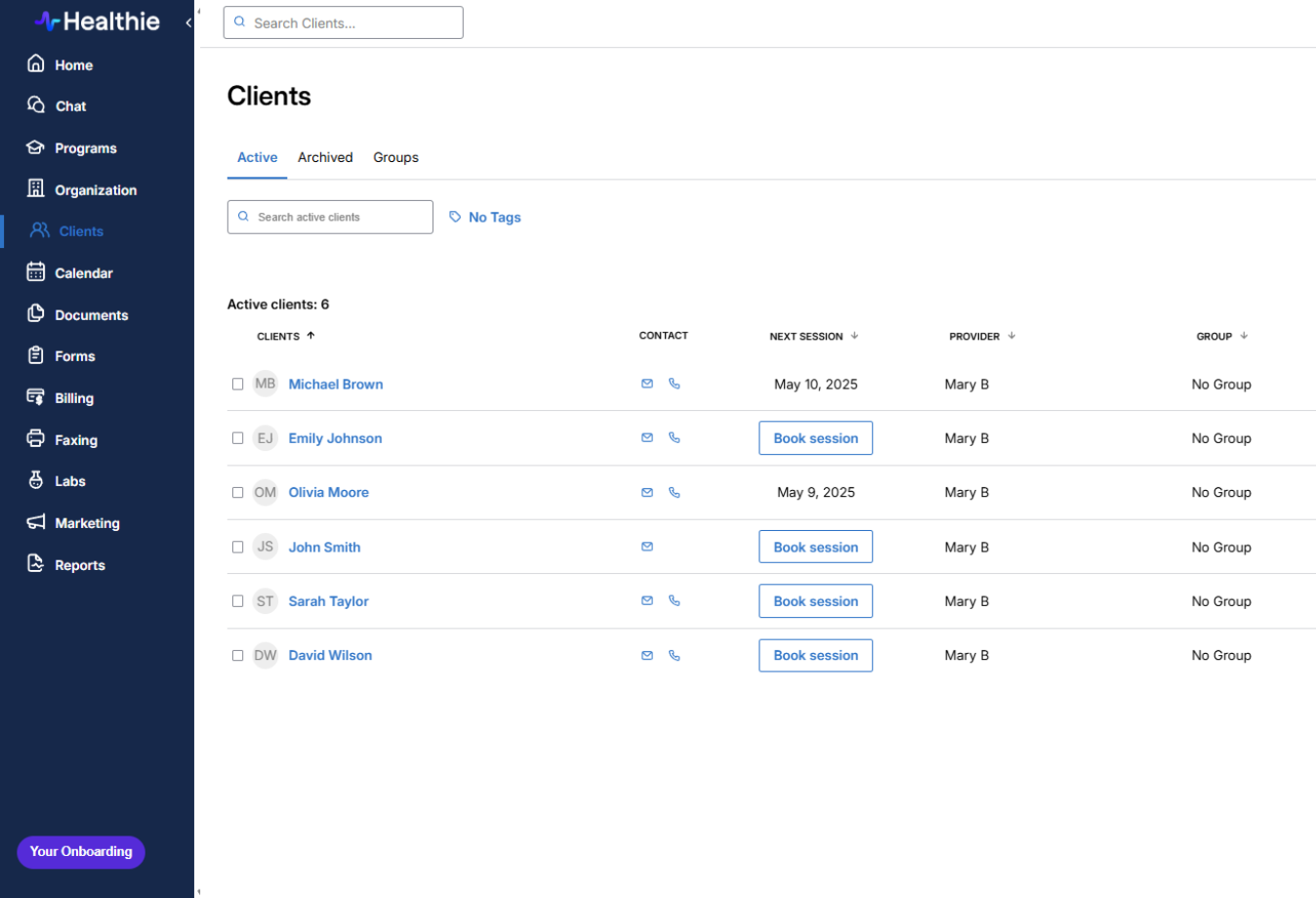
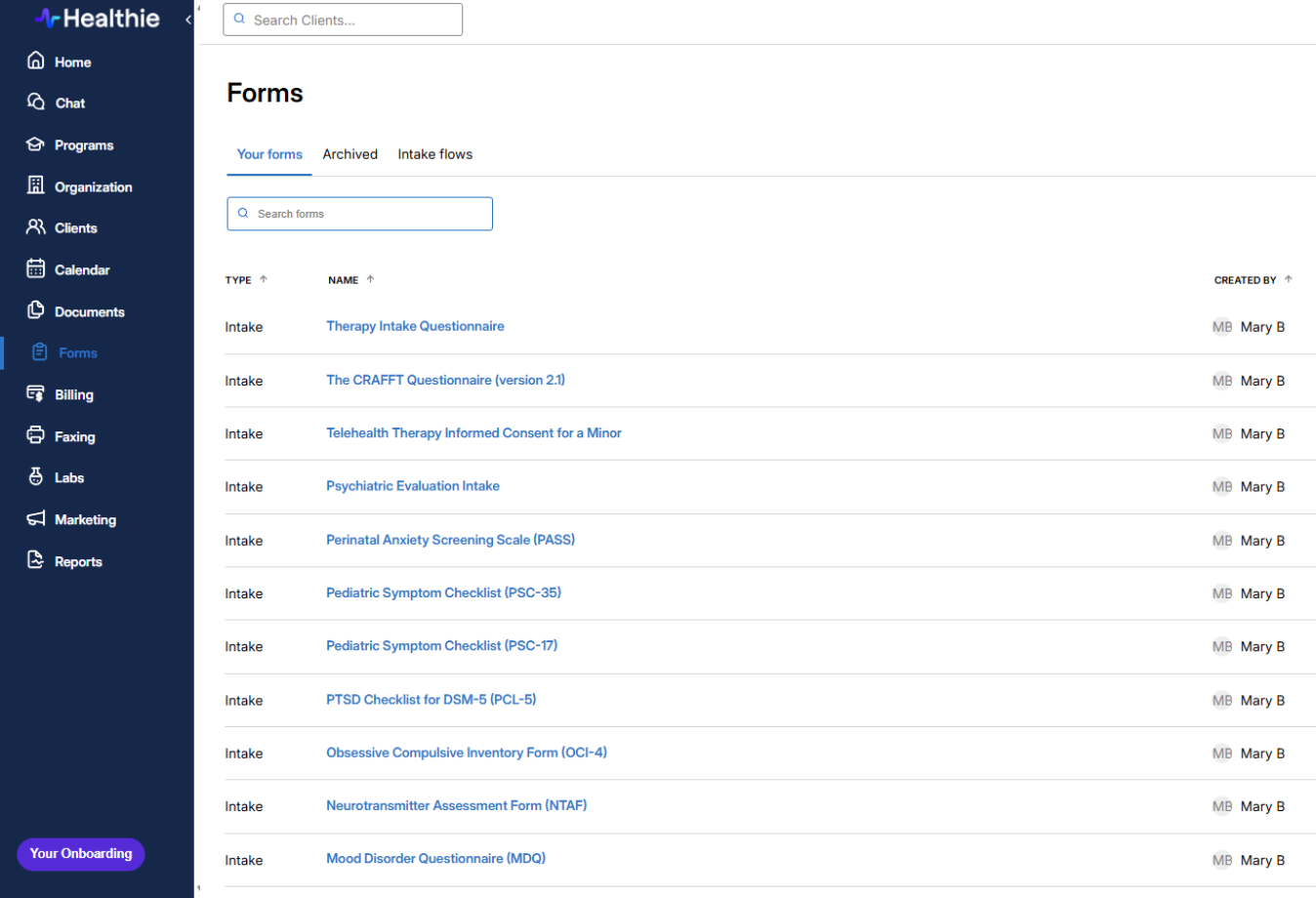
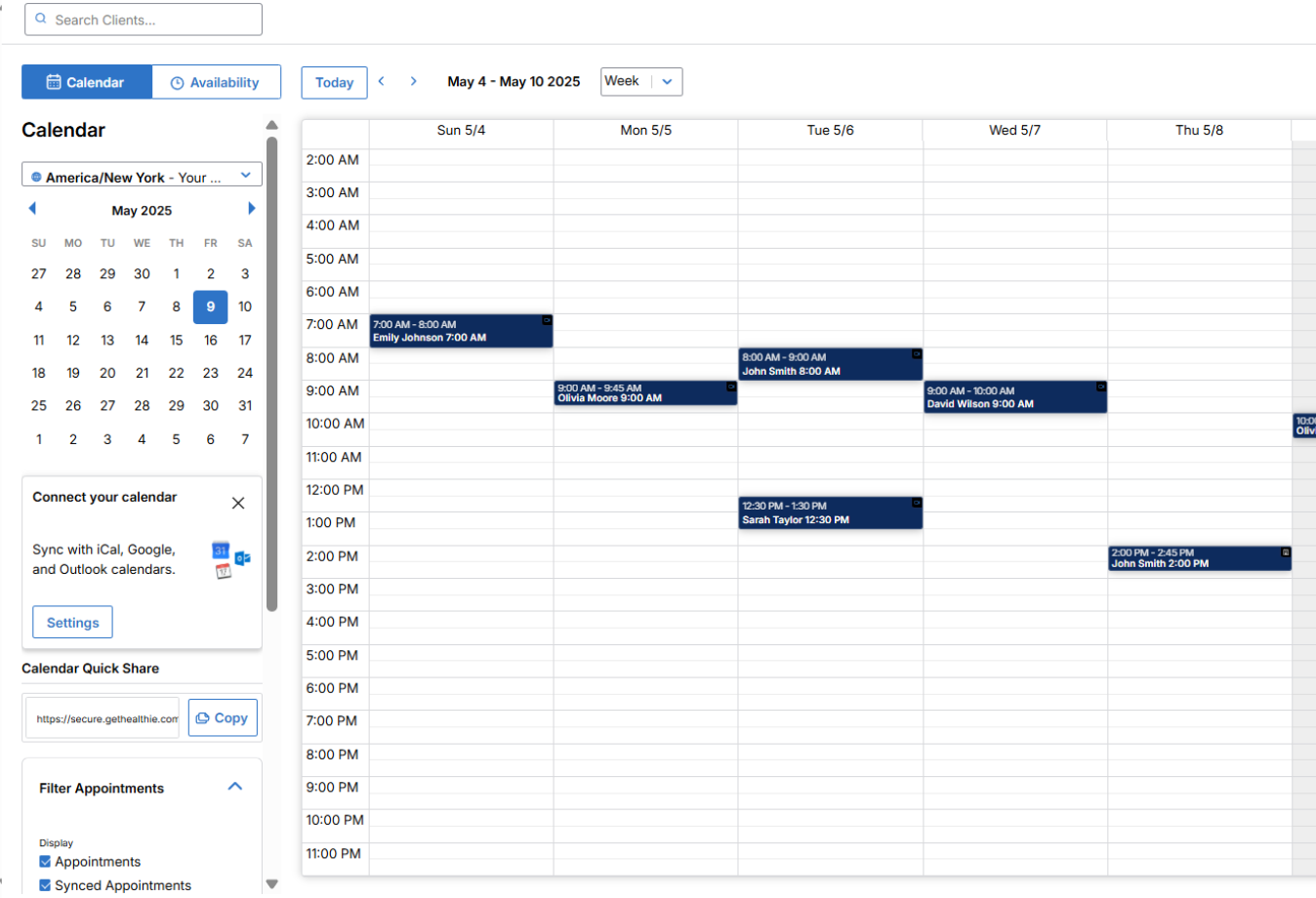
Healthie really shines in telehealth, offering built-in video sessions with multitasking support, floating notes, and seamless client access. While it lacks some bells and whistles like AI charting and its bulk import feature is dreadfully slow, its thoughtful layout and solid all-around feature set make it an excellent option for solo or small practices seeking simplicity, affordability, and client engagement.
Read more in our full Healthie review.
Price: $29 – $89+ monthly
Scalability: Excellent
Value for Cost: High
Time to Set Up: Moderate
Ensora Health (formerly TheraNest) blends reliability with a thoughtful redesign, offering a flexible and modern EHR experience backed by more than a decade of use in behavioral health settings. Its flat-rate pricing structure, customizable forms, and intuitive interface make it a strong choice for solo and group practices alike. Ensora balances structure with freedom, making it ideal for providers who want a system that adapts to their workflow rather than the other way around.
Pros & Cons
Pros
- All-in-one design with scheduling, notes, billing, and telehealth built in
- Transparent pricing model with unlimited clients at every tier
- Customizable documentation with powerful dynamic forms
- Responsive onboarding and support team Cons
Cons
- Some automation tools locked behind higher-tier plans
- Relatively small library of prebuilt forms
- Plans can get expensive quickly for larger practices Cost
Cost
Ensora Health’s pricing is much more transparent than it was as TheraNest. With three plans that charge per therapist and include unlimited clients, its quite easy to predict your ongoing costs. Plans range from $29 to $89 monthly, with automation, insurance billing, and advanced features scaling by tier. Core scheduling, notes, billing tools, and secure client portal access are available even on the lowest-cost plan.
Pricing breakdown:
- Essentials ($29 monthly) – Includes unlimited clients, core scheduling, documentation, and credit card payments.
- Advanced ($59 monthly) – Adds secure messaging, custom forms, 30 monthly insurance claims, and reminders.
- Premier ($89 monthly) – Adds Wiley planners, unlimited claims/reminders, and full telehealth.
Learn more in our full review of Ensora Mental Health.
Add-ons include:
- Telehealth ($12 monthly for non-Premier users; included in Premier plan)
- ePrescribe + PDMP ($135 setup + $45 monthly)
- Wiley Planners ($25 monthly, included in Premier)
- Admin users ($19–$29 monthly depending on tier)
Overview
Ensora Health is a modern behavioral health EHR designed for flexibility, usability, and growth. Formerly known as TheraNest, it combines years of industry trust with a streamlined interface and updated workflows. The platform includes everything most therapy practices need in a clean, logical layout.
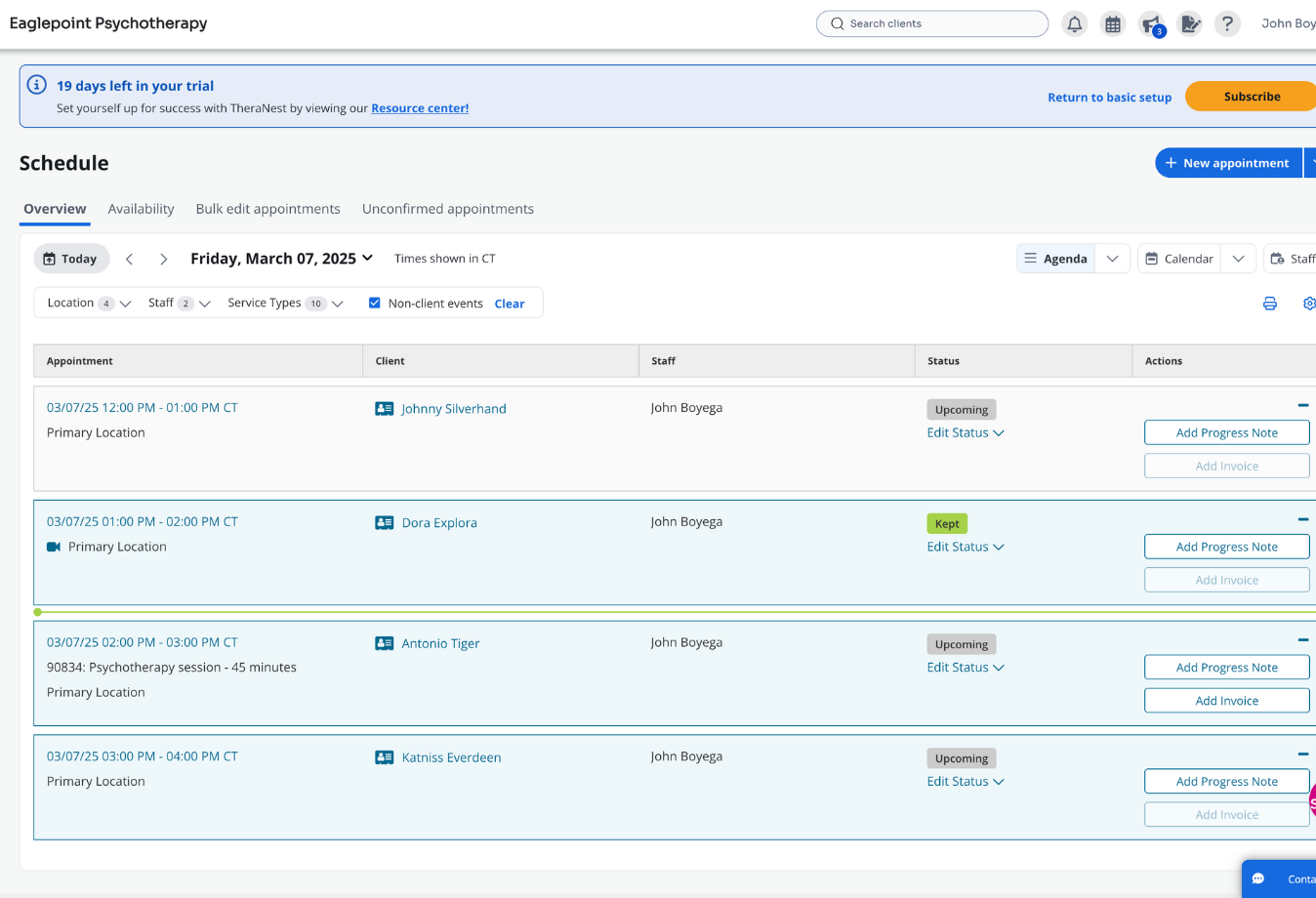
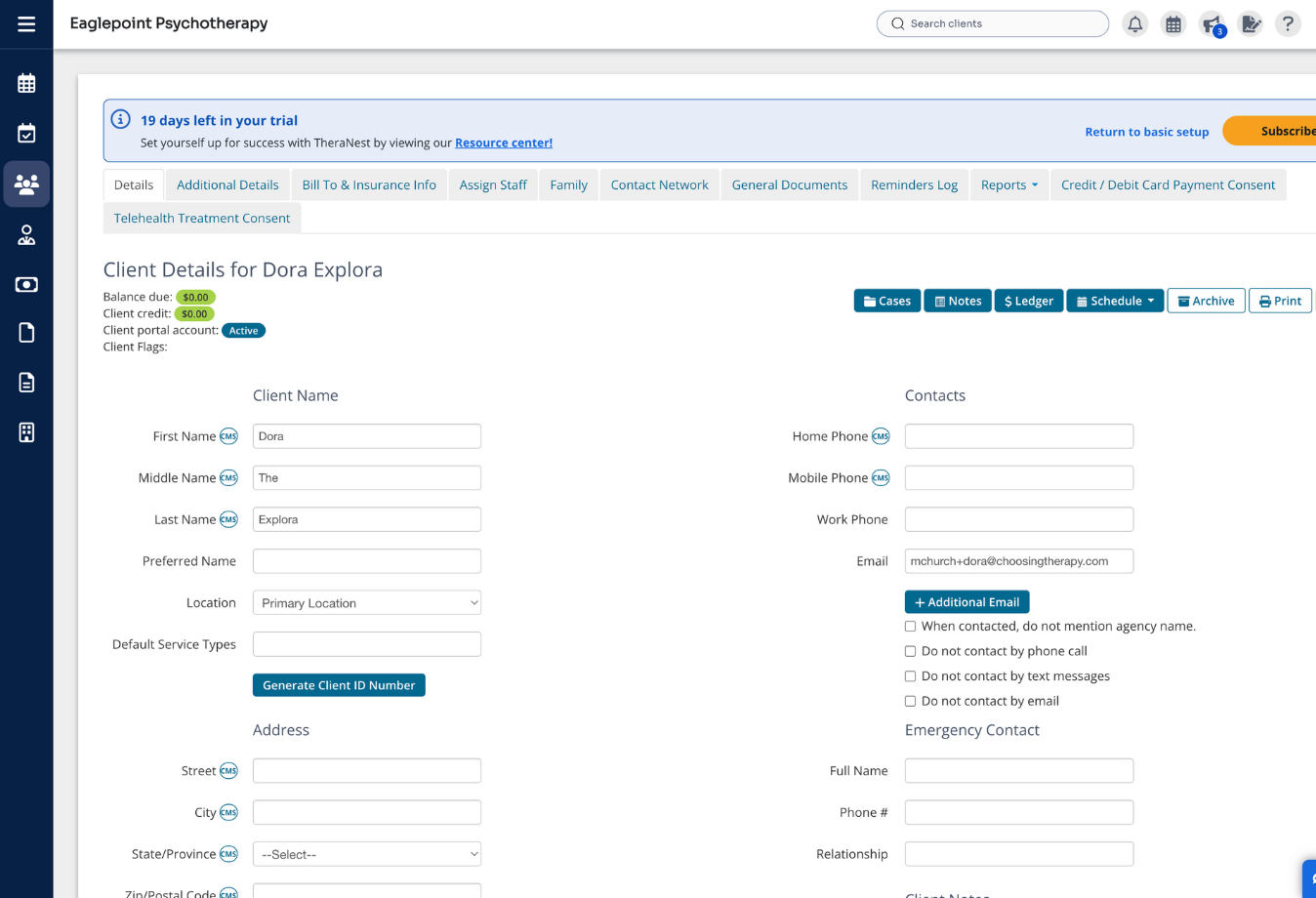
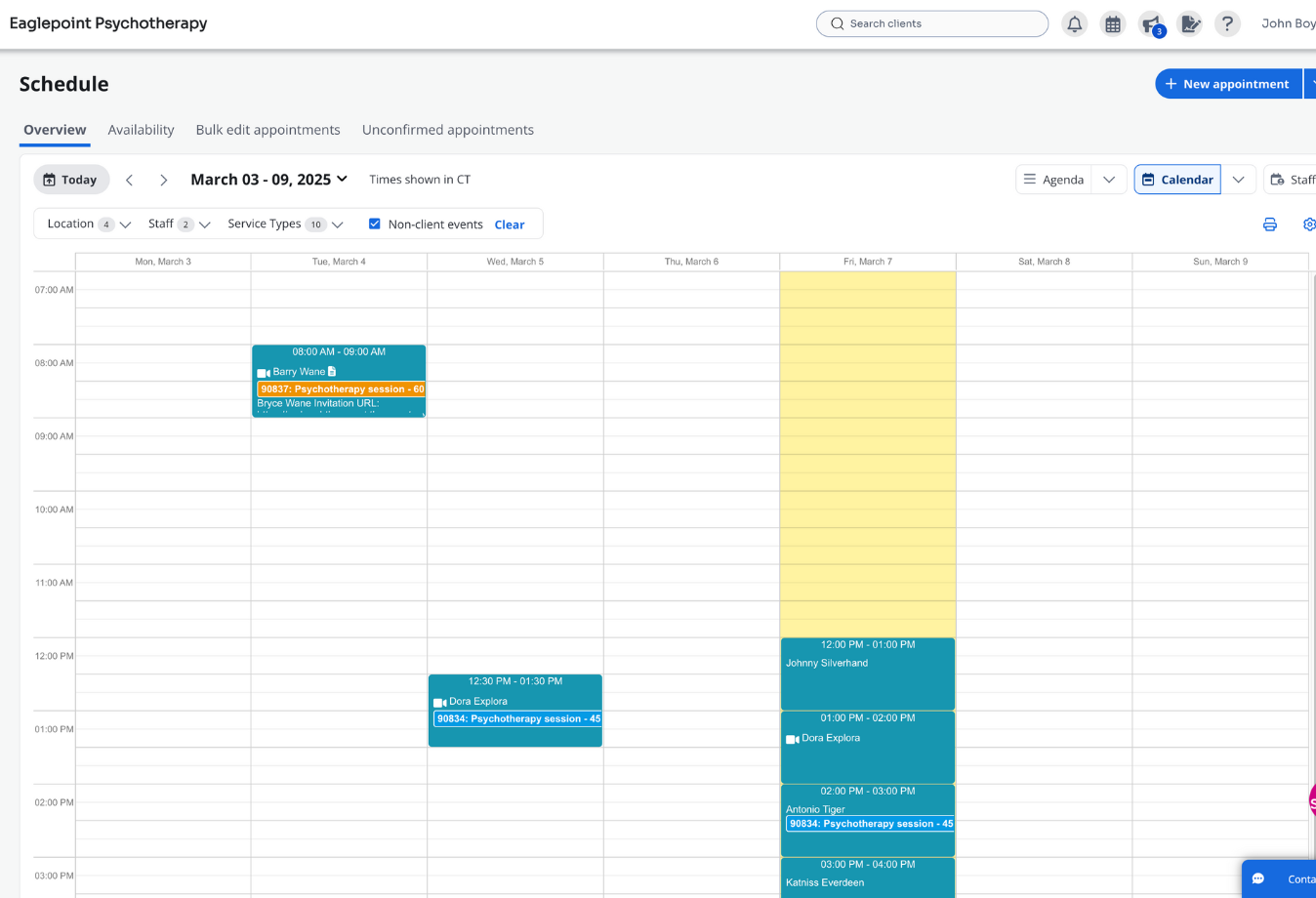
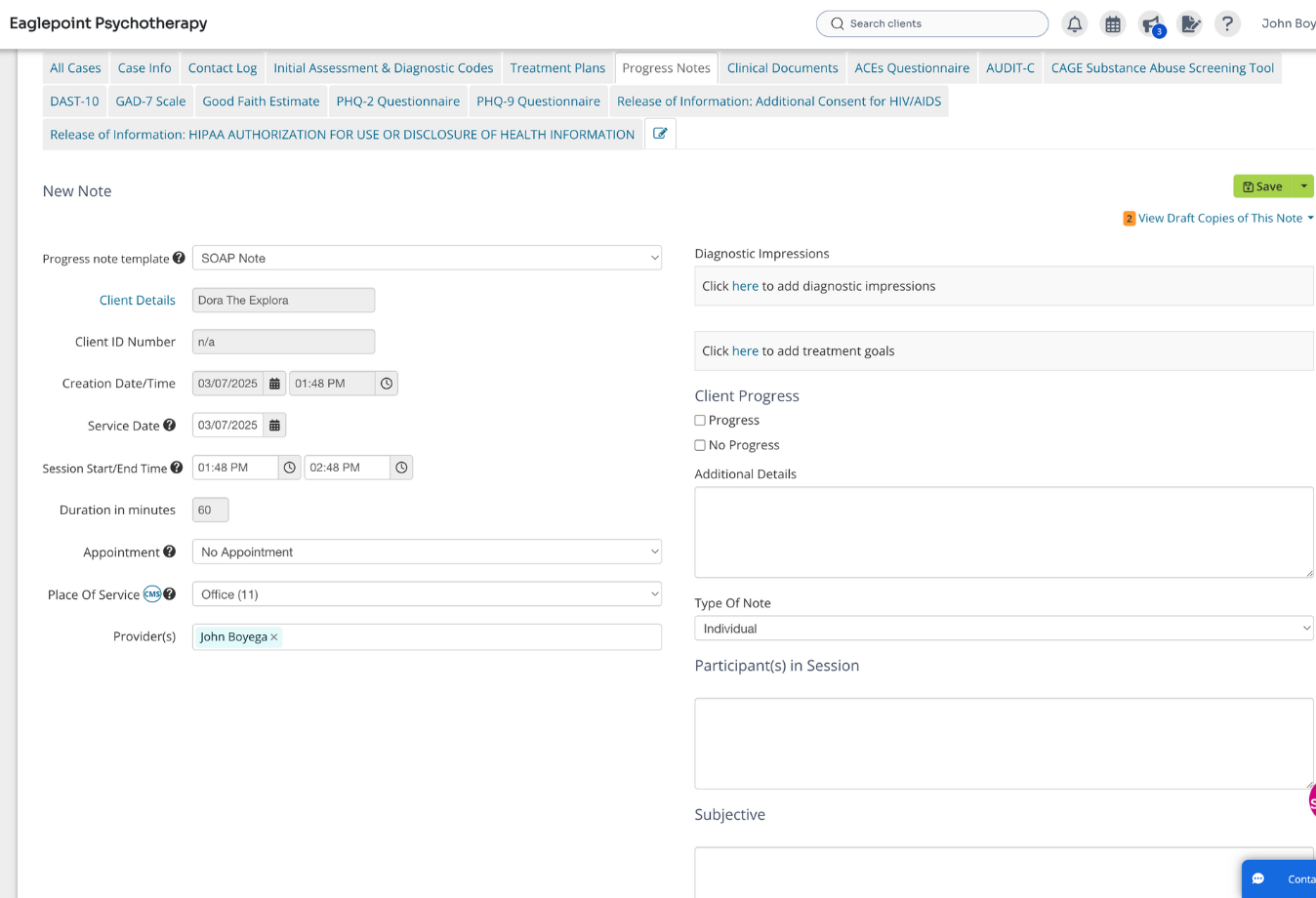
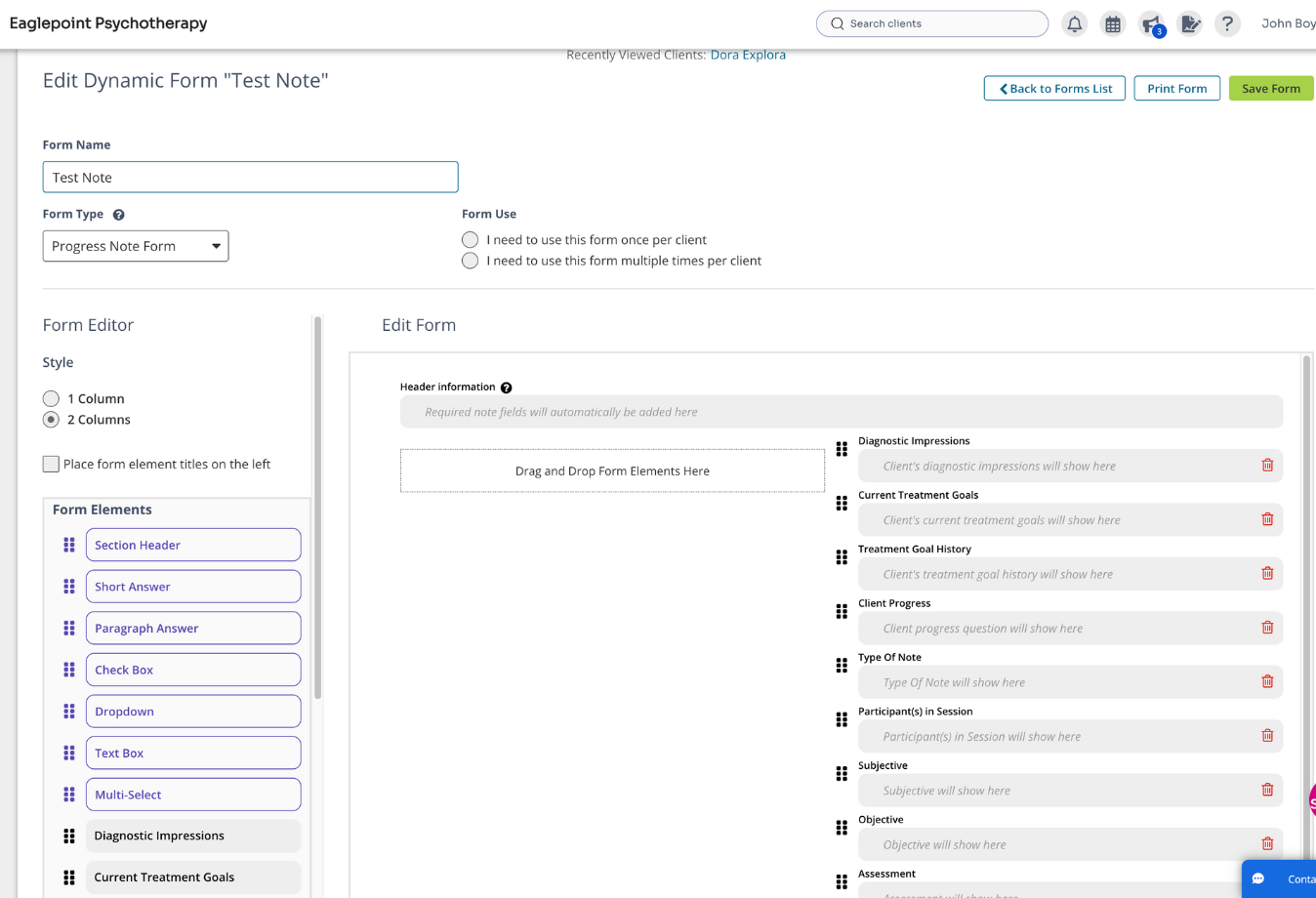
Ensora’s documentation and form customization tools are some of the better that our team has evaluated. The Dynamic Forms builder lets clinicians create personalized notes, intakes, and assessments without relying entirely on canned templates. Support and onboarding are highly responsive.
While some features, like automation and bulk insurance billing, are reserved for higher tiers, the Essentials plan covers the basics quite well. Whether you’re launching a solo practice or running a growing team, Ensora is a thoughtful, well-rounded platform that doesn’t get in your way.
Visit our full Ensora Health review for more insights from our team’s testing.
Price: $69 – $79+ monthly
Scalability: Moderate
Value for Cost: Good
Time to Set Up: Minimal
TherapyNotes stood out to our team for its structured, clinician-friendly design and transparent pricing model that scales well with group practices. While it doesn’t offer as much customization as some platforms, its straightforward and simple feature set makes it a top choice for practices prioritizing reliability and clinical clarity over flashy extras.
Pros & Cons
Pros
- One-month free trial
- Excellent user experience
- Basic telehealth platform included in all plans
- Easy to learn and quick to implement
- Supports e-prescriptions
Cons
- No mobile app available
- Fewer automation features than some competitors
- Limited reporting capability
Cost
TherapyNotes keeps things simple with a per-clinician pricing model that starts at $59 monthly for solo providers. Additional clinicians cost $30/month each, making it one of the more affordable options for growing group practices.
TherapyNotes also offers a 30-day free trial and discounts for nonprofits. Its pricing structure offers predictable scaling for practices that are expanding without incurring steep jumps in cost.
Read more about pricing in our full TherapyNotes review.
Overview
TherapyNotes is a purpose-built EHR for mental and behavioral health professionals, known for its robust clinical documentation tools and organized, simplified interface. It includes customizable scheduling, billing, and telehealth features, but its real strength lies in well-structured notes and treatment planning designed specifically for therapists, psychologists, and psychiatrists. The system’s consistent layout and focused toolset make it especially appealing to those who prefer structure and efficiency over extensive customization.
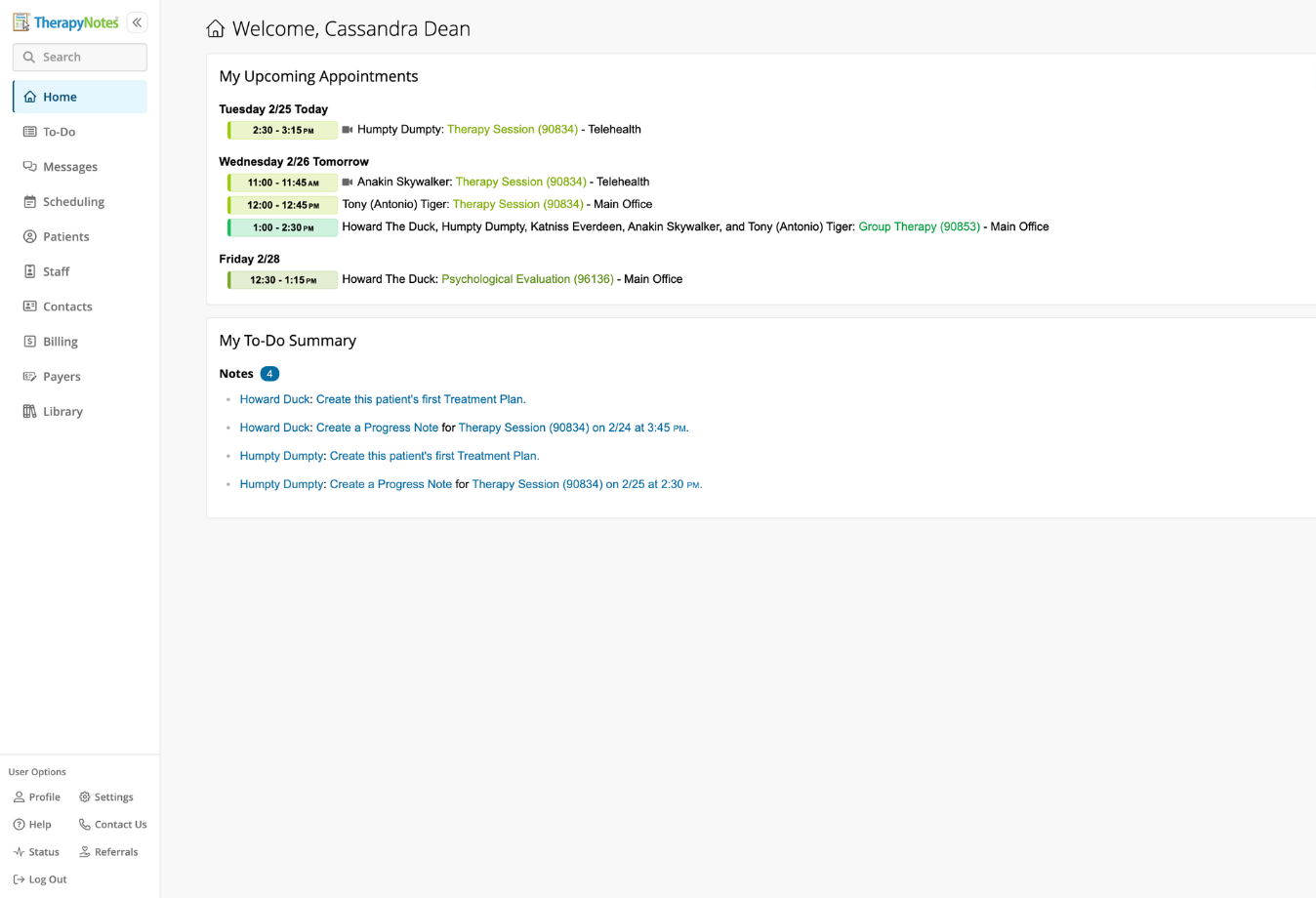
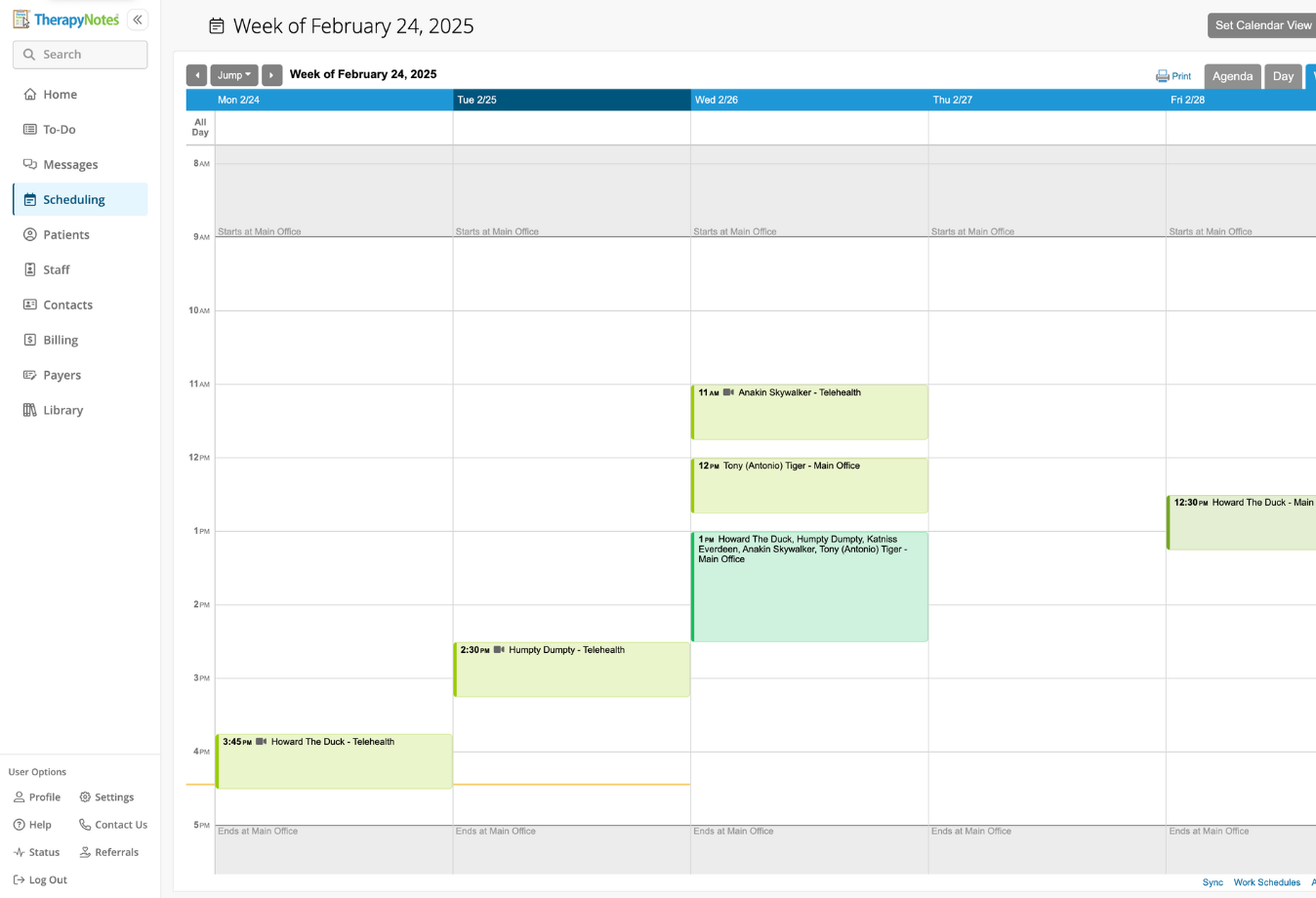
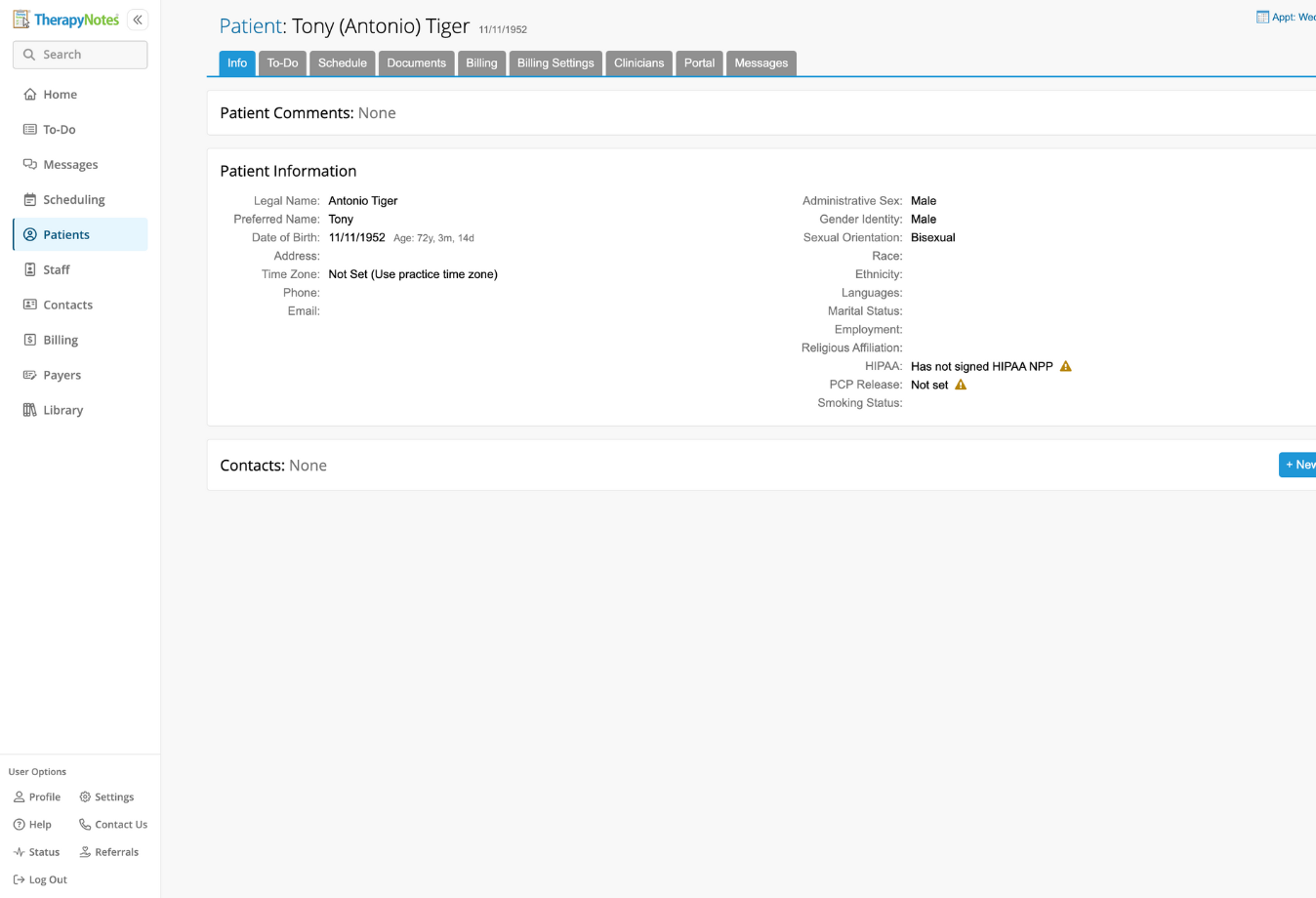
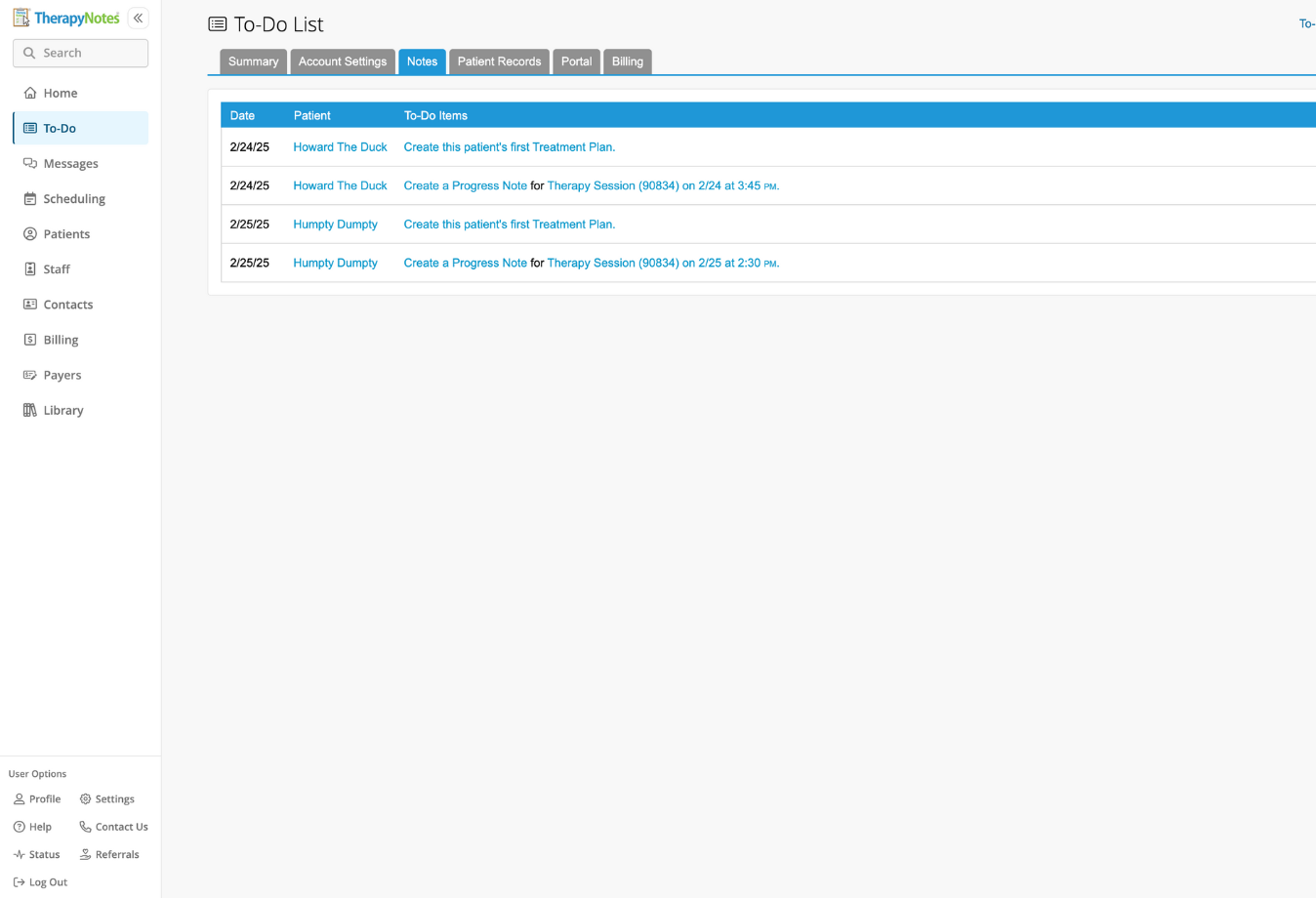
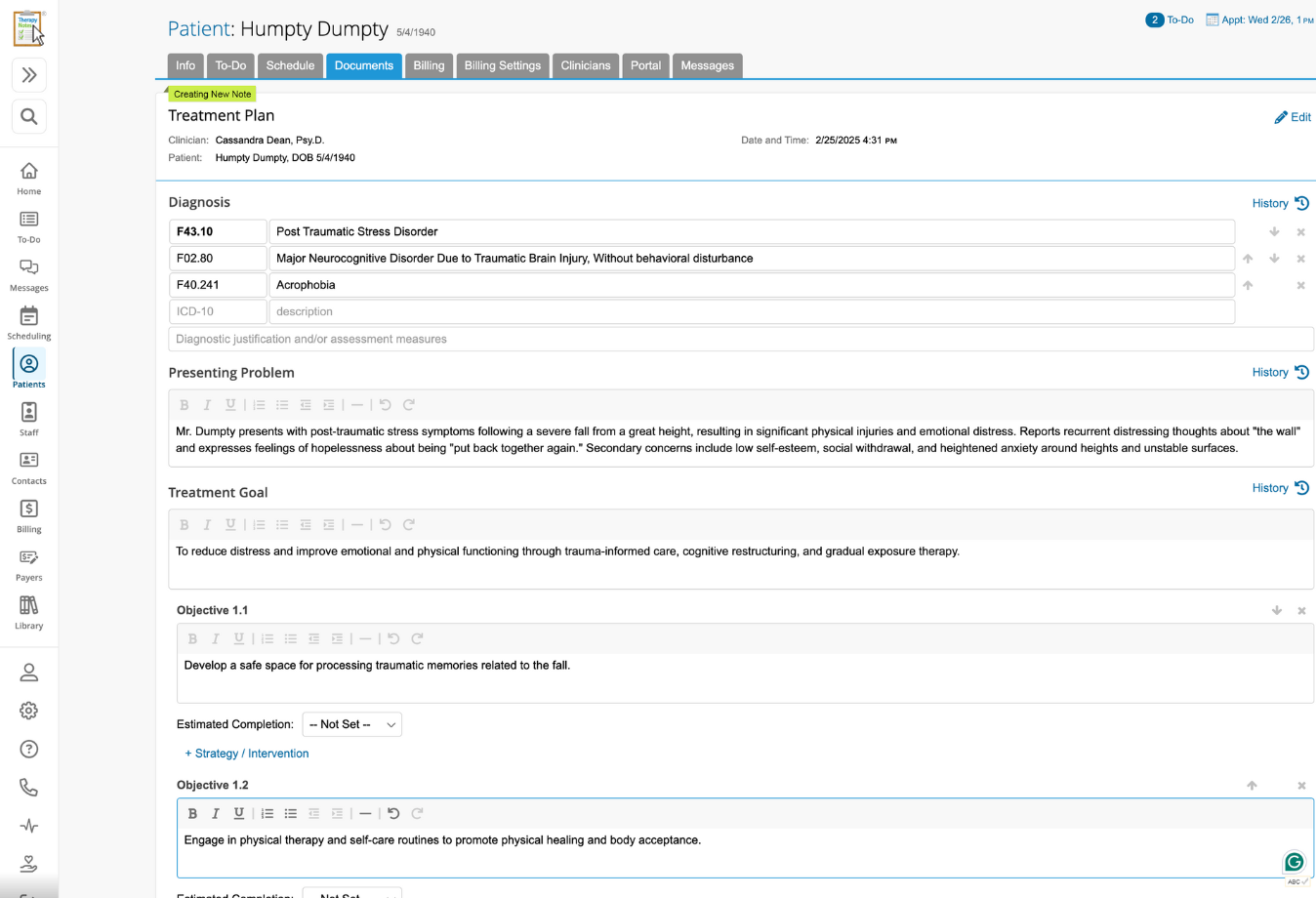
While it may not be the flashiest or most flexible platform, TherapyNotes delivers on what matters most: reliable workflows, compliant documentation, and steady performance for practices of all sizes.
Visit our full review of TherapyNotes for more insight.
Price: $35 – $155+ monthly
Scalability: Excellent
Value for Cost: Excellent
Time to Set Up: Minimal
Practice Better combines strong customization options with a beautifully intuitive design, making it ideal for therapists who want to offer a more interactive, client-centered experience. With standout tools for engagement, automation, and flexible client-centered programming, it’s one of the most versatile platforms we tested. While it was originally built for holistic health providers, it now works just as well for many therapy practices.
Pros & Cons
Pros
- Modern, intuitive design that's easy to navigate
- Powerful client engagement tools (journals, programs, tracking)
- Strong automation and integration options
- Robust telehealth built-in
- Scales easily for solo or group practices
Cons
- Pricing can climb quickly with add-ons
- More focused on holistic and integrative practices
- No built-in recurring scheduling for sessions
- Free trial requires a credit card
Cost
Practice Better’s pricing is flexible and particularly scalable, with plans ranging from free to $155+ monthly, depending on features and team size. The Sprout Plan is free for up to 3 clients and includes core features like notes, scheduling, and billing—though it does lack telehealth and some automations at this tier.
Paid tiers add in group scheduling, client messaging, white-label branding, team roles, and advanced automations. Group practices start with the Team Plan at $145 monthly for 2 clinicians, with additional clinicians billed at $50/month each. Optional add-ons like admin users, AI note-taking, and extra fax/text credits can increase your total cost.
While pricing isn’t quite as straightforward as some competitors, Practice Better does retain the same scalability we’ve come to expect, particularly if your practice relies heavily on client engagement tools.
Learn more about pricing in our full Practice Better review.
Overview
Practice Better is a modern, highly customizable EHR built with client engagement in mind. It supports robust documentation, built-in telehealth, and deep automation, while still remaining easy to learn and use. Our reviewer thought it was one of the most pleasant EHRs to use. Notable features include a floating client hub for multitasking, a powerful form builder, and tools for tracking progress between sessions (like journaling, habit tracking, and customizable courses).
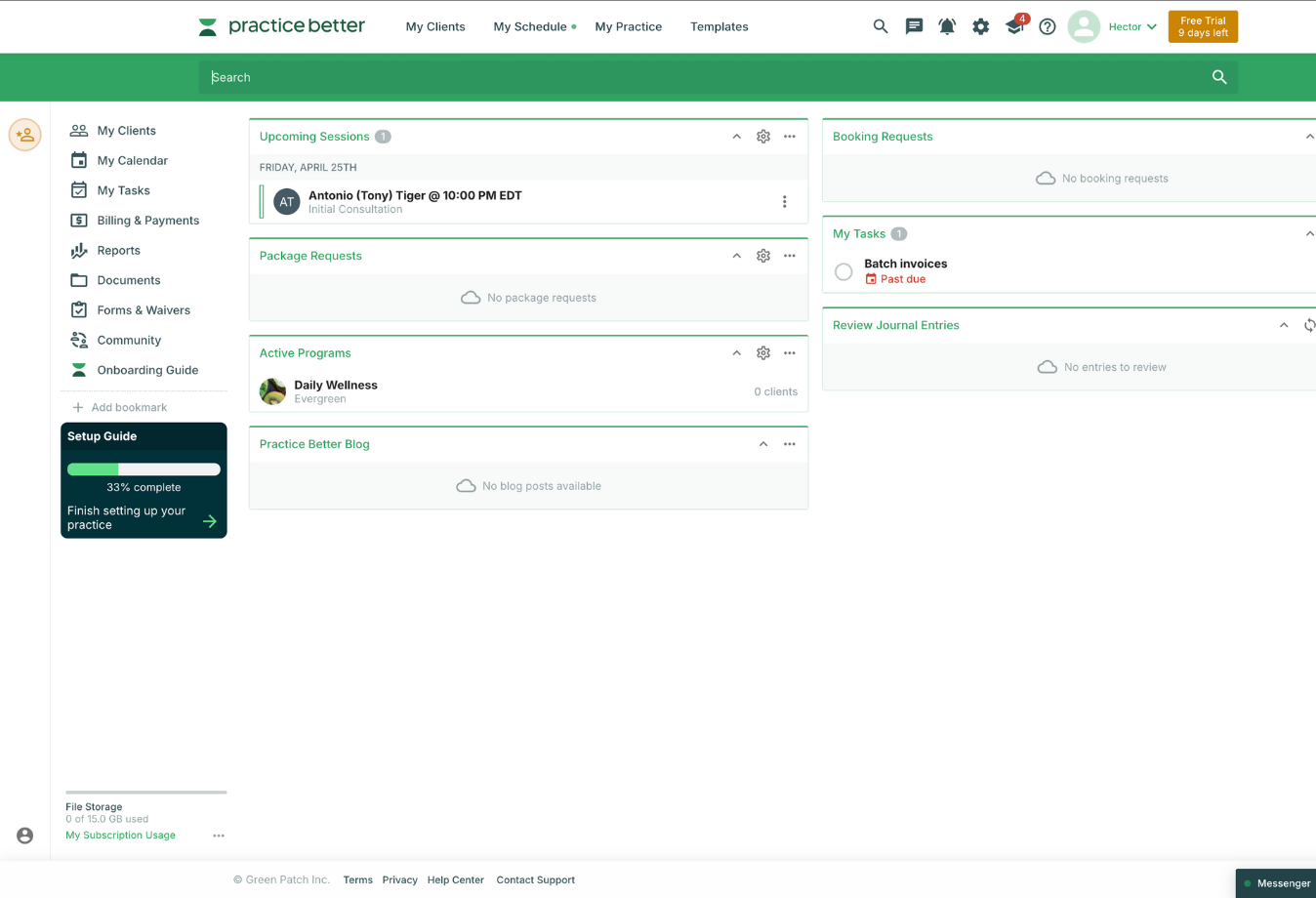
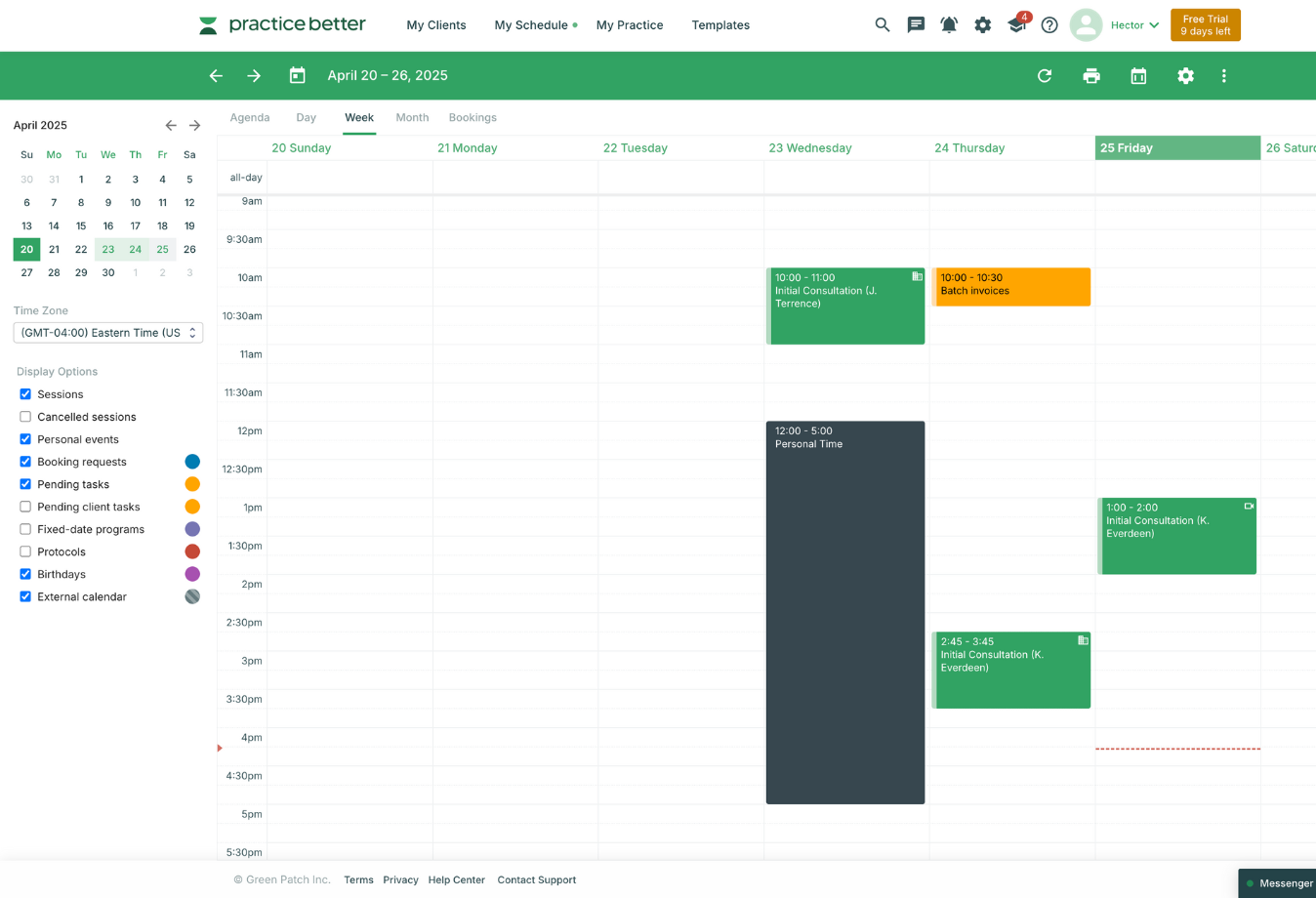
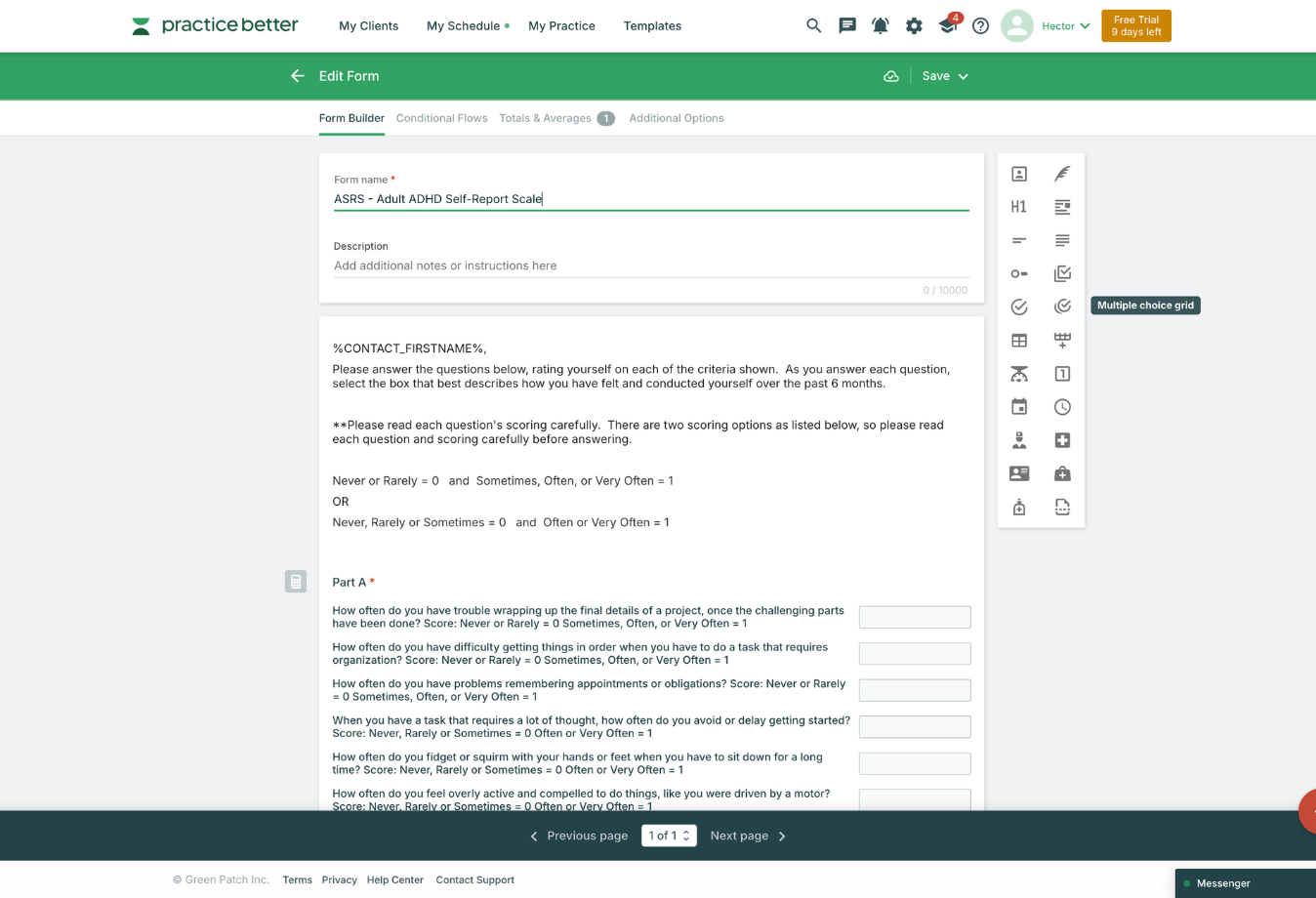
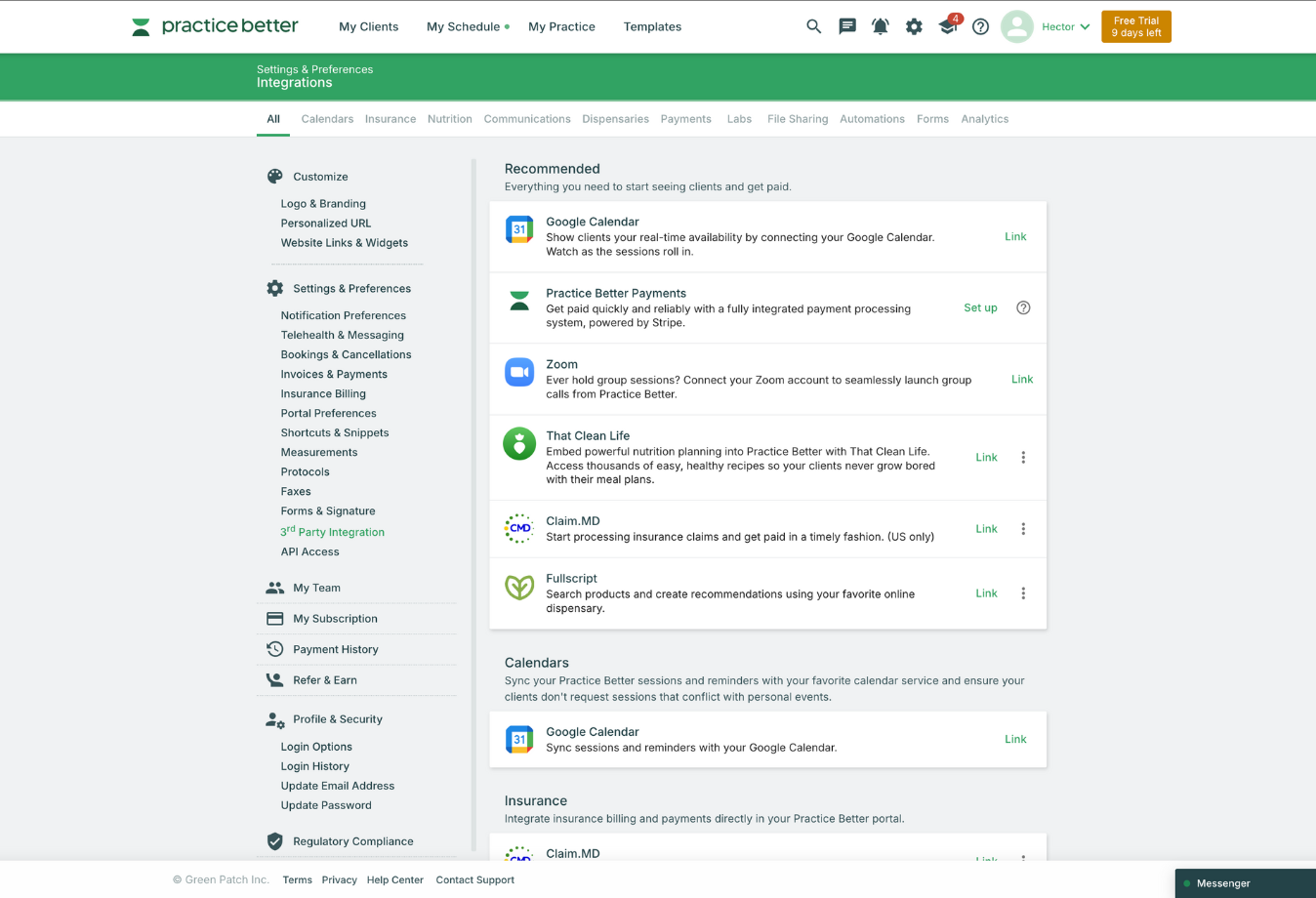

It’s a particularly strong fit for therapists who also run group programs, workshops, or coaching alongside therapy, and it adapts well to both solo and group settings. While customer support is largely self-service, Practice Better’s overall polish and flexibility make it a very compelling choice for many modern therapy practices.
Check out our hands-on review of Practice Better to find out if it’s right for you.
Compare Our Picks
| Price | $39+ monthly | $49 – $99+ monthly | $0–$29+ monthly | $0 – $39+ monthly | $18 – $135+ monthly | $29 – $89+ monthly | $69 – $79+ monthly | $35 – $155+ monthly |
| Free Trial | 14-days | 30-days |  |
30-days | 14-days | 21-days | 30-days | 14-day |
| Free Plan? | |
|

|
|
|
|
|
|
| Price | |||||||
| $39+ monthly | $49 – $99+ monthly | $0–$29+ monthly | $0 – $39+ monthly | $18 – $135+ monthly | $29 – $89+ monthly | $69 – $79+ monthly | $35 – $155+ monthly |
| Free Trial | |||||||
| 14-days | 30-days |
|
30-days | 14-days | 21-days | 30-days | 14-day |
| Free Plan? | |||||||
|
|
|
|
|
|
|
|
|
Other EHRs Worth Considering
Our list of the best behavioral health EHR platforms covers a wide range of needs, but some other options may be particularly well-suited for specific types of practices.


Price: $49.95 – $69.95+ monthly
Learn MoreShow less
CounSol.com is well-suited to practices of all sizes, with a robust suite of tools that could support anything from a single provider with a handful of clients up to a practice of 5 providers. With CounSol.com’s support of electronic prescriptions and unparalleled customer service, it’s an alluring choice for psychiatrists and other mental health providers. The managed prescription add-on allows an extra layer of support in electronic prescriptions and could prove exceptionally useful in avoiding prescription errors.
Learn more in our full CounSol.com review.

Price: $35–$215+ monthly
Learn MoreShow less
ICANotes is a clinical documentation system designed for behavioral health. It’s notable for showcasing prebuilt, point-and-click note templates that let you generate detailed documentation with minimal typing. While the interface can feel dated and the learning curve is steeper than more modern systems, ICANotes shines for psychiatrists and providers who need to document complex cases quickly and thoroughly. It’s particularly well-suited for practices that prioritize clinical depth over sleek design.
Learn more in our full review of ICANotes.

Price: $10 – $59+ monthly
Learn MoreShow less
TherapyAppointment offers an affordable, easy-to-learn EHR designed with solo and small group practices in mind. Its all-in-one approach includes scheduling, billing, telehealth, and customizable documentation without locking essential features behind higher-tier plans. The interface is simple and friendly, making it a strong choice for new or transitioning therapists who want a low-fuss platform that just works. While it may lack the polish or automation of more expensive tools, it delivers solid value for the price.
Read more in our complete review of TherapyAppointment.

Cost: $39 to $79+ monthly
Learn MoreShow less
TheraPlatform is a solid EHR option, especially for providers working in speech therapy, occupational therapy, or physical therapy. While it offers practice management features like scheduling, notes, and billing, one of its standout features is an interactive telehealth platform designed with engagement in mind. It’s particularly well suited to keeping kids engaged in a call. With built-in games, drag-and-drop activities, and whiteboard tools that run directly in the video session, it’s a great fit for therapists who need more than just a run-of-the-mill Zoom clone.
Learn more in our full review of TheraPlatform.
Final Verdict
In this update to our list of the top EHR systems for therapists, My Best Practice takes the top spot overall for its balance of smart automation, clean design, and excellent value. SimplePractice remains the most comprehensive platform, offering a wide array of features and integrations. For those focused on cost, Carepatron stands out as the most affordable, with a strong free plan and scalable pricing. Sessions Health is the easiest to use, making it ideal for solo practitioners who want a no-fuss experience. Healthie is the best pick for telehealth-heavy practices for its intelligently designed video platform. Ensora Health earns high marks as the most reliable all-in-one platform, combining EHR, billing, and client engagement in one polished, time-tested system. TherapyNotes is the most straightforward and structured platform, making it a strong fit for providers who value consistency and simplicity. And for those who want deep customization, automation, and extra features, particularly in the health and wellness space, Practice Better is the clear winner.

ChoosingTherapy.com strives to provide our readers with mental health content that is accurate and actionable. We have high standards for what can be cited within our articles. Acceptable sources include government agencies, universities and colleges, scholarly journals, industry and professional associations, and other high-integrity sources of mental health journalism. Learn more by reviewing our full editorial policy.
-
Church, M. (July 2024). “My Best Practice Review: Pros & Cons, Cost, & Who It’s Right For” Retrieved from: https://www.choosingtherapy.com/my-best-practice-review/
-
Church, M. (July 2024). “TherapyAppointment Review: Pros & Cons, Cost, & Who It’s Right For” Retrieved from: https://www.choosingtherapy.com/therapyappointment-review/
-
Church, M. (May 2024). “SimplePractice Review: Pros & Cons, Pricing, & Alternatives” Retrieved from: https://www.choosingtherapy.com/simplepractice-review/
-
Church, M. (May 2024). “Sessions Health Review: Pros & Cons, Cost, & Who It’s Right For” Retrieved from: https://www.choosingtherapy.com/sessions-health-review/
-
Church, M. (May 2024). “TheraPlatform Review: Pros & Cons, Cost, & Who It’s Right For” Retrieved from: https://www.choosingtherapy.com/theraplatform-review/
-
Church, M. (May 2024). “TheraNest Review: Pros & Cons, Cost, & Who It’s Right For” Retrieved from: https://www.choosingtherapy.com/theranest-review/
-
Church, M. (May 2024). “TherapyNotes Review: Pros & Cons, Cost, & Who It’s Right For” Retrieved from: https://www.choosingtherapy.com/therapynotes-review/
-
Church, M. (July 2024). “CounSol.com Review: Pros & Cons, Cost, & Who It’s Right For” Retrieved from: https://www.choosingtherapy.com/counsol-review/

We regularly update the articles on ChoosingTherapy.com to ensure we continue to reflect scientific consensus on the topics we cover, to incorporate new research into our articles, and to better answer our audience’s questions. When our content undergoes a significant revision, we summarize the changes that were made and the date on which they occurred. We also record the authors and medical reviewers who contributed to previous versions of the article. Read more about our editorial policies here.
Author: ChoosingTherapy.com Editorial Team
Primary Changes: Fact-checked pricing for all listed EHRs against vendor sites; updated Healthie ($18-$135+ monthly) and TherapyNotes ($69-$79+ monthly) to current published rates.
Author: Melissa Boudin, PsyD (No change)
Medical Reviewer: Kristen Fuller (No change)
Primary Changes: Updated Practice Better price range from $25-$145 monthly to $35-$155 monthly.
Author: Melissa Boudin, PsyD (No change)
Medical Reviewer: Kristen Fuller (No change)
Primary Changes: Fully rewrote article, with new entry considerations. Moved TherapyAppointment, TheraPlatform, and ICANotes from main list to “Other EHRs Worth Considering”. Added Carepatron to main list as “Most Affordable,” added Healthie to main list as “Best Telehealth Platform.” Updated TheraNest entry to Ensora Health following rebranding. Article was reviewed for factual accuracy and copy was updated throughout to improve clarity and flow.
Author: Melissa Boudin, PsyD (New author)
Medical Reviewer: Kristen Fuller (No change)
Primary Changes: Updated pricing plan details for SimplePractice from $29-$99 monthly to $49-$99 monthly.
Author: Melissa Boudin, PsyD (New author)
Medical Reviewer: Kristen Fuller (New medical reviewer)
Primary Changes: Complete rewrite of article. Fact-checked all information and reconsidered/made changes to the recommendations list based on research and product testing. Updated where necessary to improve factual accuracy and readability. Companies removed from list: CounSol.com. Companies added to list: Practice Better.
Author: Matthew Church, MS (No change)
Medical Reviewer: Melissa Boudin, PsyD (No change)
Primary Changes: Full rewrite, reevaluated all entries and updated star ratings, updated awards, changed order, rewrote for clarity.
Author: Matthew Church, MS (No change)
Medical Reviewer: Melissa Boudin, PsyD (No change)
Primary Changes: Added key takeaways; reviewed features; rewrote sections for readability; overall revamp of entire style
Author: Matthew Church, MS (No change)
Medical Reviewer: Melissa Boudin, PsyD (No change)
Your Voice Matters
Leave your own reviews!
Have you used an online therapy company? Have you tried an online psychiatry service? Do you use a meditation or mindfulness app? We’d love to hear about your experience!
We want to hear about the companies you love and the companies you wish you never used.
Leave your feedback for our editors.
Share your feedback on this article with ChoosingTherapy.com’s editors. If there’s something we missed or something we could improve on, we’d love to hear it.
Our writers and editors love compliments, too. :)

More than 5,000 therapists trust Heard to run the financial side of their practice. Choose Essential if you are solo or Premium for S corps and group practices, and get bookkeeping, taxes, payroll, and banking in one place with real human support.

Klarity credentials you under your own NPI and Tax ID, so the insurance contracts stay with you. Your first three panels are free, and Klarity’s team handles the weekly payer follow-ups while you wait. Once you are in-network, the same team runs your billing for 3.9% of what you actually collect.
Running a therapy practice? See our Jane App review for how it handles scheduling, notes, and billing.

