


Many people use alcohol to cope with difficult emotions, including sadness, loneliness, anger, and shame. Some people also drink to self-medicate mental health symptoms of depression, anxiety, PTSD, and more. While infrequently drinking to cope with life’s challenges is not necessarily problematic, making it a pattern can result in serious consequences.
Want to drink less?
Sunnyside helps you ease into mindful drinking at your own pace. Think lifestyle change, not a fad diet. Develop new daily routines, so you maintain your new habits for life. Take a 3 Minute Quiz.
What Is a Coping Mechanism?
A coping mechanism can be defined as a specific strategy intended to manage either external or internal stressors.1 Coping mechanisms may be conscious (i.e. you’re deliberately choosing a behavioral response) or more unconscious (i.e. you react to a stressor in a particular way without necessarily realizing it). All coping mechanisms are designed to mitigate emotional discomfort.
Different situations may call for different coping mechanisms, and each mechanism has its subsequent benefits and drawbacks. For example, after a long day of work, some people might cope with their stress by watching TV. Others might go to the gym, call a friend, or go to bed early. None of these mechanisms are “good” or “bad,” but they all serve different functions.
Why Do People Use Alcohol to Cope?
People tend to drink alcohol to cope with their emotions because alcohol initially coincides with feel-good effects, such as increased happiness, more confidence and energy, and a sense of relaxation.2 In some cases, drinking can temporarily soothe or numb uncomfortable emotions. Additionally, alcohol is prevalent in mainstream society, and many people socialize over drinks.
Reasons that someone might be using alcohol to cope include:
- Feel more confident in social settings
- Temporarily reduce symptoms of depression
- Unwind after a long day
- Temporarily reduce or numb PTSD symptoms
- Manage boredom
- Manage loneliness
- Feel socially connected to others
- Boost confidence or self-esteem
- Increase a sense of energy/wakefulness
- Fall asleep faster
Who Uses Alcohol as a Coping Mechanism?
People of all ages and demographics drink alcohol to cope with various life stressors. However, facts about alcohol use shows there is a strong relationship between alcohol use disorders and mental health issues. For example, people who struggle with problematic alcohol use are more likely to meet the criteria for major depression and/or PTSD.3 There is also a higher comorbidity between alcohol use and personality disorders.4
Signs of Someone Using Alcohol as a Coping Mechanism
Some people are more apparent than others when using alcohol as a coping mechanism. For example, they may regularly drink too much when they go out, or they may express discomfort or frustration if alcohol isn’t at a particular event. Others are more covert with their drinking habits and may prefer to drink alone.
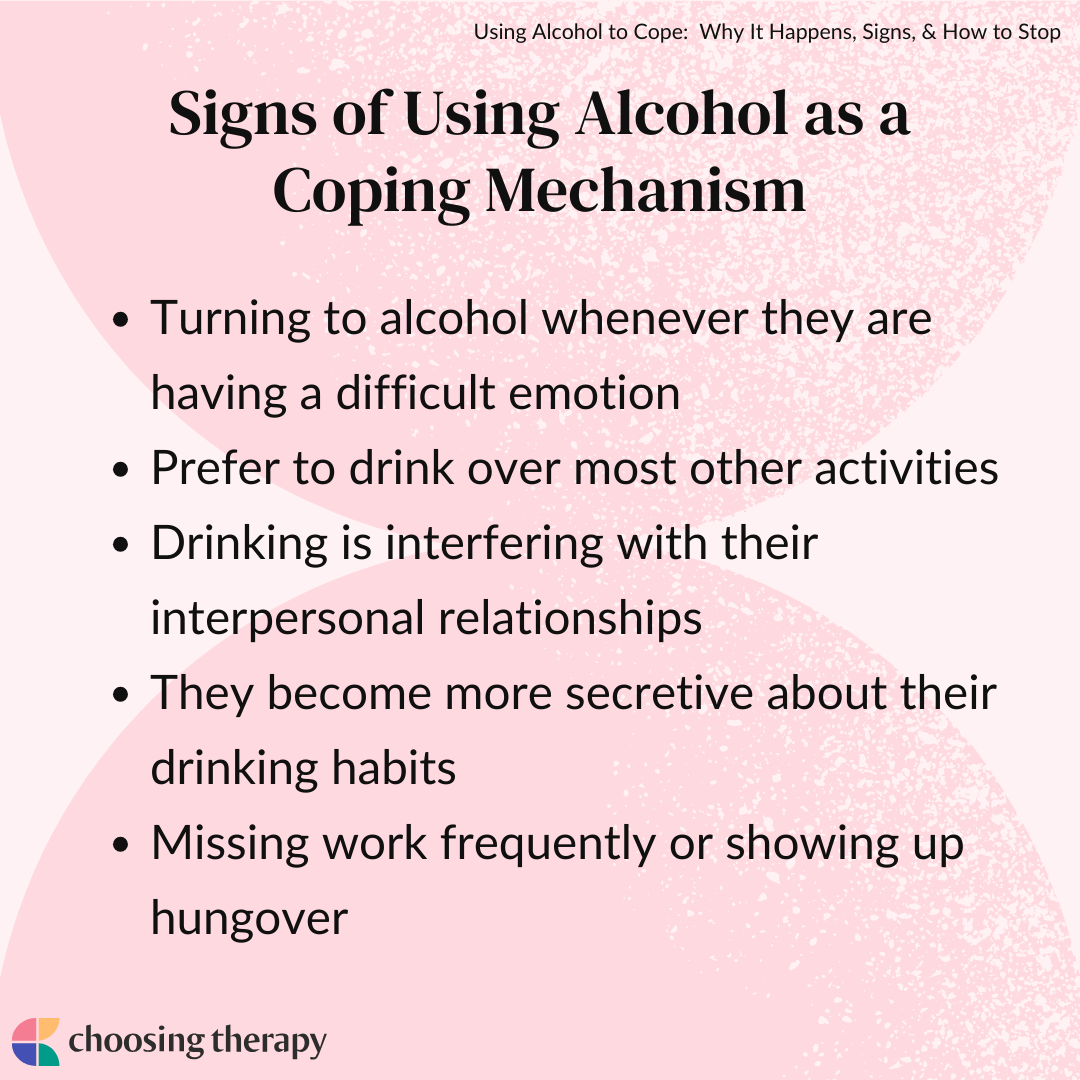
Signs that someone might be using alcohol has a coping mechanism include:
- They turn to alcohol whenever they are having a difficult emotion
- They prefer to drink over most other activities
- Their drinking is interfering with their interpersonal relationships
- They become more secretive about their drinking habits
- They miss work frequently or show up hungover
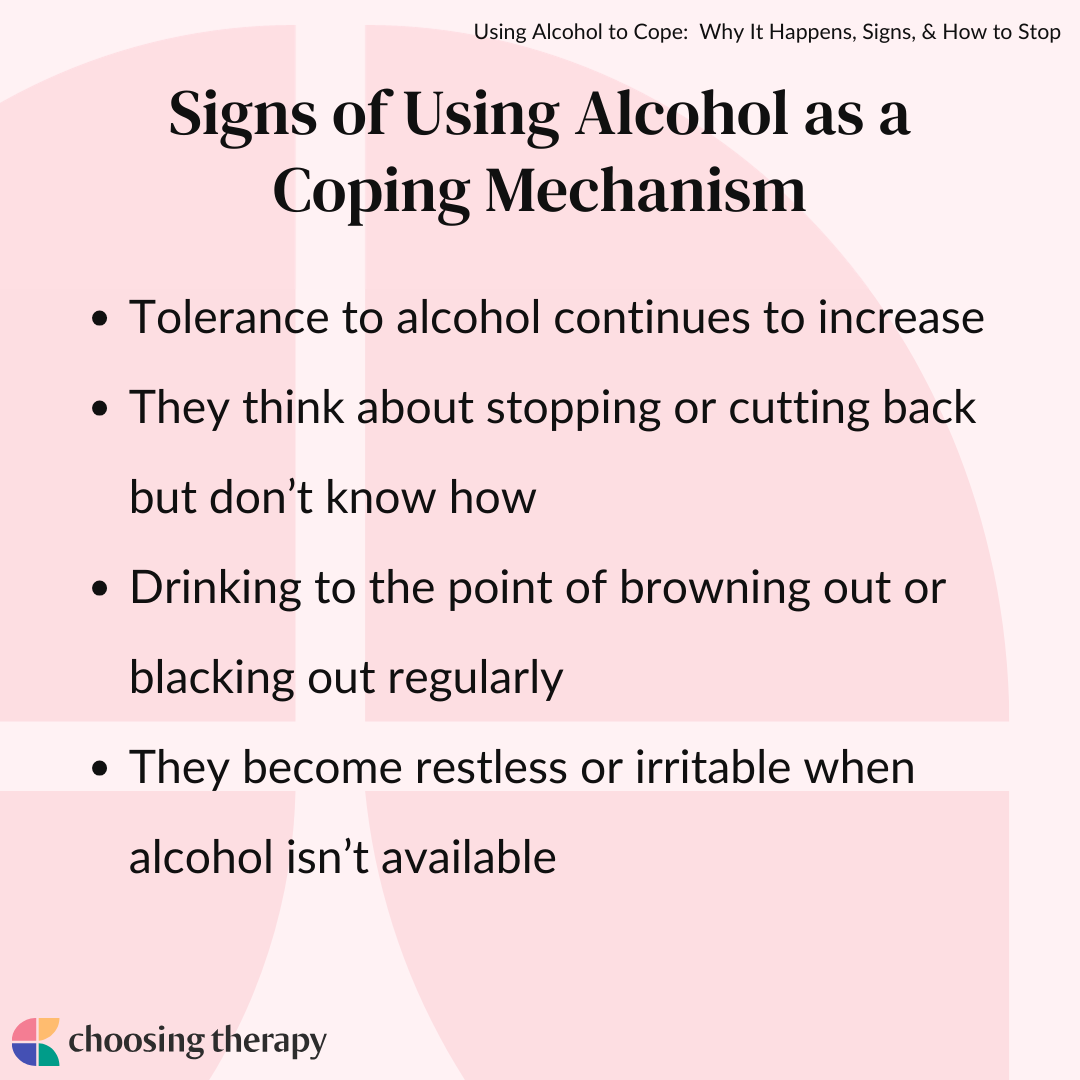
- Their tolerance to alcohol continues to increase
- They think about stopping or cutting back but don’t know how
- They drink to the point of browning out or blacking out regularly
- They become restless or irritable when alcohol isn’t available
Help for Alcohol Use
Ria Health: Effective, Evidence-Based Alcohol Treatment 100% Online Quickly change your relationship to alcohol with our at-home program. On average, Ria Health members reduce their BAC levels by 50% in 3 months in the program. Services are covered by many major health plans. Visit Ria Health
Want to drink less? Sunnyside helps you ease into mindful drinking at your own pace. Think lifestyle change, not a fad diet. Develop new daily routines, so you maintain your new habits for life. Take a 3 Minute Quiz
Dangers if You Use Alcohol as a Coping Mechanism
The main concern associated with using alcohol as a coping mechanism is the risk of developing an alcohol use disorder. The more someone drinks, the more their tolerance to alcohol will increase. Over time, this results in needing to drink more and more to achieve the desired effect. This can also result in alcohol withdrawal symptoms, where the body physically reacts to the absence of alcohol.
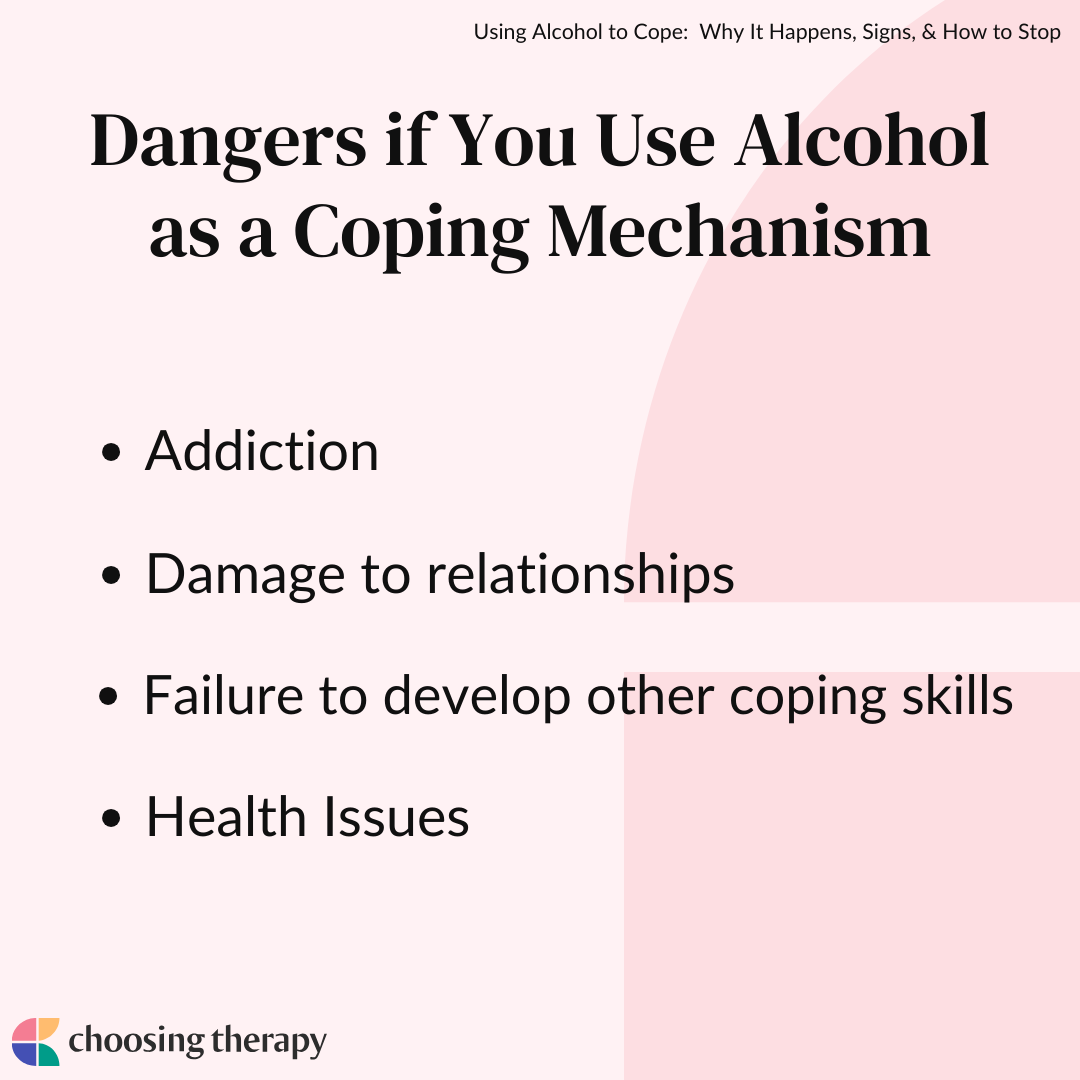
Dangers of using alcohol as a coping mechanism include:
Addiction
Alcohol addiction affects over 10% of Americans and is responsible for approximately 3 million deaths each year.5 Addiction can be insidious, but its impacts are devastating for individuals and their loved ones. When someone is addicted to alcohol, alcohol becomes the main focus of their livelihood, and stopping drinking feels like an insurmountable task.
Damage to Relationships
Problematic drinking can erode relationships with family and friends. Alcohol may worsen judgment and increase impulsivity, both of which can be detrimental to social relationships. In addition, many people who regularly rely on alcohol as a coping mechanism isolate themselves from others, which can also affect how much time they spend with their loved ones.
Failure to Develop Other Coping Skills
It’s important to develop a range of coping skills that can be used in various situations. Relying on any one coping mechanism universally can be undoubtedly problematic. Many people who solely rely on alcohol to cope with their emotions struggle to change their pattern because nothing else seems to work as well as drinking does.
Health Issues
Excessive drinking can be dangerous to your physical health. Research shows that excessive drinking alone is responsible for 1 in 5 deaths among adults aged 20-49.6 Some of the main health risks include high blood pressure, compromised immune system, cardiovascular issues, digestive problems, memory impairment, liver disease, and cancer.
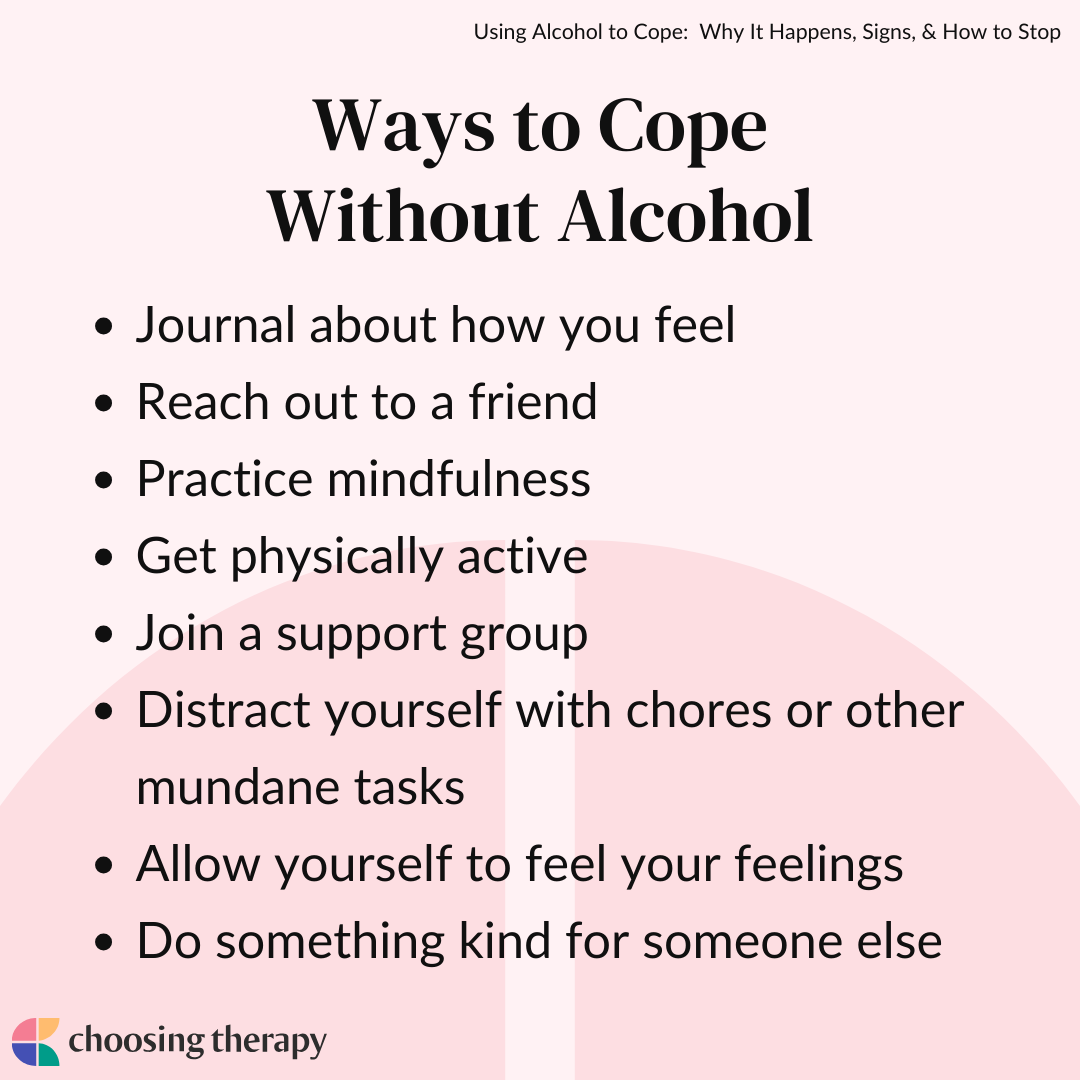
Ways to Cope Without Alcohol
Regardless of your relationship with alcohol, it’s important to learn how to cope with life’s inevitable stressors without numbing your feelings. Change can take time, but intention matters. Try to think about which situations trigger you to turn to alcohol, and then think about alternative strategies you can implement instead of drinking.
Ways to cope without alcohol include:
- Journal about how you feel: It can be helpful to learn about the patterns of your emotions and thoughts, and journaling can offer a creative way to discharge your stress.
- Reach out to a friend: Connecting to a supportive loved one can provide you with the validation and kindness you might need during a difficult time.
- Practice mindfulness: Mindfulness simply means living in the present moment without judging your thoughts or feelings. Being more mindful can help you build a sense of resilience to cope with challenging moments.
- Get physically active: Exercise can help reduce symptoms of depression and anxiety, and it can also boost self-esteem, all of which may counteract the desire to drink.
- Join a support group: Some people benefit from being connected with a sober community like Alcoholics Anonymous. These support groups offer a sense of camaraderie and accountability to motivate you to stop drinking.
- Distract yourself with chores or other mundane tasks: Sometimes it helps to just get busy, even if the activity isn’t all that enjoyable.
- Allow yourself to feel your feelings: It can be powerful to give yourself permission to cry, laugh, or simply be upset. Choosing to ride the wave of emotion may help lessen the urge to suppress or numb it.
- Do something kind for someone else: If you feel overly distracted by your own needs or thoughts, consider engaging in an act of kindness for someone else. You’ll also reap the prosocial benefits associated with giving back to others.
Treatment for Alcohol Abuse
Alcohol abuse treatment ranges in type and length based on the specific symptoms associated with your addiction. In severe cases, you may need hospitalization or a medical detox for the body to resolve any issues related to alcohol intoxication. In other cases, you may benefit from an alcohol rehab or structured treatment setting. There is no cure for alcohol abuse, but management can help you live a meaningful life without drinking.
Treatment options for alcohol abuse include:
- Intensive outpatient therapy: IOP for substance use provides a higher level of care than traditional, outpatient therapy. It may be beneficial for people who have not been able to cut back or stop drinking despite receiving professional treatment.
- Cognitive-behavioral therapy: CBT for substance use helps people replace their negative thoughts with more adaptive, realistic ones. Over time, this can interrupt cycles of unwanted behaviors, such as drinking too much.
- Motivational interviewing: Motivational interviewing can be beneficial for people experiencing ambivalence about their drinking. This helps people explore the full breadth of pros and cons associated with their alcohol use.
- Group therapy: Group therapy may focus on pertinent topics like self-esteem, psychoeducation, relapse prevention, and healthy coping skills. Groups may be peer-led or facilitated by mental health professionals.
- Medication: The FDA has approved several drugs for medication-assisted treatment for addiction, including disulfiram (Antabuse), naltrexone (Vivitrol), and acamprosate (Campral) to help treat alcohol use disorder. These drugs often work best when taken in conjunction with other professional treatment measures.
When to Seek Professional Help
If you’re struggling to cut back or stop drinking on your own, you may benefit from seeking professional support. Look for a therapist who specializes in both addiction and any co-occurring issues you’re experiencing. You can use an online therapist directory or online therapy platform to get started. If you’d like to discuss medication options, many psychiatrists offer a hybrid of both in-person and online psychiatric options.
Ria Health: Effective, Evidence-Based Alcohol Treatment 100% Online
Quickly change your relationship to alcohol with our at-home program. On average, Ria Health members reduce their BAC levels by 50% in 3 months in the program. Services are covered by many major health plans. Visit Ria Health
In My Experience
“People often turn to alcohol to cope with pain, trauma, relationship stress, and other unwanted stressors. It’s normal to want to “shut it off” or “numb it out,” and I’ve worked with many clients who use alcohol or other mood-altering substances to try to take care of themselves. Unfortunately, the relief is only temporary, and chronic alcohol use almost always leads to more problems. Learning how to take care of yourself without alcohol may seem daunting, but it’s one of the best gifts you can truly give yourself. Although it can be challenging at first, I see many people achieve a sense of freedom they’ve never felt once they change their relationship with alcohol.”

Using Alcohol to Cope Infographics
ChoosingTherapy.com strives to provide our readers with mental health content that is accurate and actionable. We have high standards for what can be cited within our articles. Acceptable sources include government agencies, universities and colleges, scholarly journals, industry and professional associations, and other high-integrity sources of mental health journalism. Learn more by reviewing our full editorial policy.
-
Coping Mechanisms (2023, April). National Library of Medicine. Retrieved from: https://www.ncbi.nlm.nih.gov/books/NBK559031/.
-
What is alcohol (2023, December). Alcohol and Drug Foundation. Retrieved from: https://adf.org.au/drug-facts/alcohol/.
-
Relationship Between Depression and Risky Alcohol Consumption in Women: the Mediating Role of Coping Styles and Age (2022, October). National Library of Medicine. Retrieved from: https://www.ncbi.nlm.nih.gov/pmc/articles/PMC9555268/.
-
Personality Disorder Symptoms, Drinking Motives, and Alcohol Use and Consequences (2009, April). National Library of Medicine. Retrieved from: https://www.ncbi.nlm.nih.gov/pmc/articles/PMC2673803/.
-
Alcohol Abuse Statistics. National Center for Drug Abuse Statistics. Retrieved from: https://drugabusestatistics.org/alcohol-abuse-statistics/.
-
Alcohol use and Your Health (2022, April). Centers for Disease Control and Prevention. Retrieved from: https://www.cdc.gov/alcohol/fact-sheets/alcohol-use.htm.

Your Voice Matters
Can't find what you're looking for?
Request an article! Tell ChoosingTherapy.com’s editorial team what questions you have about mental health, emotional wellness, relationships, and parenting. Our licensed therapists are just waiting to cover new topics you care about!
Leave your feedback for our editors.
Share your feedback on this article with our editors. If there’s something we missed or something we could improve on, we’d love to hear it.
Our writers and editors love compliments, too. :)
Additional Resources
To help our readers take the next step in their mental health journey, ChoosingTherapy.com has partnered with leaders in mental health and wellness. ChoosingTherapy.com is compensated for marketing by the companies included below.
Alcohol Treatment – Cut Back or Quit Entirely
Ria Health – Quickly change your relationship to alcohol with our at-home program. On average, members reduce their BAC levels by 50% in 3 months in the program. Services are covered by many major health plans. Visit Ria Health
Drinking Moderation
Sunnyside – Want to drink less? Sunnyside helps you ease into mindful drinking at your own pace. Think lifestyle change, not a fad diet. Develop new daily routines, so you maintain your new habits for life. Take a 3 Minute Quiz
Treatment for Mental Health Conditions That Coexist With SUD
Talkiatry – Get help from a doctor who can treat the mental health conditions that commonly lead to or coexist with substance use disorders. Take our online assessment and have your first appointment in days. Take Assessment
Addiction Newsletter
A free newsletter from the experts at ChoosingTherapy.com for those impacted by addiction. Get helpful tips and the latest information. Sign Up

Best Online Medication-Assisted Treatment Programs
Online medication-assisted treatment programs are fairly new to the telehealth industry, but existing companies are expanding quickly with new programs emerging every day. It’s important to explore your options and understand the level of virtual care available so you can choose the best addiction treatment program for you.
Best Mindful Drinking Apps
If you’re thinking about joining the sober curious movement and you’d like to cut back on drinking, mindful drinking apps are a great place to start. Practicing mindful drinking can take some time, attention, and patience, but with the help of the right app, you can completely transform your relationship with alcohol.
