Perfectionism can be caused by many different factors, including high expectations or critical parents in childhood, social pressure, a desire for control, or personality traits such as being very driven, detail-oriented, or Type A. Experiences like being validated for success and achievements can lead to perfectionism, as can fear about being judged or rejected.
ChoosingTherapy.com may earn a commission from the companies whose services are linked on this page.
What Is Perfectionism?
Perfectionism is when a person holds themself to very high standards and seeks to be flawless or perfect. This is a multifaceted trait that can have both positive and negative impacts on an individual’s life. Perfectionism can lead to motivation and achievement, but it can also lead to stress, anxiety, and low self-esteem when a person doesn’t meet their own expectations.
Impact of Perfectionism
On the surface, perfectionism can lead a person to strive to do their best and achieve success. However, it often leads to a drive that is beyond what is healthy and does more harm than good. People who deal with perfectionism tend to have increased stress and anxiety, and it can contribute to social and emotional problems as well as an increase in stress-related health problems.1
Perfectionism Is Often A Sign Of OCD
Many perfectionist people also struggle with misdiagnosed OCD. Use the Choosing Therapy Directory to find a therapist who specializes in treating compulsive behaviors and OCD. Find a Therapist
Psychological Factors That Cause Perfectionism
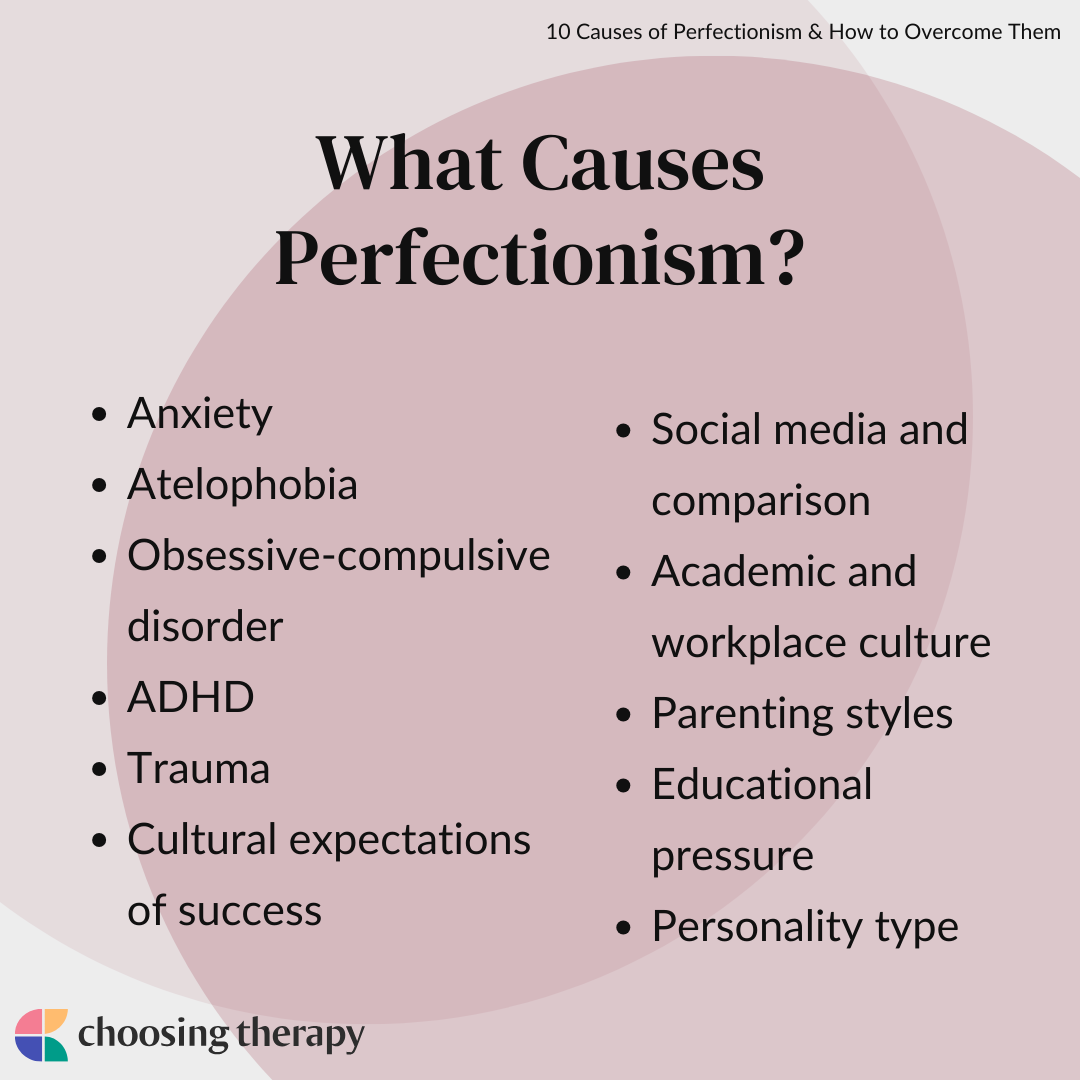
Psychological factors can contribute to the development of perfectionism. These include disorders like generalized anxiety disorder, ADHD, OCD, and atelophobia, which is a phobia of imperfection. These factors can create significant stress and anxiety for a person.
Psychological factors that can cause perfectionism include:
1. Generalized Anxiety Disorder
Anxiety and perfectionism are often closely linked, as individuals with anxiety are more prone to perfectionism. Anxiety fuels perfectionism by manifesting as a desire to gain control and avoid criticism, failure, or disappointing others. This contributes to an increased feeling of pressure and a relentless pursuit of perfection, which creates a vicious cycle in which anxiety and perfectionism continue to feed each other.2
2. Atelophobia
Atelophobia is an extreme form of fear of imperfection, and like all phobias, it has a severe impact on a person’s life. The difference between generalized anxiety surrounding perfectionism and atelophobia is that generalized anxiety causes worry and stress about a variety of different things, whereas atelophobia is focused solely on the fear of imperfection. 12% of adults and 19% of adolescents in the U.S. experience a specific phobia like atelophobia.3
3. Obsessive-Compulsive Disorder
Obsessive-compulsive disorder (OCD) and perfectionism are often associated with each other, and OCD can contribute to perfectionism. OCD causes obsessions and intrusive thoughts as well as compulsions. For someone with OCD-induced perfectionism, this might present as obsessive thoughts about performing well on a test, followed by compulsive studying. In OCD, obsessions and compulsions cause significant distress and take a lot of time and energy.
4. Attention-Deficit/Hyperactivity Disorder
There is a strong relationship between attention-deficit/hyperactivity disorder (ADHD) and perfectionism. People with ADHD can develop perfectionistic tendencies as a way to compensate for their symptoms, a process called ADHD masking. This can be a way for a person to meet expectations, fit in, and avoid criticism and judgment despite their symptoms. This can be exhausting and result in increased anxiety and stress.
Environmental Factors That Cause Perfectionism
Environmental and cultural factors can foster perfectionism when a person seeks perfection as a coping mechanism to fit in or avoid criticism. This can create unrealistic expectations and lead to a culture in which perfectionism is rewarded and praised by authority figures or peers. This can also lead to competition, which feeds perfectionism and stress.
Environmental factors that can cause perfectionism include:
5. Trauma
Trauma can trigger or exacerbate perfectionistic tendencies. Perfectionism can be a way for a person to try to reduce the effect of past trauma by seeking control and avoiding criticism. People with trauma in their history may experience shame or anxiety, which leads them to seek perfection as a way to cope and reduce the symptoms.
6. Cultural Expectations of Success
Cultures that value achievement and success are likely to contribute to perfectionism. When a culture promotes success and achievement, individuals tend to compare themselves to others, be more competitive, and strive toward continual improvement.
7. Social Media & Comparison
Constant exposure to others’ curated lives on social media can impact self-esteem and drive perfectionism. Influencers, celebrities, and successful online creators are known for creating images that can fuel perfectionism in people who compare themselves to them. It is important to remember that a person’s social media feed doesn’t represent the reality of their life, only the part that they want others to see.
8. Academic & Workplace Culture
Academic competition and workplace culture can exacerbate perfectionistic tendencies. When a culture constantly highlights success and achievement, this can trigger people who struggle with perfectionism to strive more and become an approval addict. This can lead to overwork, self-doubt, comparison to others, and heightened stress. When a person is acknowledged for their overwork and perfectionism, this creates a vicious cycle of always striving for more.
Developmental Factors That Cause Perfectionism
Experiences during childhood and adolescence can sow seeds for perfectionism to develop. These include influences at home, such as parental attitudes and expectations about performance and success, as well as the perception that love has to be earned through achievement. Children also experience pressures in the academic environment that can lead to perfectionism, particularly when expectations of excellence are high.
Developmental factors that can cause perfectionism include:
8. Parenting Styles
Certain parenting styles, such as authoritarian parenting, can contribute to developing perfectionism in children. In this type of environment, love and approval are perceived to be conditional on achievement and success. Children develop the belief that they have to perform well to earn love and acceptance and that they have to avoid criticism from their parents at all costs.
9. Educational Pressure
Early academic pressures can also cause perfectionism. Children in environments where high achievement is expected learn to perform at their best at all times and avoid mistakes. Gifted and talented children have been shown to experience more stress, perfectionism, and isolation than their peers. While academic success is important and a source of pride for children and parents, perfectionism can cross a line and become unhealthy.4
10. Personality Type
Certain personality types are more prone to perfectionism. People who are motivated by success, achievement, or recognition, crave the validation of others, or are very Type-A and driven to succeed are all more likely to experience perfectionism. These personalities lend themselves to self-criticism. While these traits can have benefits, when they cause perfectionism, it can quickly become unhealthy.
Break Free From Intrusive Thoughts & Behaviors
Talkspace - Online Therapy & Medication Management
Talkspace – has thousands of experienced therapists to work with. Answer a few questions to get matched with the right therapist for you. Talkspace is covered by most major insurance plans. Talkspace also accepts Medicare in some states. The average copay is $15, but many people pay $0. Visit Talkspace
Grow Therapy - Find A Psychiatrist
Grow Therapy – Find a therapist or psychiatrist for online or in-person care. Most major insurances accepted. Connect with a mental health professional today. Get started
How to Know What Is Causing Your Perfectionism
Pinpointing the underlying causes of one’s perfectionism helps reduce the negative impact on one’s life. Things like deadlines, performance reviews, tests, criticism from family members, or social media can all trigger perfectionism. Even when these triggers can’t be avoided completely, awareness can allow a person to notice when they come up and confront them directly rather than going into old patterns.
Here are some strategies for how to learn what is causing your perfectionism:
Identify Your Triggers
Keep a log to track when your perfectionist tendencies come up, noting when and where you feel the most pressure to be perfect. It can be helpful to take note of things like what was happening at work or school, who you have been spending time with, and what media or social media you’ve been consuming. This can help you identify patterns, track your progress, and develop healthy coping skills.
Here is how to keep a log that can help you identify your triggers:
- Start a notebook or use a notes app on your phone designated to tracking perfectionism triggers
- Make four columns across the top: Date, Time, Perfectionistic Behaviors, Possible Triggers
- Notice your specific perfectionism traits, like doing something over and over, overworking, or having intrusive self-critical thoughts
- Every time you notice these traits, fill out the log. Note any potential triggers, including people, places, deadlines, expectations, etc.
- Track every day for at least 2 weeks and notice patterns that start to emerge
Here are some questions to get a better sense of what is causing your perfectionism:
- What’s going on right now at work or school?
- Am I facing any deadlines?
- Are there any performance reviews, tests, or evaluations coming up?
- Who have I been spending time with?
- Have I been spending more time on social media than usual?
- What places have I visited?
- What is my negative self-talk?
Ask for Feedback from Someone You Trust
Seeking feedback from friends, family, or colleagues can help a person gain an external perspective on their behavior. This feedback can reveal patterns that the individual may not recognize on their own. For example, a friend may notice that when a family member is coming over, you get stressed about cleaning your house. Or, a colleague may notice that you start overworking when the boss is in town.
Go for a Professional Evaluation
When perfectionism starts to damage your mood, mental health, or ability to enjoy life, it’s a good idea to see a mental health professional for an evaluation. Therapists and counselors can assist in uncovering deep-seated causes of perfectionism, such as past trauma or mental health disorders. They can help you change your negative thoughts and develop healthy coping skills.
Benefits of Overcoming Perfectionism
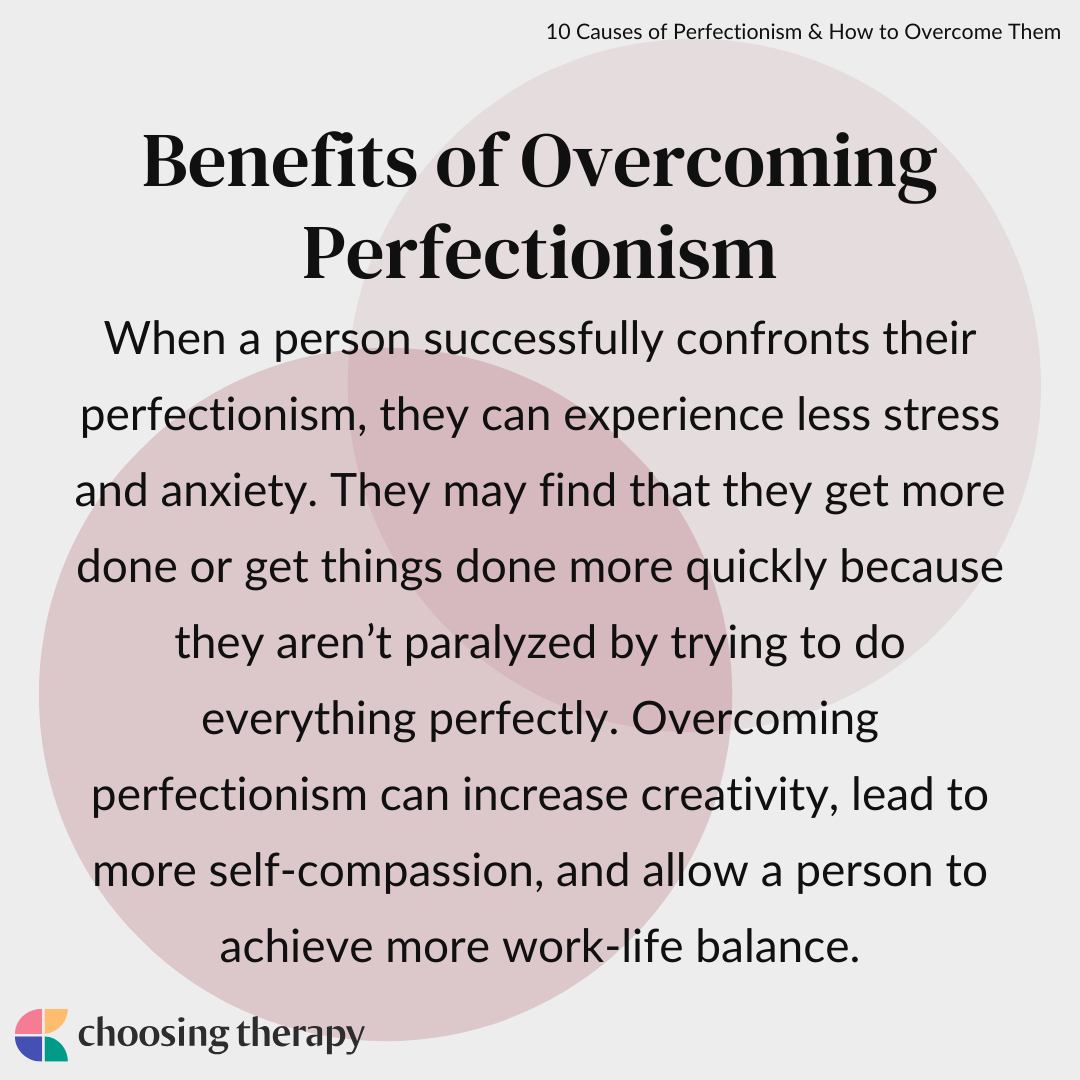
When a person successfully confronts their perfectionism, they can experience less stress and anxiety. They may find that they get more done or get things done more quickly because they aren’t paralyzed by trying to do everything perfectly. Overcoming perfectionism can increase creativity, lead to more self-compassion, and allow a person to achieve more work-life balance.
How to Overcome Perfectionism
Several helpful tools and approaches can help a person begin to overcome perfectionism. Therapy helps address underlying causes of perfectionism, like culture, family of origin, and trauma history. Self-help approaches like mindfulness practices, acceptance, and self-compassion can help a person change their negative thoughts and beliefs and start to treat themselves with less judgment and more compassion.
Here are some tips for how to overcome perfectionism:
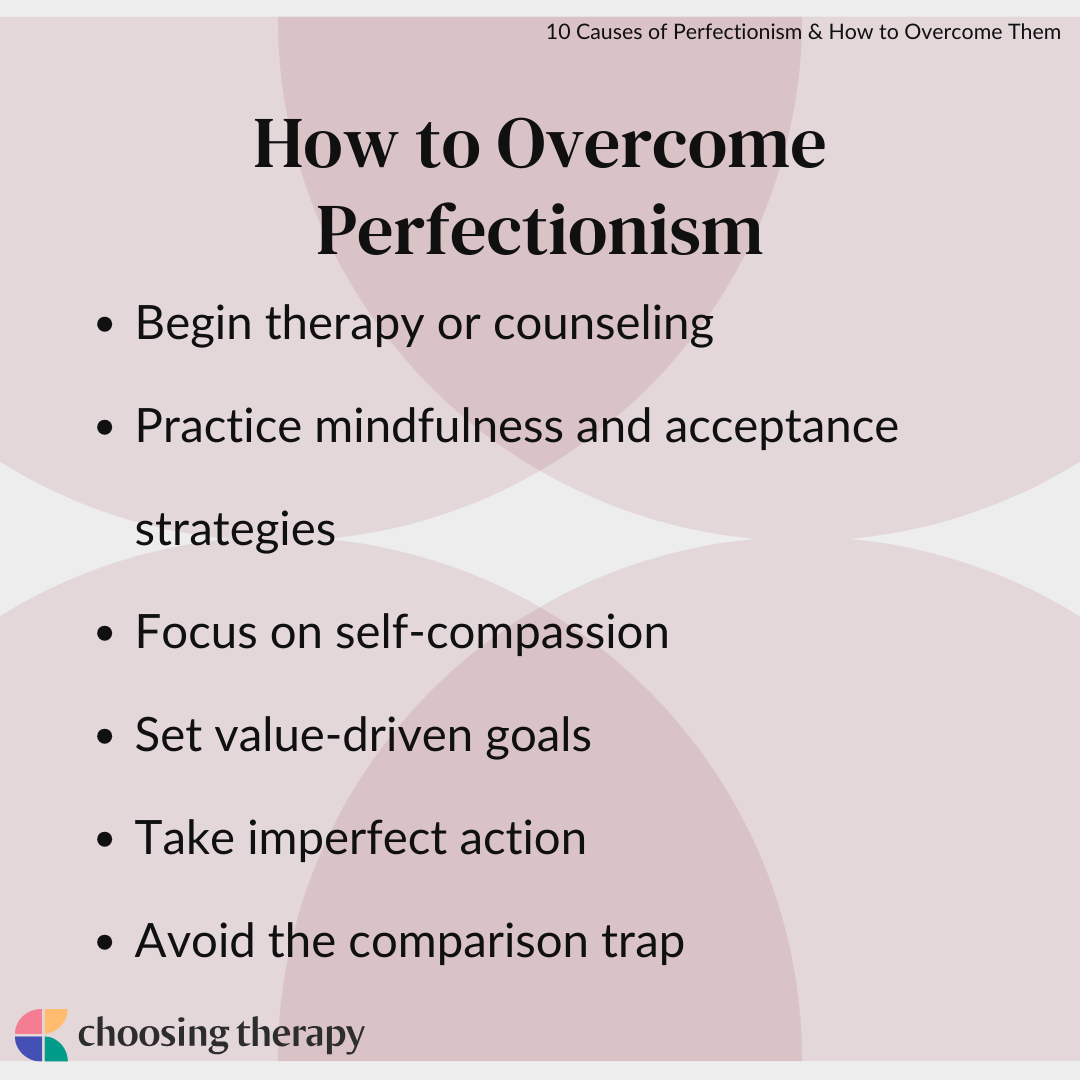
Begin Therapy or Counseling
A therapist or counselor can help a person identify the contributing factors that lead to perfectionism and develop more accepting and self-compassionate thoughts and behaviors. Several therapy options are effective for dealing with perfectionism. The best type of therapy will depend on the factors and causes leading to perfectionism.
Practice Mindfulness & Acceptance Strategies
Mindfulness is a helpful tool for accepting imperfection and reducing the anxieties that come along with it. It allows a person to notice what they are feeling in the present moment without judgment or self-criticism. Specific technology tools like mindfulness apps can help people practice mindfulness and meditation in innovative ways. These apps help with starting a breath practice, meditation, and reducing stress.
Focus on Self-Compassion
Practicing self-compassion can be a helpful way to reduce the impact of perfectionism and negative thoughts. It teaches a person to treat themselves with the same understanding and compassion as they would treat a loved one. With self-compassion, a person allows themselves room to be human and imperfect. This can open up opportunities for creativity and success that may not have been possible with perfectionism standing in the way.
Treat yourself with the same kindness and compassion as you would treat a good friend. This includes being gentle with yourself when things don’t go perfectly or turn out like you had planned. It’s OK to be human. Remind yourself that you are doing the best you can and that your value and worth are not related to whether or not you do things perfectly.
Set Value-Driven Goals
Choose goals that align with your values rather than your perfectionism and will move you closer to the things that are most important to you. Break those larger goals into smaller action steps and prioritize a few small, achievable steps each day. This can reduce the overwhelming feeling of needing a whole project to be perfect while still providing a sense of accomplishment and making progress toward goals.
Take Imperfect Action
Perfectionism can be paralyzing and prevent people from achieving their goals. Practice doing things imperfectly. Remember that done is better than perfect, meaning finishing the task is the most important thing. Intentionally try leaving things “good enough” and see what happens. It’s likely that nothing bad will happen at all, which will help you build confidence and momentum.
Avoid the Comparison Trap
Stay focused on your own life and achievements rather than on what others are doing, and avoid comparing yourself to others whom you perceive to be doing things more perfectly than you. Remember that you see the outside image that others show the world, and you don’t know what it took for them to get there or how they feel inside. This is especially true on social media, where images and stories are carefully curated.
When to Seek Professional Support
When perfectionism starts to hurt your relationships or impact work, school, or ability to enjoy life, it’s a good idea to consider seeking professional help to address it. Some ways to find a therapist include asking your primary care provider, checking with your insurance company, or searching an online therapist directory. For people who have a hard time getting to appointments or prefer to meet online, an online therapy platform may be a helpful solution.
In My Experience

“In my experience as a therapist, perfectionism shows up often for clients for a number of different reasons. Perfectionism can be caused by conditions like Generalized Anxiety and OCD, as well as family, cultural, and workplace expectations. I often see perfectionism in people with a trauma history, as it can come from a desire to control things or avoid any potential negative consequences from mistakes.
Fortunately, it is very possible for individuals to replace perfectionism with healthier, more self-compassionate ways of thinking. Therapy helps individuals address any underlying conditions that may be contributing, heal from trauma, and develop healthier, more self-compassionate thoughts and actions. Reducing the impact of perfectionism is an important step toward lowering stress and increasing emotional well-being.”
Additional Resources
To help our readers take the next step in their mental health journey, ChoosingTherapy.com has partnered with leaders in mental health and wellness. ChoosingTherapy.com is compensated for marketing by the companies included below.
Online Therapy
BetterHelp Get support and guidance from a licensed therapist. BetterHelp has over 30,000 therapists, who provide convenient and affordable online therapy. BetterHelp starts at $65 per week and is FSA/HSA eligible by most providers. Take a free online assessment and get matched with the right therapist for you. Free Assessment
Online Support Groups
Relay (online support groups for porn addiction) – Are you ready to take back control from porn? Try Relay, the premium porn addiction program. Anonymous, flex to your schedule, all in your phone: the tool you need to finally overcome porn. Try it free for a week, then subscriptions start at $9.99/month. Learn more
OCD Newsletter
A free newsletter from the experts at ChoosingTherapy.com for those impacted by OCD. Get helpful tips and the latest information. Sign-Up

Best Online Therapy Services
There are a number of factors to consider when trying to determine which online therapy platform is going to be the best fit for you. It’s important to be mindful of what each platform costs, the services they provide you with, their providers’ training and level of expertise, and several other important criteria.
Best Online Psychiatry Services
Online psychiatry, sometimes called telepsychiatry, platforms offer medication management by phone, video, or secure messaging for a variety of mental health conditions. In some cases, online psychiatry may be more affordable than seeing an in-person provider. Mental health treatment has expanded to include many online psychiatry and therapy services. With so many choices, it can feel overwhelming to find the one that is right for you.
10 Causes of Perfectionism & How to Overcome Them Infographics