


ADHD affects your brain’s ability to filter out distractions, manage emotions, and stay on task, making focus feel like a constant battle. If you’re finding it hard to focus, know that it’s not about a lack of effort or motivation—it’s about learning to work with how your brain naturally functions. With the right strategies, you can build focus skills that suit your unique needs. This might involve breaking big tasks into smaller steps, using tools to limit distractions, or incorporating regular mindfulness practices. Remember, finding what works for you will take some experimentation and patience, but it is entirely possible to develop these skills.
ChoosingTherapy.com may earn a commission from the companies whose services are linked on this page.
ADHD Management Tools
Inflow App is the #1 science-based app to help you manage your ADHD. Their support system helps you understand your neurodiverse brain and build lifelong skills. Free Trial
Why Focusing With ADHD Is Challenging
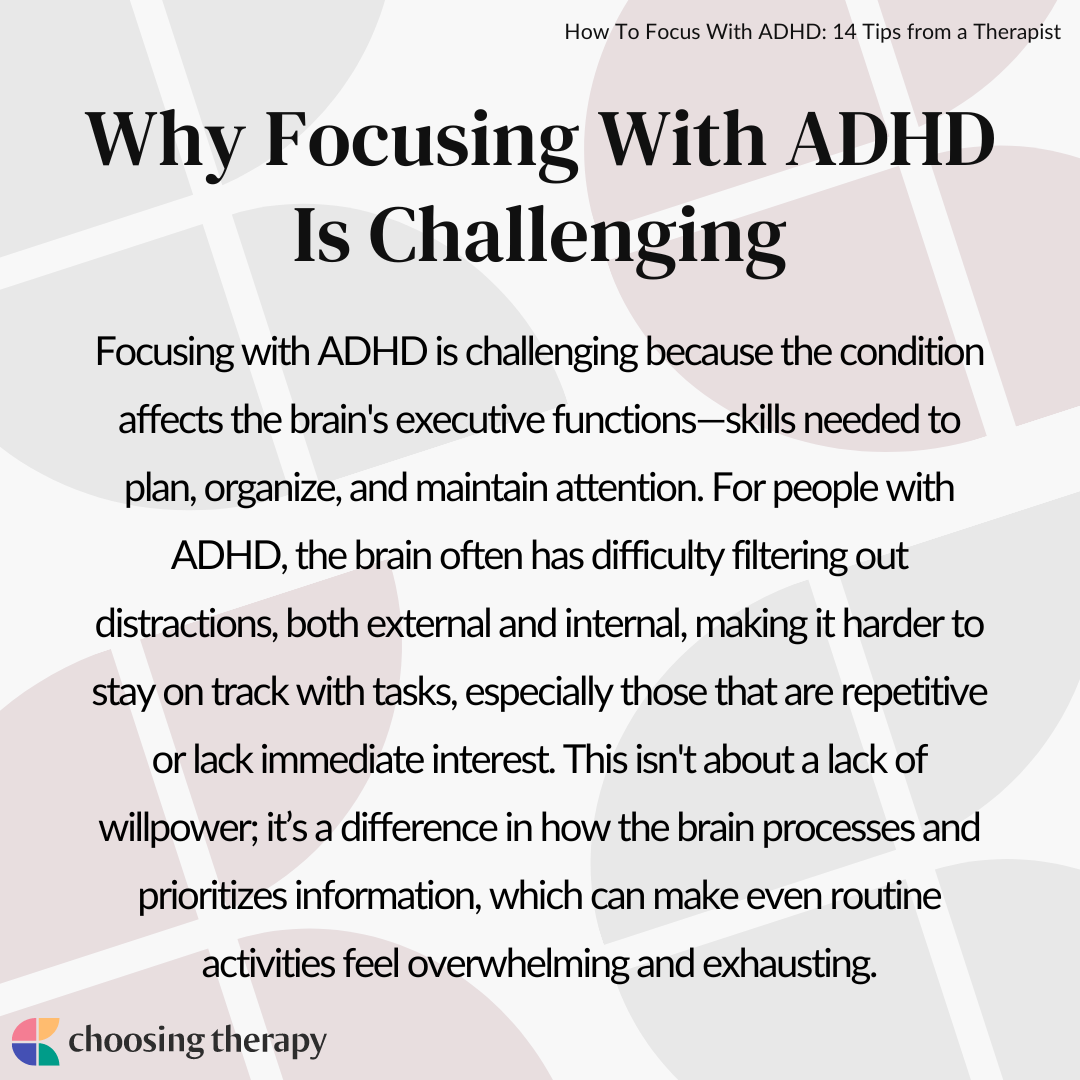
Focusing with ADHD is challenging because the condition affects the brain’s executive functions—skills needed to plan, organize, and maintain attention. For people with ADHD, the brain often has difficulty filtering out distractions, both external and internal, making it harder to stay on track with tasks, especially those that are repetitive or lack immediate interest. This isn’t about a lack of willpower; it’s a difference in how the brain processes and prioritizes information, which can make even routine activities feel overwhelming and exhausting.
Here are some reasons individuals with ADHD struggle to focus:
- Dopamine deficit: People with ADHD often have lower levels of dopamine, a chemical in the brain that helps with reward and motivation. This can make it hard to stay interested in tasks that aren’t immediately rewarding.1, 2
- Executive dysfunction: ADHD executive dysfunction refers to difficulties with planning, organizing, and managing time. If you have ADHD, you might find it hard to start tasks, keep your focus, and see things through to the end.
- Working memory deficits: Individuals with ADHD often have an impaired working memory, which means they are less capable of holding and manipulating information over short periods of time. This can cause problems with following instructions, remembering details, and keeping track of what needs to be done.
- Hyperfocus: While it may seem contradictory, individuals with ADHD can sometimes become so engrossed in a particular activity that they lose track of time and neglect other tasks. This ADHD hyperfocus can make it difficult to switch attention to other important activities.
- Emotional dysregulation: Individuals with ADHD often struggle with emotional dysregulation. Feelings of frustration, anxiety, or sudden mood changes can make it hard to concentrate.
- Distractibility: Getting easily distracted by noises, movements, or even your own thoughts is common with ADHD. This can make it tough to stay focused on one thing.
- Impulse control issues: Individuals with ADHD often struggle with impulsivity, which can lead to frequent task interruptions. Therefore, they may struggle to resist the urge to engage in distracting activities or thoughts.
How to Focus With ADHD
Focusing on ADHD can be challenging, but there are many different strategies that can significantly improve your concentration. While all individuals with ADHD struggle with focusing, each person’s experience is unique, so it is important to experiment with different strategies and implement personalized techniques that work for you. Remember, focusing with ADHD is a skill that can be developed with practice and patience.
Free ADHD Worksheets

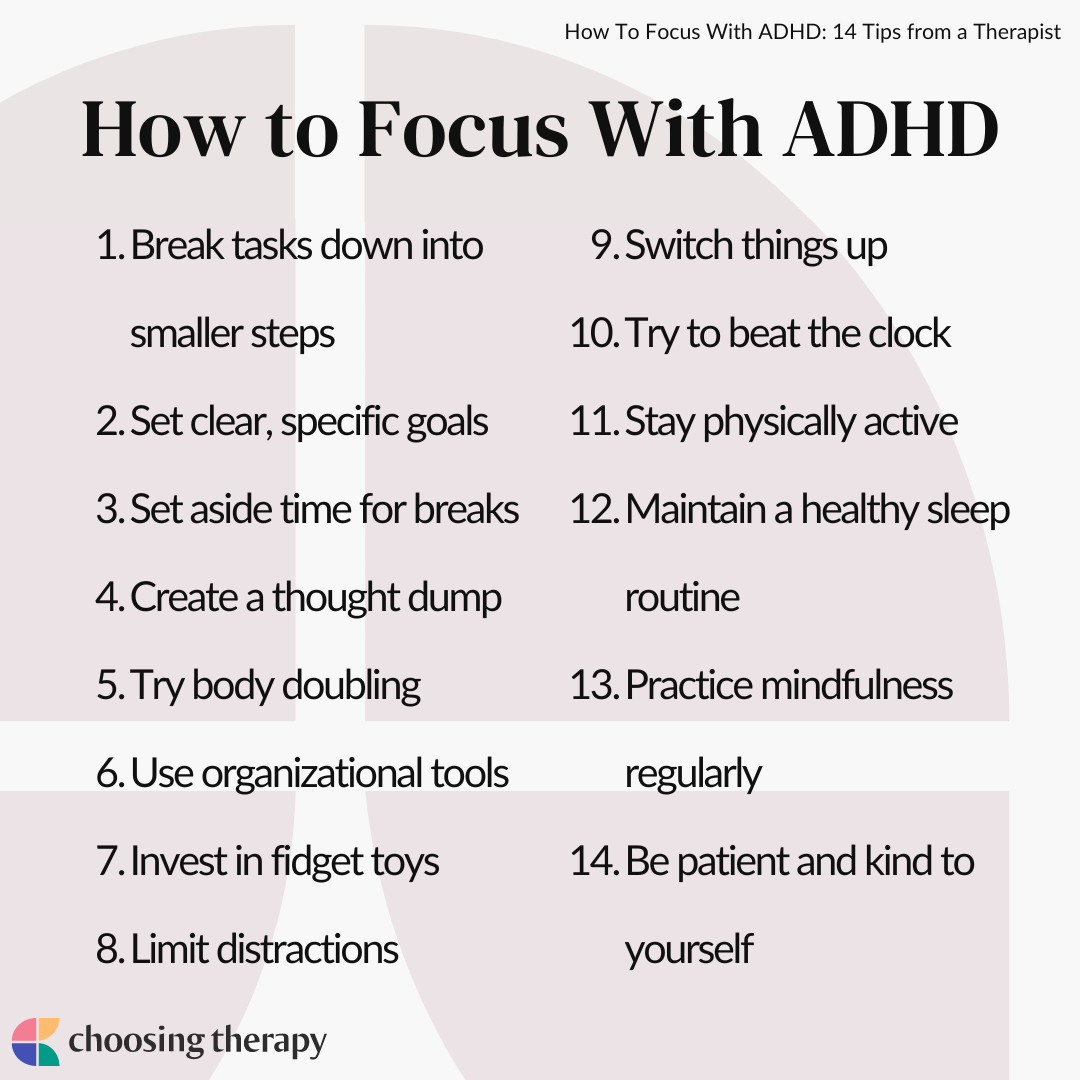
Here are fourteen tips for how to focus with ADHD:
1. Break Tasks Down Into Smaller Steps
ADHD can make big tasks feel overwhelming, leading to a sense of ADHD paralysis where you feel stuck and unable to start. Breaking a task down into smaller, manageable steps can help you get moving and reduce that feeling of being paralyzed. Each small step you complete gives you a sense of progress and keeps you from getting stuck.
For example, if you need to clean your desk, list each step: throw out trash, gather loose papers, sort papers, and put away pens. This method can make the task feel less overwhelming and help you stay organized, reducing ADHD paralysis.
2. Set Clear, Specific Goals
Goal setting can help provide structure in working towards a desired outcome, project, or task. Similar to breaking a task down, setting goals can help decrease the overwhelm that may come with ADHD executive dysfunction. Setting clear and specific goals can help with motivation, focus, and keeping your brain engaged.
One way of setting goals is called a SMART goal, which stands for Specific, Measurable, Achievable, Relevant, and Time-bound. For example, if your goal is to be more organized, a SMART goal for this could be “I will organize my working space by going through one desk drawer each week, for the next 3 weeks” or “I will spend 20 minutes sorting through clutter on my desk, at the end of each week”.
3. Set Aside Time for Breaks
For individuals with ADHD, taking a break can be an excellent tool to regain focus. By stepping away from a project for a few minutes, you give your brain a chance to rest and recharge. This break can help clear your mind, reduce stress, and prevent ADHD burnout. When you return to the task, you are likely to feel more refreshed, which can improve your concentration and dedication, making it easier to continue working effectively.
One effective method is the Pomodoro technique for ADHD, which involves creating a structured regimen for a specific task. Work for 25 minutes, then take a five-minute break and repeat this process until the project is complete. This schedule, with its intermittent rewards (breaks), can help you stay motivated and focused.
4. Create a Thought Dump
A thought dump is when you write down everything on your mind—tasks, ideas, worries, or reminders. People with ADHD often have many thoughts racing around, which can be distracting and stressful. A thought dump helps clear your mind, improve focus, and reduce stress. To create a thought dump, choose what to write on (paper, online document, your phone), set an allotted amount of time such as 10-15 minutes, and then start writing anything that comes to mind without filtering it.
5. Try Body Doubling
Body doubling refers to having someone else work alongside you on their task while you work on your own task. For individuals with ADHD, this can help with tasks that require sustained attention by increasing motivation and accountability. Body doubling can improve productivity and also reduce isolation by having someone else present, allowing for social interactions. To try body doubling, ask someone you feel would be supportive of this and also wants to work on accomplishing their tasks.
6. Use Organizational Tools
There are a variety of organizational tools that can help with ADHD and make it easier to stay organized and focused. Examples of these include physical items, such as a planner to keep track of events, sticky notes for quick reminders, or a whiteboard for to-do lists. Digital tools can be helpful as well, such as calendar apps, note-taking apps, or task management apps to help track progress in accomplishing a task.
ADHD Management Tools
Inflow App is the #1 science-based app to help you manage your ADHD. Their support system helps you understand your neurodiverse brain and build lifelong skills. Free Trial
7. Invest in Fidget Toys
ADHD fidgeting can help individuals focus by providing a physical outlet for restless energy, which can otherwise be distracting. When engaged in a mundane or repetitive task, it’s common for individuals with ADHD to feel mentally understimulated, leading to distraction and difficulty sustaining attention. Fidgeting with objects allows individuals to channel their need for movement into a controlled activity, helping to maintain concentration on the primary task. Fidget toys come in various forms, such as stress balls, fidget spinners, putty, or textured items, each offering different sensory experiences.
8. Limit Distractions
Being aware of your work environment is crucial for maintaining focus with ADHD. It’s important to identify the specific elements in your environment that affect your concentration. To do this, try working in different settings and observe how each one impacts your productivity. Experiment with various factors such as lighting, noise levels, and the organization of your workspace. You might find that a quiet, well-lit room with minimal distractions is ideal for you, or you may discover that a slightly noisy coffee shop helps you stay engaged.
Additionally, consider using tools and techniques to minimize distractions. Noise-canceling headphones can block out unwanted sounds, while decluttering your workspace can reduce visual distractions. If certain stimuli are unavoidable, try to create a routine or schedule that allows you to work during times when the environment is less distracting.
9. Switch Things Up
When you’re stuck doing the same thing over and over, it’s easy for your brain to get bored and wander off. But by changing how or where you’re doing something — like moving to a different room, listening to music, or breaking a task into smaller parts — you’re adding a little variety that your ADHD brain craves. This new approach can make the task feel less overwhelming, give you a boost of motivation, and help you stay on track without feeling stuck or frustrated.
10. Try to Beat the Clock
Trying to beat the clock can help with focus by turning a task into a challenge or a game, which can make it more engaging for someone with ADHD. Setting a timer for a short burst of time, like 10 or 15 minutes, creates a sense of urgency that can help your brain zero in on what you need to get done. It takes advantage of your natural tendency to thrive under pressure and gives you a clear, immediate goal to work toward. Plus, knowing there’s a finish line can make even boring tasks feel more doable, helping you stay focused and motivated until the timer goes off.
11. Stay Physically Active
Exercise has many mental health benefits, and regular physical activity can reduce the severity of ADHD symptoms.3 Whether it’s taking a hike, hitting the gym, or just walking around the office when you’re having trouble focusing, getting some physical activity can make a big difference.
12. Maintain a Healthy Sleep Routine
Research has found that sleep problems are common in individuals with ADHD.4 Getting better sleep can boost brainpower and focus, so it’s important to prioritize good sleep hygiene. To start, try maintaining a consistent sleep schedule by going to bed and waking up at the same time every day, even on weekends. This helps regulate your body’s internal clock and promotes better sleep quality.
Establishing a bedtime routine with calming activities can also help signal to your body that it’s time to wind down. Avoid stimulating activities such as using electronic devices or consuming caffeine close to bedtime, as these can interfere with your ability to fall asleep. Additionally, make sure your bedroom is dark, quiet, and cool, and consider using blackout curtains, white noise machines, or eye masks to minimize disruptions.
13. Practice Mindfulness Regularly
Regularly practicing meditation can be incredibly beneficial for improving focus with ADHD, particularly when it comes to improving focus.5 By practicing mindfulness regularly, you can train your brain to become more attentive and less prone to distractions. To get started, there are numerous mindfulness apps available, such as Headspace, that offer guided meditation sessions specifically designed to help you develop and maintain focus. By practicing mindfulness regularly, you can train your brain to become more attentive and less prone to distractions, ultimately improving your productivity and overall sense of well-being.
14. Be Patient & Kind With Yourself
We live in a culture that often expects too much from us, and balancing work, school, social life, and daily tasks can feel overwhelming. It’s important to focus on what you can control, like developing effective coping skills for ADHD, rather than stressing over what you cannot change. Remember that you can only handle so many responsibilities at once. Be kind to yourself and practice self-compassion and patience as you work on improving your concentration. It’s a journey, and it’s okay to take your time.
When to Seek Professional Support
If your difficulty focusing is affecting your job, emotions, relationships, or daily life, it might be a good idea to seek professional mental health support. Therapy can help you tackle these concentration issues and reduce their impact on your work, studies, and personal relationships.
Online ADHD treatment services like ADHD Online connect you with licensed therapists who specialize in ADHD. Also, apps such as Inflow offer self-paced programs and resource libraries that can help you learn to manage your ADHD symptoms. If you’re looking into ADHD medication options, Circle Medical provides same-day appointments with a psychiatrist who can discuss the various available medications. They also offer therapy referrals for those interested in pursuing both medication and therapy at the same time.
ADHD Diagnosis & Treatment at Talkiatry
Talkiatry can match you with a psychiatrist who takes your insurance. Their clinicians can evaluate you for ADHD and prescribe medication. This can include controlled substances if they’re right for you and allowed by your state. Get started with a short online assessment.
How a Lack of Focus Affects People With ADHD
When a person with ADHD has chronic difficulties with focus, it can lead to low self-esteem and feeling like a failure. Tasks that seem manageable to neurotypical individuals may feel impossible, often causing emotional distress, irritability, fatigue, depression, or anxiety. People with ADHD often report feeling burned out, fatigued, or frustrated, often due to ADHD-induced forgetfulness. This can strain their relationships and work performance. Additionally, struggling to keep up with chores and tasks at home can add to a person’s sense of overwhelm and stress.
In My Experience
“When improving focus with ADHD, any behavioral exercise incorporated into a daily routine is sustainable. Individuals with ADHD may see more long-term success when they slowly implement small changes and exercises rather than making abrupt and drastic changes. Patience and self-compassion are essential when making changes or improvements.”

How To Focus With ADHD Infographics

ChoosingTherapy.com strives to provide our readers with mental health content that is accurate and actionable. We have high standards for what can be cited within our articles. Acceptable sources include government agencies, universities and colleges, scholarly journals, industry and professional associations, and other high-integrity sources of mental health journalism. Learn more by reviewing our full editorial policy.
-
Nigg, J. T., Sibley, M. H., Thapar, A., & Karalunas, S. L. (2020). Development of ADHD: Etiology, Heterogeneity, and Early Life Course. Annual review of developmental psychology, 2(1), 559–583. https://doi.org/10.1146/annurev-devpsych-060320-093413
-
Mehta, T. R., Monegro, A., Nene, Y., Fayyaz, M., & Bollu, P. C. (2019). Neurobiology of ADHD: a review. Current Developmental Disorders Reports, 6(4), 235–240. https://doi.org/10.1007/s40474-019-00182-w
-
Silva, A. P., et al. (2015). Measurement of the effect of physical exercise on the concentration of individuals with ADHD. PloS one, 10(3), e0122119.
-
Kirov, R., & Brand, S. (2014). Sleep problems and their effect in ADHD. Expert review of neurotherapeutics, 14(3), 287-299.
-
Leland, M. (2015). Mindfulness and student success. Journal of Adult Education, 44(1), 19-24.

We regularly update the articles on ChoosingTherapy.com to ensure we continue to reflect scientific consensus on the topics we cover, to incorporate new research into our articles, and to better answer our audience’s questions. When our content undergoes a significant revision, we summarize the changes that were made and the date on which they occurred. We also record the authors and medical reviewers who contributed to previous versions of the article. Read more about our editorial policies here.
Author: Chelsea Twiss, LP, PhD (No Change)
Reviewer: Heidi Moawad, MD (No Change)
Primary Changes: Revised section titled “How to Focus With ADHD.” New content written by Elizabeth Yoak, LMHC, and medically reviewed by Kristen Fuller, MD. Fact-checked and edited for improved readability and clarity.
Author: Chelsea Twiss, LP, PhD
Reviewer: Heidi Moawad, MD
Your Voice Matters
Can't find what you're looking for?
Request an article! Tell ChoosingTherapy.com’s editorial team what questions you have about mental health, emotional wellness, relationships, and parenting. Our licensed therapists are just waiting to cover new topics you care about!
Leave your feedback for our editors.
Share your feedback on this article with our editors. If there’s something we missed or something we could improve on, we’d love to hear it.
Our writers and editors love compliments, too. :)
Additional Resources
To help our readers take the next step in their mental health journey, ChoosingTherapy.com has partnered with leaders in mental health and wellness. ChoosingTherapy.com is compensated for marketing by the companies included below.
ADHD Diagnosis & Treatment at Talkiatry
Talkiatry – can match you with a psychiatrist who takes your insurance. Their clinicians can evaluate you for ADHD and prescribe medication. This can include controlled substances if they’re right for you and allowed by your state. Get started with a short online assessment.
ADHD Management Tools
Inflow App – Inflow is the #1 science-based app to help you manage your ADHD. Their support system helps you understand your neurodiverse brain, and build lifelong skills. Free Trial
Online Psychiatry
Circle Medical – Affordable online ADHD evaluations and treatment. Circle Medical can prescribe controlled substances when clinically appropriate. Insurance accepted. Same day appointments available. Visit Circle Medical
Free ADHD Newsletter
A free newsletter from Choosing Therapy for those impacted by ADHD. Get helpful tips and the latest information. Sign Up

Do you think you have ADHD?
Answering a few questions can help you understand your symptoms and give you a recommendation for what to do next.
Best Online ADHD Treatments
There are many considerations when looking for the best online ADHD treatments. It is important to know which online platforms can provide a diagnosis, which offers therapy only, which offers medication management only, and which offers a combination of treatments.
