


Postcoital dysphoria (PCD) is the experience of unexpected sadness, tearfulness, or agitation after otherwise enjoyable or satisfying sexual experiences.1, 2, 3Both men and women can experience occasional PCD episodes that usually resolve on their own after a matter of minutes. Professional treatments may be indicated when these issues become frequent or severe, and can include therapy, medication, and/or help from a medical specialist.4, 5
Find a Therapist Focused on Sex and Intimacy
Get the support you need from a therapist specializing in sex and intimacy. Use the ChoosingTherapy.com Directory to find a licensed therapist near you who specializes intimate relationships and sex. Many therapists accept insurance, offer in-person and online appointments, and have immediate availability.
What Is Postcoital Dysphoria?
Postcoital dysphoria (PCD) is a term used to describe the experience of sudden and unexpected negative emotions like sadness, irritability or anxiety directly following sexual intercourse or activity. Sometimes called ‘post-sex blues’ or postcoital tristesse, PCD usually occurs after orgasm during what’s referred to as the ‘resolution phase’ of the sexual response cycle.1, 3, 4
For many men and women, PCD symptoms come on suddenly directly following orgasm and can occur after masturbation or sexual intercourse. Generally, PCD episodes last only a matter of minutes. For others, the distressing feelings can last for several hours.4 Part of what makes PCD episodes so upsetting is that they can occur in people who have no other mental health issues, no history of depression, and after sexual intercourse that was satisfying and enjoyable.1, 2, 3
While PCD used to be a relatively uncommon problem experienced mostly by women, recent research suggests that the experience is common in both sexes. According to studies, 41% of men and 32.9% of women experience PCD at some point in their lifetime.1, 2, 3 One study found that chronic PCD might be more common in men than in women, affecting up to 3-4% of men and 2% of women on a regular basis.2, 3
Symptoms of Postcoital Dysphoria
The characteristic symptom of postcoital dysphoria is the onset of sudden, unexpected negative emotions directly following orgasm, sexual intercourse, or masturbation. Postcoital dysphoria is often experienced as inexplicable feelings of sadness or tearfulness, but some may experience symptoms of anxiety or irritability instead of or in addition to sadness.6, 7 PCD is poorly studied, but is usually considered a type of sexual dysfunction that may be diagnosed by a medical or mental health professional.1
Symptoms of postcoital dysphoria may include:1, 2, 4, 5, 6
- Unexplained feelings of sadness, postcoitus depression, or unhappiness
- Becoming tearful or crying
- Panic attacks or other symptoms of anxiety
- Feelings of frustration, irritability, or anger
- Experiencing mood swings or trouble regulating mood
- Feeling tired, unmotivated, or lacking in energy
- Feelings of emptiness or numbness
- Extreme feelings of worthlessness, guilt, or self-loathing
Possible Causes of Postcoital Dysphoria
Sexual activity and intercourse is complicated for many people, and can evoke different emotions depending on a person’s culture, sexual history, relationship history, mental health, and personal beliefs. This means many of the risk factors that may contribute to PCD are too nuanced and individualized to apply to everyone’s experience.
PCD is also one of the least understood types of sexual dysfunction, and much more research is needed to fully understand the phenomenon and what factors make certain people more susceptible to it.1, 3, 4 Still, recent studies exploring PCD risk factors in men and women have uncovered certain data that can help to partially explain what might cause PCD. Many of the risk factors for PCD are the same in both men and women who struggle with this issue, but some are slightly different.1, 3
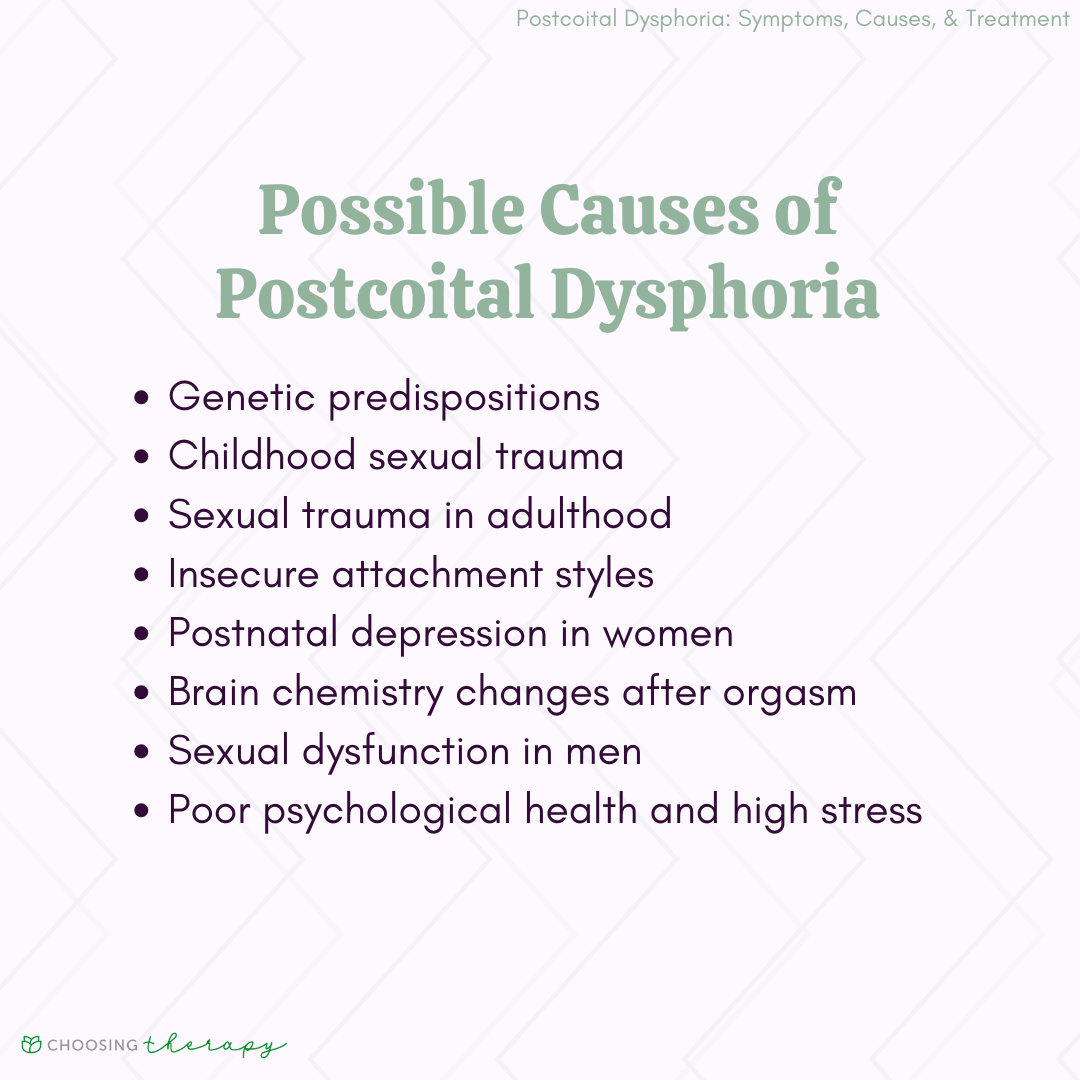
Potential risk factors of experiencing PCD include:
Genetic Predispositions
Genetic predispositions may play a role in making someone more susceptible to PCD, especially in women. One study found that having a genetic or family history of PCD explained 26-28% of the variance between which women reported PCD and which did not.1 Because many families don’t openly discuss sex, many people aren’t aware of whether or not they have a genetic predisposition to PCD. Still, research does suggest this is common.
Childhood Sexual Trauma
According to several studies, both men and women who experienced sexual abuse in childhood are more likely to struggle with postcoital dysphoria as adults.1, 2, 3 Sexual activity is often a trigger for PTSD flashbacks and emotional distress in people with a history of childhood trauma and sexual abuse.7 In PCD, these symptoms may be a slightly delayed response to these PTSD triggers, even if the person isn’t aware that their symptoms are trauma-related.
Sexual Trauma in Adulthood
Experiencing sexual trauma or assault in adulthood can also increase the risk of experiencing PCD in men and women.1, 2, 3 People who have had traumatizing sexual experiences or been the victims of sexual assault or abuse often develop negative associations with sex. Even after having satisfying, consensual sexual intercourse with someone they feel safe with can trigger these associations and the distressing feelings attached to them.8
Insecure Attachment Styles
Some research shows a slightly increased risk for PCD in people (especially women) who have insecure attachment styles. These often arise from early traumatic childhood experiences or inconsistent bonding with adult caregivers or parents. This can lead to trust issues, problems with intimacy, and patterns of either becoming avoidant or overly dependent on people in adult relationships. People with insecure attachments might struggle more with the natural feelings of separation that occur after sexual intercourse during the resolution phase.1, 2
Postnatal Depression in Women
In women, one study showed a strong correlation between post-natal depression (formerly called postpartum depression) and postcoital dysphoria. The study showed that over 60% of women with postnatal depressive symptoms also reported instances of PCD, which is one of the strongest correlations found to date.9 After birth, reproductive hormone imbalances are common in women, and are believed to strongly contribute to depressive and mood-related symptoms. For some, PCD may be partially caused by hormonal imbalances (like estrogen, progesterone, etc.).9, 10
Brain Chemistry Changes After Orgasm
For some people, dysphoric symptoms occur after sex as a part of the normal neurochemical response. During an orgasm, the brain releases large amounts of dopamine, causing a pleasurable and intense feeling. After such a large rush, the hormone prolactin suppresses dopamine levels to re-establish a sense of equilibrium, which could be experienced as feeling down or sad. Low dopamine levels are associated with depression, irritability, fatigue, anxiety, and other mood issues commonly reported by people during PCD.10
Sexual Dysfunctions in Men
In women, PCD is usually not associated with other kinds of female sexual dysfunction disorders (like problems getting aroused, staying aroused, or achieving orgasm), but this is not the case with men. For example, men who have PCD are more likely to describe sexual anxiety, problems with sexual performance, and concern and shame about sex than men with no history of PCD.3These findings suggest that for men, shame, anxiety, or problems with sexual performance may be a contributing factor to negative feelings after intercourse.
Poor Psychological Health & High Stress
High stress and psychological issues are known to interfere with many aspects of sexuality in ways linked to lower levels of relationship and sexual satisfaction. Some studies have found a correlation between poor mental health and PCD, with high levels of psychological distress making people more likely to experience dysphoria.1, 3, 5This means it’s possible that stress and other underlying psychological problems could be the cause of PCD, at least in certain people.
Other possible causes or risk factors for PCD include:1, 2, 4, 8
- Psychological stress or poor mental health
- Body image issues or low self-esteem
- Relationship anxiety, conflict, or dissatisfaction
- Guilt, inner conflicts, or shame about sex and sexuality
- Anxiety about sexual performance
- More intense orgasms or less frequent sexual release
- Stored up, unresolved, or suppressed emotions
- Poor differentiation of self (sense of individuality & clear identity)
- An existing diagnosis of depression or another mental health condition
Sex & Intimacy Counseling for Couples
Receive online counseling in a safe, unbiased space from a licensed therapist. BetterHelp starts at $65 per week and is FSA/HSA eligible by most providers. Complete a brief questionnaire and get matched with the right therapist for your relationship!
How Is Postcoital Dysphoria Diagnosed?
Postcoital dysphoria can be diagnosed by a licensed health or mental health provider, usually during a formal appointment or diagnostic intake assessment. When someone presents with complaints of PCD to their doctor, therapist, psychologist, OBGYN, or other licensed clinician, they may receive a formal diagnosis of an unspecified sexual dysfunction. The reason they may not receive a specific diagnosis of PCD is because the disorder is not officially listed in the DSM-5 and other diagnostic guides used by clinicians.7
Treatment for Postcoital Dysphoria
Most of the time, PCD symptoms only occur occasionally and resolve on their own.1, 2, 3, 4Only a small number of people go on to experience more regular or intense postcoital dysphoria symptoms that require treatment. When they do, treatment may include individual and/or couples therapy, medication, or a combination of the two. Sometimes, a recommendation to see a specialist is also made to rule out or address other suspected medical, sexual, or psychological problems that may be contributing to PCD.4, 5, 6, 9
Because little is understood about PCD, there aren’t formal treatment guidelines used for people who seek help for this issue or studies showing which kinds of treatments work best to resolve PCD symptoms. Treatment is usually individualized, and will vary depending on whether a person seeks help from a medical or mental health professional.
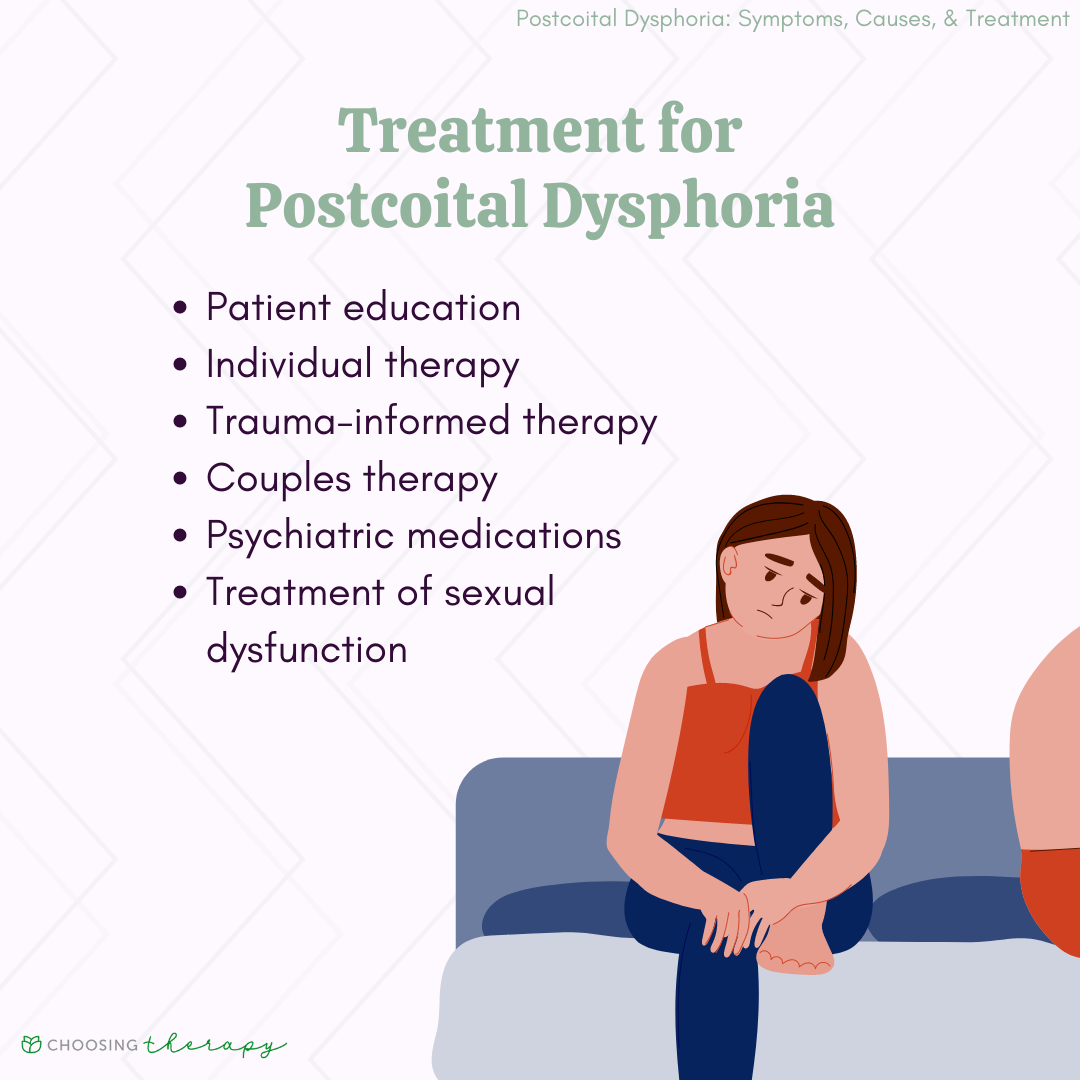
Treatments that may be recommended for PCD include:4, 5, 8, 9
- Patient education: This is provided by a trained, licensed medical or mental health provider to explain the symptoms, what might be causing them, what they can try to reduce or manage the symptoms
- Individual therapy: Individual therapy may be used to address underlying psychological issues, stress, depressive symptoms, or other disorders or symptoms contributing to the problem.
- Trauma-informed therapy: Therapies like CPT, ART, or EMDR may be used to address symptoms of PTSD, unresolved trauma, or sexual trauma that may be contributing to PCD symptoms.
- Couples therapy: In some cases, couples therapy may be recommended to address underlying relationship problems, relationship conflicts, intimacy, or communication issues using approaches like EFT or the Gottman method.
- Psychiatric medications: Medications like SSRI antidepressants may help reduce symptoms of sadness, tearfulness, and depression.
- Treatment of sexual dysfunction: Consultation, treatment, or medication for other sexual dysfunctions or disorders like erectile dysfunction and problems getting or staying aroused or achieving orgasm may be beneficial.
How to Cope With Postcoital Dysphoria
If the symptoms and instances of dysphoria become more frequent or severe enough to cause distress, interfere with sexual functioning and satisfaction, or cause relationship issues, it’s a good idea to seek help from a professional. In addition to professional help, there may be some things you can do on your own to cope in healthy ways and possibly even overcome PCD–or at least keep it from interfering as much in your life and relationships.
Here are some tips on how to cope with postcoital dysphoria symptoms:8
- Communicate with your partner: Becoming suddenly sad, unresponsive, or tearful after sex can also affect your sexual partners, who may be confused or distressed that they did something wrong. Open communication can help prevent these misunderstandings, while also giving you an opportunity to get some emotional support from them.
- Take some time alone: If you’re not comfortable opening up and sharing with your partner, it’s also ok to take some time for yourself to work through your feelings. Many people find that their PCD passes after a few minutes, so a quick trip to the bathroom might be enough to work through your feelings.
- Reflect on your thoughts, beliefs, and feelings about sex: Sometimes, PCD symptoms are indications of unresolved issues or inner conflicts about sex, sexuality, and relationships. Take time to journal, reflect, or talk with a therapist about your feelings and beliefs surrounding sex.
- Create a comforting post-sex routine: Some people find that being close, cuddling, and being affectionate with someone after sex helps to relieve some of their feelings of sadness and dysphoria. Cuddling can actually stimulate the release of feel-good chemicals like oxytocin that help people feel close and connected, especially with people they care about.
- Find healthy emotional outlets: Sex releases a rush of different chemicals, endorphins, and neurotransmitters that are known to have an impact on your mood. Journaling, opening up to people you trust, or even physical exercise can all be great emotional outlets that can keep your feelings flowing.
Sex & Intimacy Counseling for Couples
Receive online counseling in a safe, unbiased space from a licensed therapist. BetterHelp starts at $65 per week and is FSA/HSA eligible by most providers. Complete a brief questionnaire and get matched with the right therapist for your relationship!
Final Thoughts
Postcoital dysphoria is the experience of sudden, unexplainable sadness, anxiety, or irritability after sexual intercourse, activity, or orgasm. These mood related symptoms occasionally happen and usually resolve on their own in a matter or minutes. However, some people find they become more frequent and severe. In these cases, therapy, medication, and/or consultation with medical experts may be indicated to identify the causes and appropriate treatments for PCD.1, 2, 3, 4, 8
Postcoital Dysphoria Infographics
ChoosingTherapy.com strives to provide our readers with mental health content that is accurate and actionable. We have high standards for what can be cited within our articles. Acceptable sources include government agencies, universities and colleges, scholarly journals, industry and professional associations, and other high-integrity sources of mental health journalism. Learn more by reviewing our full editorial policy.
-
Schweitzer, R. D., O’Brien, J., & Burri, A. (2015). Postcoital Dysphoria: Prevalence and Psychological Correlates. Sexual medicine, 3(4), 235–243. https://doi.org/10.1002/sm2.74
-
Bird, B. S., Schweitzer, R. D., & Strassberg, D. S. (2011). The prevalence and correlates of postcoital dysphoria in women. International Journal of Sexual Health, 23(1), 14-25.
-
Maczkowiack, J., & Schweitzer, R. D. (2019). Postcoital dysphoria: prevalence and correlates among males. Journal of Sex & Marital Therapy, 45(2), 128-140.
-
International Society for Sexual Medicine (ISSM). (2022). Post coital dysphoria. Retrieved from https://www.issm.info/sexual-health-qa/what-is-postcoital-dysphoria-post-sex-blues/
-
Sachdeva, N., et al. (2022). A Case Report of Postcoital Dysphoria: A Paradoxical Melancholy. Cureus, 14(10), e30746. https://doi.org/10.7759/cureus.30746
-
Burri, A., & Hilpert, P. (2020). Postcoital Symptoms in a Convenience Sample of Men and Women. The journal of sexual medicine, 17(3), 556–559. https://doi.org/10.1016/j.jsxm.2019.12.009
-
American Psychiatric Association. (2013). Diagnostic and statistical manual of mental disorders (5th ed.). https://doi.org/10.1176/appi.books.9780890425596
-
Wahl, D. W. (April 30, 2021). 11 Reasons Why Some People May Feel Sad After Sex: Making sense of “postcoital dysphoria”. Psychology Today. https://www.psychologytoday.com/us/blog/sexual-self/202104/11-reasons-why-some-people-may-feel-sad-after-sex
-
Mehta, D., Schweitzer, R., & Maczkowiack, J. (2017). Overlap of postnatal depression and postcoital dysphoria in women-implications for common underlying mechanisms. Journal of Depression and Anxiety, 6(5), Article-number.
-
Castro, G. (November 18, 2014). Postcoital Neurochemistry: The Blues and the Highs. Emotion, Brain, & Behavior Labratory. Tufts University. https://sites.tufts.edu/emotiononthebrain/2014/11/18/postcoital-neurochemistry-the-blues-and-the-highs/

Your Voice Matters
Can't find what you're looking for?
Request an article! Tell ChoosingTherapy.com’s editorial team what questions you have about mental health, emotional wellness, relationships, and parenting. Our licensed therapists are just waiting to cover new topics you care about!
Leave your feedback for our editors.
Share your feedback on this article with our editors. If there’s something we missed or something we could improve on, we’d love to hear it.
Our writers and editors love compliments, too. :)
Additional Resources
To help our readers take the next step in their mental health journey, ChoosingTherapy.com has partnered with leaders in mental health and wellness. ChoosingTherapy.com is compensated for marketing by the companies included below
Sex & Intimacy Counseling for Couples
Receive online counseling in a safe, unbiased space from a licensed therapist. BetterHelp starts at $65 per week and is FSA/HSA eligible by most providers. Complete a brief questionnaire and get matched with the right therapist for your relationship!
Modern Support For Sex & Intimacy
OurRitual is an effective, modern alternative to traditional sex therapy for couples or individuals. With expert-led sessions and personalized, science-backed practices to improve intimate relationships. Plans start at $36 per week. Get 20% off your first month with code: choosingtherapy20 Visit OurRitual
Sexual Healthcare For Men
Get ED meds online shipped to you if prescribed. FDA-approved ED pills, with treatments starting at less than $2/day. 100% online, discreet delivery. No waiting weeks for an appointment. Visit Hims
Sexual Healthcare For Women
Plushcare – Get personalized, high-quality healthcare online. In-network with most major insurers, with a typical out-of-pocket cost of just $30. Painful Sex Treatment and HSDD (low sex drive in women)

Best Online Therapy Services
There are a number of factors to consider when trying to determine which online therapy platform is going to be the best fit for you. It’s important to be mindful of what each platform costs, the services they provide you with, their providers’ training and level of expertise, and several other important criteria.
Best Online Psychiatry Services
Online psychiatry, sometimes called telepsychiatry, platforms offer medication management by phone, video, or secure messaging for a variety of mental health conditions. In some cases, online psychiatry may be more affordable than seeing an in-person provider. Mental health treatment has expanded to include many online psychiatry and therapy services. With so many choices, it can feel overwhelming to find the one that is right for you.
